

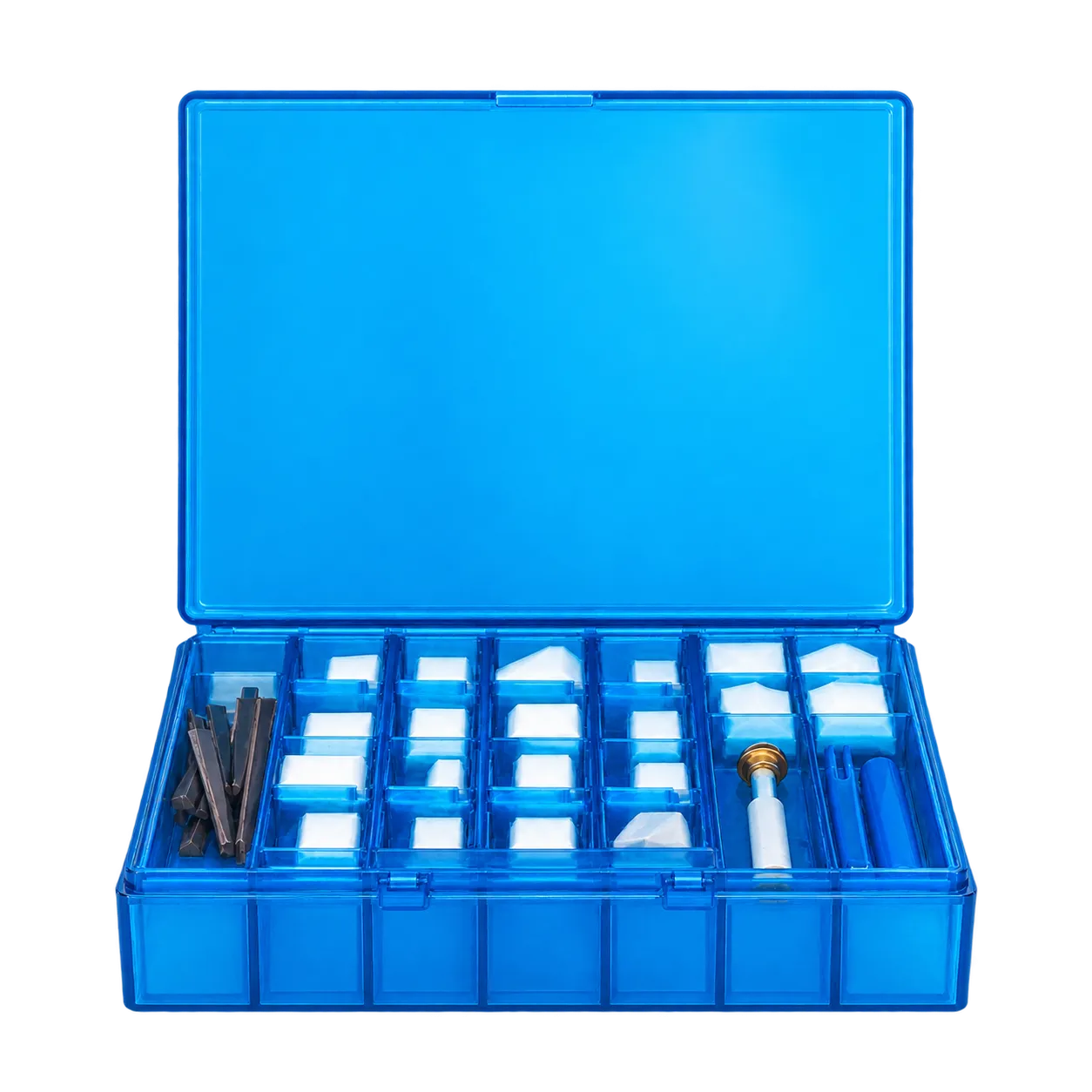


Dispensing desks handle a steady flow of small repairs: a lost hinge screw, a split nose pad, a pad arm that needs a new pad. Keeping those parts in one case at the desk lets staff find the right piece during the visit, and the translucent case shows at a glance which compartments are empty.
Glazing and repair workshops can use the case to separate screws by size and pads by style, so parts do not mix in a single tray. The long channel shown in the photograph suits a slim driver or tweezers kept with the parts.
Multi-site groups can set out the same layout at each branch, so staff moving between sites find parts in the same places. A written layout from the seller helps with this.
Domiciliary services visiting care homes and private addresses can carry a closed case of common spares, provided the seller confirms the lid holds parts in place when the case is moved.
Training new optical assistants is simpler when each part type has its own compartment and can be named and shown in turn.
Stock control benefits from a fixed home for each item. When a compartment empties, the gap is visible, and a reorder can be raised before a repair is delayed.
The case is less suited to a practice that needs a guaranteed starter stock but has not received a contents list, or to a workshop holding a large parts range. Buyers needing documentation should request it, because any declaration of conformity is issued by the manufacturer and provided by the seller.