
Wide Angle Fundus Viewing
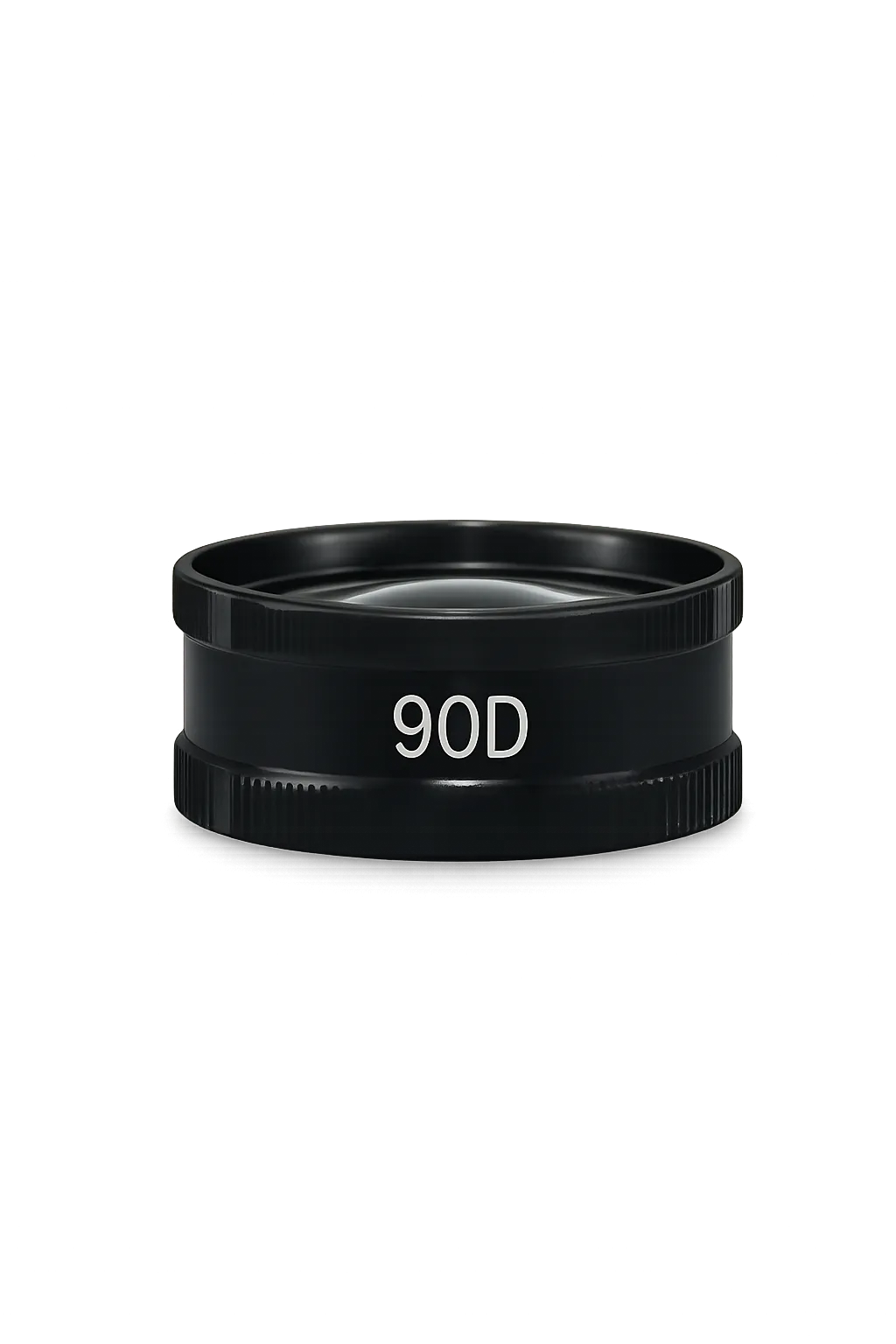
A high dioptre lens gathers a broad angular view, which suits examination where an overview of the posterior pole matters more than scale. The 72 degree field and 0.65 times magnification describe what the lens presents; how that suits any given examination is determined by the clinician rather than the specification. Overview and scale pull against one another here. The lens presents the view; the clinician judges its use. Wide angular gathering is what the power delivers.
Slit Lamp Examination in Routine Practice
Non-contact viewing lenses are standard equipment wherever posterior segment examination happens at a slit lamp, with illumination and magnification supplied by the instrument rather than the lens. The compact element and black ring both suit a clinic where lenses are handled repeatedly through a list. Lenses are picked up and set down repeatedly through a list. Recognition at a glance genuinely saves time in clinic. The instrument supplies what the lens does not.
Examinations Where Contrast Is Critical
Coatings across the optical surfaces reduce reflection at every boundary, and a viewing lens sits directly between a bright slit lamp beam and the examiner's eye. Contrast lost to stray reflection cannot be recovered afterwards, which bears on how readily fine detail is discerned. Contrast lost at a boundary cannot be recovered later. Fine detail is exactly what such examinations seek out. Bright beams make reflection control worthwhile.
Practices Holding Several Powers
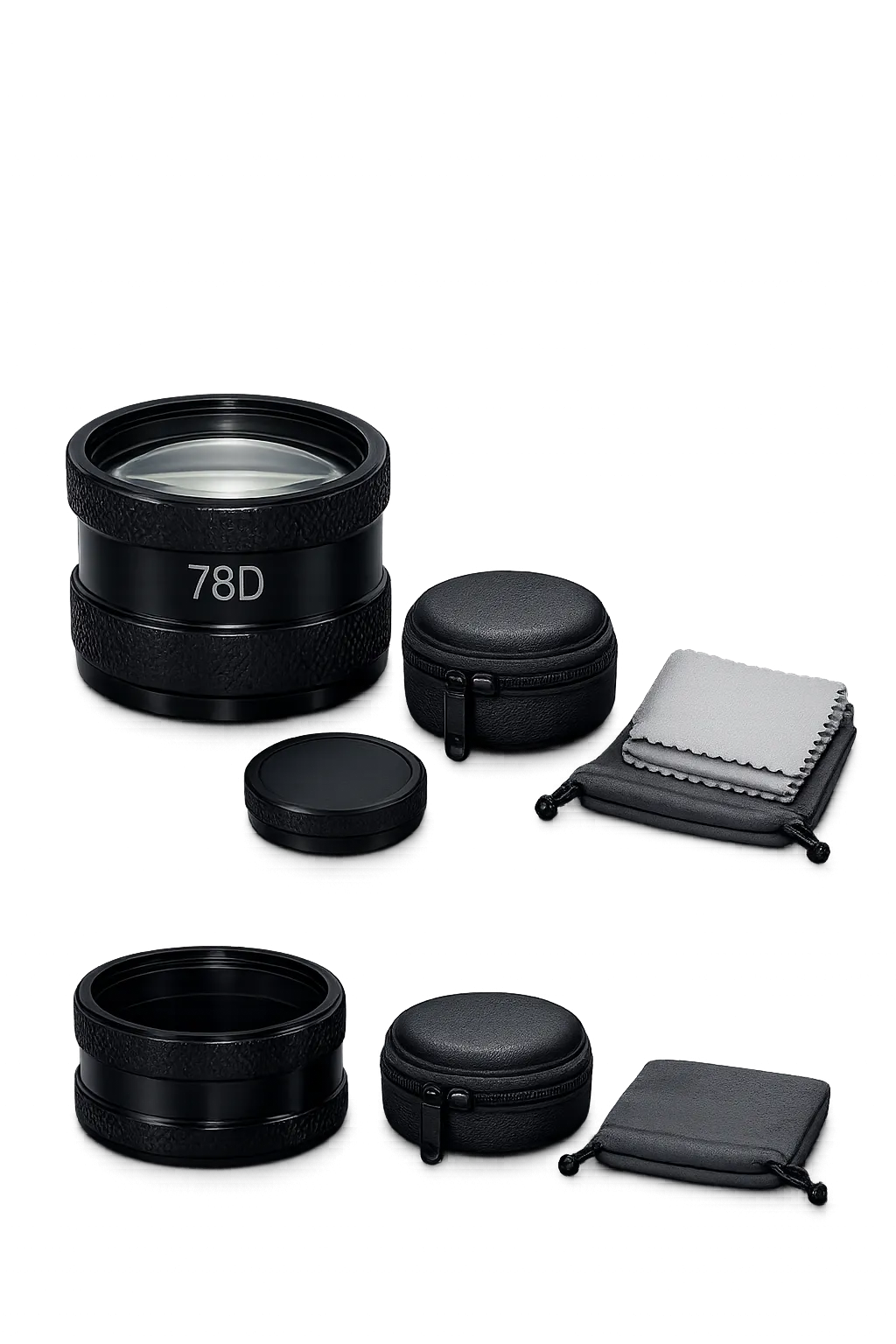
Departments typically keep more than one lens power, selected according to the examinations they perform. This is one power within a wider range, and Medigear.uk can advise on what else is available to sit alongside it in a set. Different examinations call for different lens powers. Advice on the wider range is available on request. Sets are assembled according to a service's work.