
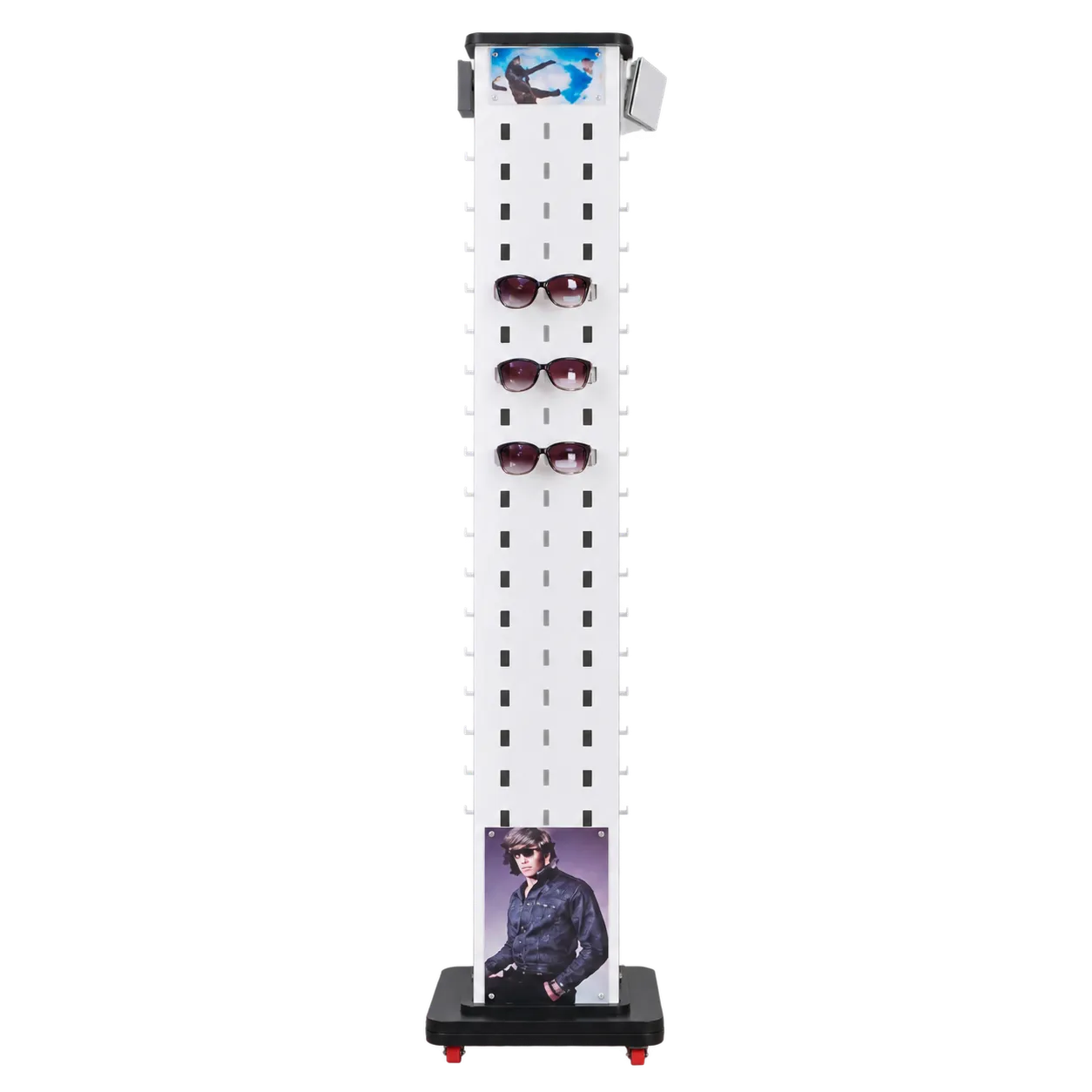
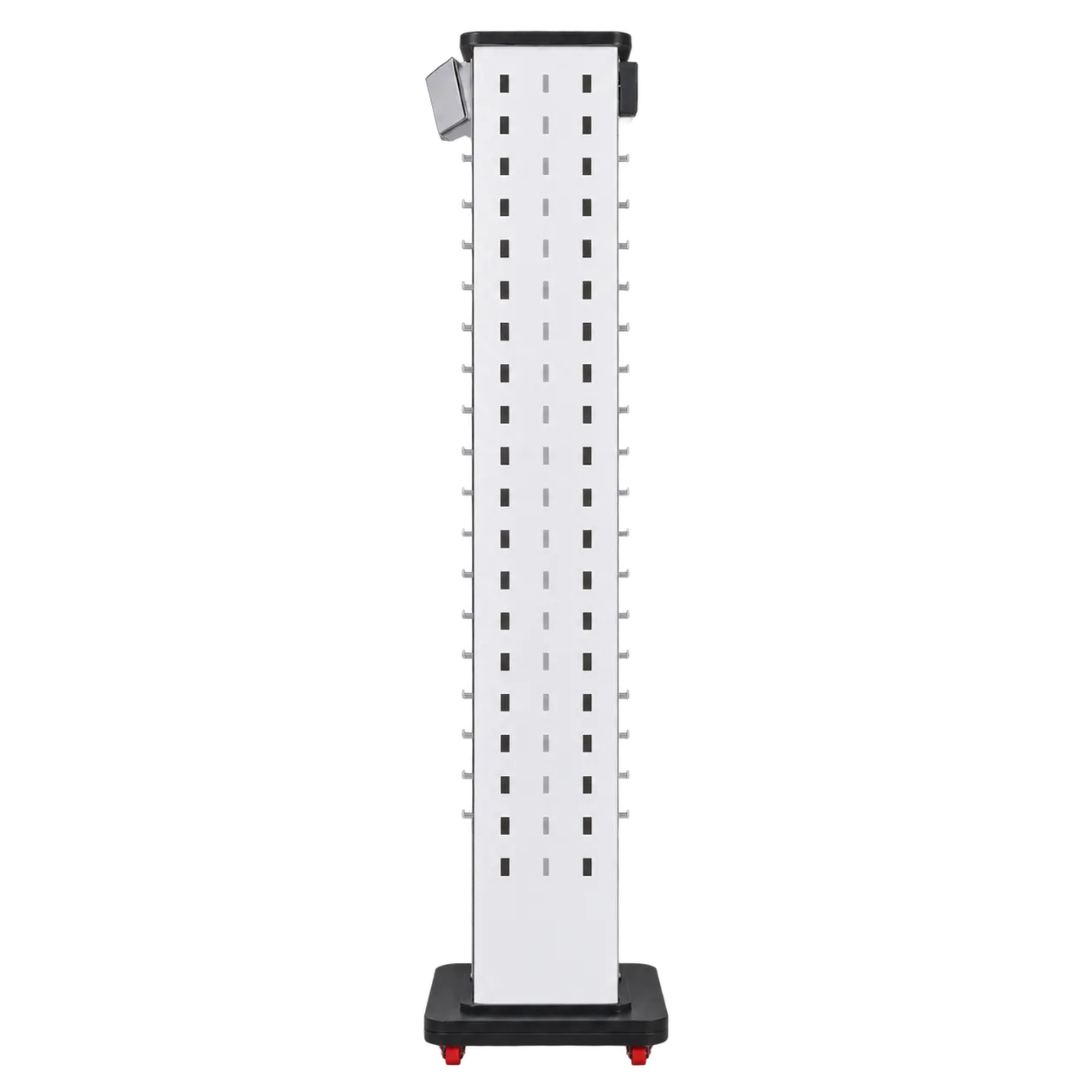
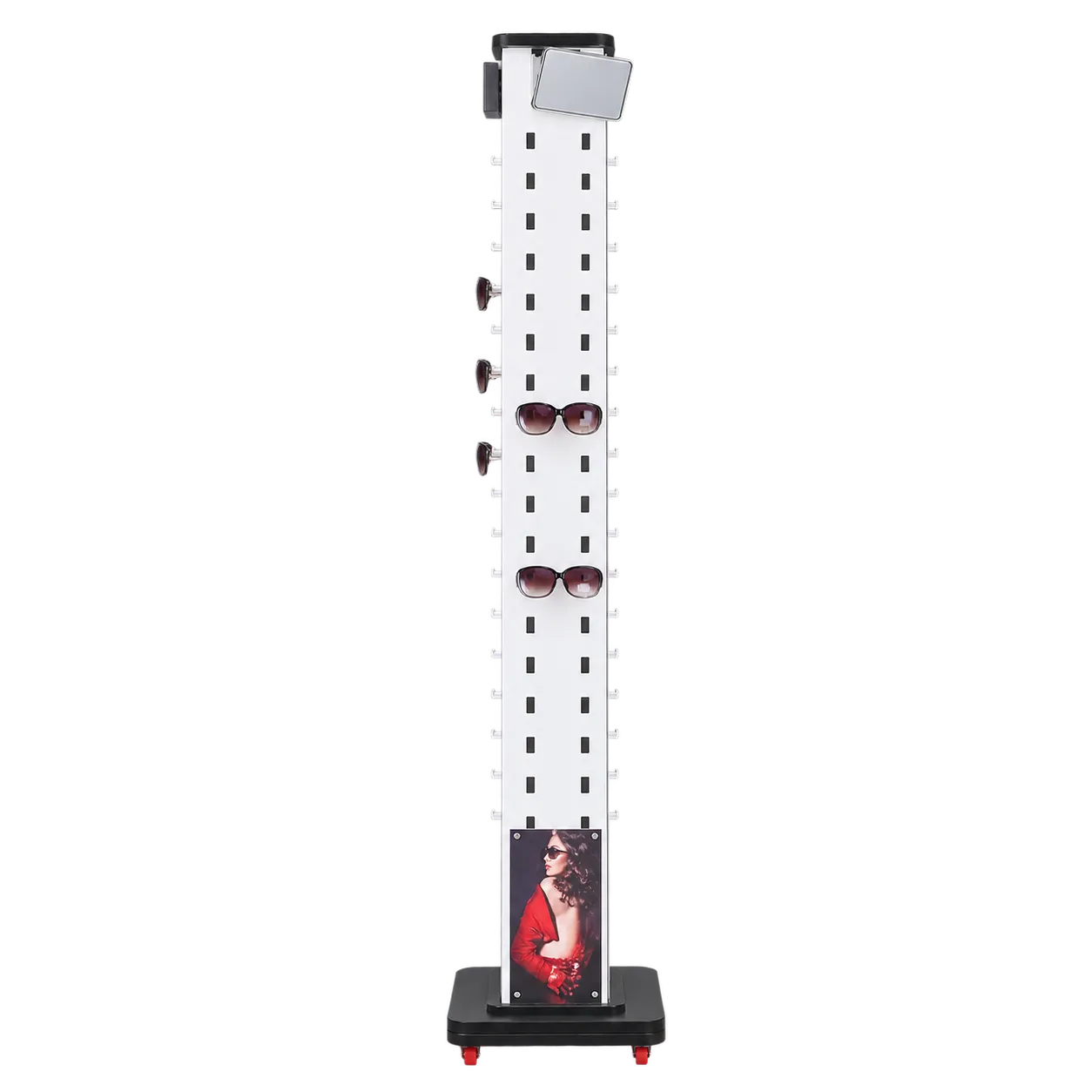
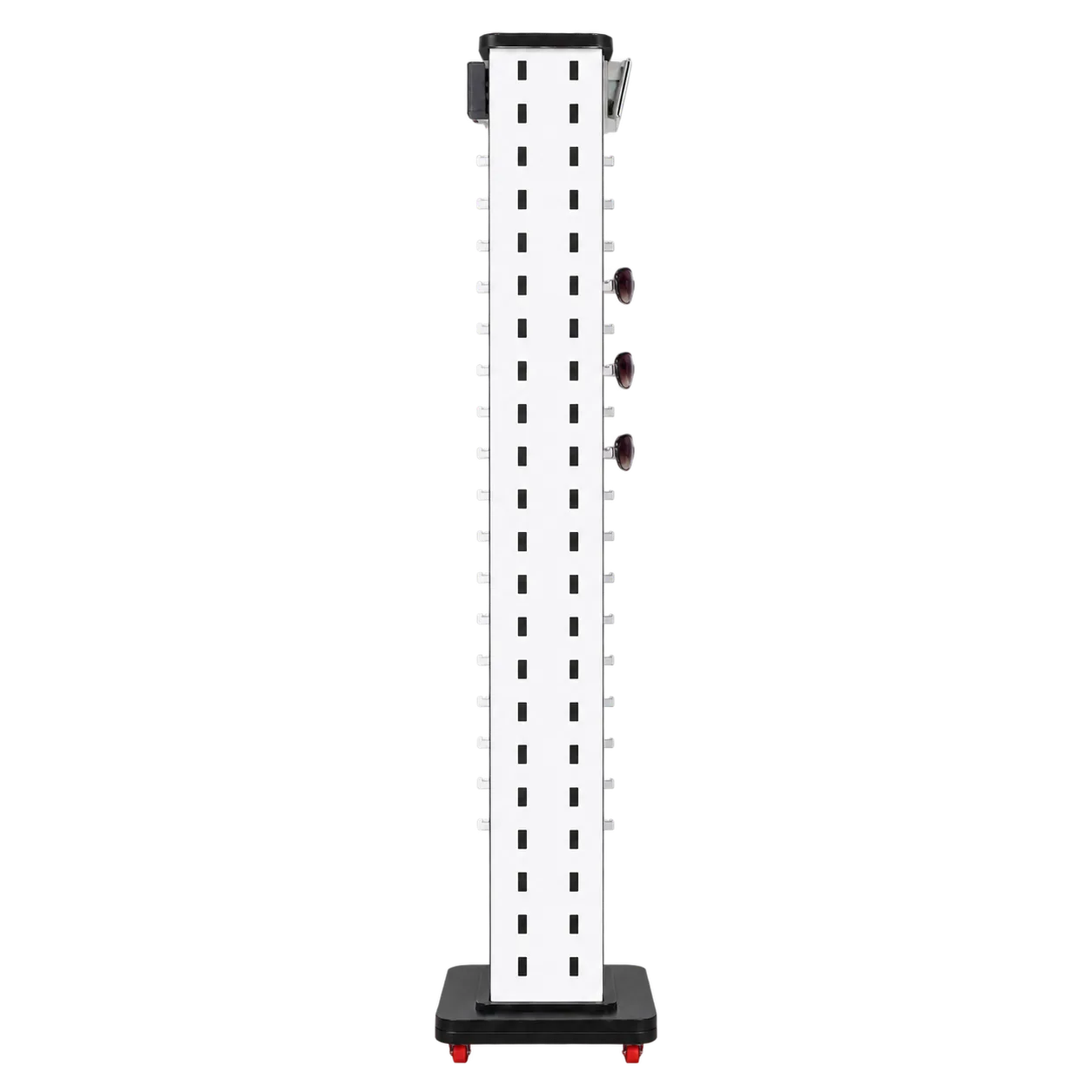
The 8016 is for shops that already have somewhere to keep stock. A sunglass counter in a department store has drawers behind it, and an optical practice has a dispensing desk and a back room. A fashion shop has a stockroom a few steps from the floor. In each case a cupboard under the display would duplicate what exists. A tower that uses its full height for eighty-four listed positions and a band of portraits serves them directly.
The honest test is distance. Count the steps from where the rack will stand to where spare frames are kept. If a colleague can fetch a replacement without losing sight of the floor, the absence costs nothing. If the walk means leaving customers alone, gaps will stay unfilled through busy periods and the rack will look picked over. Open holders add to the point: the British Retail Consortium's March 2025 survey put crime prevention spending by UK retailers at £1.8bn, and an unwatched floor is where losses can occur.
Where the fit is right, a few practical matters remain. The lowest levels are near the floor and the top panel is high, so the Equality Act 2010 calls for a mirror at low level and help on request. The portrait panels meet shoes, bags and cleaning equipment, and will scuff. Any printed picture of a person needs a licence for commercial display. Department stores and brand owners usually set rules for imagery in a visual merchandising guide. The conformity documentation those procurement routes require is issued by the manufacturer and shared by the enquiry team.