
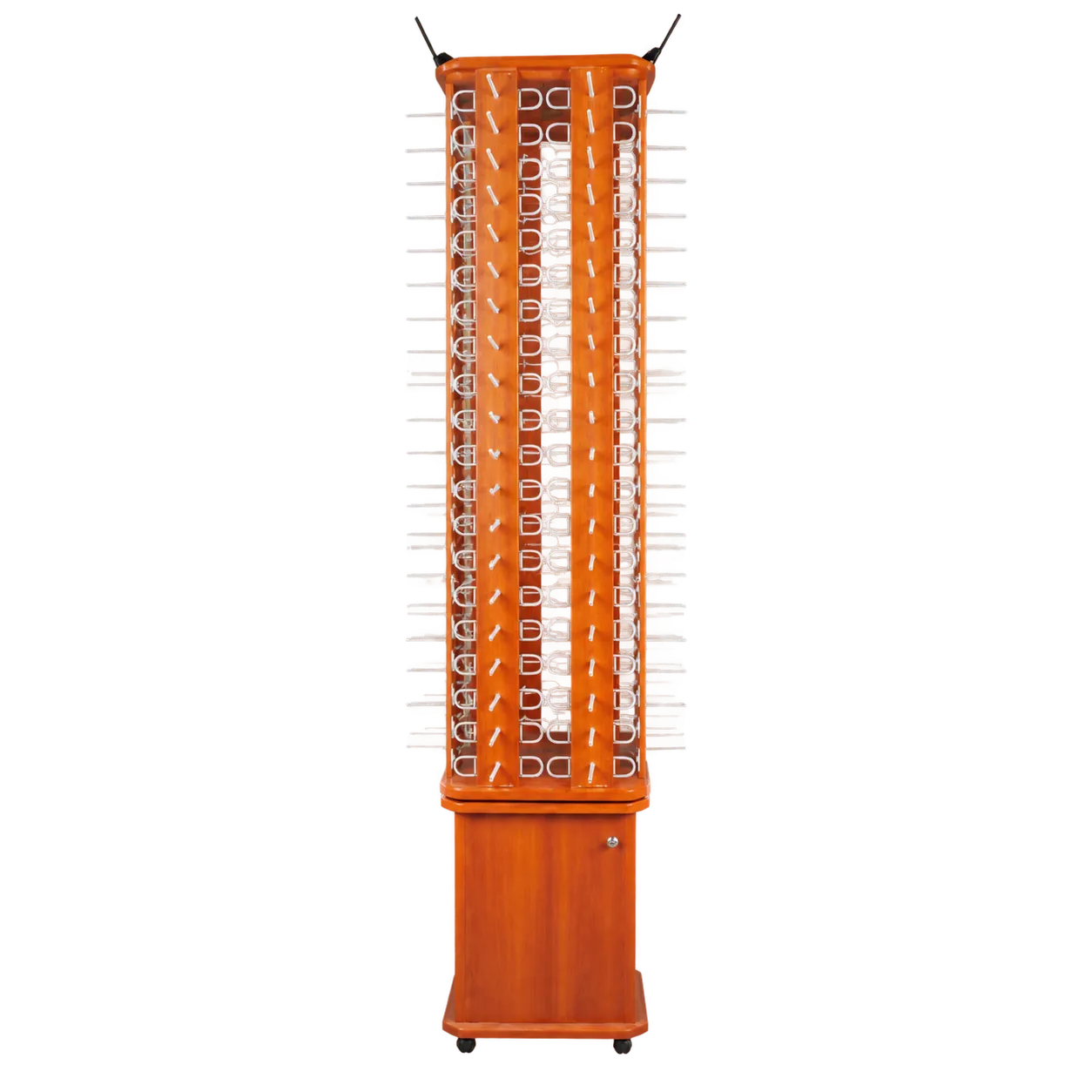
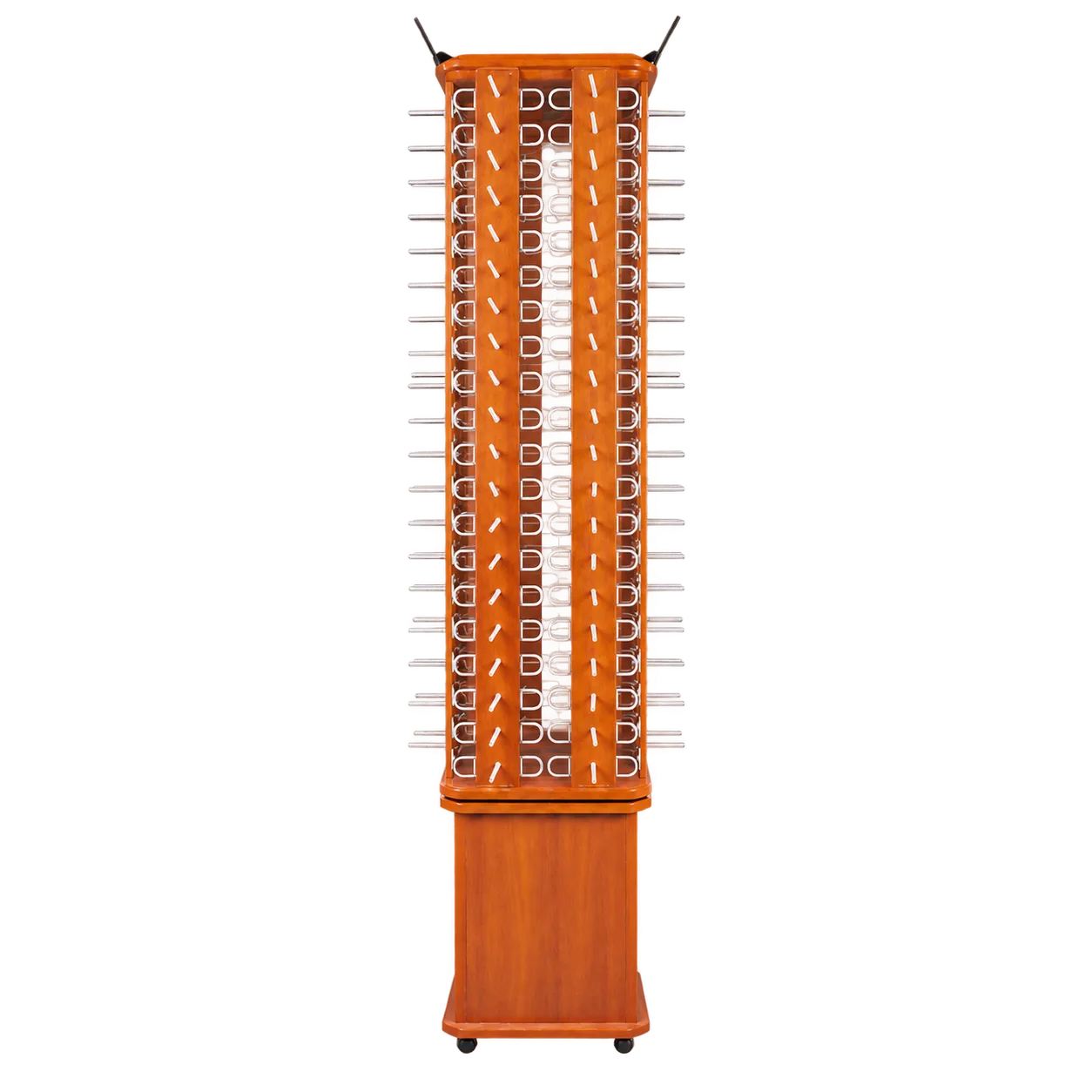
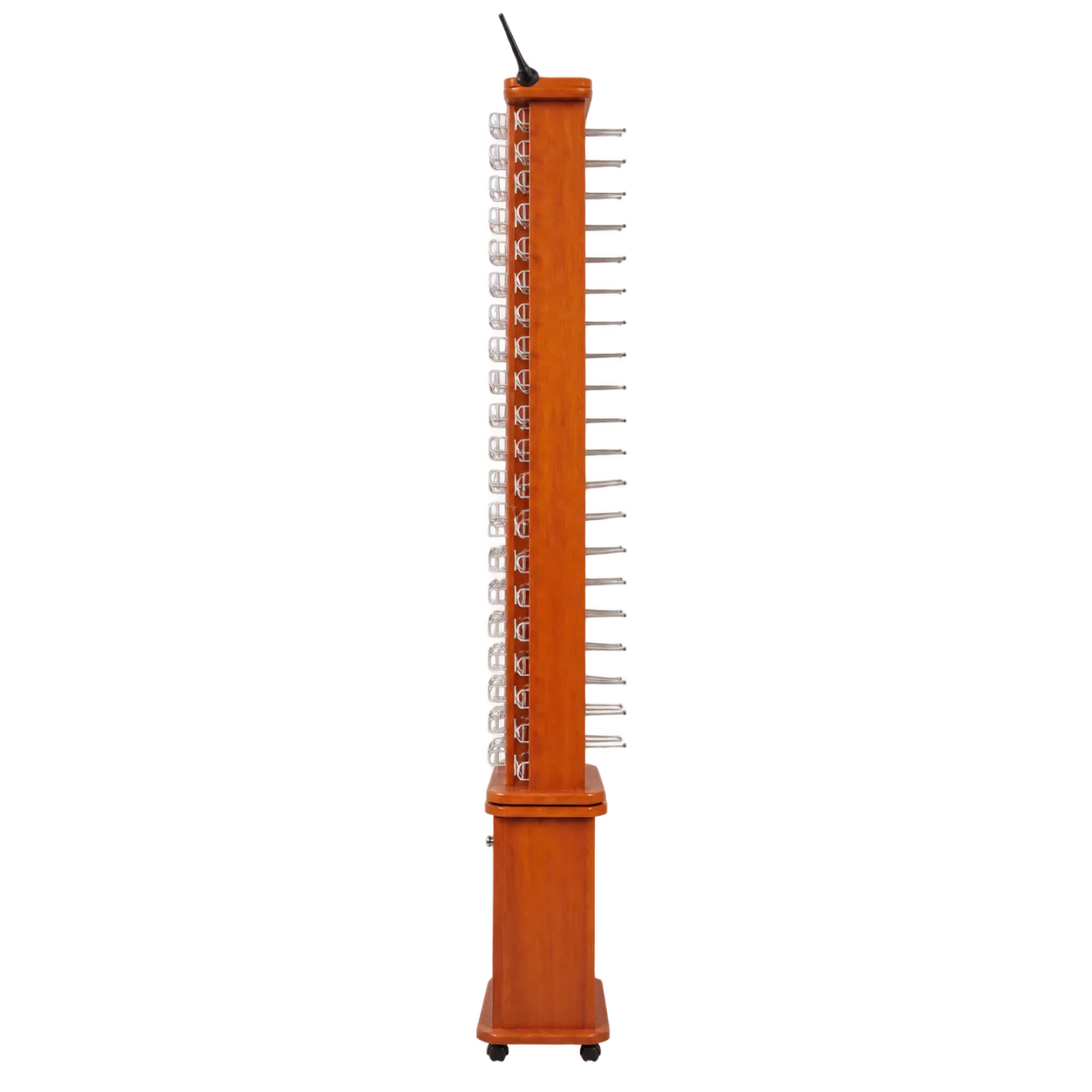
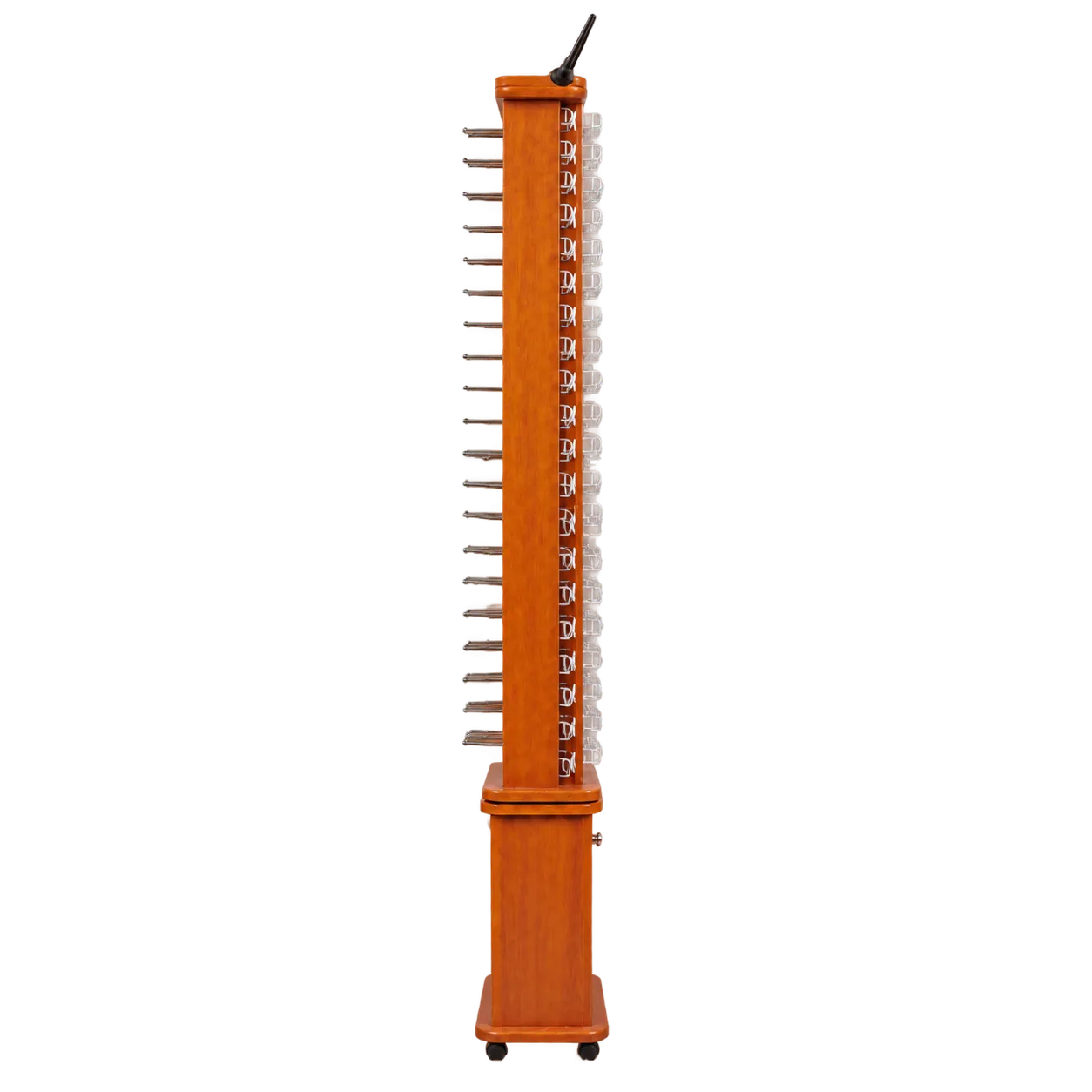
The 8012 fits retailers whose customers arrive in groups and differ in what they need. Family optical practices may see parents, children and grandparents in one visit. Supermarket opticians, pharmacies and holiday-resort shops sell sunglasses and readers to anyone who walks by. A range for all of them is large, and 152 listed positions hold it on one base. The question for the buyer is whether each customer can find her part of it without being led.
Autonomy is the experience at stake. Some people prefer to look before they speak to anyone, and an early approach from an assistant can feel like pressure. Eight labelled columns let them start alone. A parent can send a child to the low levels of the children's column while looking at her own. An older customer can go straight to readers. Mirrors on the cap finish the choice. Staff join when asked, which is the moment for advice on fit and lenses.
The same openness sets the limits. Labels must be large and plain enough for people who have taken their glasses off to try frames. High mirrors and upper levels do not serve children or seated customers, so the Equality Act 2010 calls for a low mirror and assistance on request. Open loops leave stock exposed, and the British Retail Consortium's March 2025 survey put theft losses at £2.2bn a year, so sightlines matter. Supermarket and pharmacy groups usually govern such fixtures through a category plan and store standards. The conformity documentation those procurement routes require is issued by the manufacturer and shared by the enquiry team.