
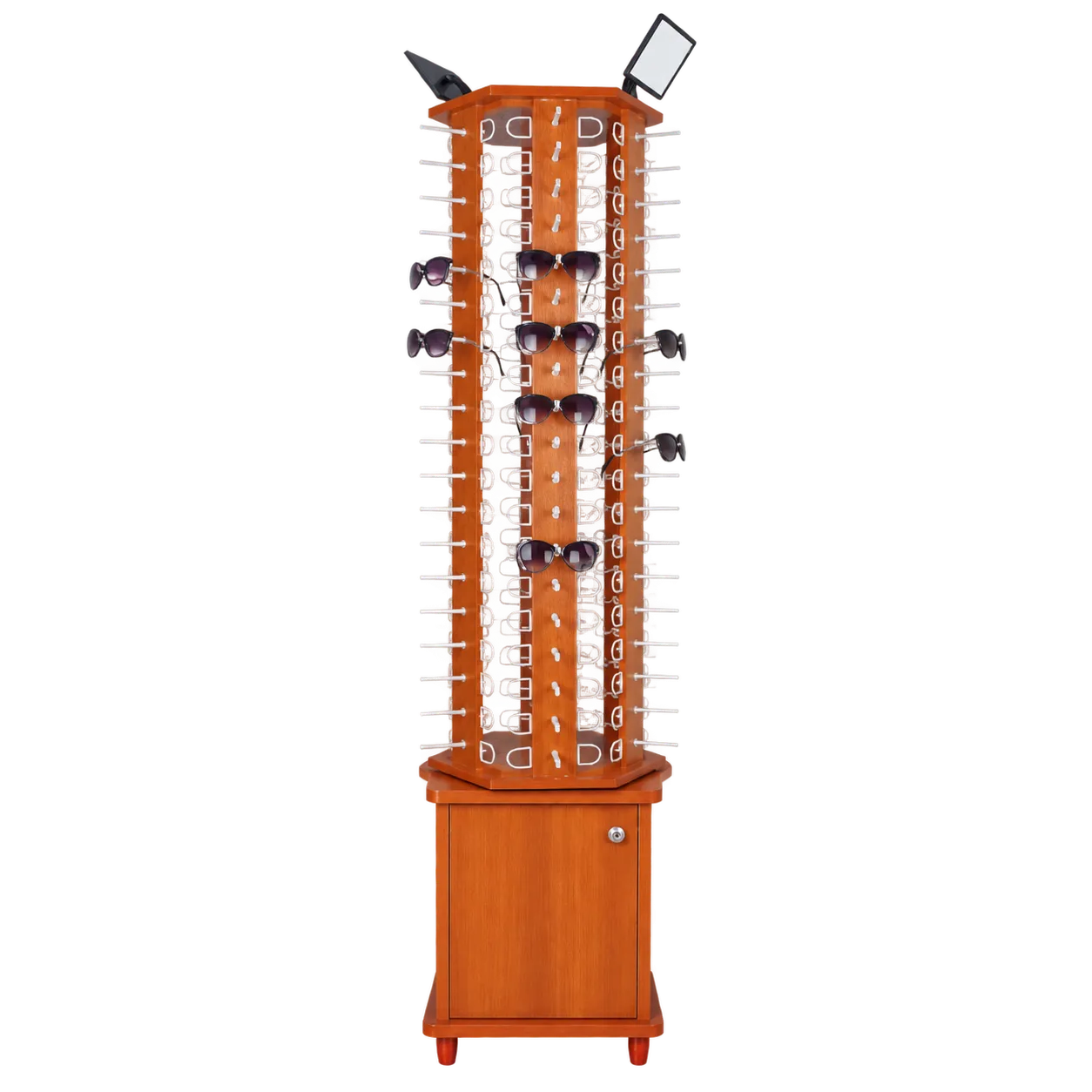
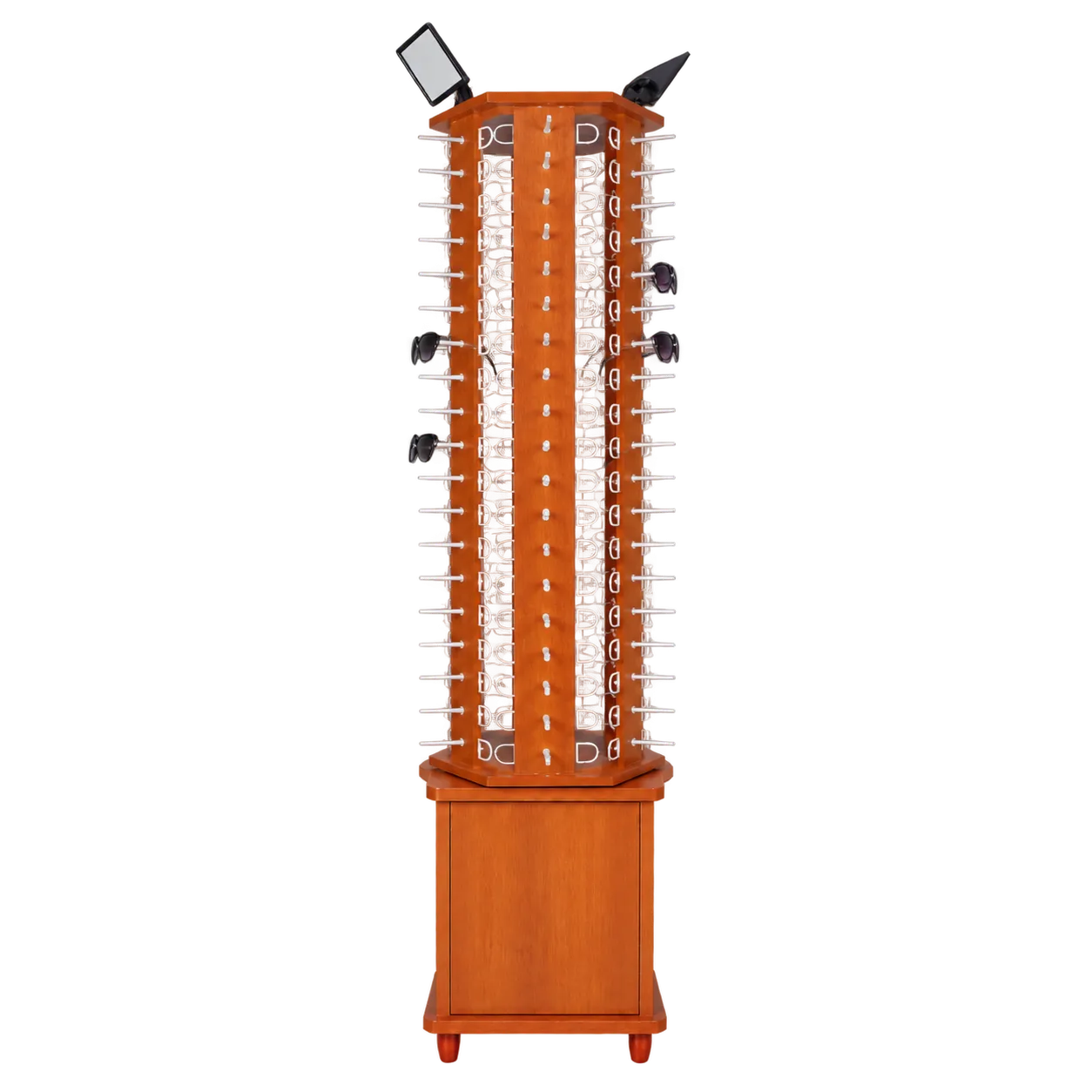
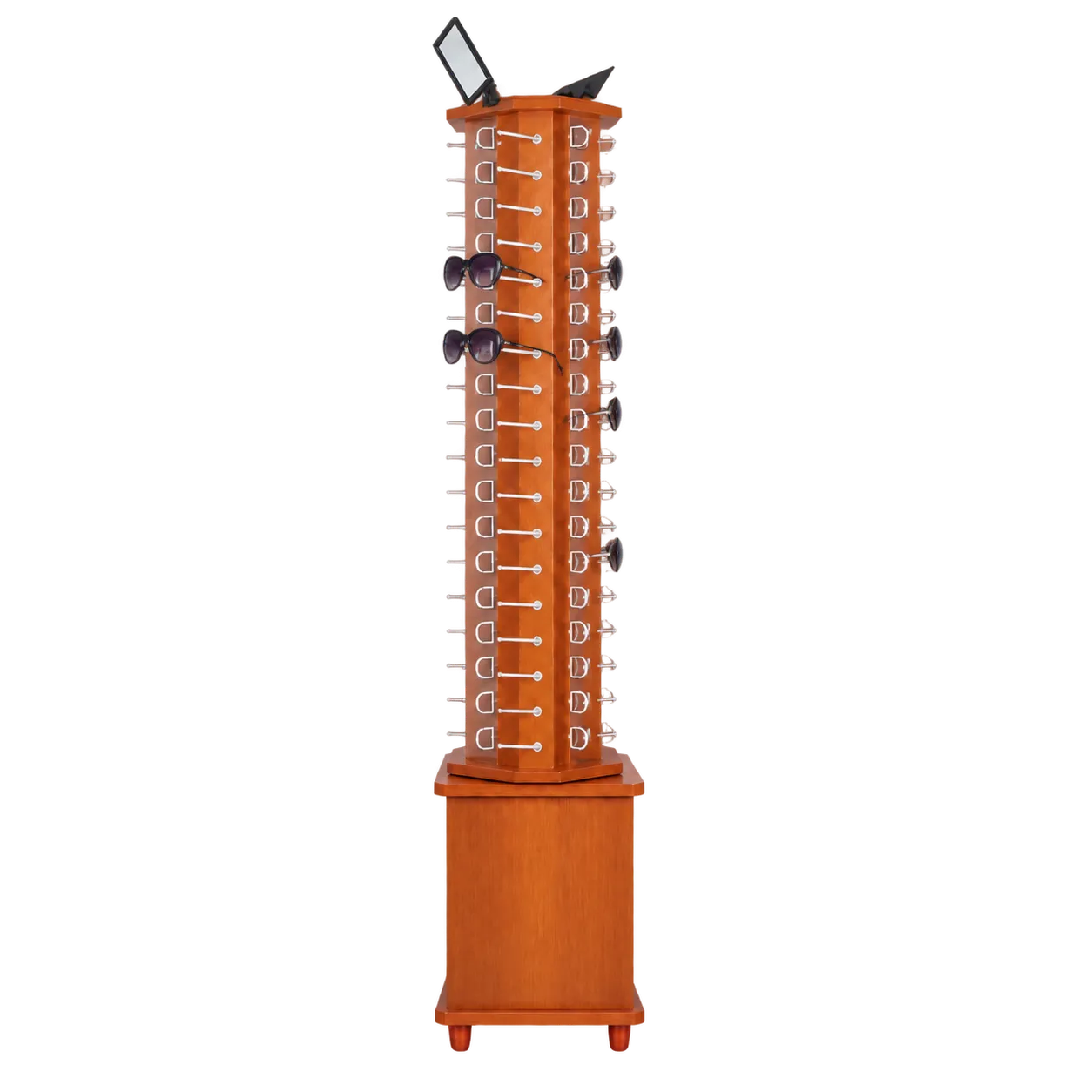
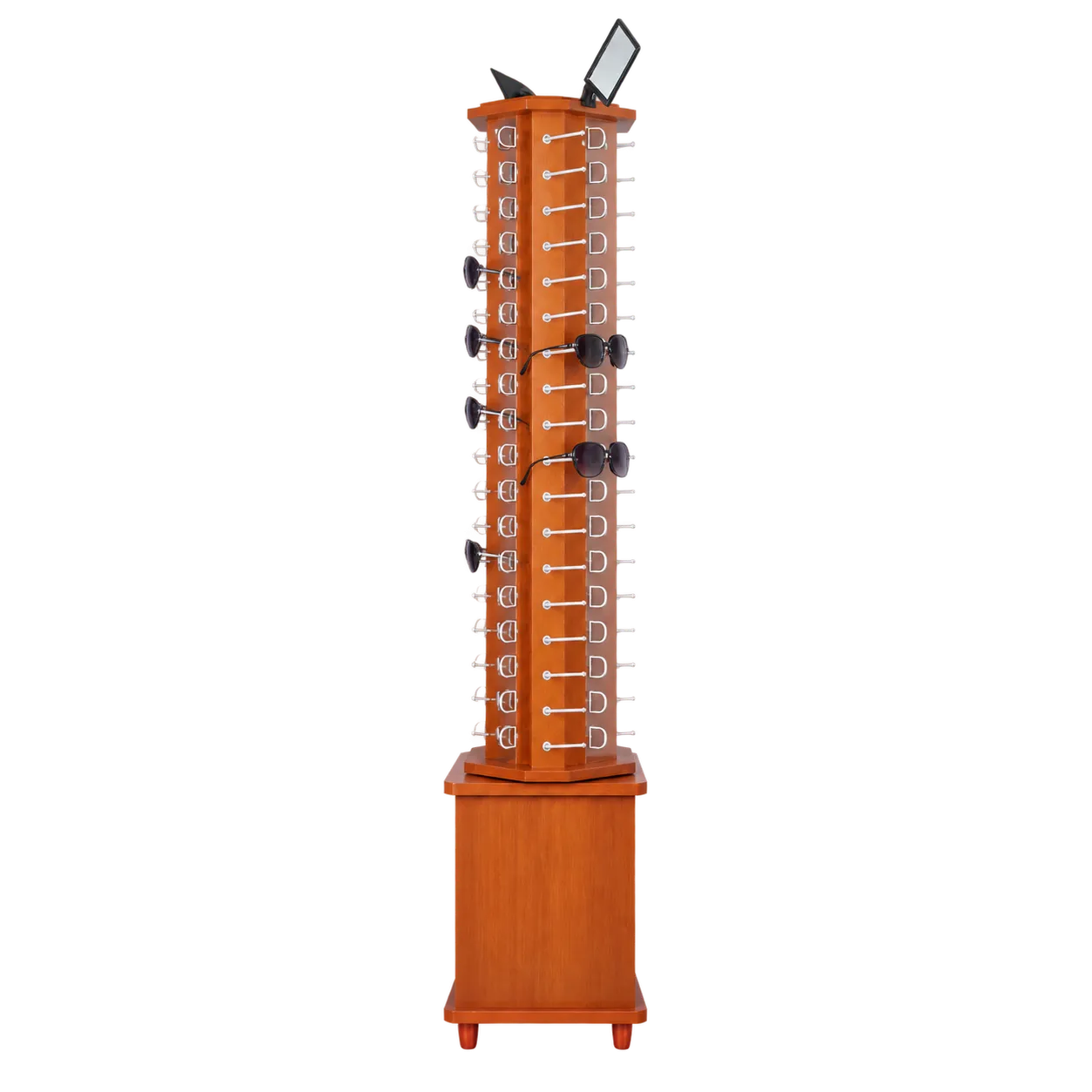
The 8011 is for retailers whose constraint is floor area. High-street opticians in small units, kiosks and concessions inside shopping centres, and travel shops paying premium rents all have to decide what each square metre shows. A rack listing 114 positions on a base of about 0.29 m² lets a sunglass or frame range grow upwards and round a centre, where a wall display would grow sideways.
The building sets the terms. Leases commonly restrict fixings and require the unit to be handed back as found, and a rack on castors involves neither. Shopfronts are mostly glass, so wall length is short. A hexagonal unit in open floor uses space the walls cannot offer. Weight needs checking on upper floors and raised floors, and the 187 cm height should clear soffits, sprinkler heads and security sensors. None of these figures is on the sheet except the dimensions, so the written configuration is part of the survey.
Density has costs to weigh. Six posts close together can make frames on neighbouring posts crowd each other, and a busy rack is harder for a customer in a wheelchair to approach, so BS 8300-2 clearances and the Equality Act 2010 apply. The holders are open, and the British Retail Consortium's March 2025 survey counted around 20 million customer theft incidents a year. Keep sightlines from the desk. Shopping centre landlords and travel retail operators usually assess such units against a tenant design guide. The conformity documentation those procurement routes require is issued by the manufacturer and shared by the enquiry team.