
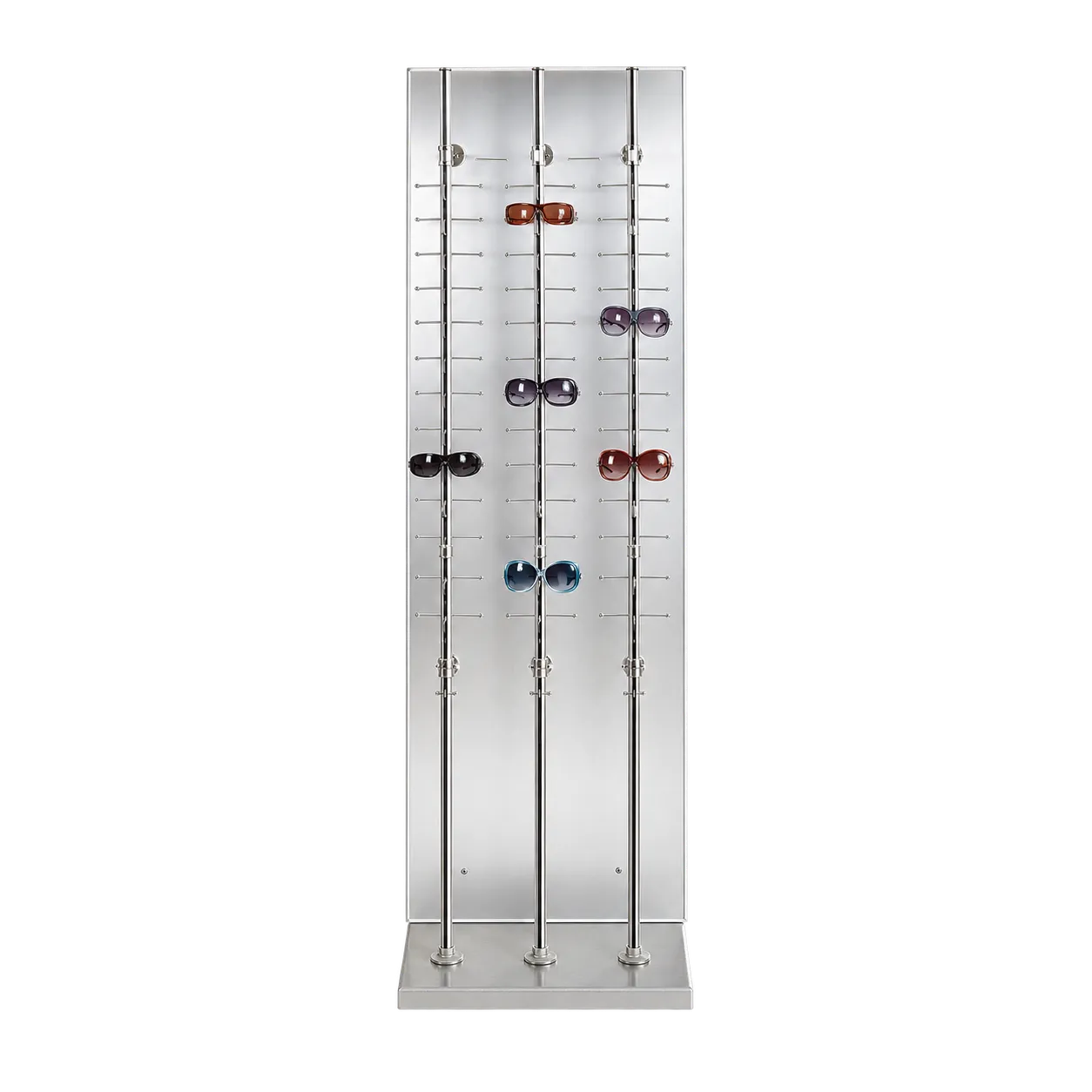
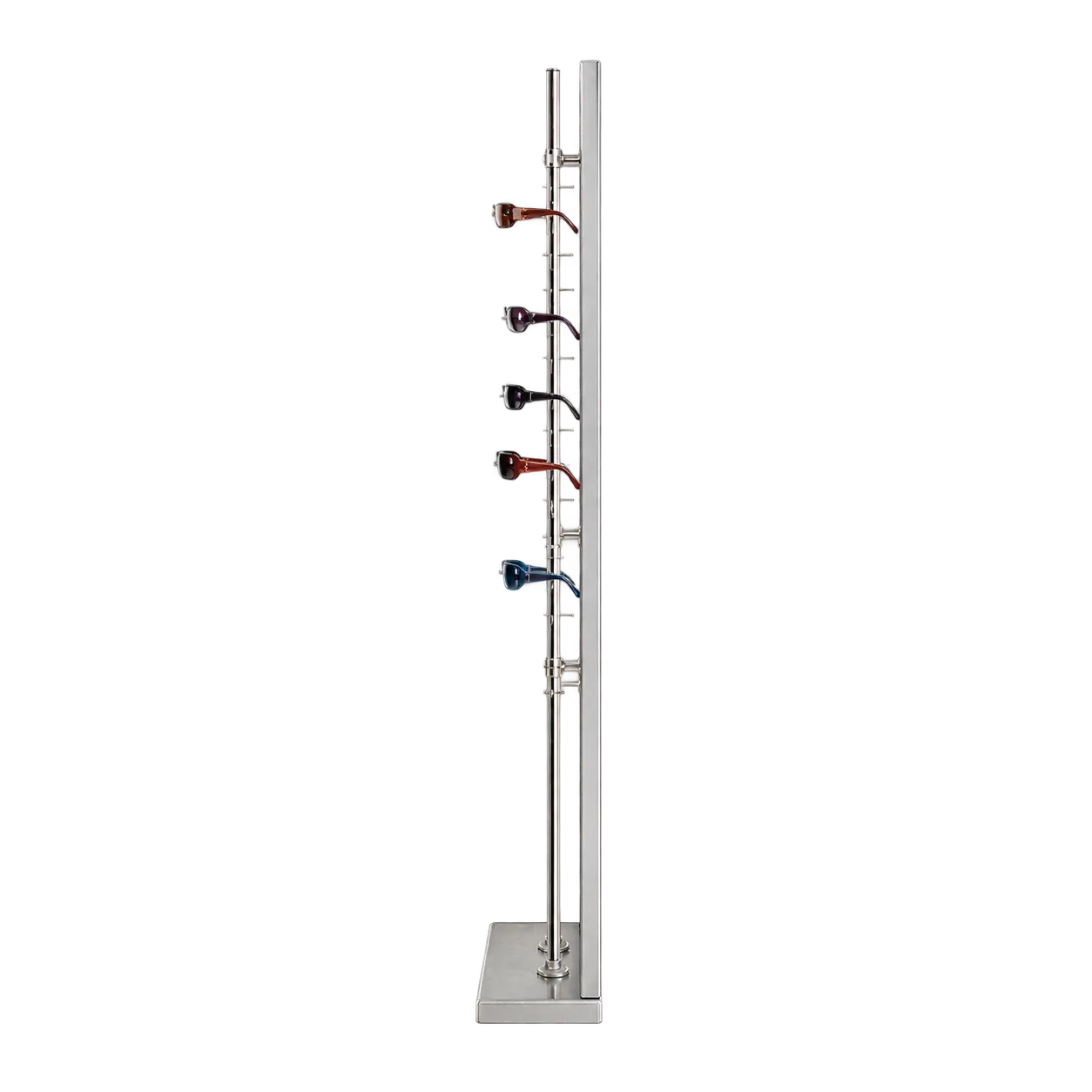
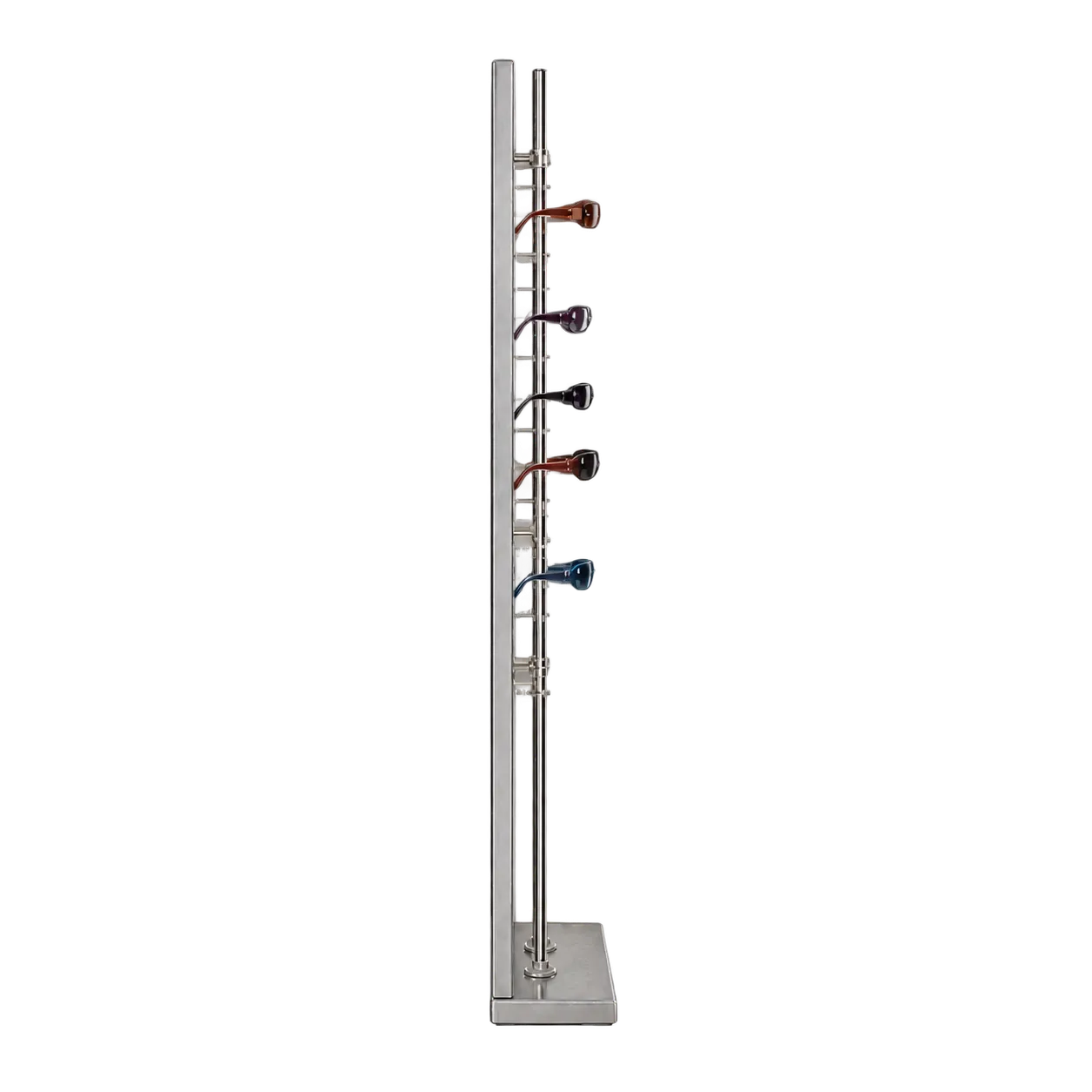
The 8006 fits premises where depth is scarce and a wall is available but cannot carry fixings. Small optical practices often have a corridor between reception and the consulting room, or a short return beside the door. Pharmacies, opticians inside larger stores and seasonal shops have partitions and counter ends doing nothing. A rack listed at 16 cm deep puts forty-eight frames into such a space and leaves the walking route open.
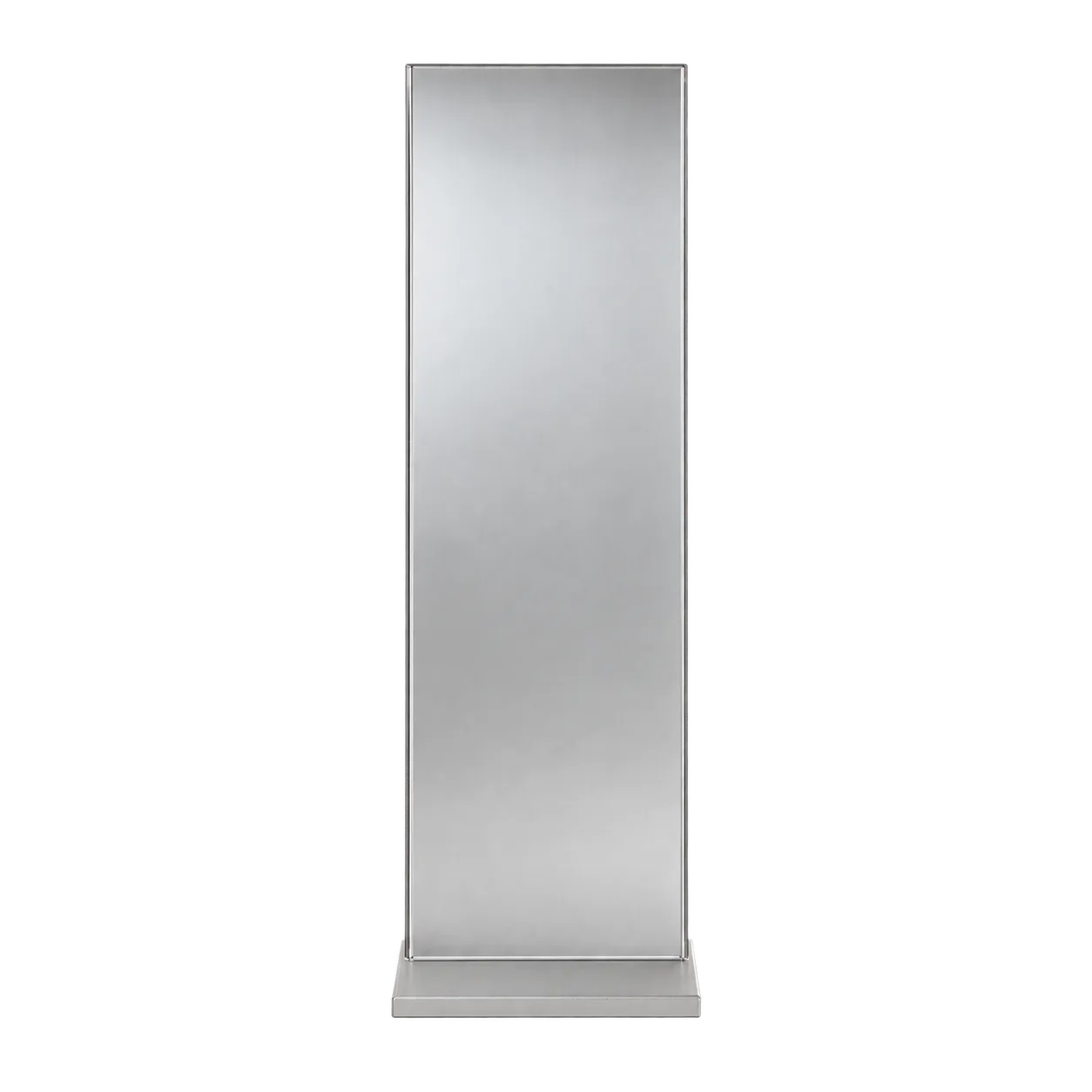
Its omissions decide where it works. With no mirror pictured, it belongs near one, since a customer who cannot check a frame will carry it elsewhere to look. Lacking castors, it suits a fixed position and not a floor that is rearranged each season. Its single face needs something behind it. A buyer who wants a mobile, all-round unit with mirrors is looking for a different product.
Narrow spaces carry duties of their own. BS 8300-2 gives the clear widths that corridors need for wheelchair users, and the Equality Act 2010 expects reasonable adjustments. Measure what remains once 16 cm is taken from the route. Under the Health and Safety at Work etc. Act 1974 the operator should consider whether a tall, shallow unit could be knocked over where people squeeze by, and whether restraint is needed. The panel's upper rows will be beyond seated reach, so spread styles down each rod. Landlords and host stores normally approve fixtures against a fit-out guide. The conformity documentation those procurement routes require is issued by the manufacturer and shared by the enquiry team.