
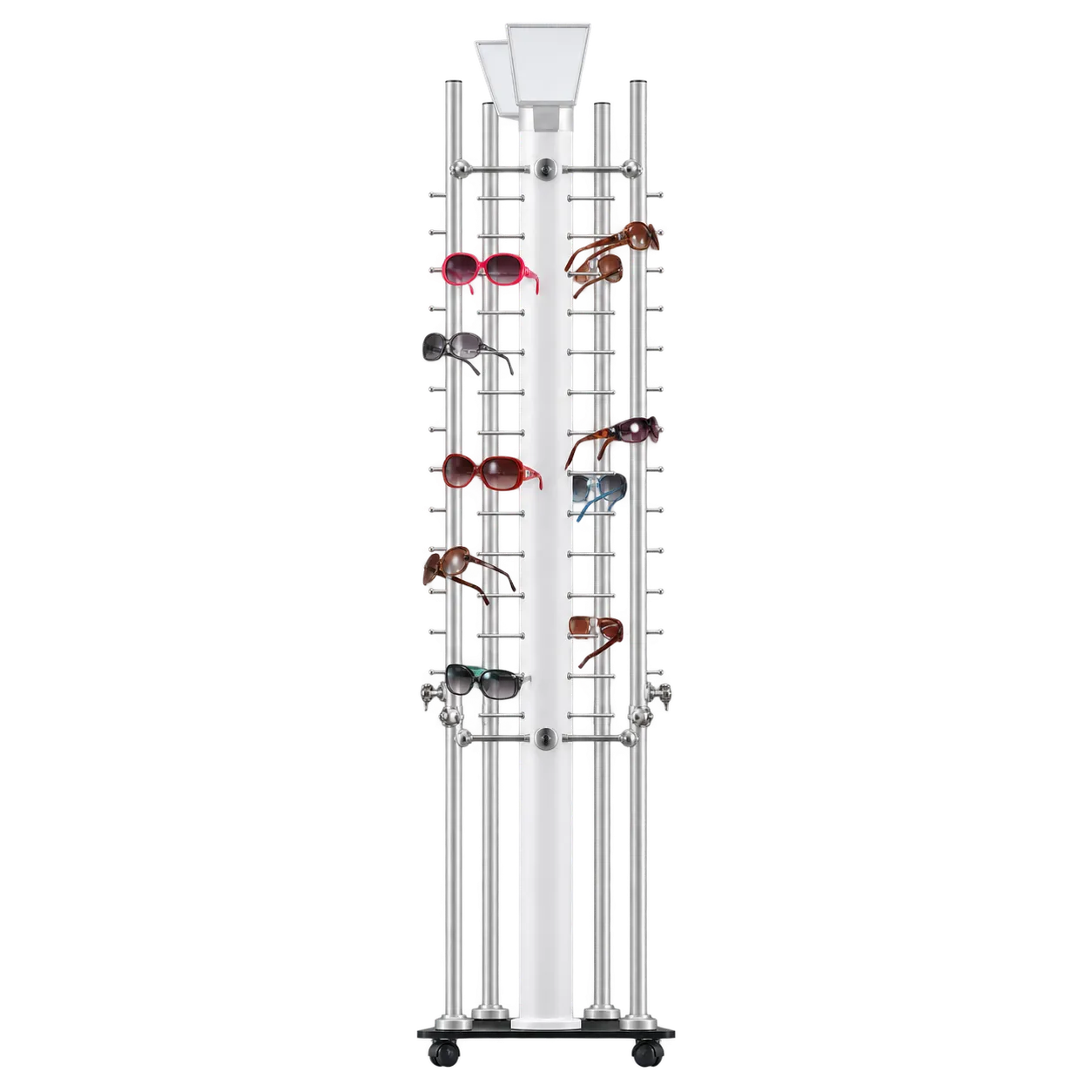
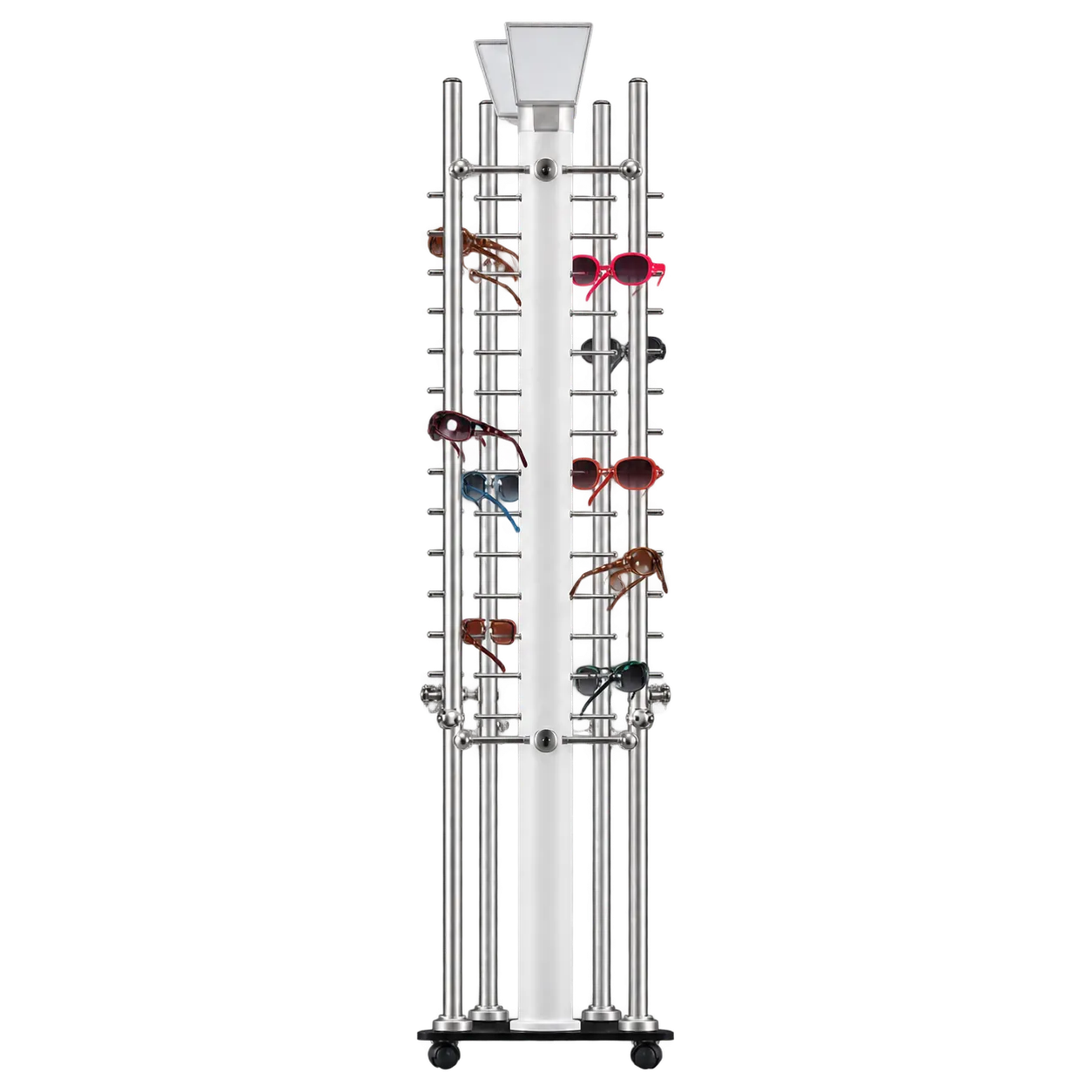
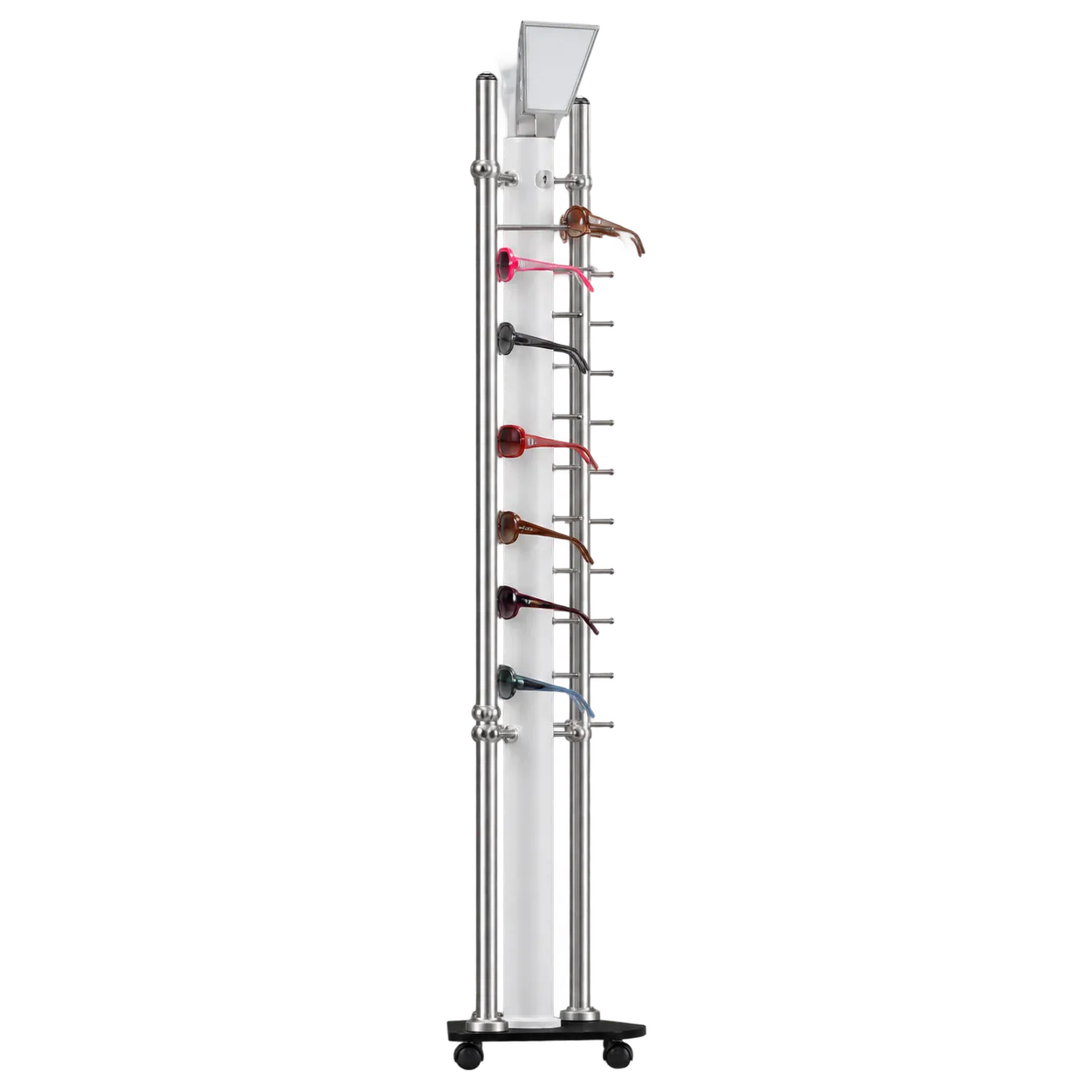
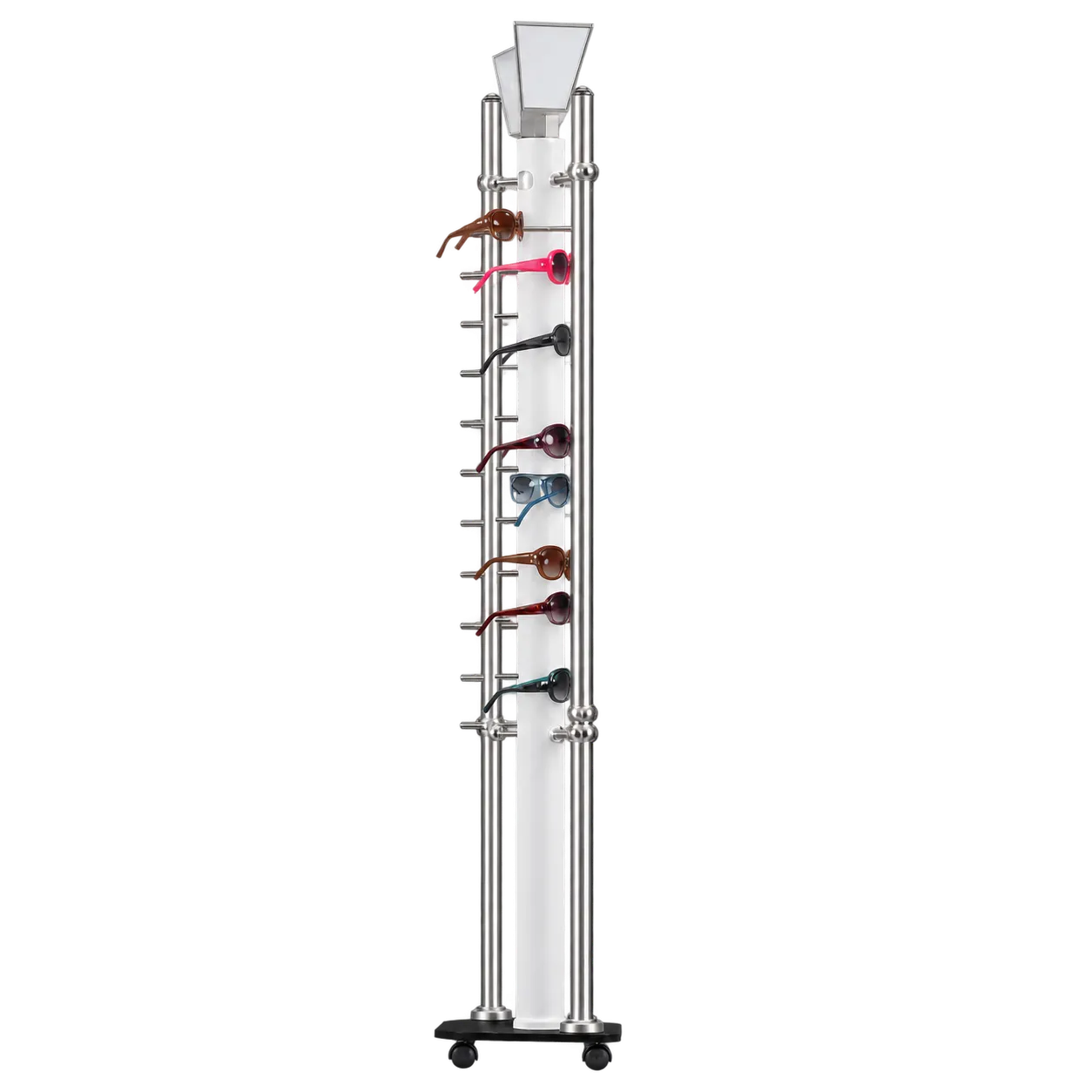
The 8002 belongs where customers choose eyewear by trying it and staff are not always free to help. Sunglass sections in optical practices, pharmacy and department store concessions, travel retail and seasonal pop-ups all work this way. The customer wants to handle several pairs and judge each one on her own face. With sixty-four listed positions and what appear to be mirrors above them, the rack keeps that whole exchange in one spot on the floor.
Self-service has a commercial case and a security cost. Numerator's 2024 survey of more than 5,000 US shoppers found that 62% usually wait for an assistant when goods are locked up, and 27% switch retailer or give up. The British Retail Consortium's survey published in March 2025 put the cost of customer theft to UK retailers at £2.2bn in a year. Lock housings are visible on this rack, so a retailer can decide by time of day or by stock value whether the rods stay keyed.
The experience has to work for every customer. Mirrors at the top of a 175 cm unit serve a standing adult and may not serve a child, a shorter person or a wheelchair user. The Equality Act 2010 expects reasonable adjustments, and a second mirror at low level is a simple one. Good, even lighting near the rack helps customers judge lens tint and frame colour. Staff should be able to see the rack from the till or the dispensing desk. Store groups and landlords commonly set fixture rules in a concession manual or fit-out guide. The conformity documentation those procurement routes require is issued by the manufacturer and shared by the enquiry team.