
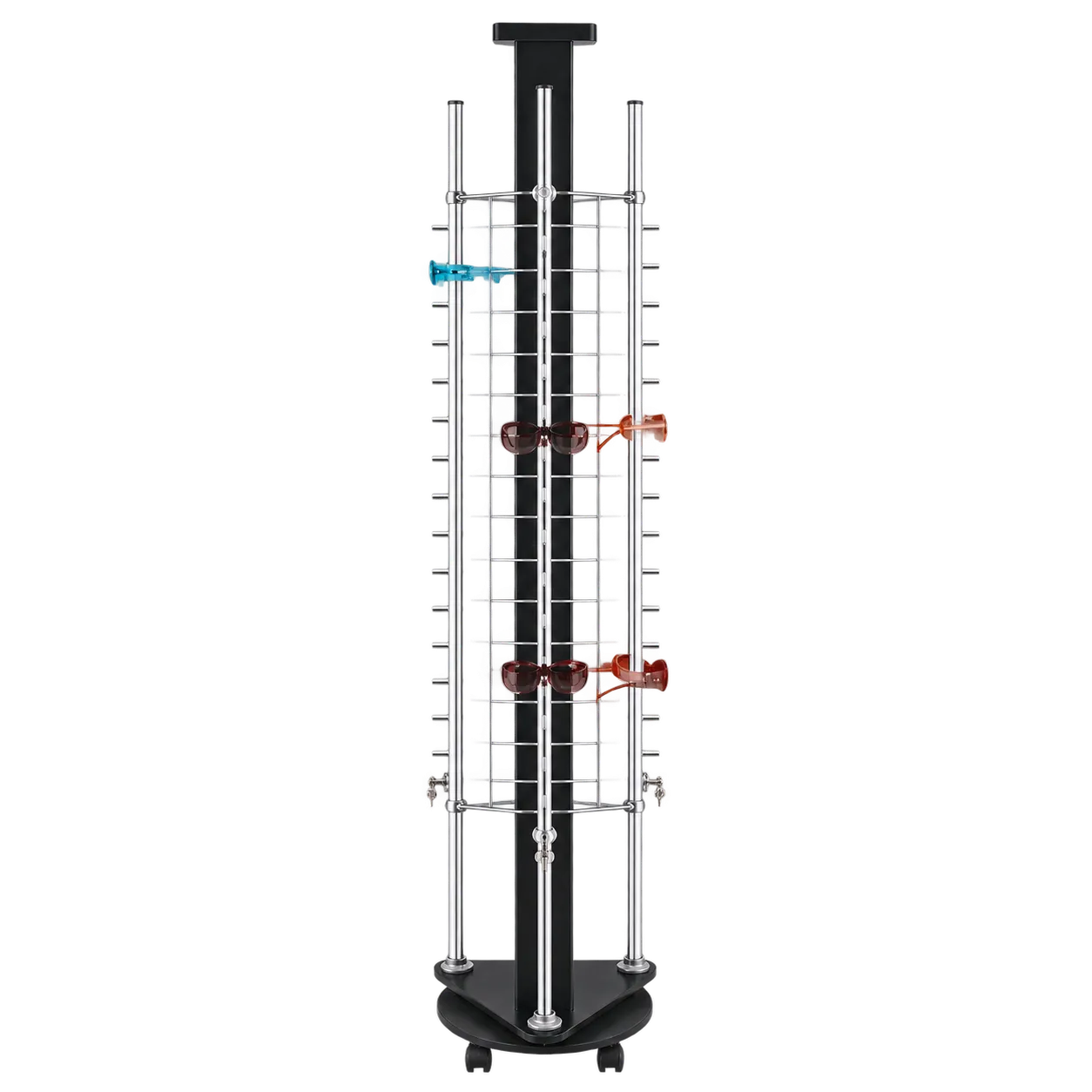
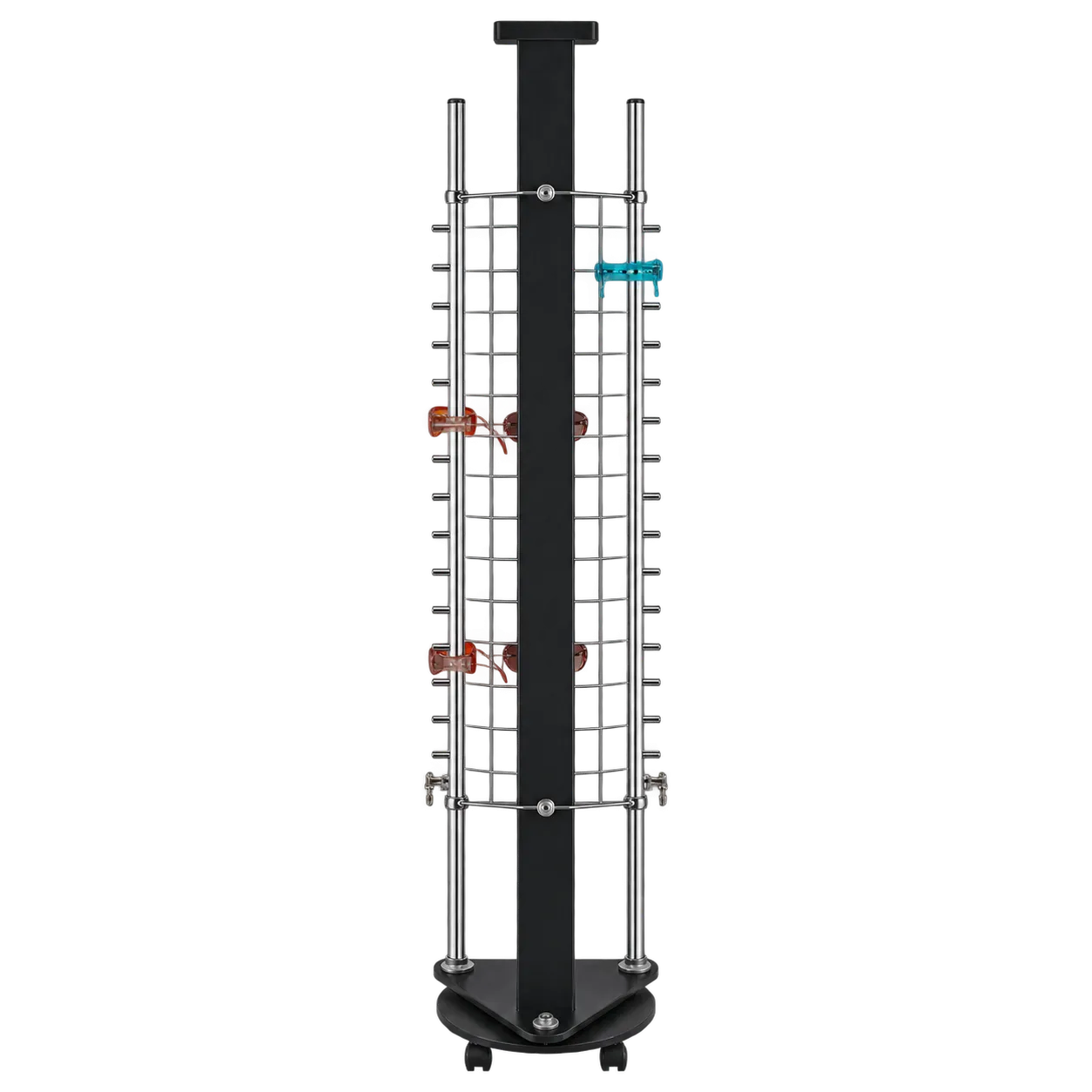
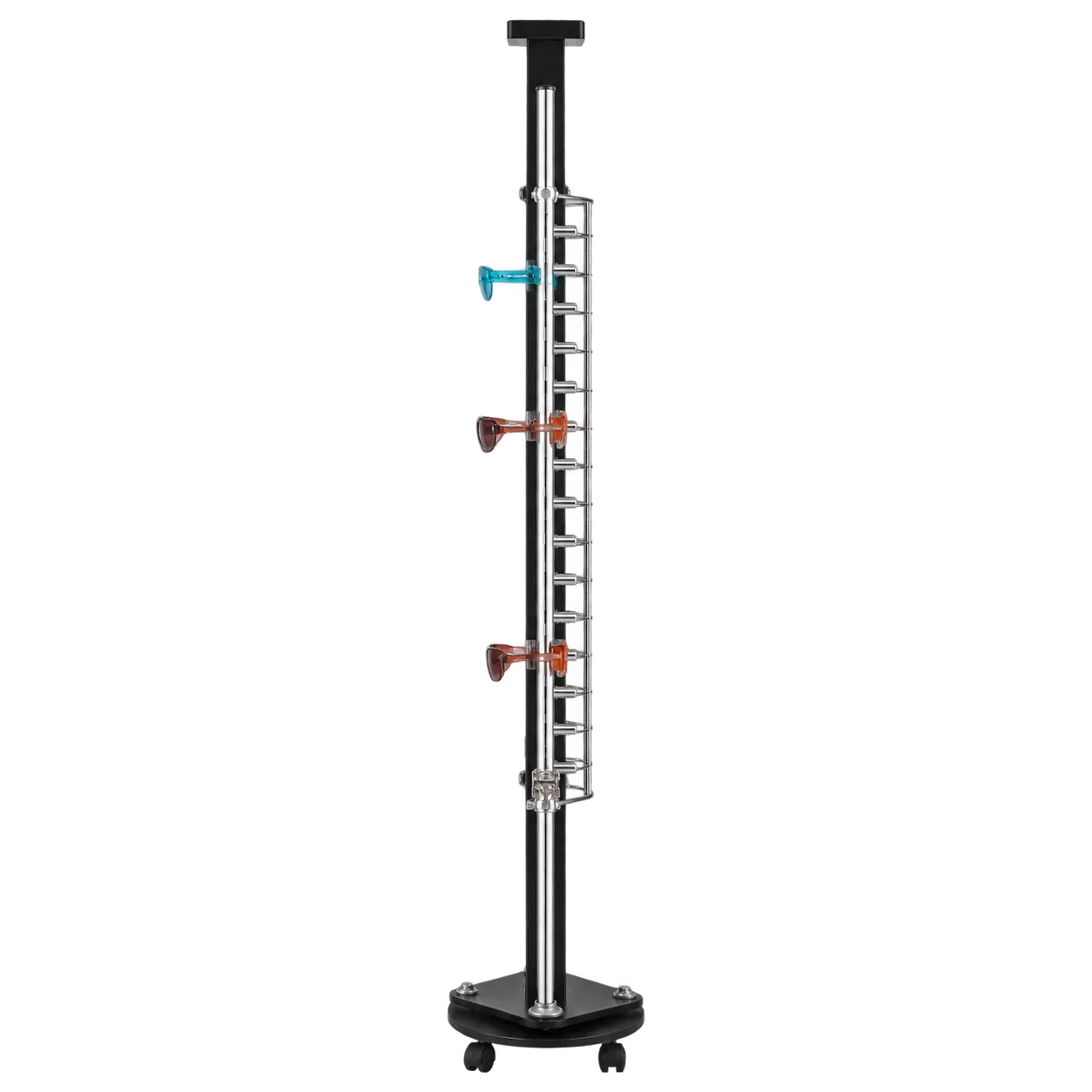
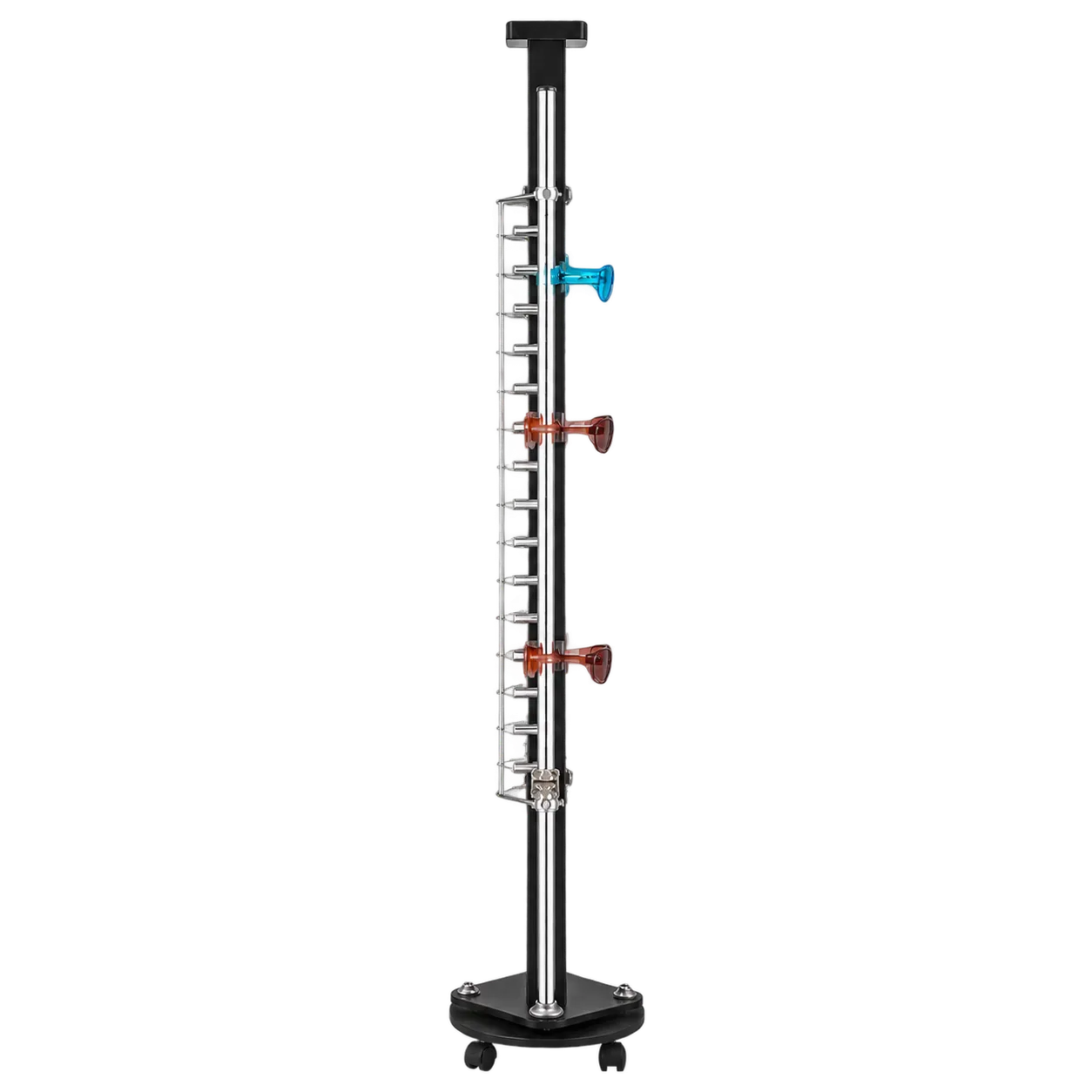
The 8001 answers a problem of premises. Many optical practices and sunglass retailers have run out of usable wall, or never had much. Shopfronts are glazed, older buildings have walls nobody may drill, and tenants in shopping centres and concessions often work under a lease that limits fixings. A rack that stands on its own base turns open floor into display space for forty-eight frames, as the sheet lists it, and takes a footprint 42 cm square.
Temporary selling is the second use. Trade exhibitions, pop-up units, domiciliary and workplace eyecare events and seasonal sunglass promotions all need stock shown for a few days and then taken away. A rack on castors can be wheeled into place, and the lock housings seen in the photograph suggest stock can stay on it under key. The British Retail Consortium's survey published in March 2025 counted around 20 million incidents of customer theft in a year, so a unit standing in open floor deserves that thought.
Open floor brings duties that walls do not. A unit 1.95 m tall in a walkway must leave routes clear, and the Equality Act 2010 expects reasonable adjustments for disabled customers, with BS 8300-2 as the working guide on widths. The upper levels will be out of reach for a seated customer, so put a full spread of styles lower down. Staff should check the floor is level, the castors are sound and the rack is clear of fire exits. Shopping centres and exhibition organisers normally set fixture rules in a fit-out guide or exhibitor manual. The conformity documentation those procurement routes require is issued by the manufacturer and shared by the enquiry team.