
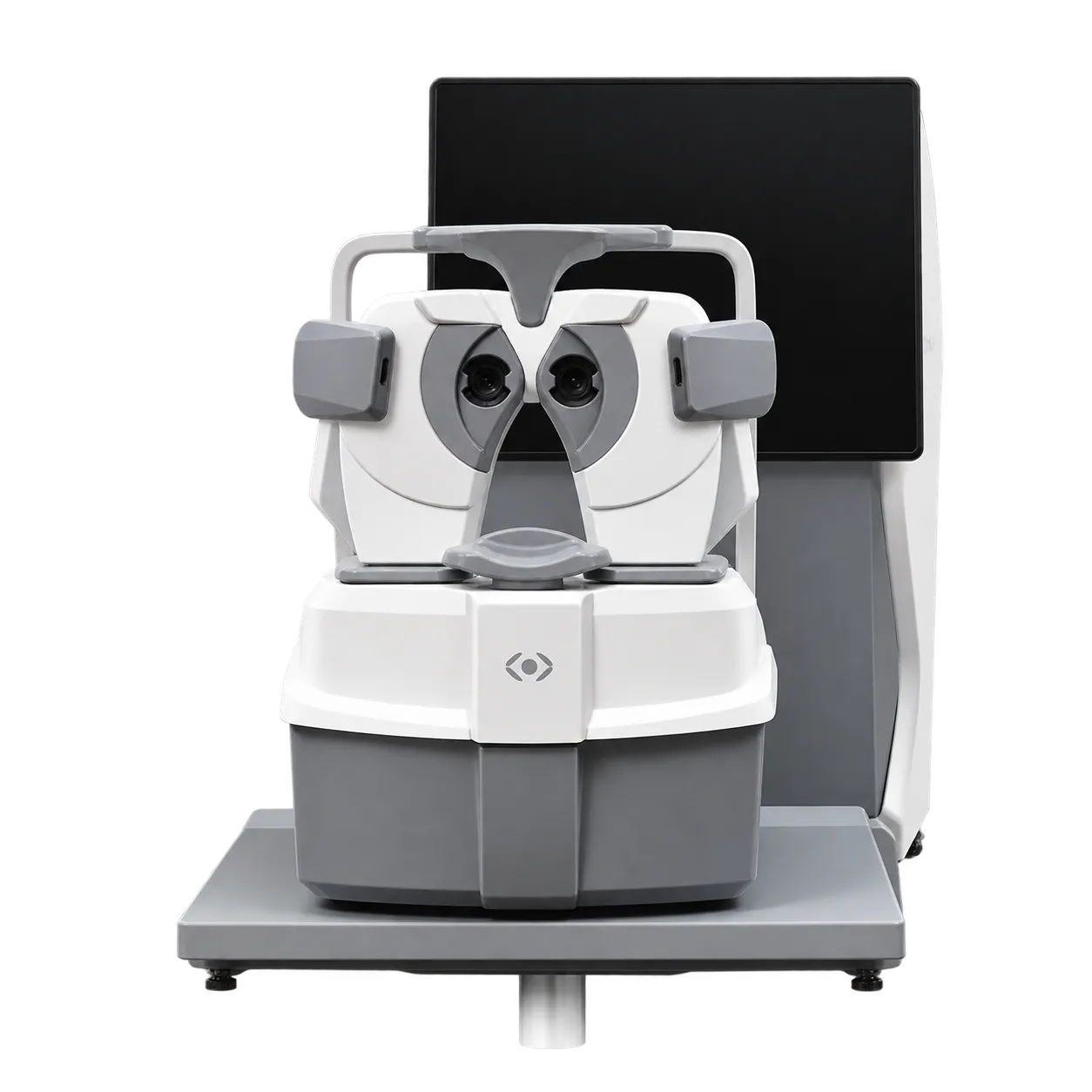
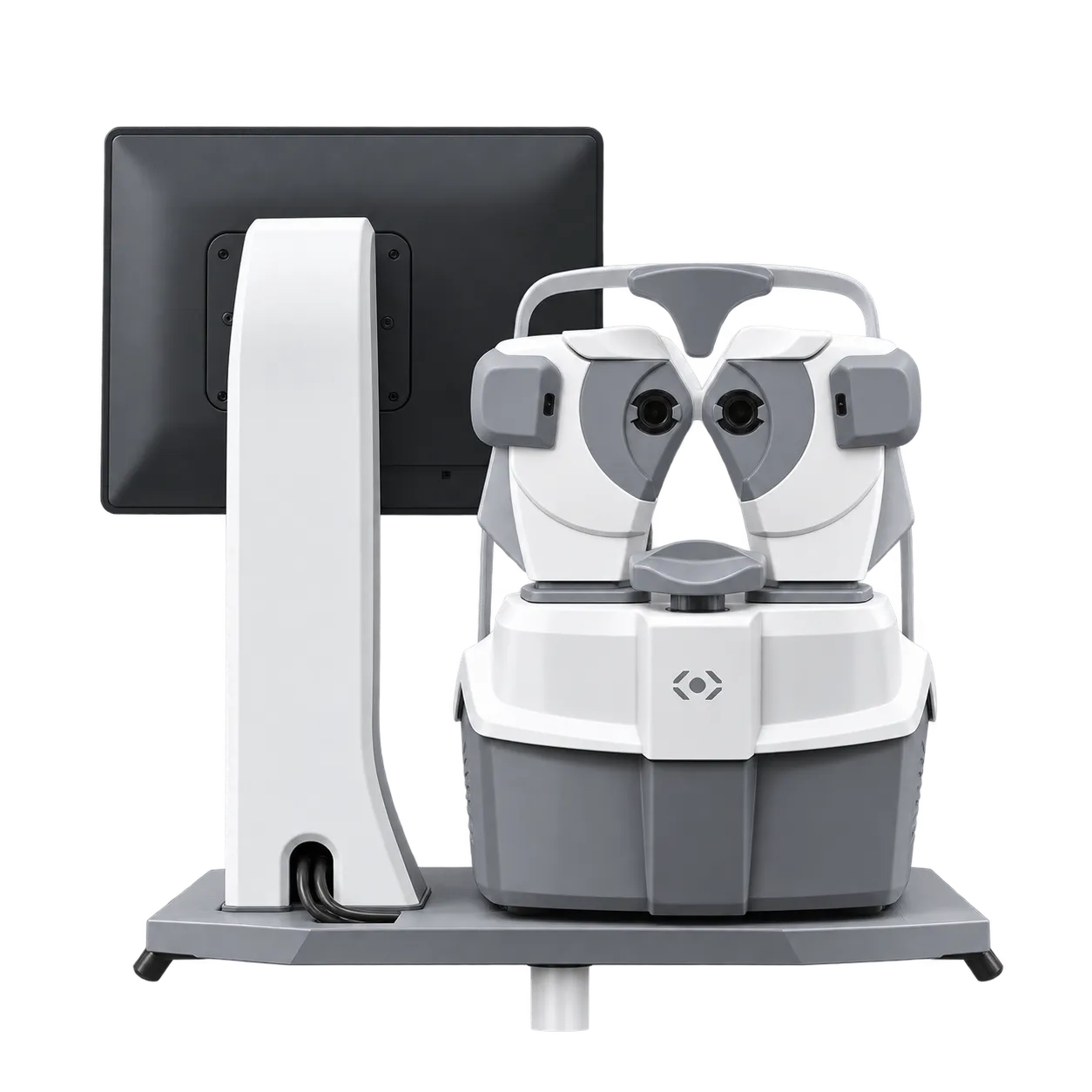
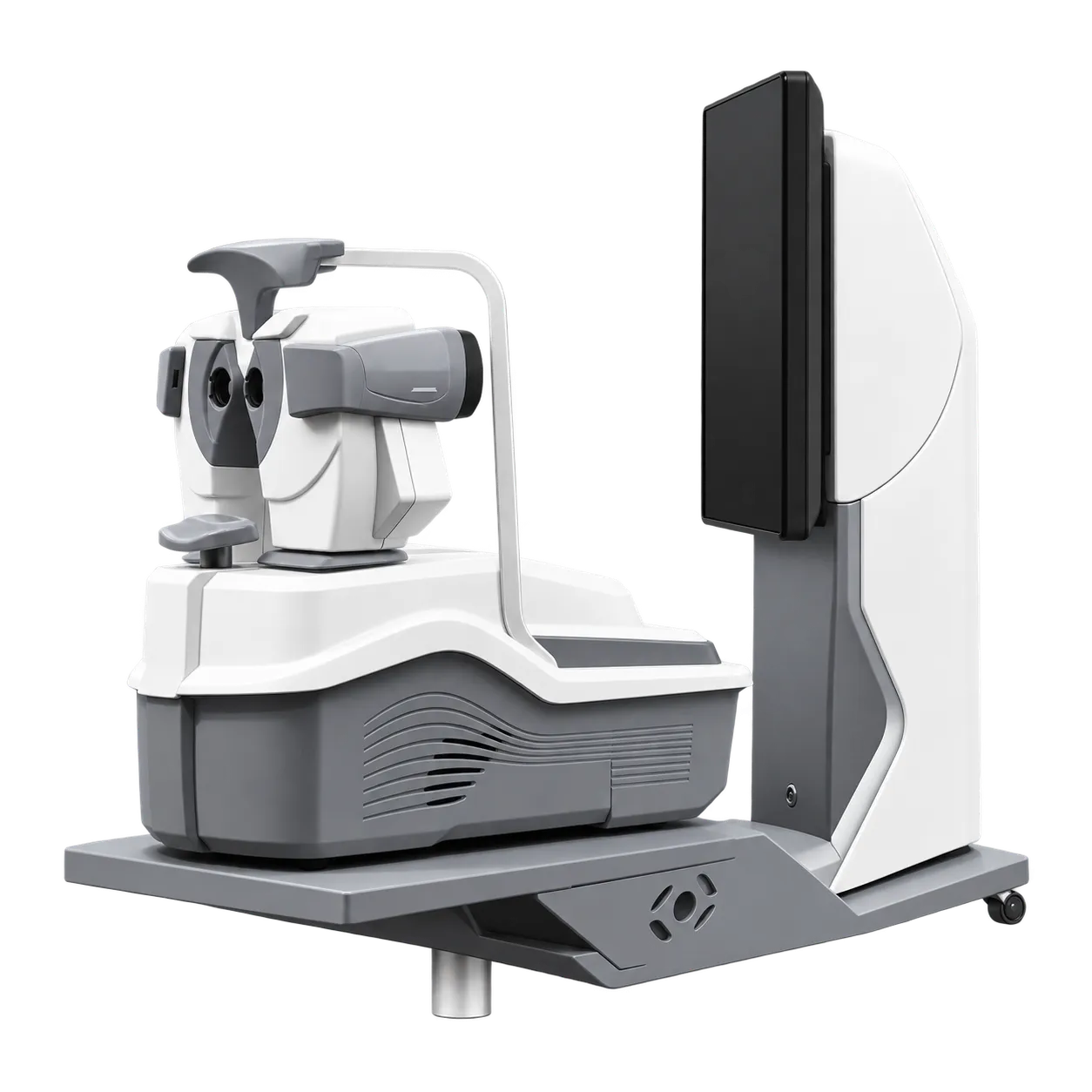
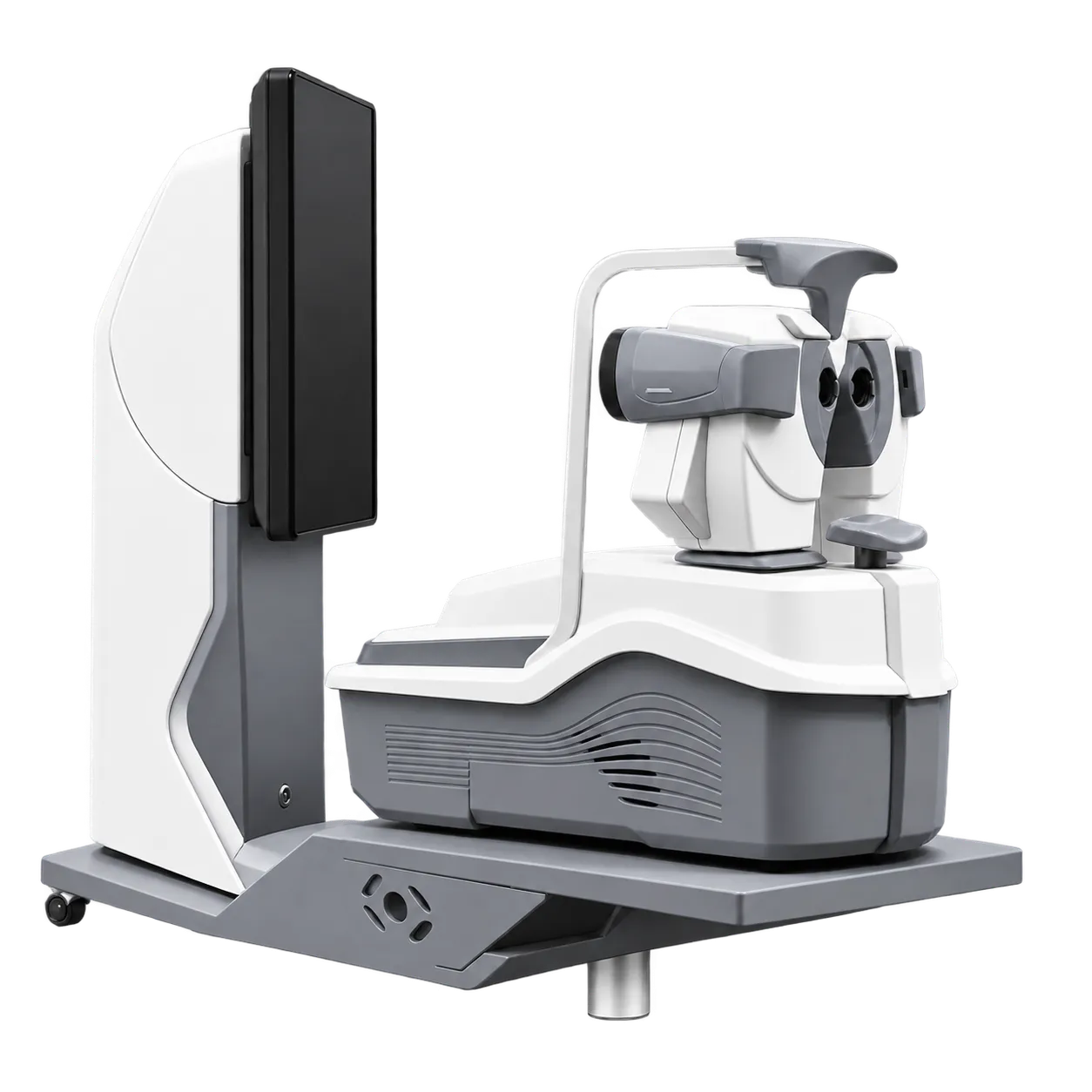
Optometry practices with a pre-test room are the main setting. A technician seats the patient at the Eye Refract, and the tablet script takes over. The wavefront aberrometer measures both eyes together, the digital phoropter refines the result with automatic lens changes, and the system delivers a recommended final prescription in about four minutes. The optometrist then reviews and approves it, keeping clinical judgement with the doctor while staff handle the measurement work.
That division of labour suits practices that want more examinations from the same clinical hours. Luneau staff train new users, and the scripted sequence ensures the routine follows the same order for every patient, regardless of who operates it. Staff can also operate the system remotely, with data collection delegated to staff.
Contact lens work draws on the built-in keratometry. Readings from 6 to 9 mm, or 37.5 to 56 D, support soft contact lens fitting without a separate keratometer, so spectacle and contact lens patients pass through the same lane. The integrated lens analyser measures the spectacles each patient arrives in, placing the existing prescription alongside the new one at the point of decision.
Ophthalmology clinics and optical practices with a broad range of prescriptions gain from the measurement span. Sphere runs from −30.00 to +27.25 D, cylinder to ±8.00 D and prism up to 20 Δ. Cases that need closer subjective refinement still go to a hand-operated phoropter. The Eye Refract serves as the lane for routine refractions. With an 8 sq ft footprint and a 100 to 240 V supply, it fits in rooms with limited space.