
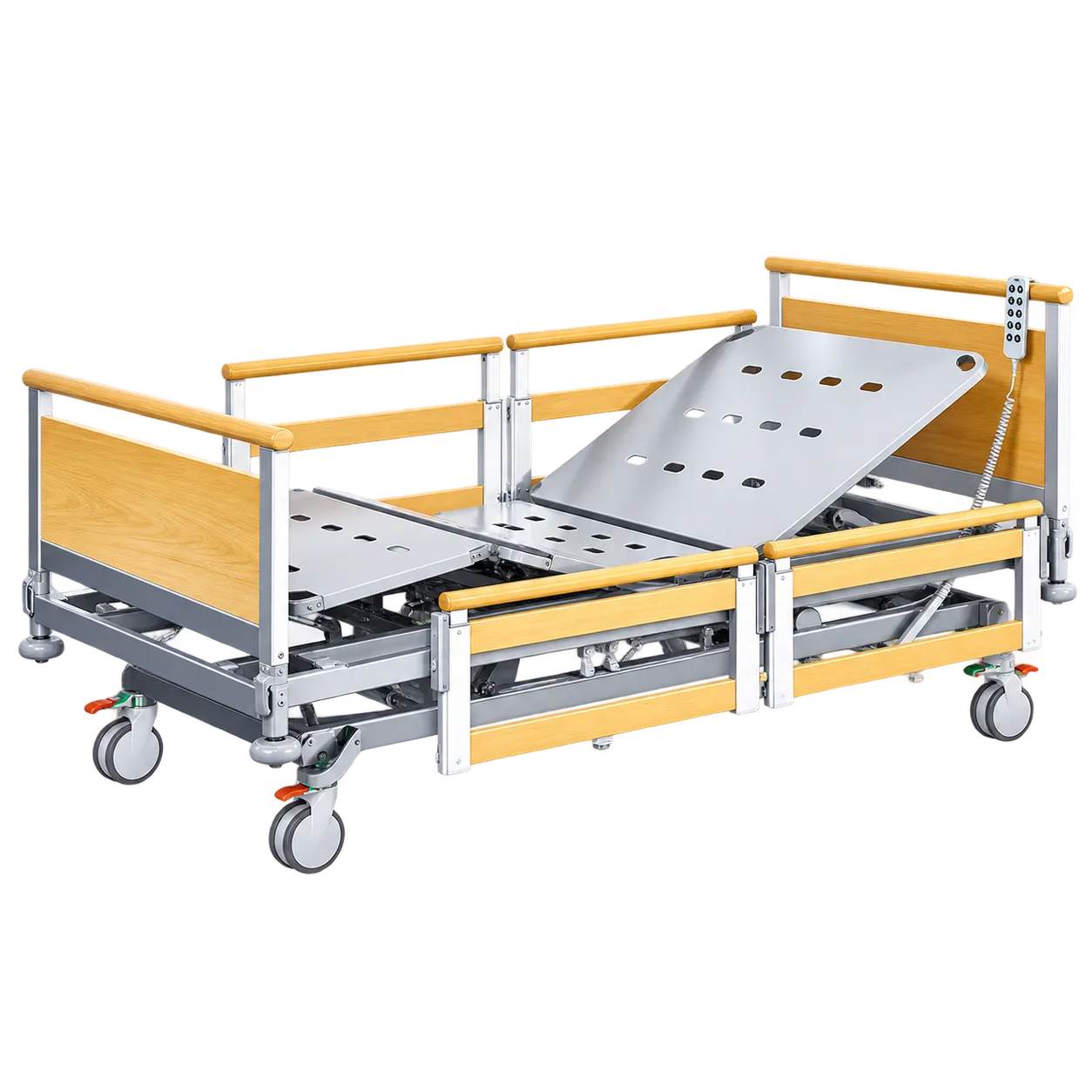
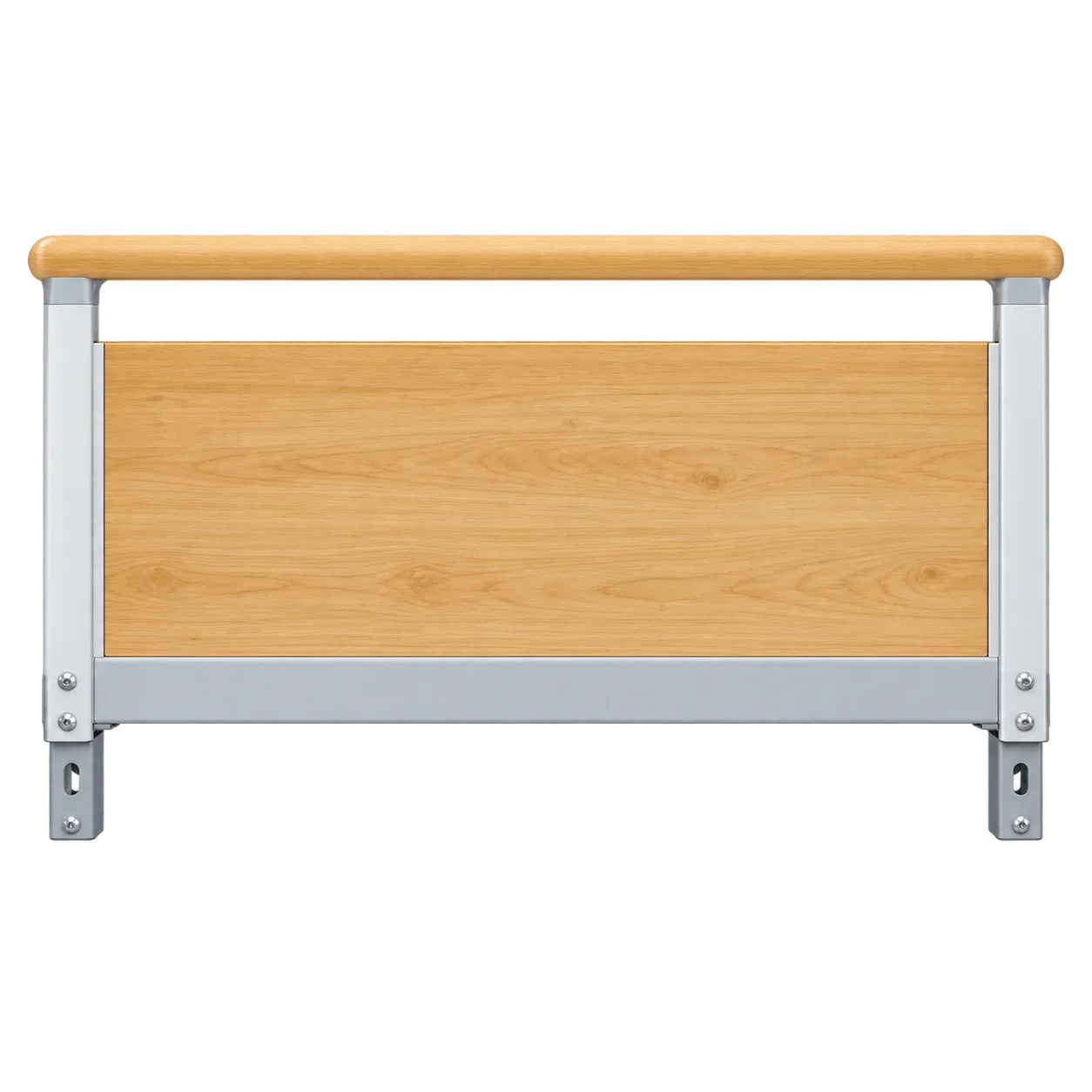

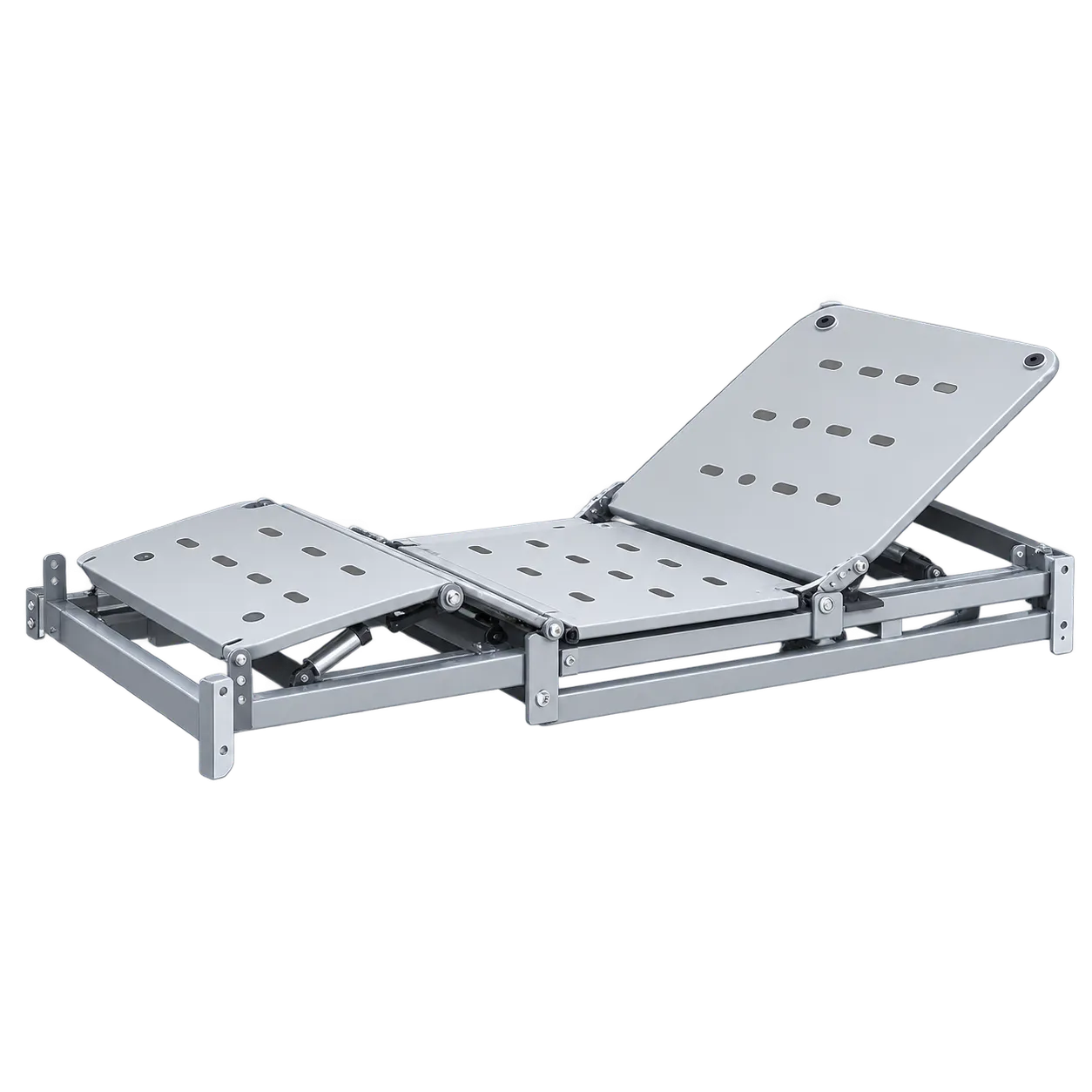
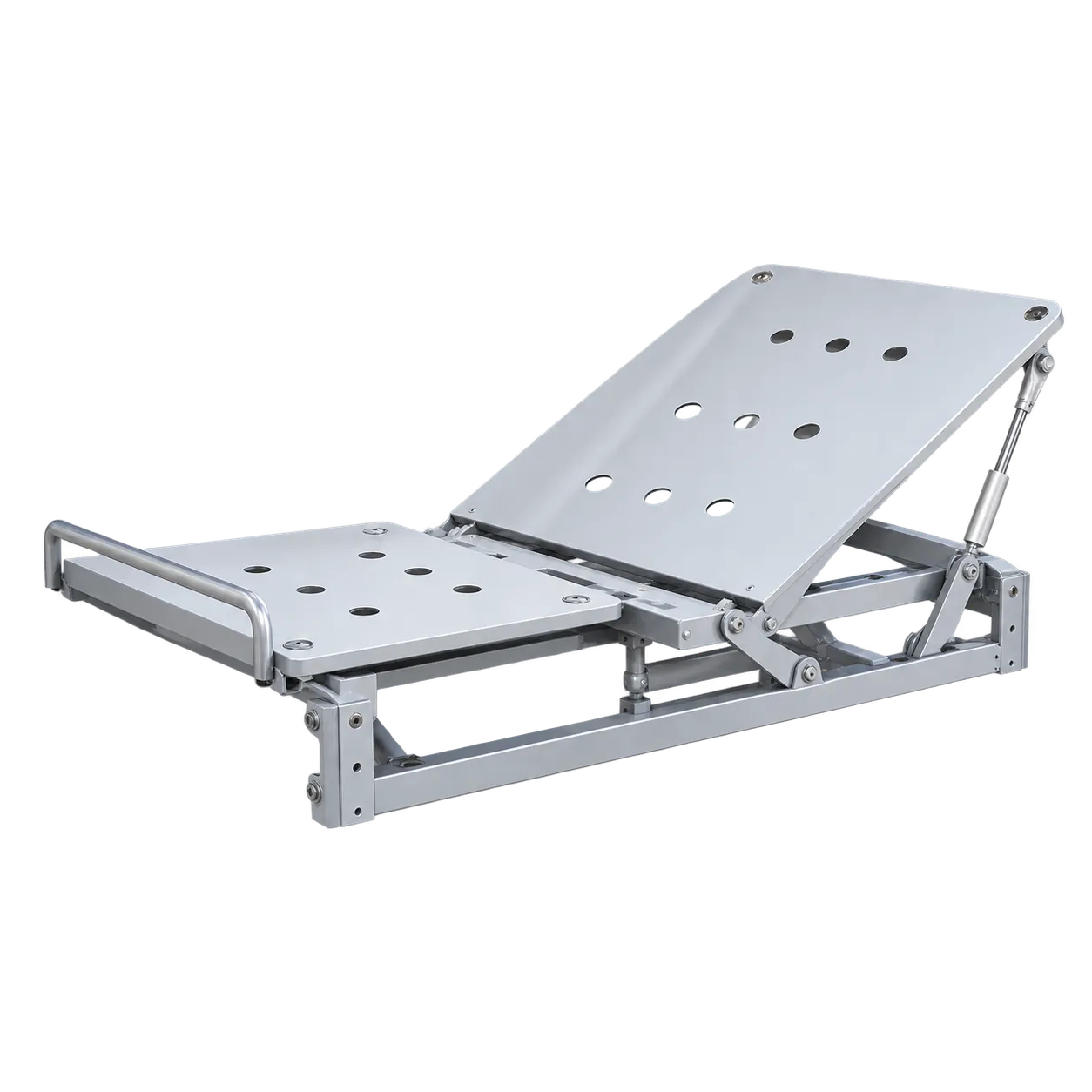

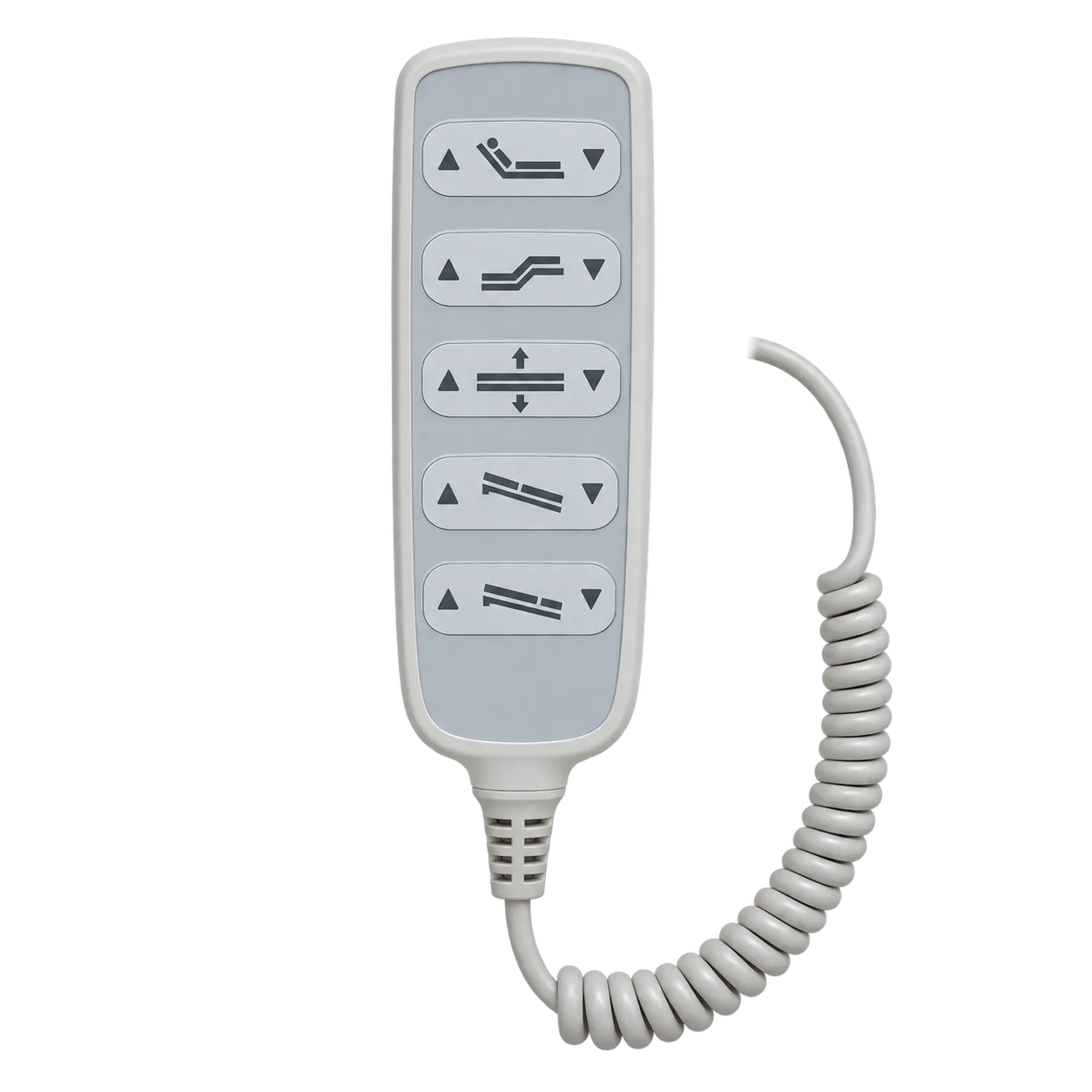
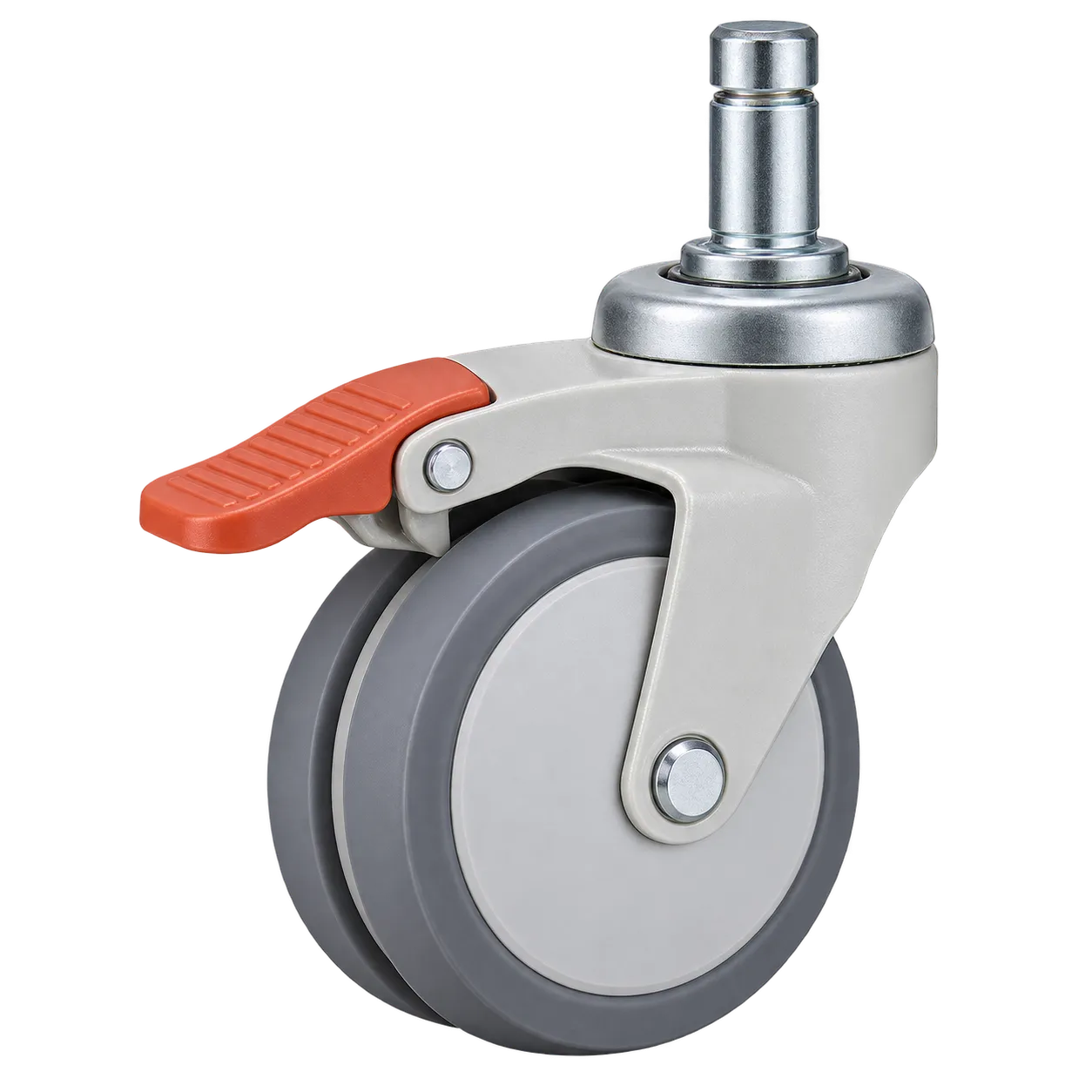
The WRA IV D suits settings where carers spend long stretches doing hands-on care at the bedside: home care packages with several visits a day, residential and nursing homes, hospices, and community hospitals caring for dependent adults. Its case is workflow and choreography. Where the carer stands, how high they work and how quickly they reach the controls all shape a shift, and this frame is built around those three.
Height is the largest part of it. HSE guidance on electric profiling beds, made under the Manual Handling Operations Regulations 1992, says that when people are handled in bed, electric beds should be considered because they reduce risk. A 2022 study by Alperovitch-Najenson and colleagues tested bed height with 80 participants performing passive manual tasks. Participants chose heights above a standard 715 mm with less perceived exertion, and the authors recommended setting the bed to each carer's knuckle or wrist height for each task. The 880 mm upper limit allows this for most adult carers.
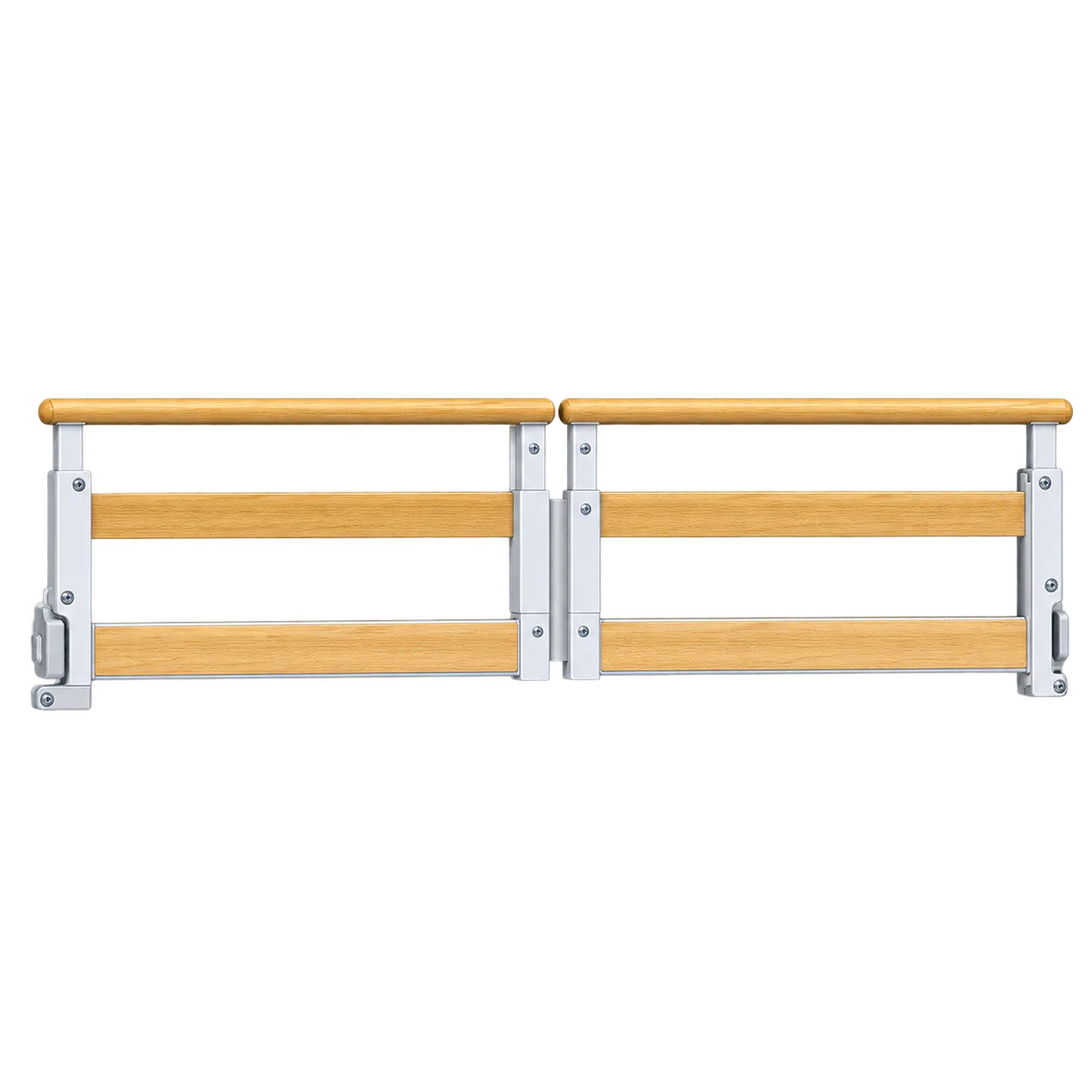
Access and controls complete the picture. Split rails let a carer lower only the section they are working beside, keeping the patient protected on the other side. The handset clips to the rail at the head end, within reach during care. The routine has costs. Every raised rail section needs its gaps checked with the mattress fitted, and the bed must return to 480 mm after care. At 480 mm, the lowest position is not a low bed, so patients at high falls risk need further measures.
NHS procurement routes, community equipment services and public purchasers elsewhere ask for a device class and a declaration of conformity. The conformity documentation those procurement routes require is issued by the manufacturer and shared by the enquiry team.