
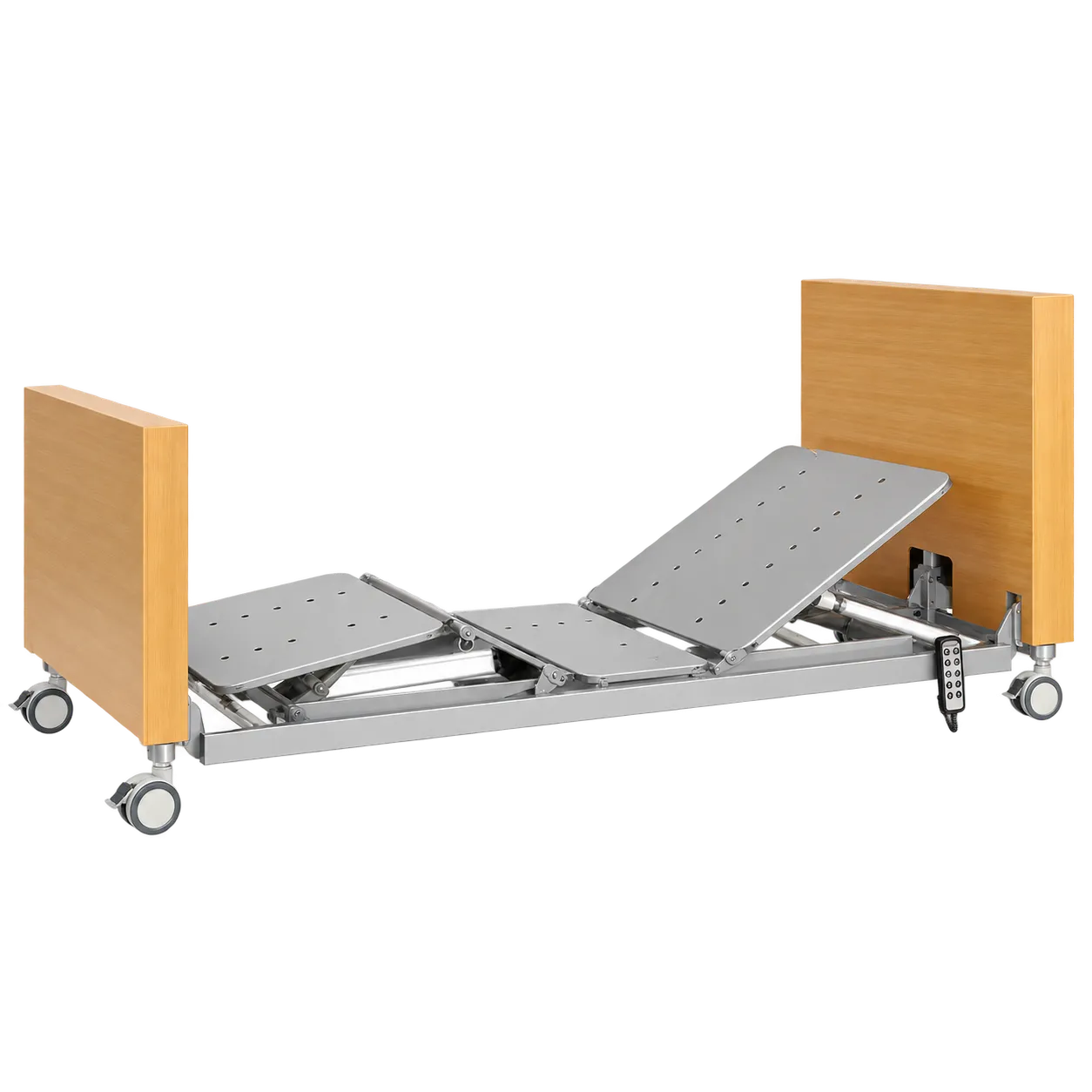




The WRA IV B suits people at risk of rolling or falling out of bed who don't need, or shouldn't have, side rails. Older adults with dementia or delirium, people with epilepsy or restless sleep, those recovering from a fall at home, and residents in care homes and hospices all fit. Its case is safety and risk transfer. A platform that drops to 190 mm shortens falls from bed, but it also creates new tasks and hazards the care plan must cover.
The evidence supports this approach while calling for careful implementation. In their 2022 systematic review of ultra-low beds, Fray, Hignett and Gyi reported promising early findings on reducing fall injury, based on 11 papers of variable quality. They also warned that the lowest heights, below about 80% of lower leg length, can stop a person from standing without a grab rail. They concluded that bed height must be managed alongside rails, grab rails, and nearby furniture. On this bed, that means the platform rises before the patient stands and lowers again once they settle.
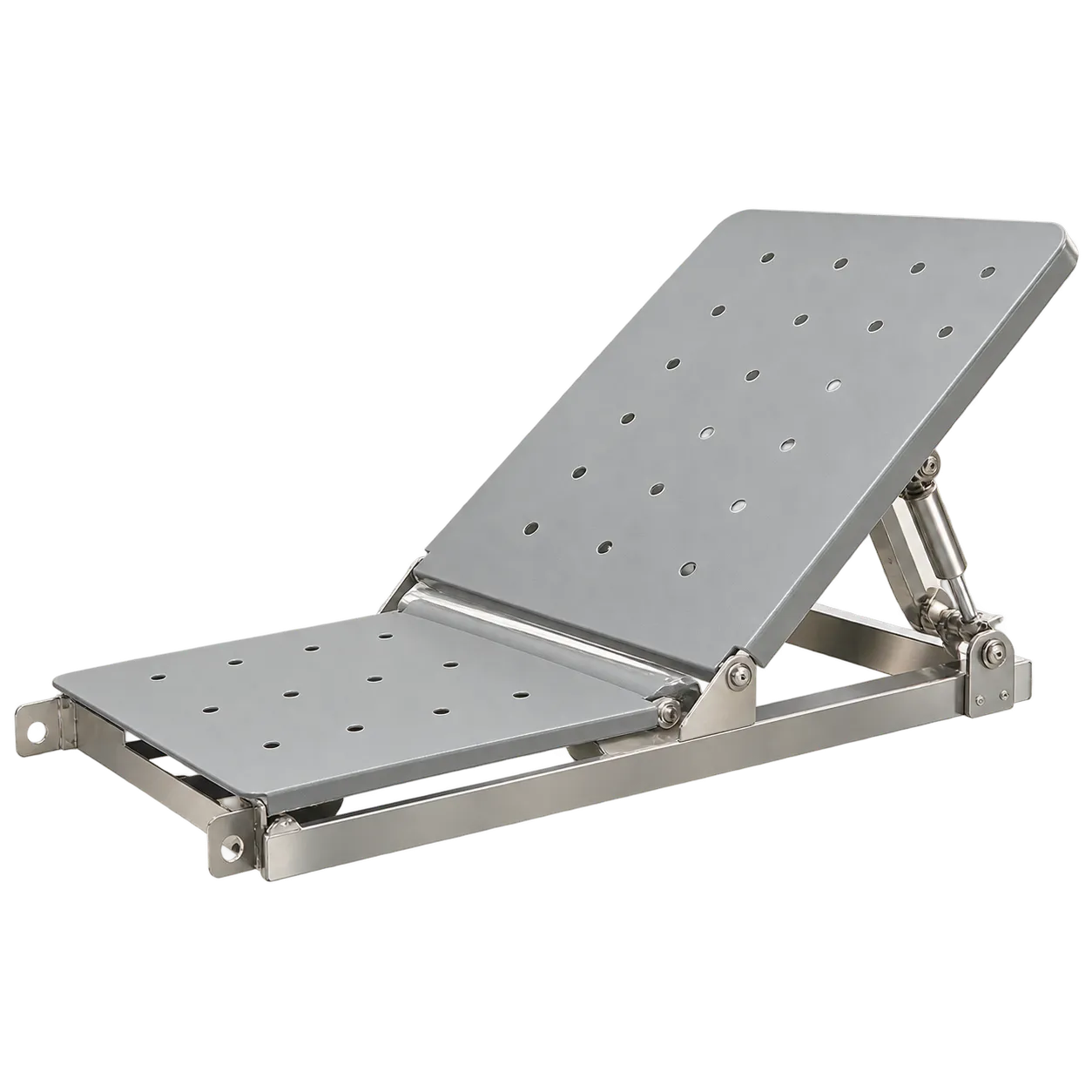
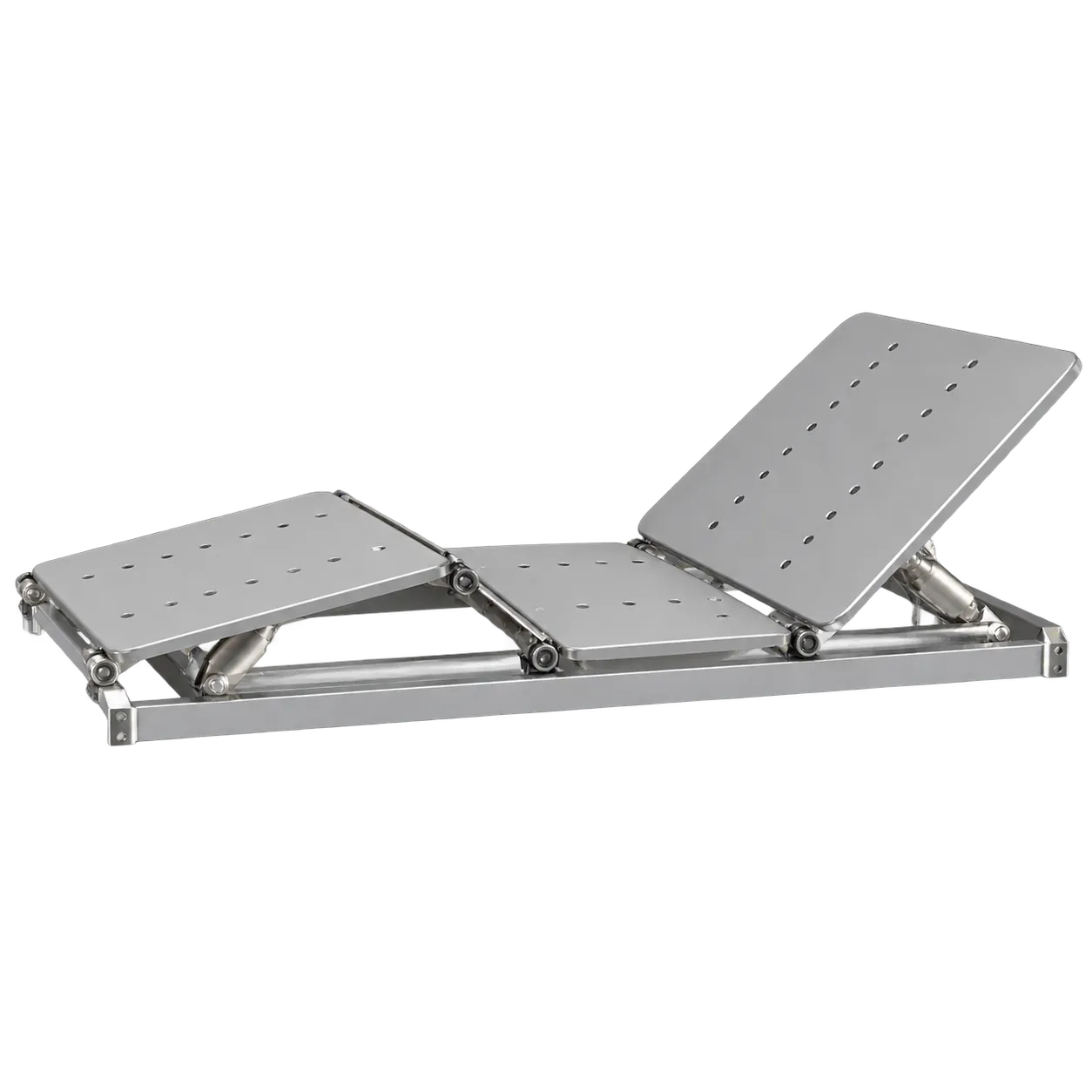
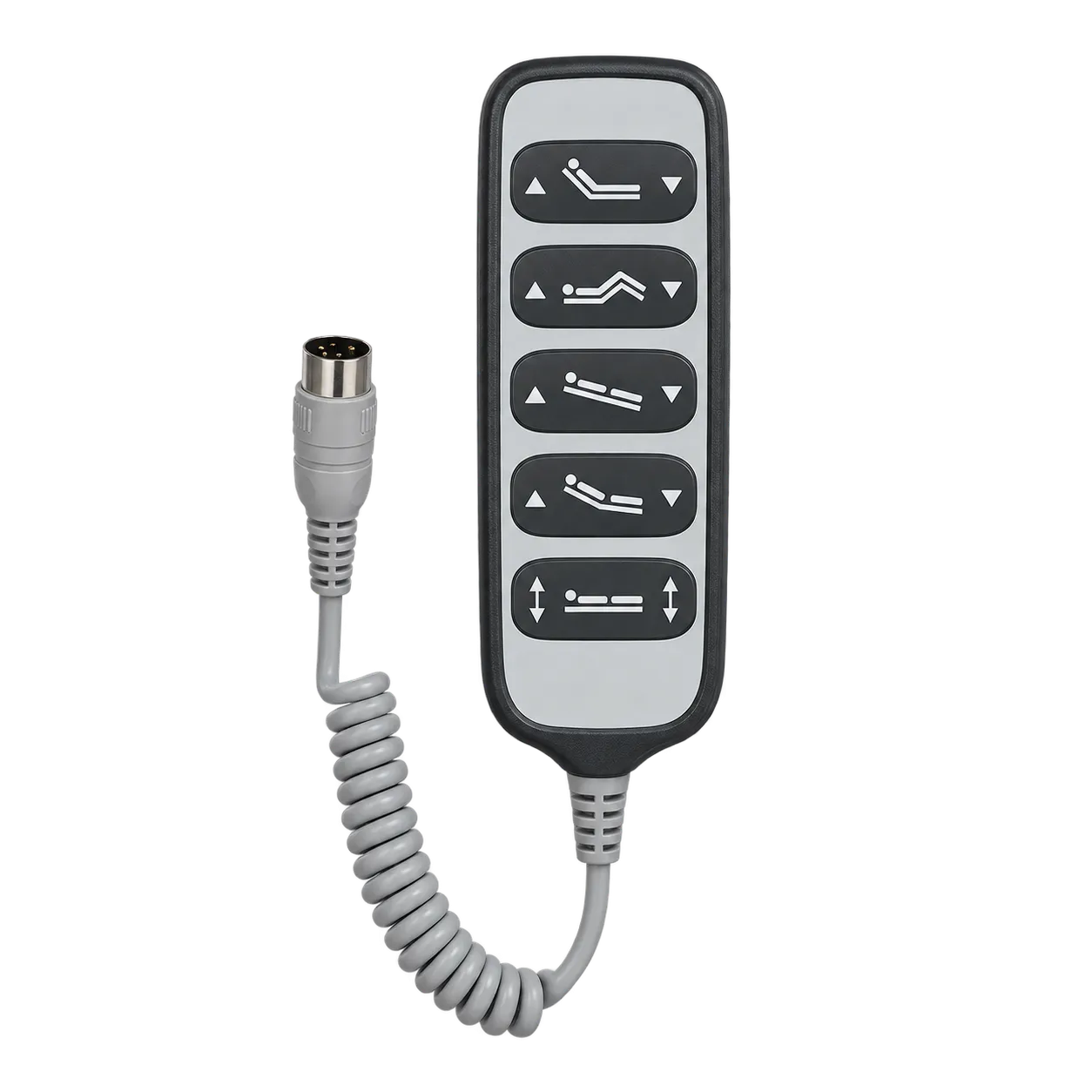
The hazards introduced sit mostly at floor level and at the top of the range. A deck that descends to 190 mm can trap feet or objects beneath it and must work with any floor mat used. The 590 mm upper limit means long care tasks are done at a stoop, which the moving and handling assessment has to address. The five electric functions add backrest, knee rest and tilt, all run from a handset that may need locking for some patients.
NHS procurement routes, community equipment services and public buyers elsewhere require a device class and a declaration of conformity. The conformity documentation those procurement routes require is issued by the manufacturer and shared by the enquiry team.