
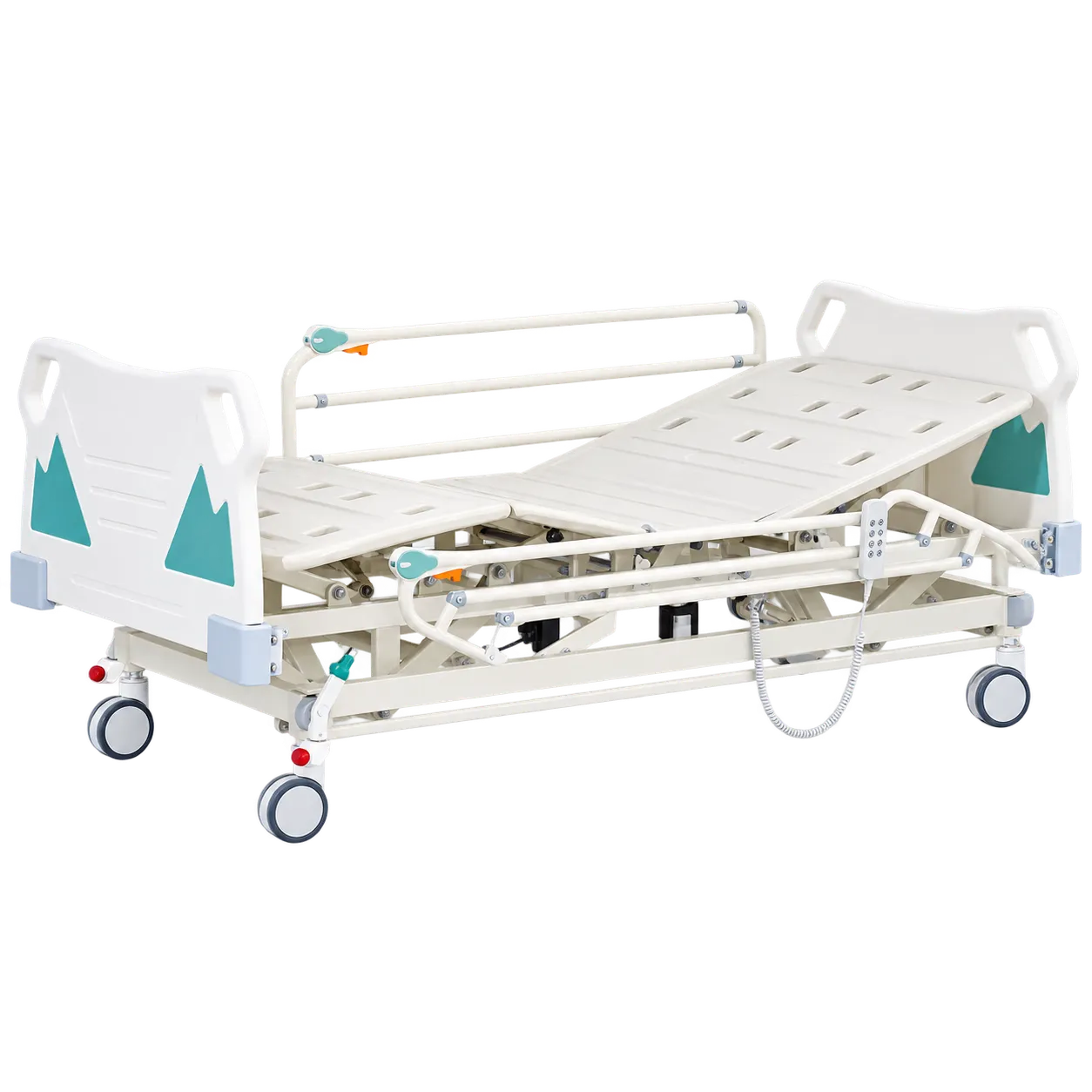


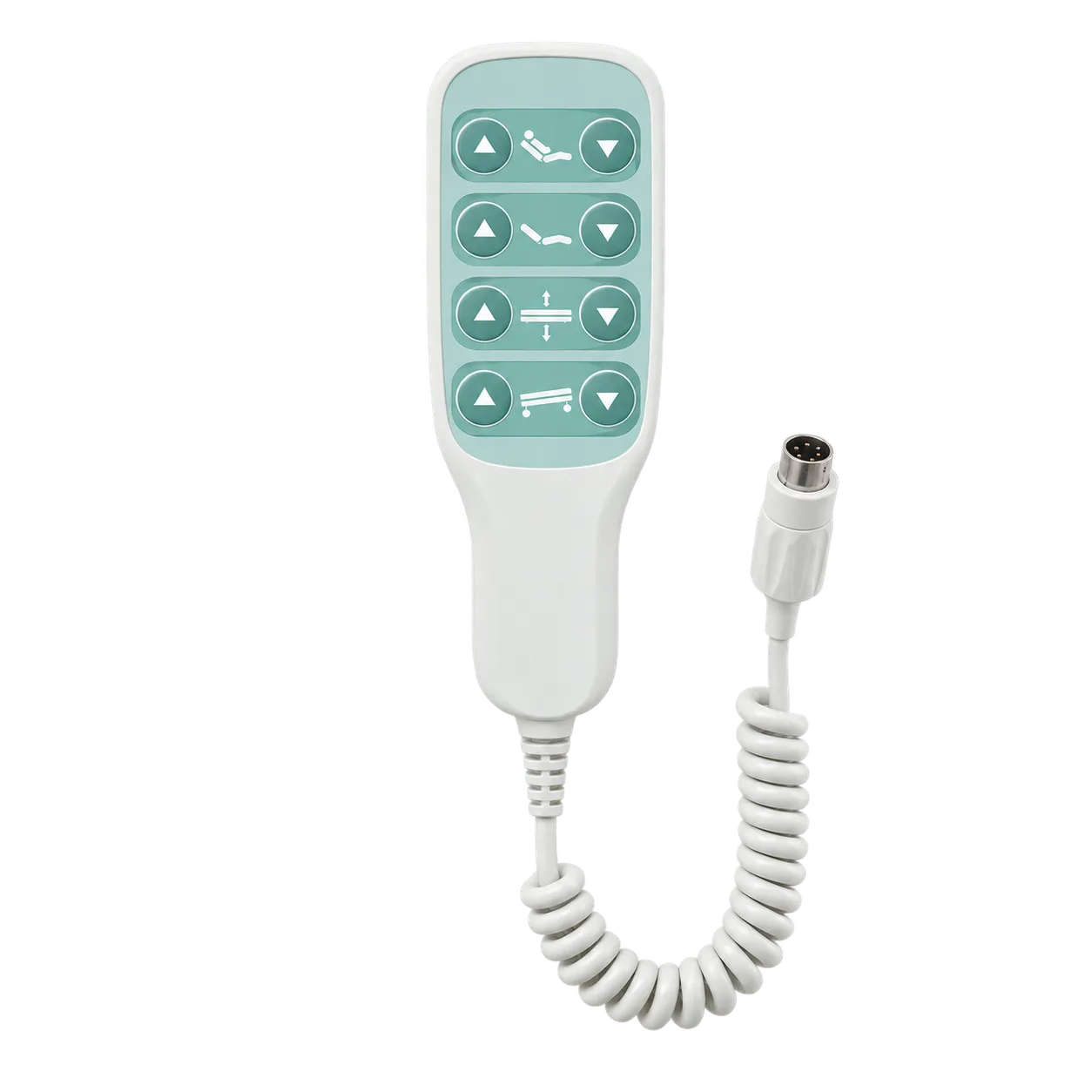

Homecare, community settings and smaller rooms in residential care are where a narrow three-function bed with drop-down rails fits best. The 1010 mm width helps where space either side of the bed is limited, the low setting of 430 mm supports getting out of bed, and the working height of 780 mm reduces stooping for care.
Side access is the practical heart of the bed. With the rail lowered, carers can wash, dress, turn and reposition a patient from the side, use slide sheets to move someone up the bed without lifting, and bring a chair, commode or trolley alongside for a transfer. The narrow frame shortens the reach across the patient. Those tasks fall under the Manual Handling Operations Regulations 1992, so each needs assessing, and staff and family carers need training in slide-sheet use and in lowering and relocking the rail.
Rail safety comes back into play once the rail is raised again. The bars and the openings around them must meet MHRA guidance with the mattress fitted, and the MHRA's 2023 National Patient Safety Alert asks providers to assess rails for each individual. For some people, leaving the rail down with a low bed and a crash mat may be safer than raising it, and the assessment should consider that.
Resuscitation needs a plan before first use, since no CPR arrangement is shown. The bed is not a specification for children, who fall under a separate standard, and is unlikely to suit bariatric patients. Procurement will ask for the legal manufacturer, the standard edition, rail test data, the platform size and the CPR arrangement. The conformity documentation those procurement routes require is issued by the manufacturer and provided by the seller.