
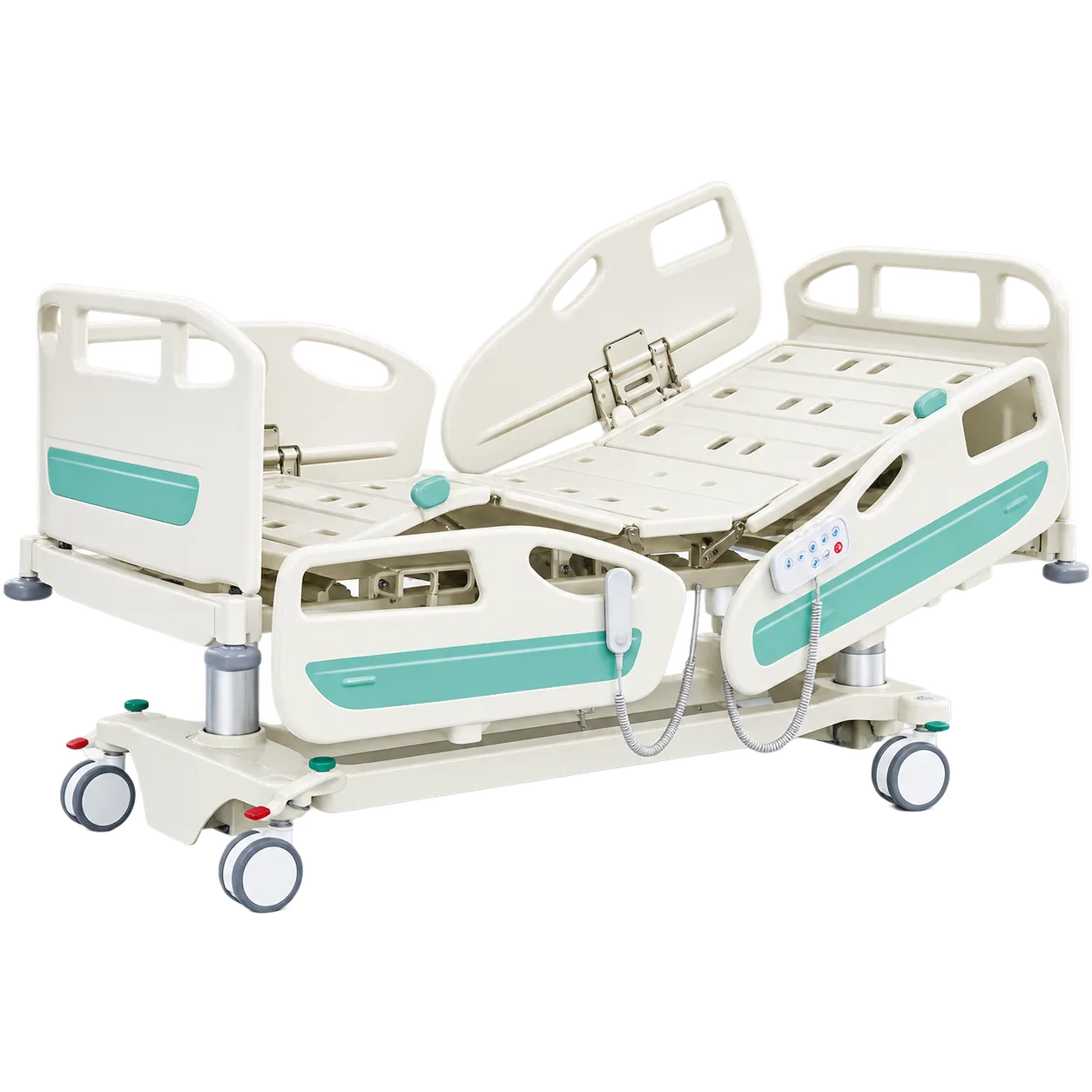


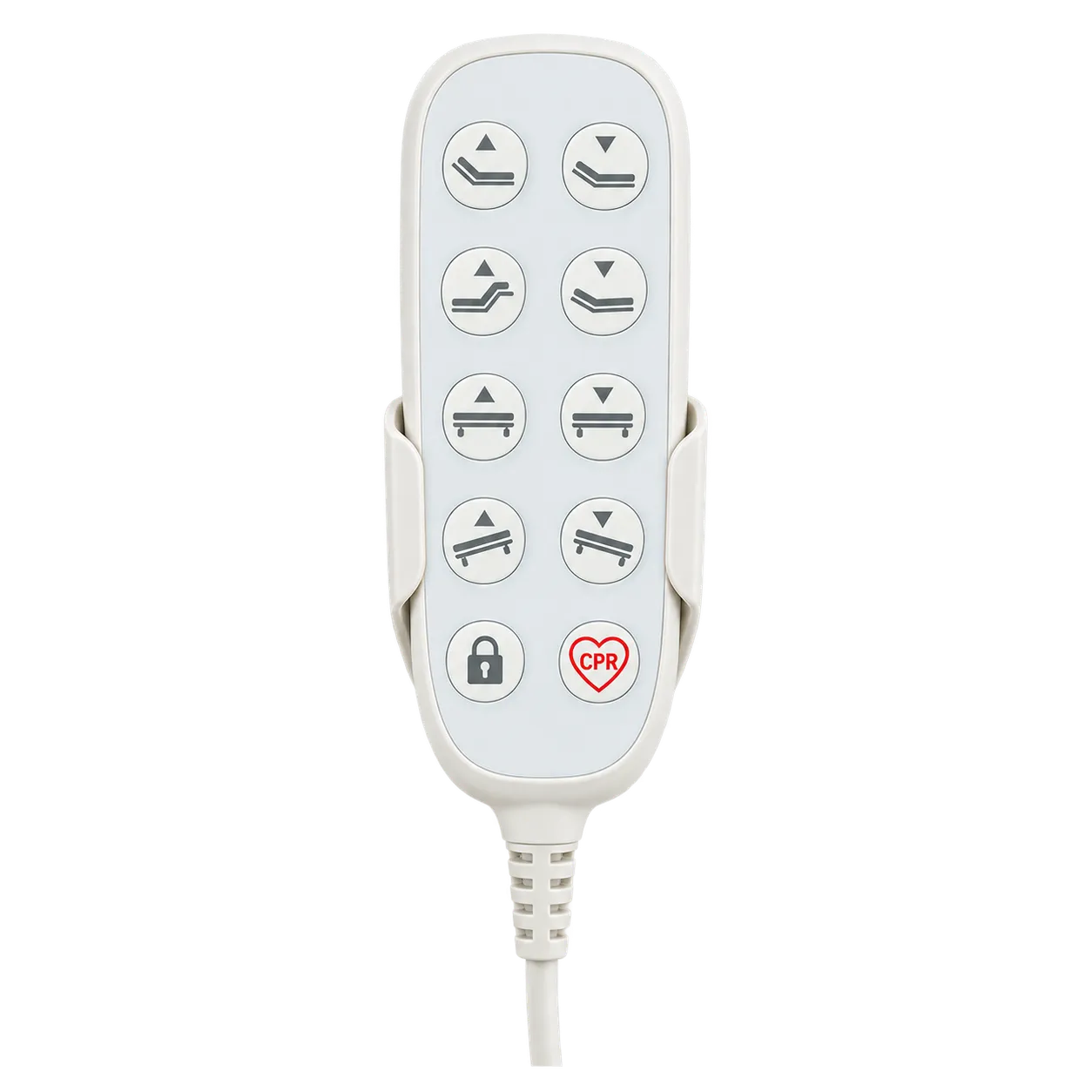
General medical, surgical and acute wards are where the WRA I B does its everyday work. The backrest to 70° and knee rest to 30° cover sitting up for meals, visitors and breathing, the cardiac chair position brings a patient upright without a transfer, and the examination position gives a consistent posture for assessment. Trendelenburg and reverse Trendelenburg to 15° add positioning for circulation and breathing, and an emergency Trendelenburg position gives staff a head-down posture in one step when a clinician calls for it.
Night-time safety is covered by several listed functions working together. The patient exit position sets the bed for getting out, the night light helps a patient see the floor, and the lowest position indication tells staff the bed has been left down. None of these replaces a falls assessment, but together they support one.
Escalation and reserve stock is where the storage side of this bed matters. Many hospitals keep beds in reserve for winter, outbreak closures or ward refurbishments, and those beds can stand unused for months. A bed returning to service should have every listed function tested, including both CPR routes, the emergency stop and the indicators, and its battery status confirmed if one is fitted.
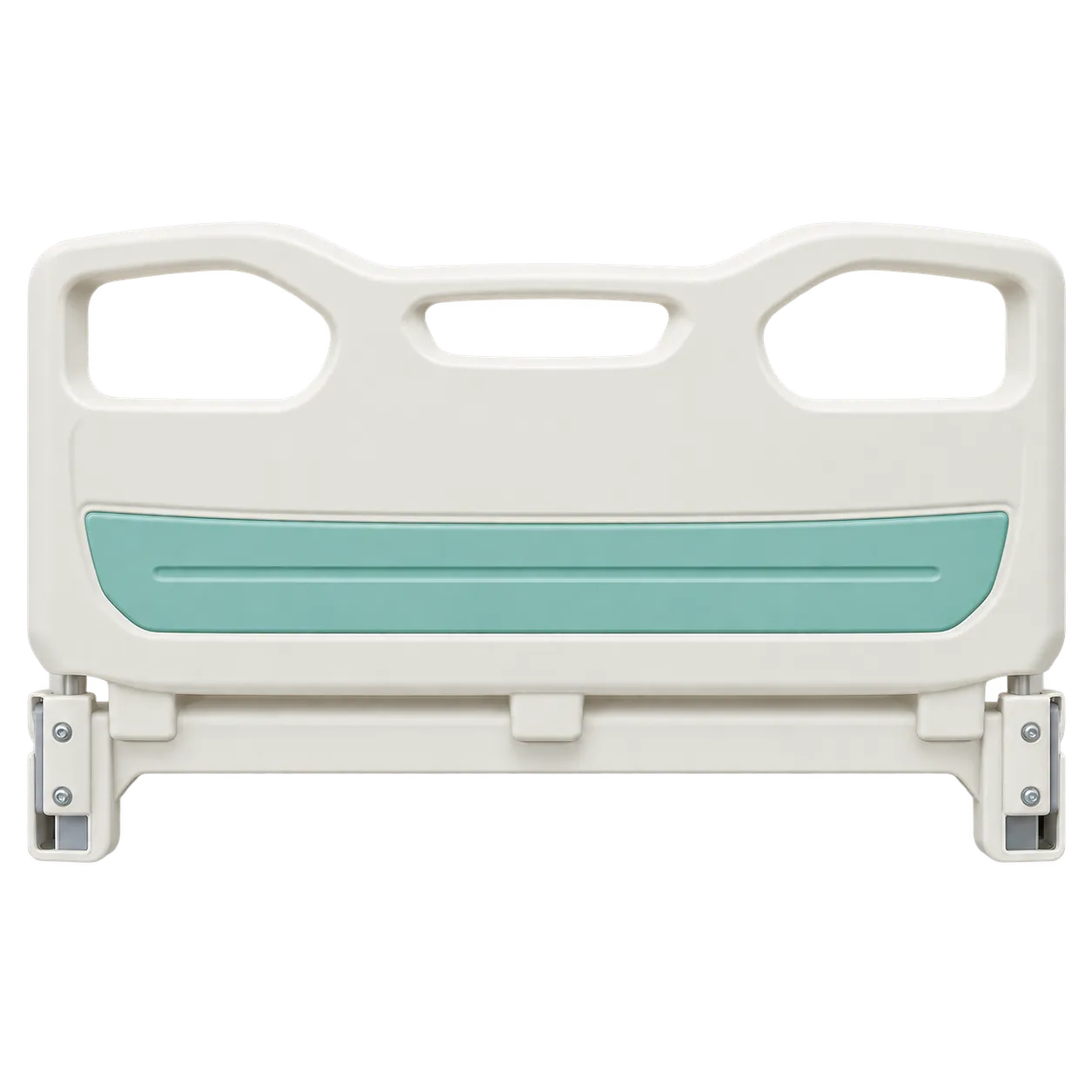
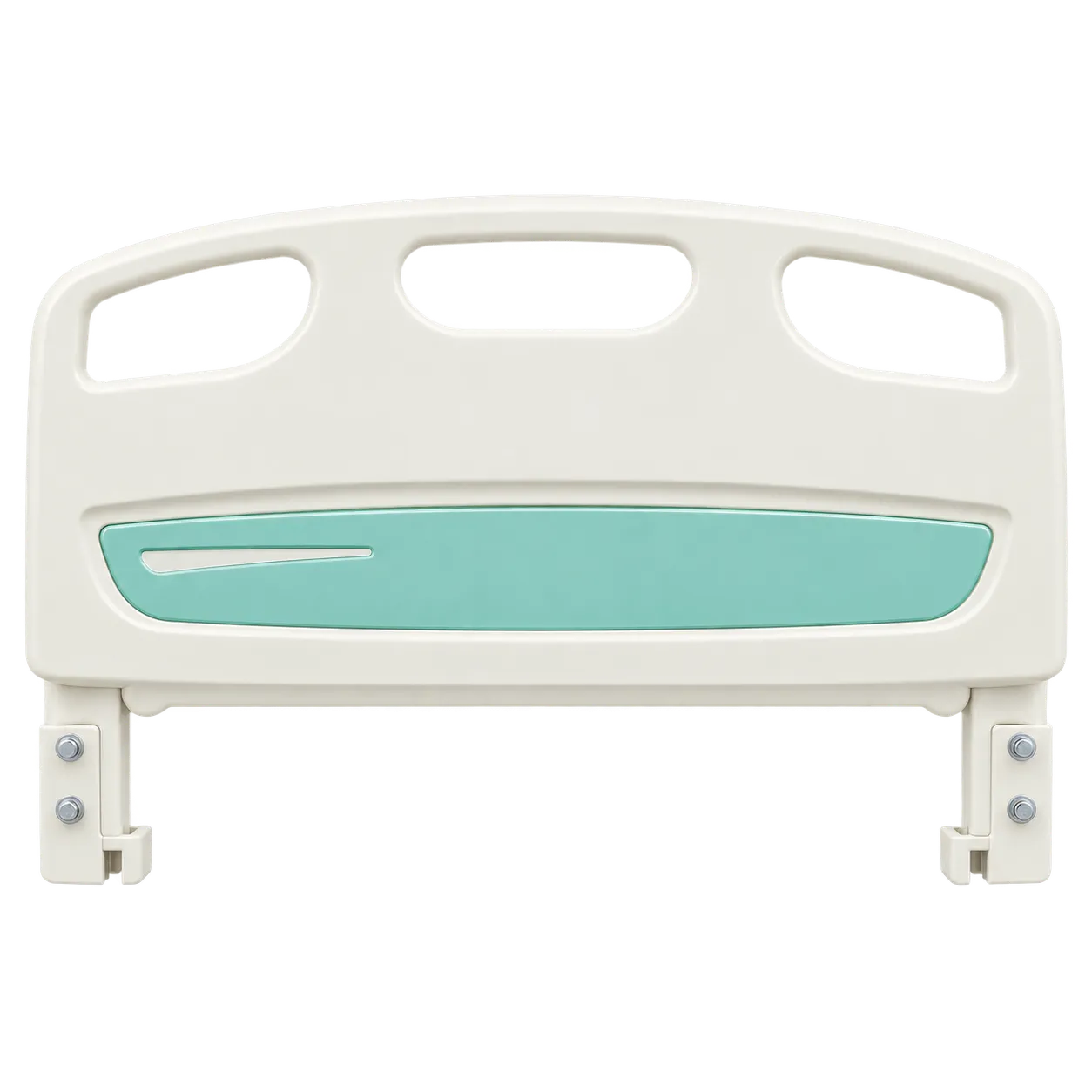
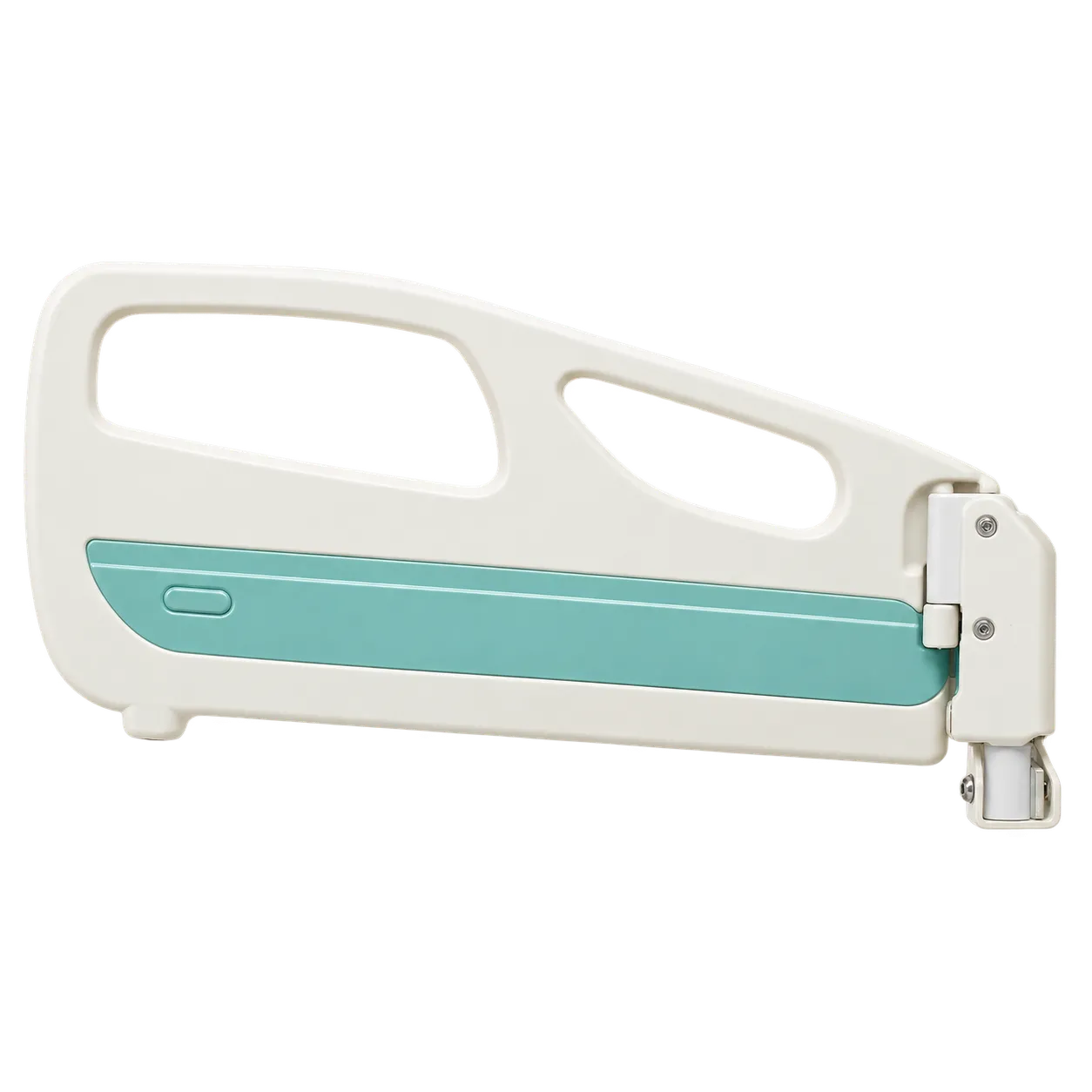
The 260 kg safe working load on a 1950 × 900 mm platform suits the general adult population, but it is not a bariatric bed. It is not a specification for children, who fall under a separate standard. Its rails bring the MHRA's 2023 National Patient Safety Alert on entrapment and falls into every allocation, including after storage. Procurement will ask for the legal manufacturer, the standard edition and the rail gap data. The conformity documentation those procurement routes require is issued by the manufacturer and provided by the seller.