

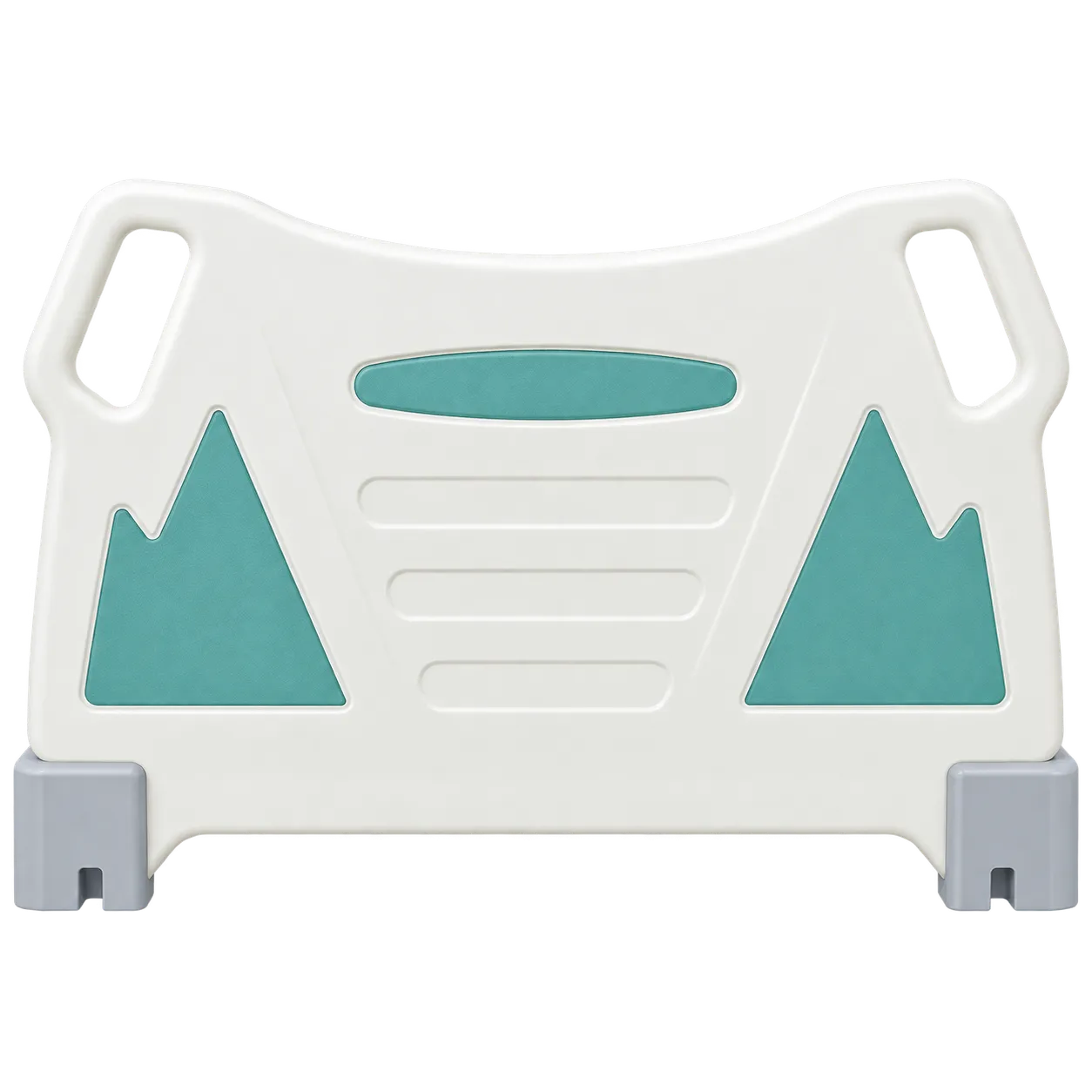
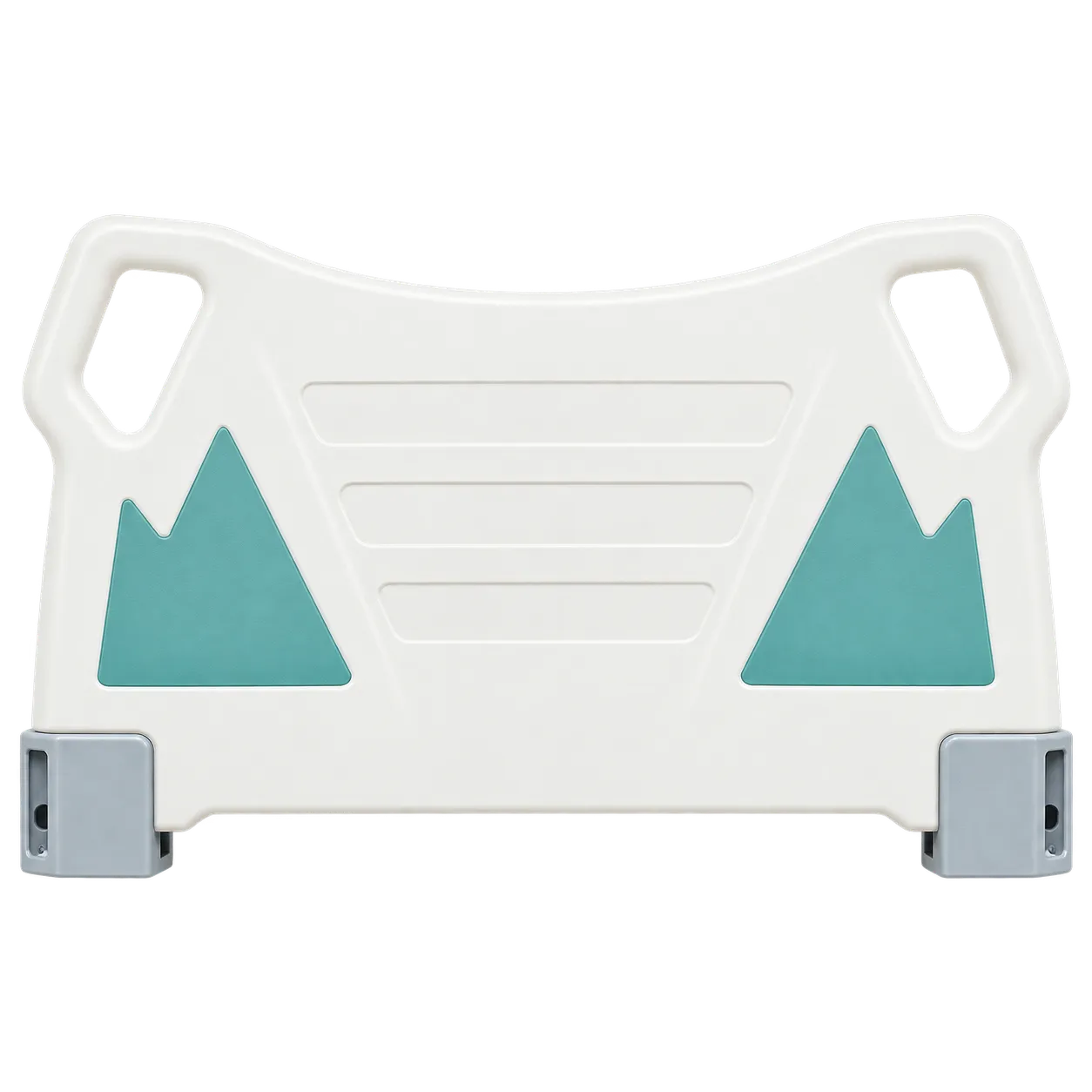
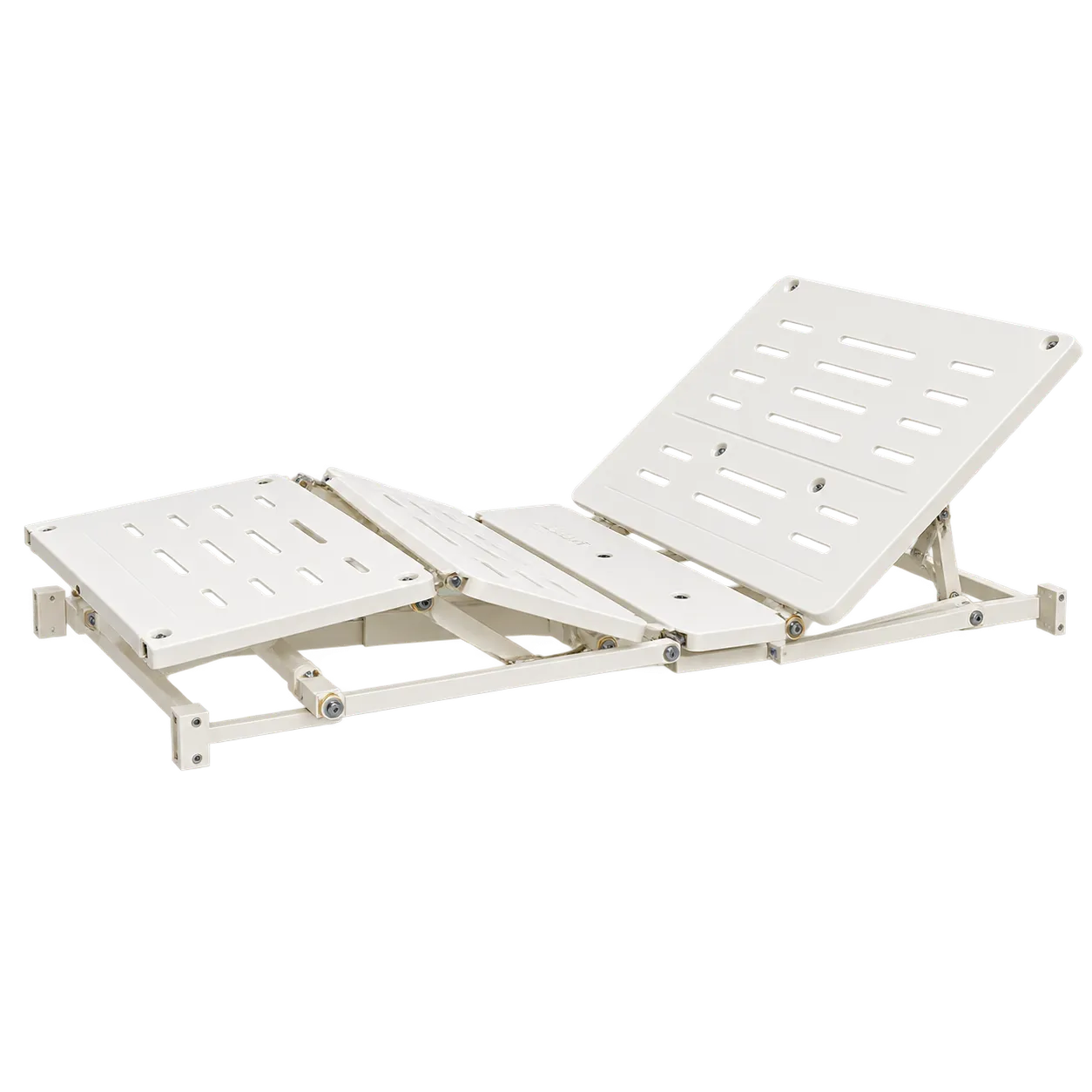


Sheltered housing, homecare, small residential rooms and community settings are where a narrow full-fowler manual bed with collapsible rails fits. Backrest and leg section wound by hand cover sitting up for meals and visitors with the knees supported, the 1000 mm frame suits smaller rooms, and the bed needs no power.
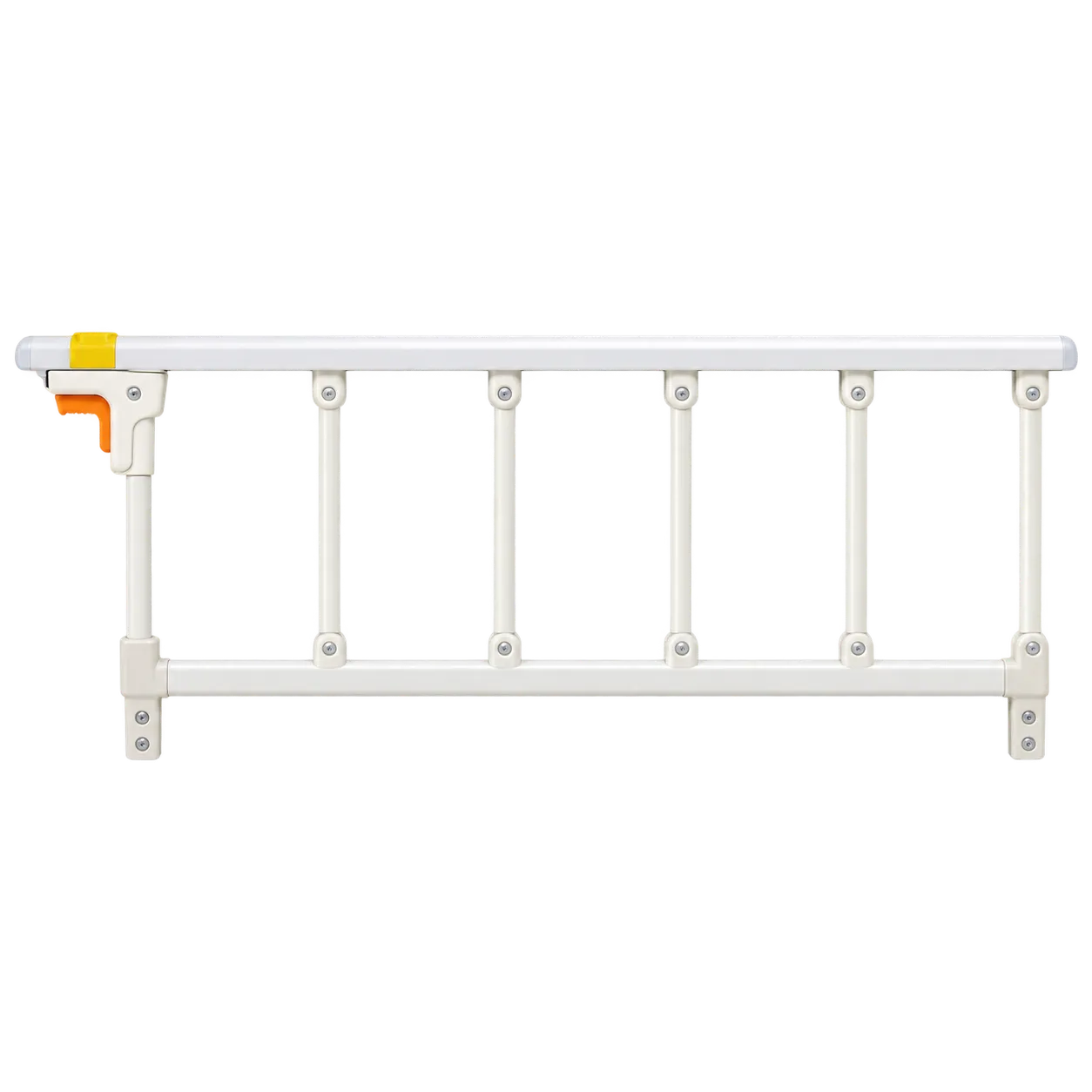
The collapsible rails are both the convenience and the thing to manage. Folded down, they leave the side of the bed open for care, transfers and getting in and out, without lifting a rail off. As they fold, though, the posts close together, and a carer's fingers or a patient's hand can be caught. A consistent lowering routine, taught at induction and at every handover, prevents most of those injuries: tell the patient, check their hands are clear, hold the top bar with both hands, lower slowly, and confirm the latch when raising. Families caring at home need the same routine.
Patients who are confused, drowsy or restless need particular care. They may hold the rail or put an arm through it without understanding that it is about to move, and the MHRA's 2023 National Patient Safety Alert identifies such people among those at higher risk from bed rails generally. For some, the assessment will conclude that rails are not appropriate at all.
The raised rails must be checked against MHRA guidance with the mattress fitted, and the hinges and latches belong in routine maintenance. The fixed 500 mm height means care tasks need a manual handling assessment. The bed is not bariatric and not a specification for children. Procurement will ask for the legal manufacturer, the standard used, rail test data and the operating instructions. The conformity documentation those procurement routes require is issued by the manufacturer and provided by the seller.