
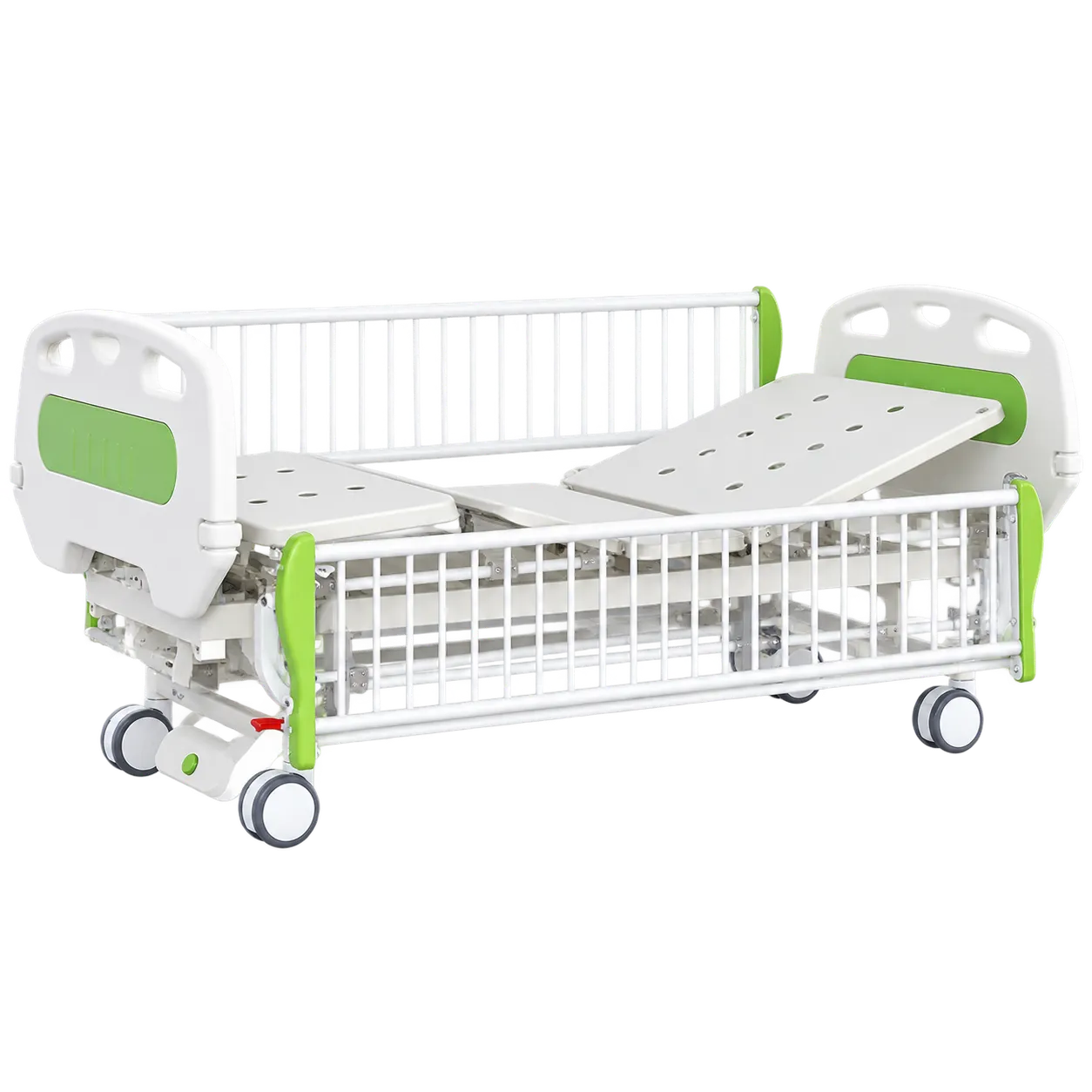




The R-5 A suits children’s wards, adolescent units, mixed-age paediatric bays and community hospitals that admit patients from early school age to the late teens. Its case is population-fit. A 2100 mm frame with barred sides suits children who are too long for a cot-sized bed, and it adjusts as the patient grows.
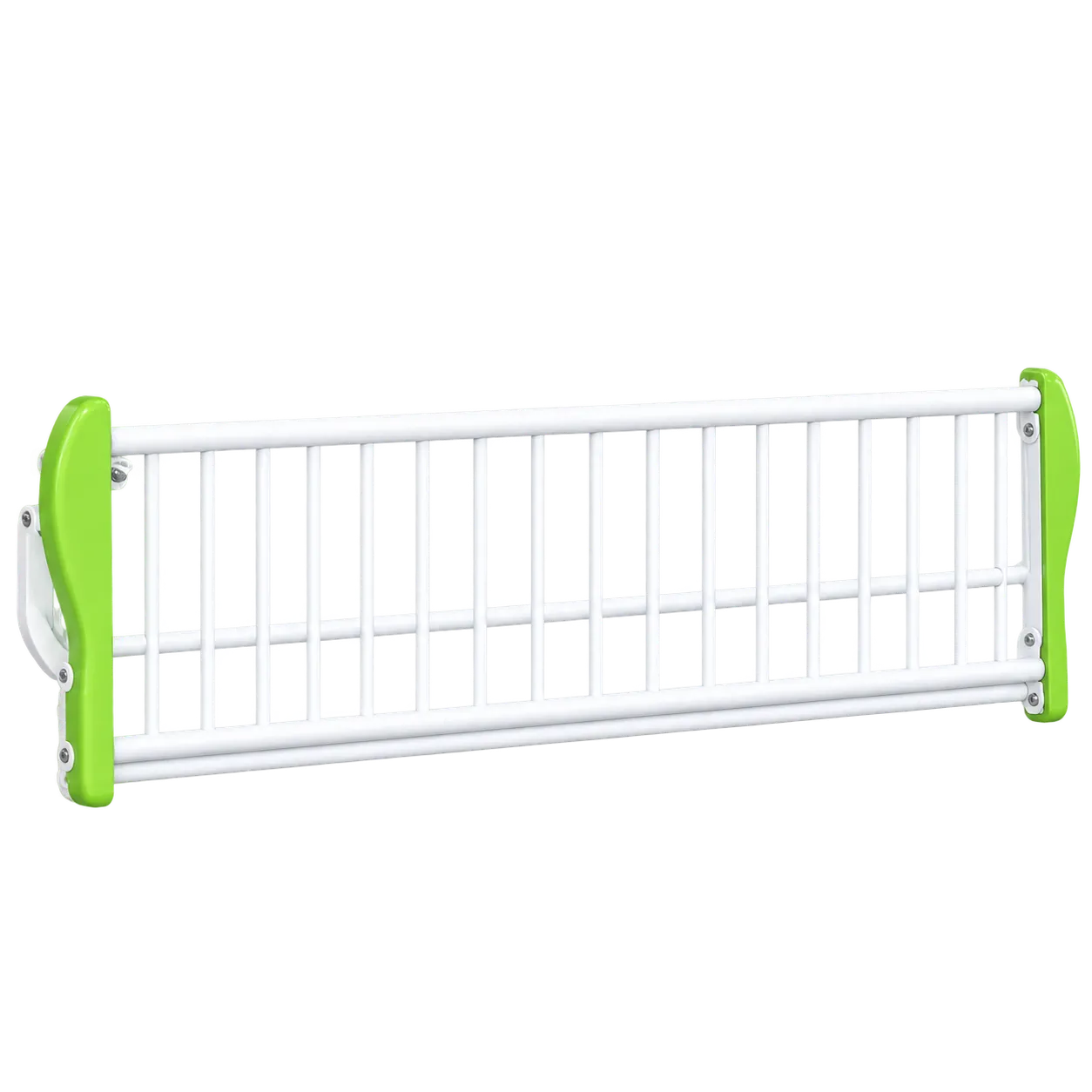
For school-age children, the bed gives full containment with room to grow. Barred sides run the whole length, two cranks raise the backrest and leg section, and the 500 mm platform lets a child who is allowed up sit on the edge with feet near the floor. For teenagers, the frame has adult length while the ward keeps the option of raised sides for those at risk of falling, after seizures or sedation, for example.
Each group brings its own checks. Small children need the bars and gaps measured against BS EN 50637:2017, which sets enclosed gaps at under 60 mm, and NatPSA/2023/010/MHRA expects children’s beds to meet that standard unless a reason is documented. Teenagers above 155 cm or 70 kg fall under the adult bed standard, and their weight needs to be compared with the safe working load. Adolescents may also object to barred sides, so raising them should follow an individual assessment under MHRA bed rails guidance. The fixed height and lack of tilt or a CPR release limit the bed to stable patients.
NHS procurement routes and overseas public tenders will ask for the device class, the standard the bed was tested to, and a declaration of conformity. The manufacturer issues the conformity documentation those procurement routes require, and the enquiry team shares it.