
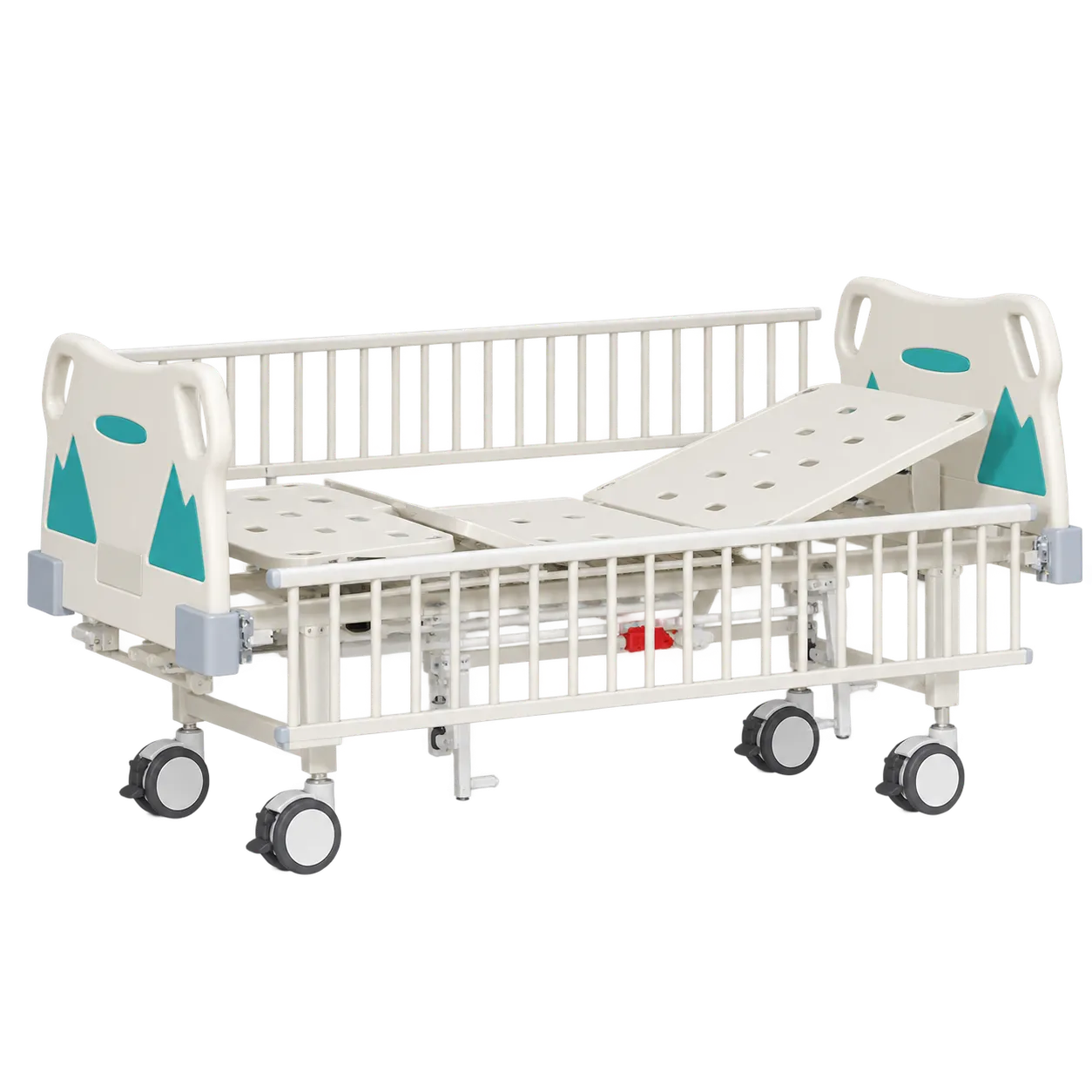
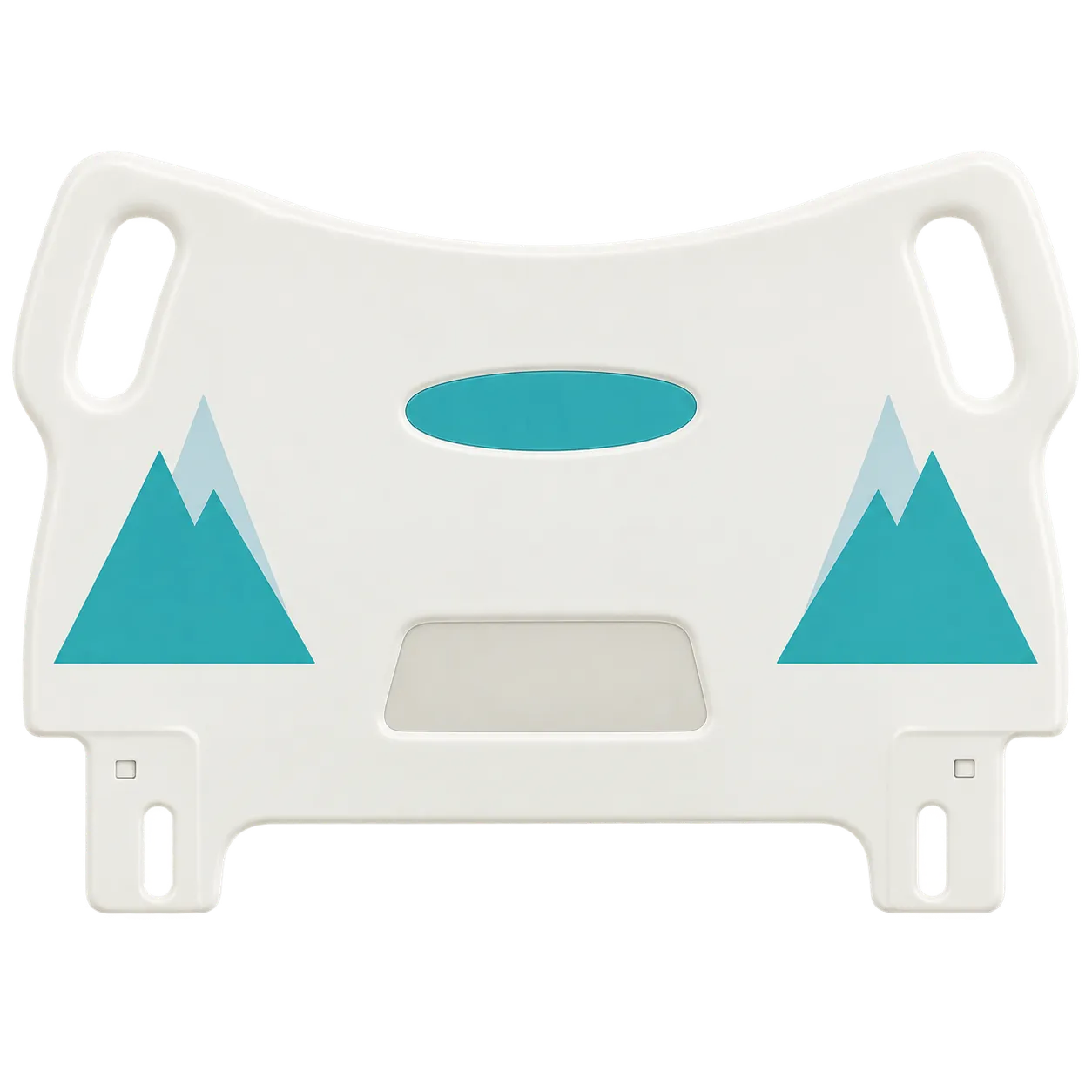
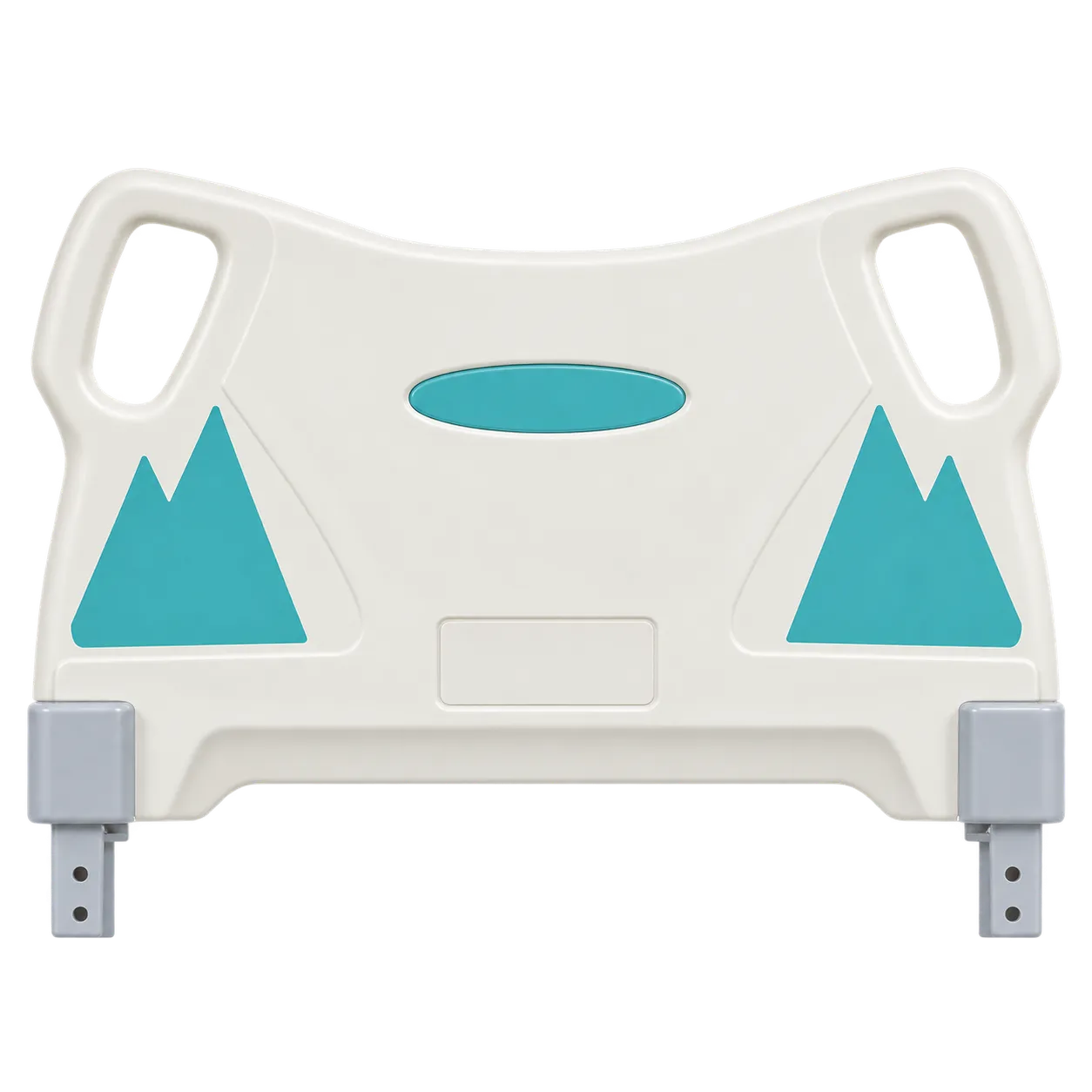
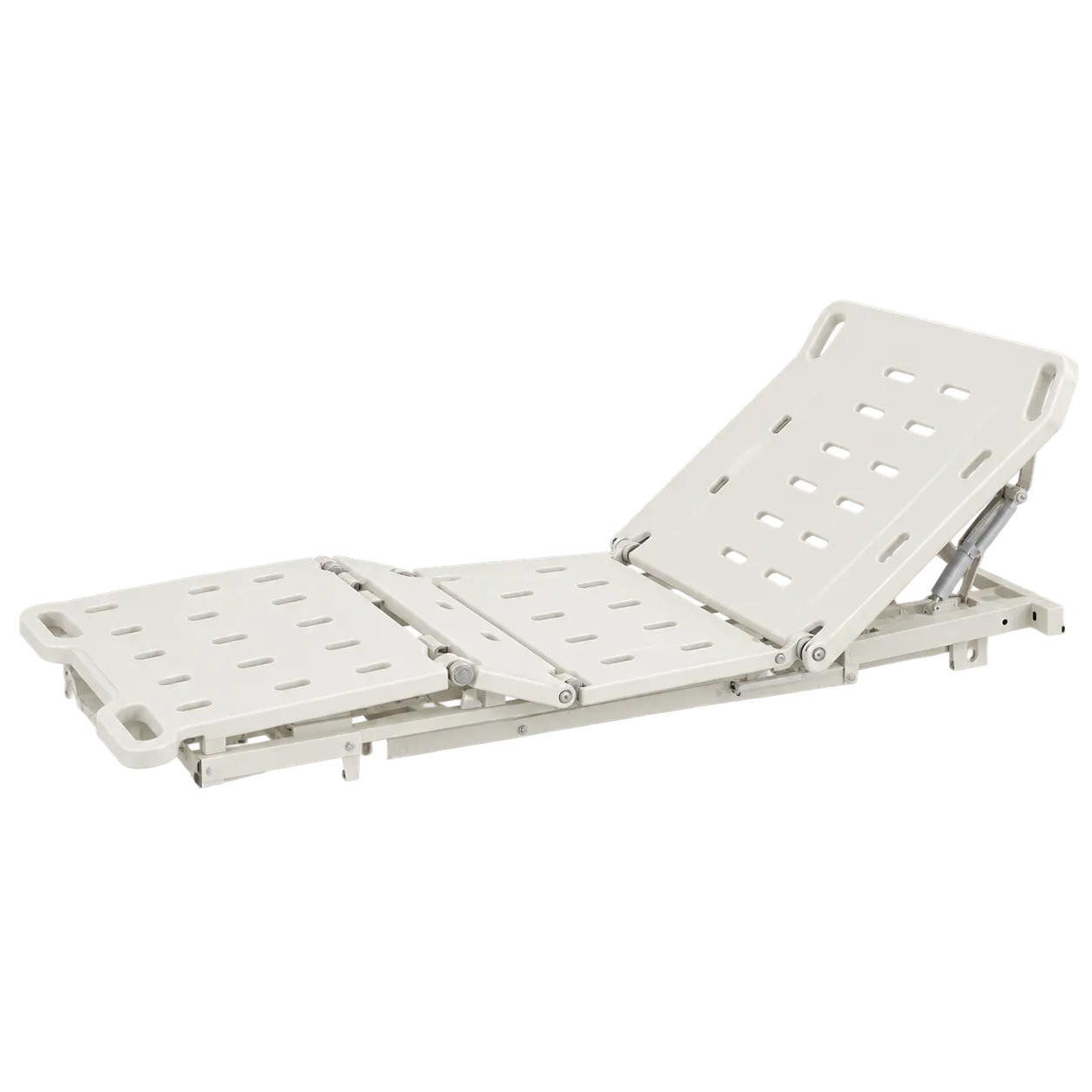
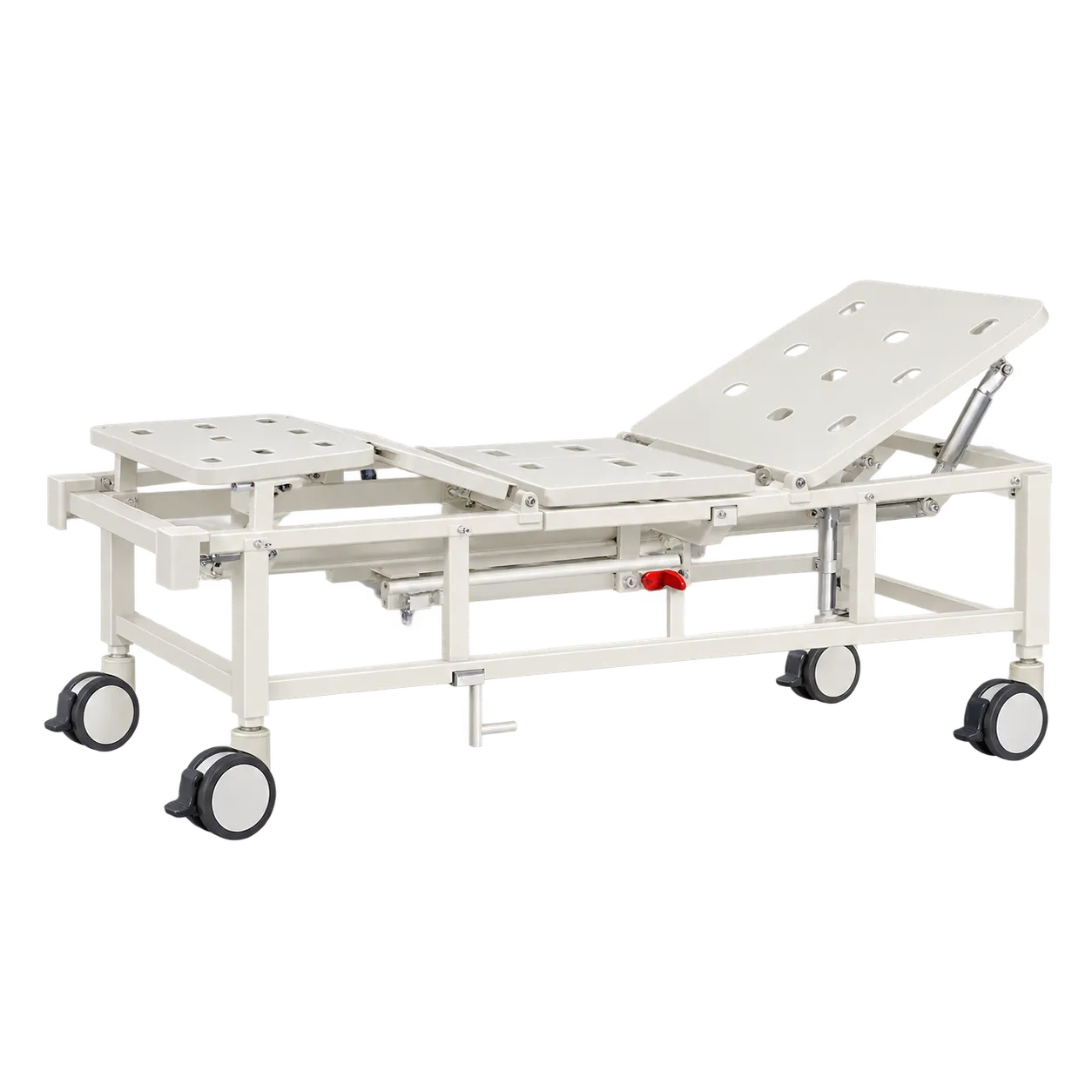

The R-4 suits general children’s wards, observation bays, outpatient and day-case areas and community hospitals, for children who are stable and need routine nursing. Its case is workflow. The bed turns each episode of care into the same short sequence, and a ward that teaches that sequence gets the safety the barred sides provide.
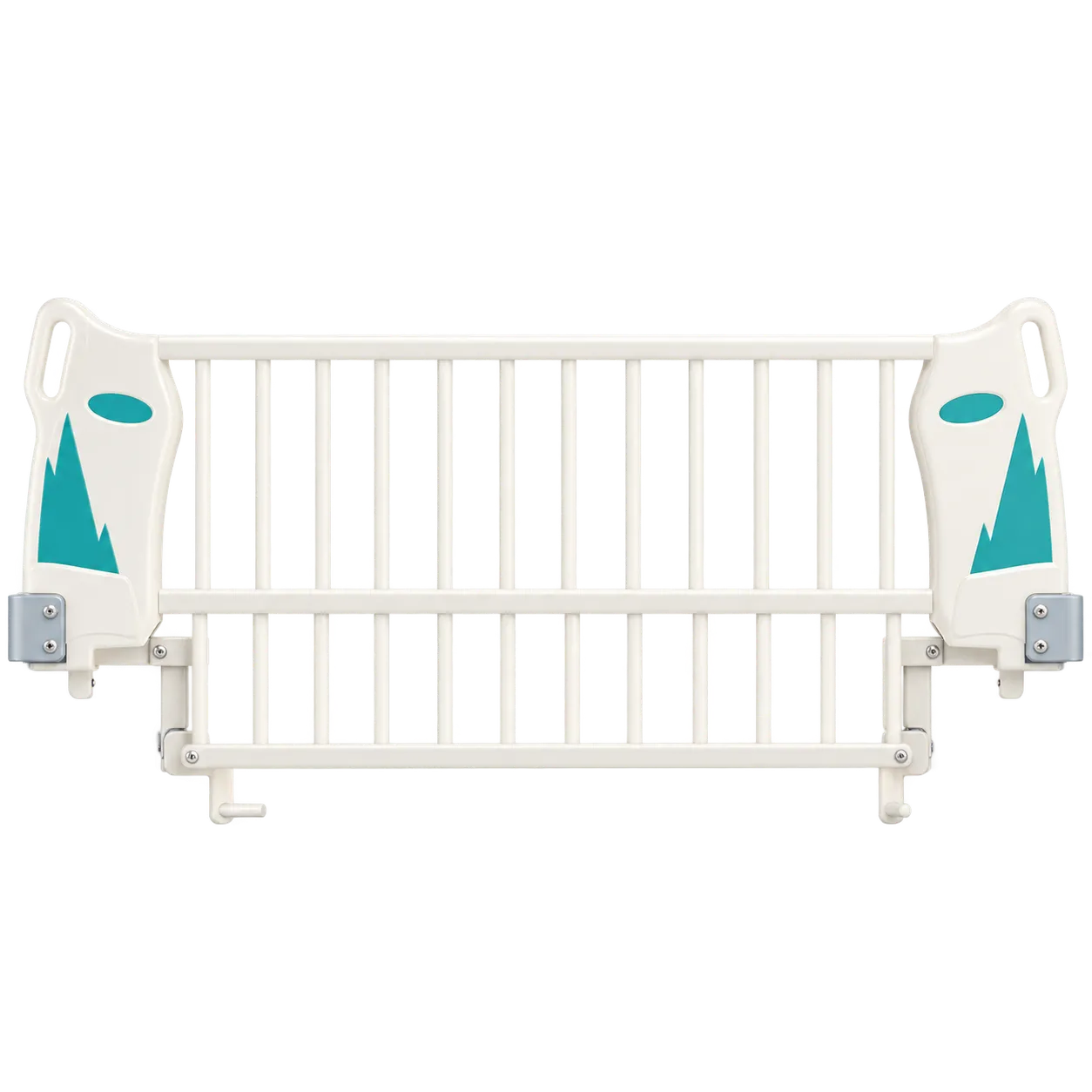
The sequence runs like this. Brakes go on at the twin-wheel castors. One full-length barred side comes down, the nurse works at the 500 mm platform, and the cranks at the foot end raise the backrest for a feed or the leg section for comfort. Then the side goes up, the catch is checked, and the crank handles are stowed. With no motor or handset, nothing needs charging or plugging in between patients, and the whiteboards and bars are wiped down between occupants.
Workflow fails at its skipped steps. A side left lowered while a nurse turns away is a fall, so local procedure should say a child is never left with a side down. BS EN 50637:2017 sets enclosed gaps at under 60 mm, and NatPSA/2023/010/MHRA expects children’s beds to meet it unless a reason is documented, so bar spacing and mattress fit need to be measured at set-up. The fixed 500 mm height keeps nurses bending for long tasks, which the Manual Handling Operations Regulations 1992 require assessing. The bed has no tilt or CPR release, so children who may deteriorate belong elsewhere.
NHS procurement routes and overseas health ministries will ask for the device class, BS EN 50637 evidence and a declaration of conformity. The conformity documentation those procurement routes require is issued by the manufacturer and shared by the enquiry team.