
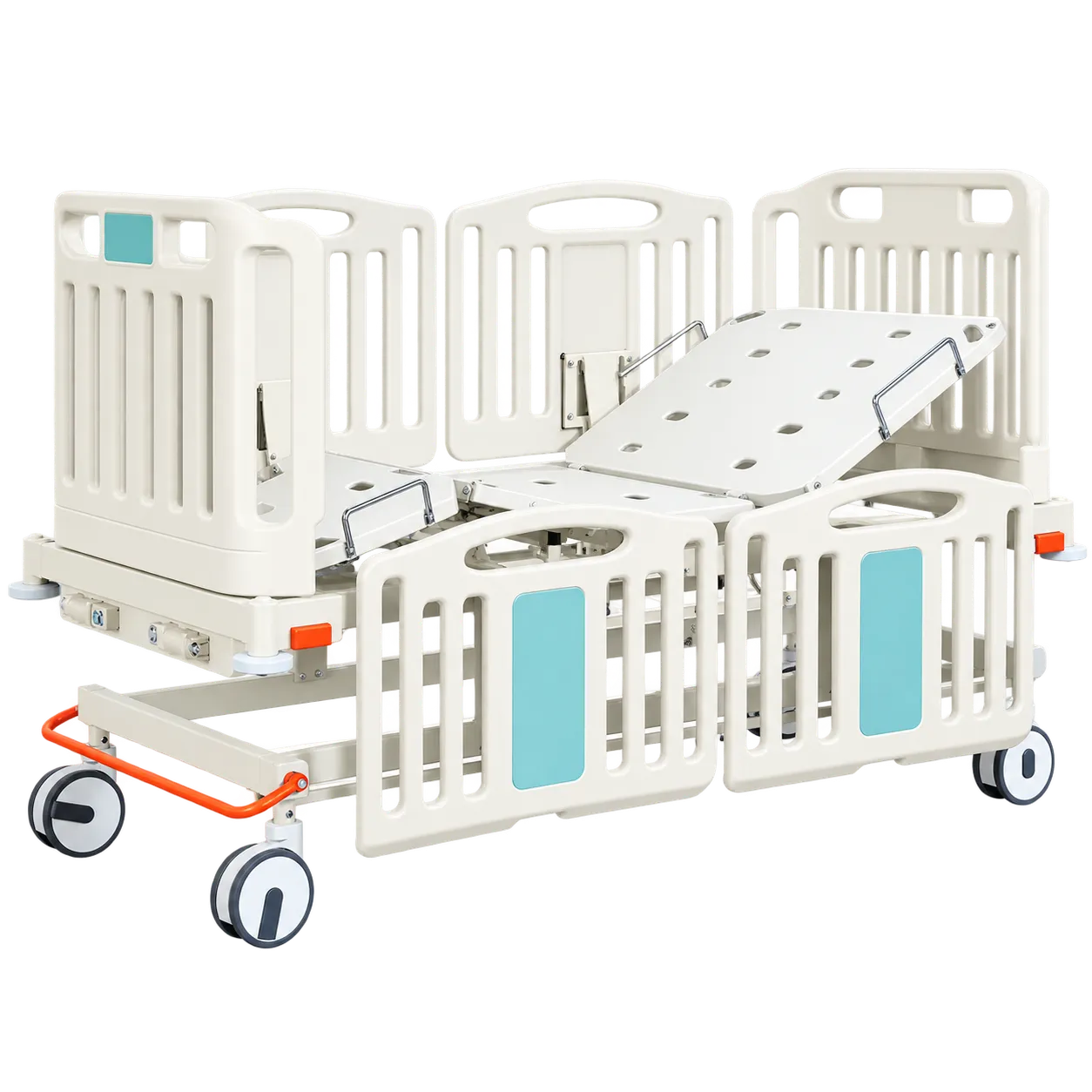



The R-3 suits general children’s wards, short-stay and observation units, children’s hospices and community hospitals, for children who are stable and staying at least one night. Its case is patient experience and dignity. For a child, a hospital bed is where they wake up, and the R-3 is designed to make that place less frightening.
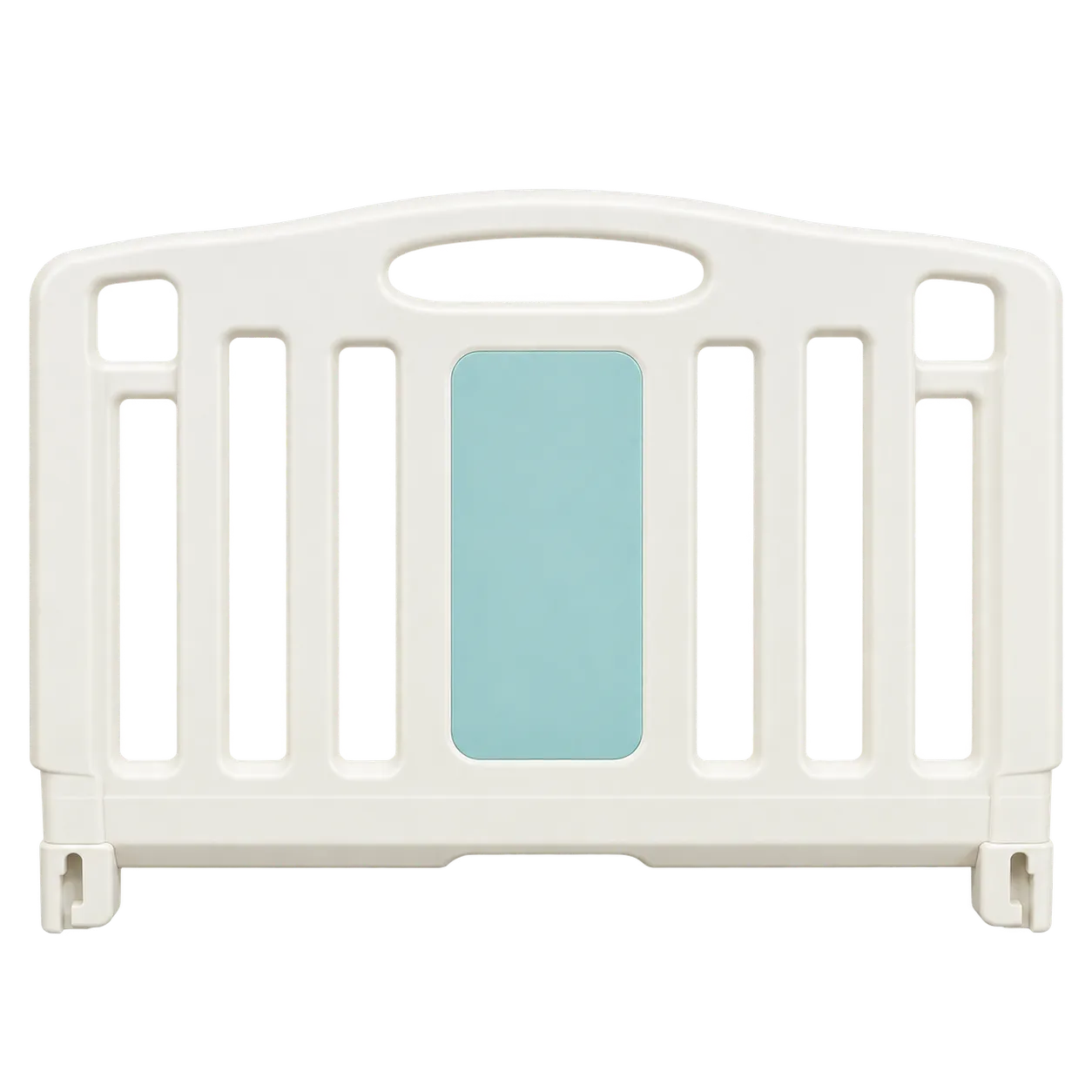
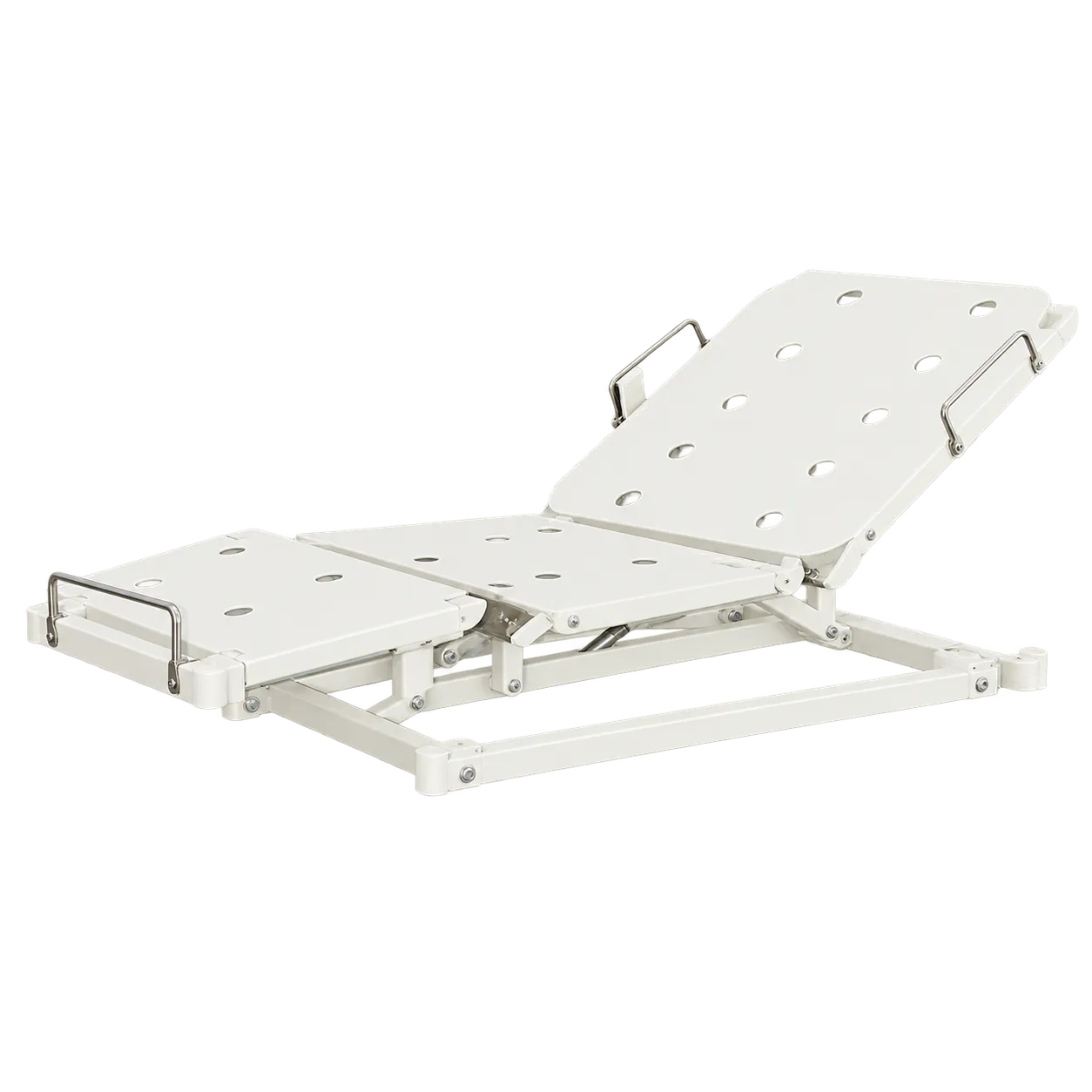
Several details serve that aim. Tall moulded rails and end boards give a child clear edges and a sense of enclosure, while rounded white shapes and coloured panels give the bed a nursery look. Hand cranks adjust the backrest and leg section without motor noise, so the bed doesn't wake a sleeping child. A parent can sit a child up for a drink or a book from outside the rails, which keeps a familiar adult in charge of small comforts.
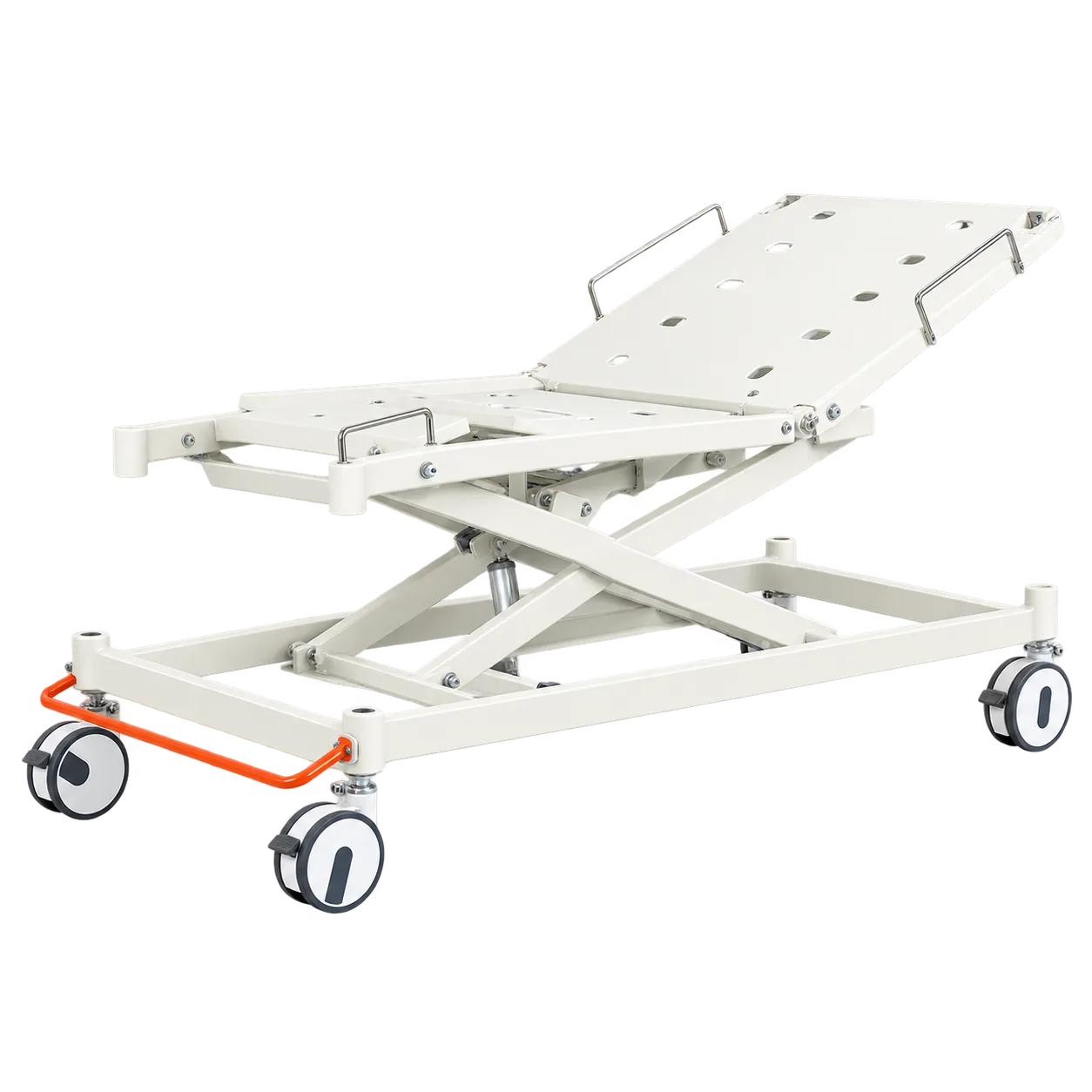
Comfort rests on safety checks. BS EN 50637:2017 sets enclosed gaps at under 60 mm, and NatPSA/2023/010/MHRA expects children’s beds to meet it unless a reason is documented, so measure rail openings and the gaps between split rails with the mattress in place. Check catches at each handover and show them to parents. The platform is fixed at 600 mm, which leaves nurses working at one height and sets the drop if a child climbs out. There is no tilt or CPR release, so children who may deteriorate need a bed with those functions.
NHS procurement routes, hospice purchasers and public buyers overseas will ask for the device class, BS EN 50637 evidence and a declaration of conformity. The manufacturer issues the conformity documentation those procurement routes require, and the enquiry team shares it.