
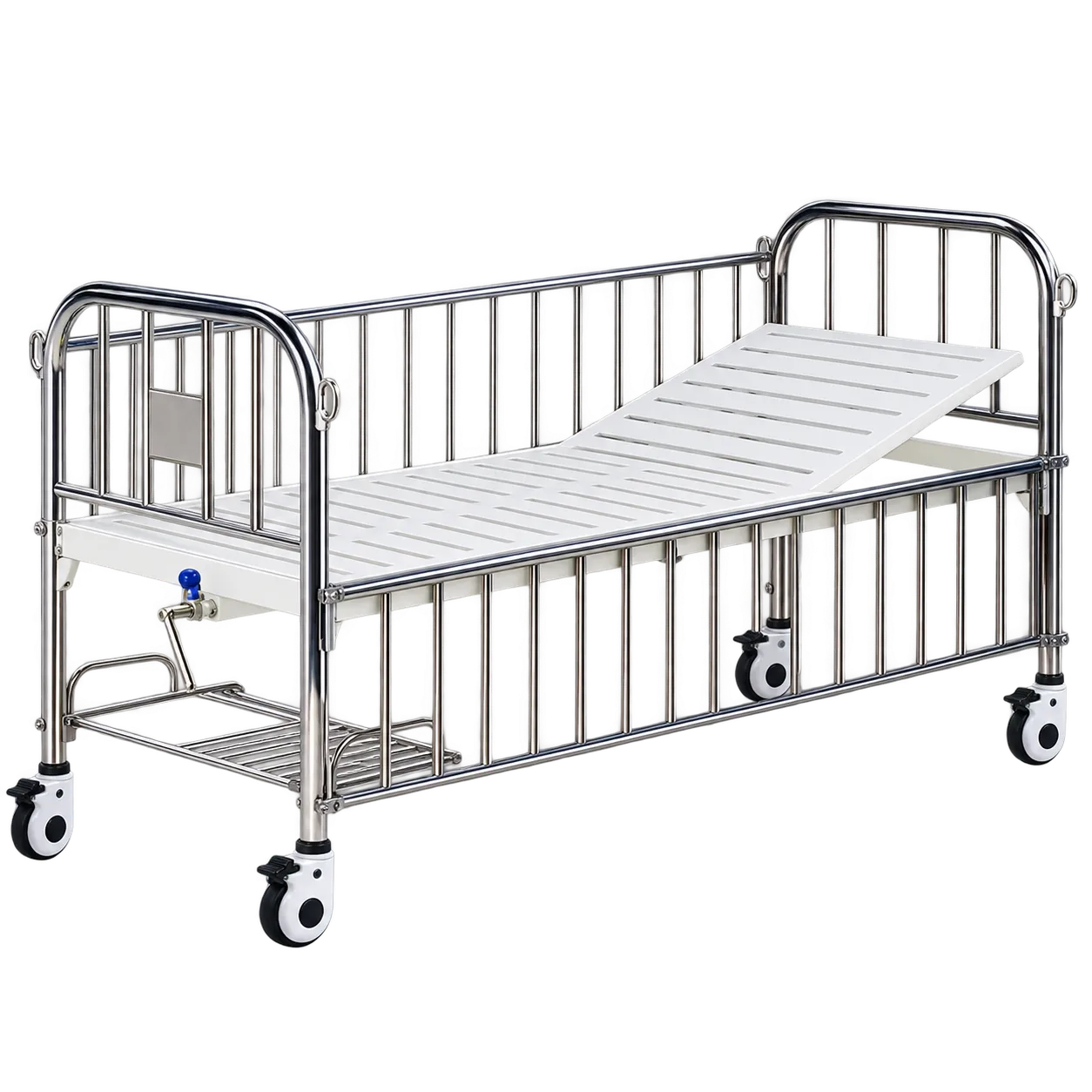


The R-2 suits general children’s wards, observation and day-case areas, outpatient clinics, rural health posts, and field hospitals where children are stable and need a safe, cleanable place to rest. Its case is absence honesty. The bed does one thing, and a buyer who knows what it does not do can place it well.
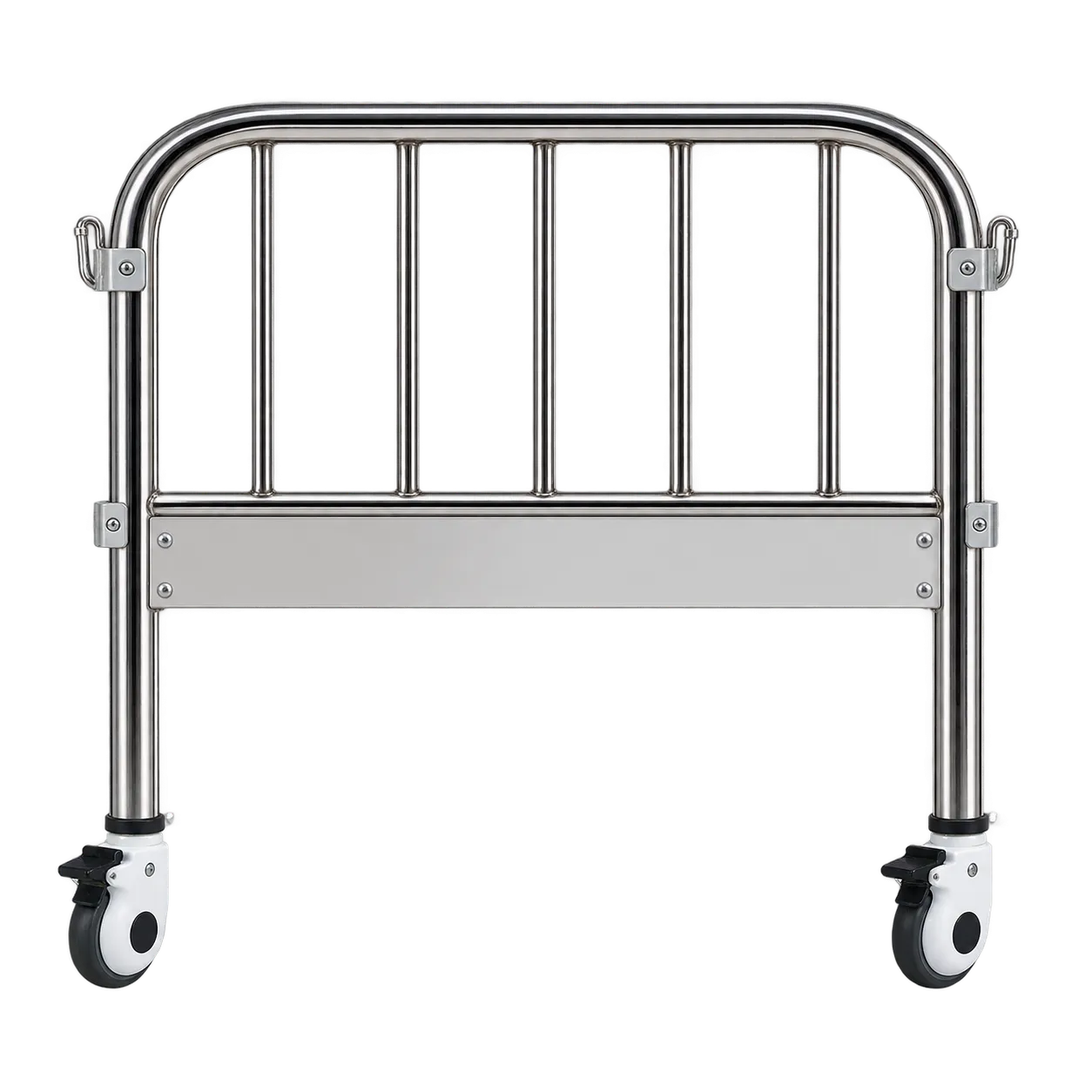
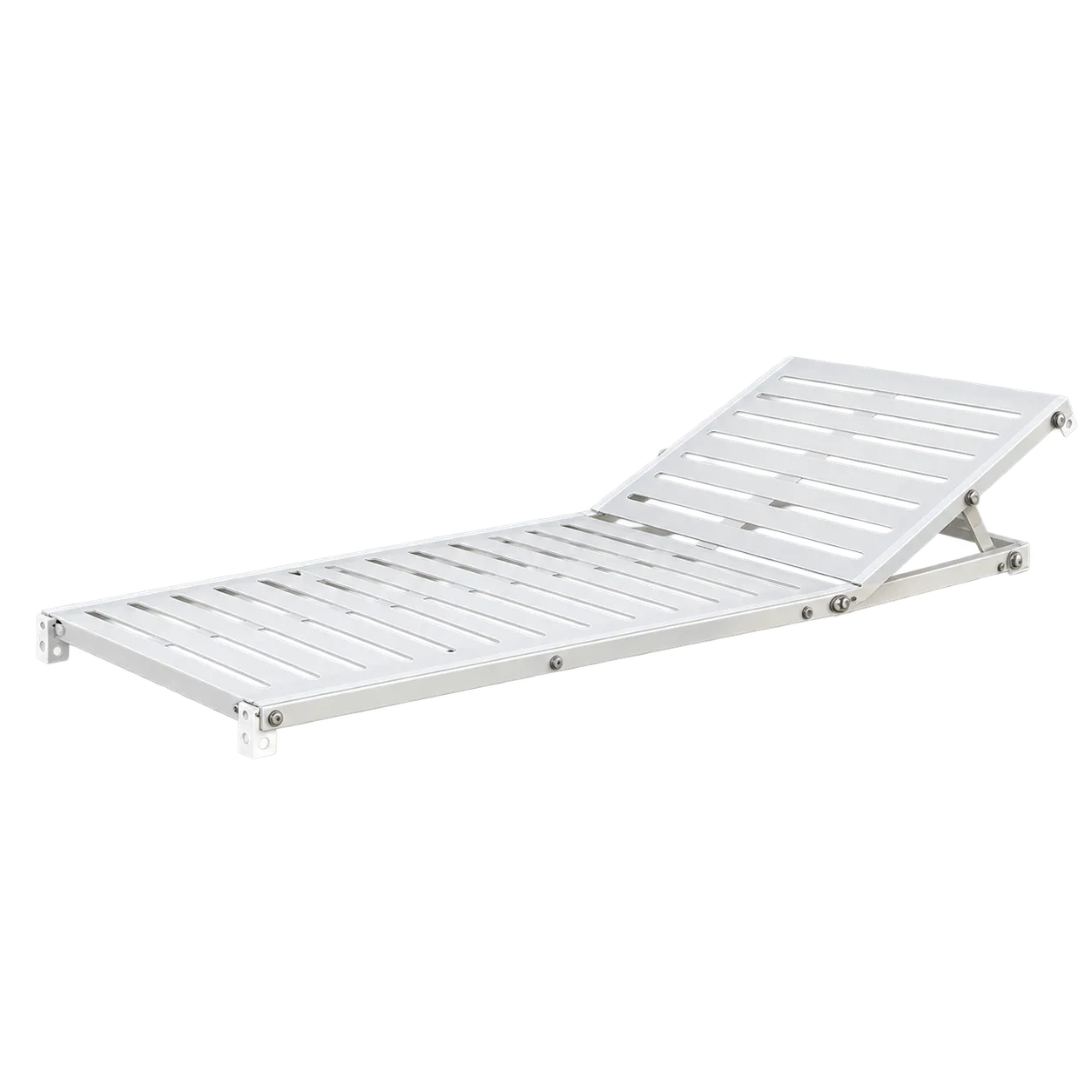
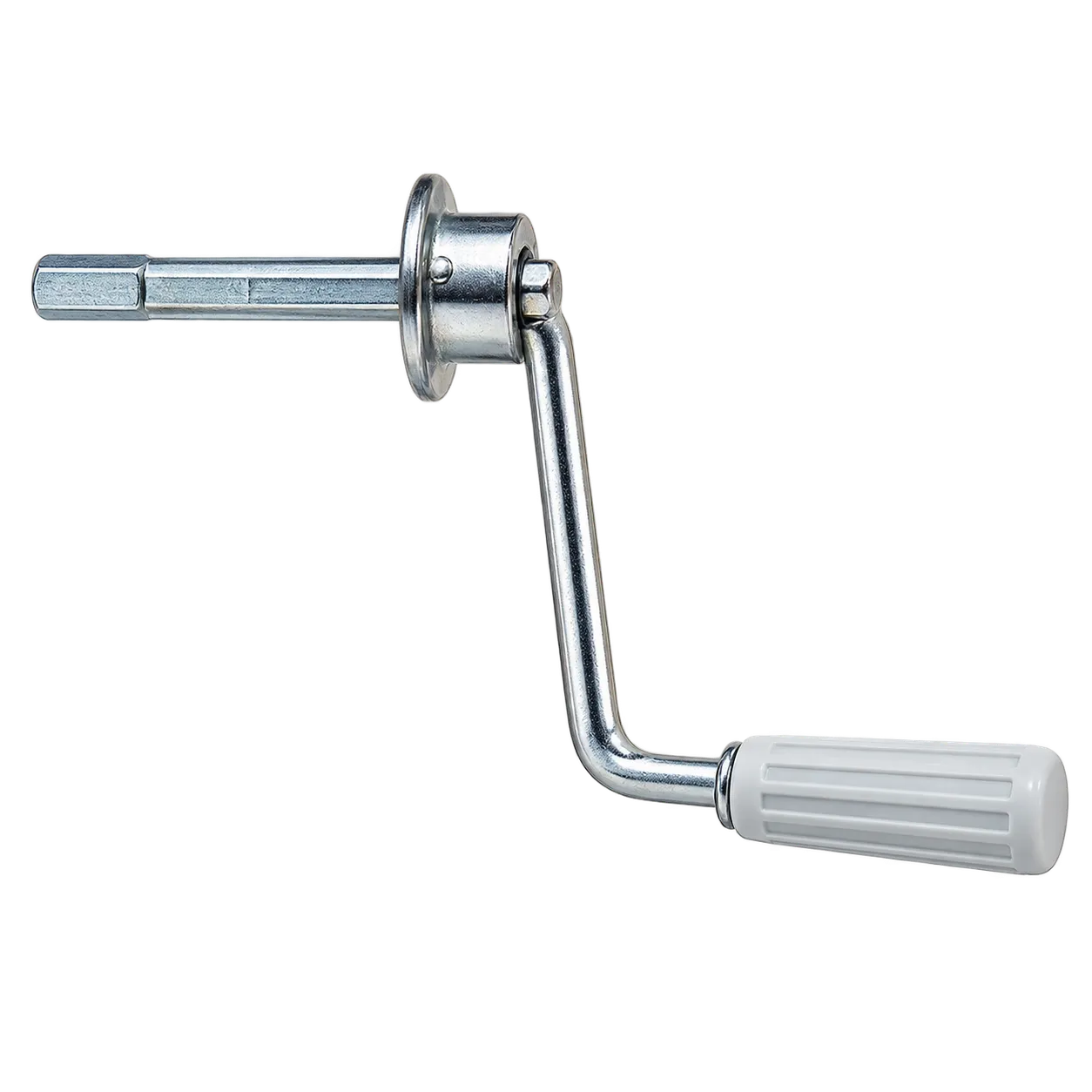
It props a child up. A raised backrest helps with feeding, drinking, breathing comfort and seeing the room, and one crank at the foot end is all a nurse or parent has to learn. Barred sides and ends contain the child, the open frame keeps them in view, and the polished tubes and bars wipe quickly between patients. With no motor or cable, there is nothing to plug in, charge or test electrically, which suits sites with unreliable power.
What it does not do matters as much. There is no leg-section adjustment, so a propped-up child may slide down the bed and need repositioning. The 530 mm platform is fixed, so nurses work at one level, which belongs in the moving and handling assessment. There is no tilt or CPR release, so children at risk of deterioration belong on another bed. The bars need checking too. BS EN 50637:2017 sets enclosed gaps at under 60 mm, NatPSA/2023/010/MHRA expects children’s beds to meet that standard unless a reason is documented, and side catches and castor brakes need checking at each handover.
Public tenders, aid procurement and NHS procurement routes will each ask for the device class, any BS EN 50637 evidence and a declaration of conformity. The conformity documentation those procurement routes require is issued by the manufacturer and shared by the enquiry team.