
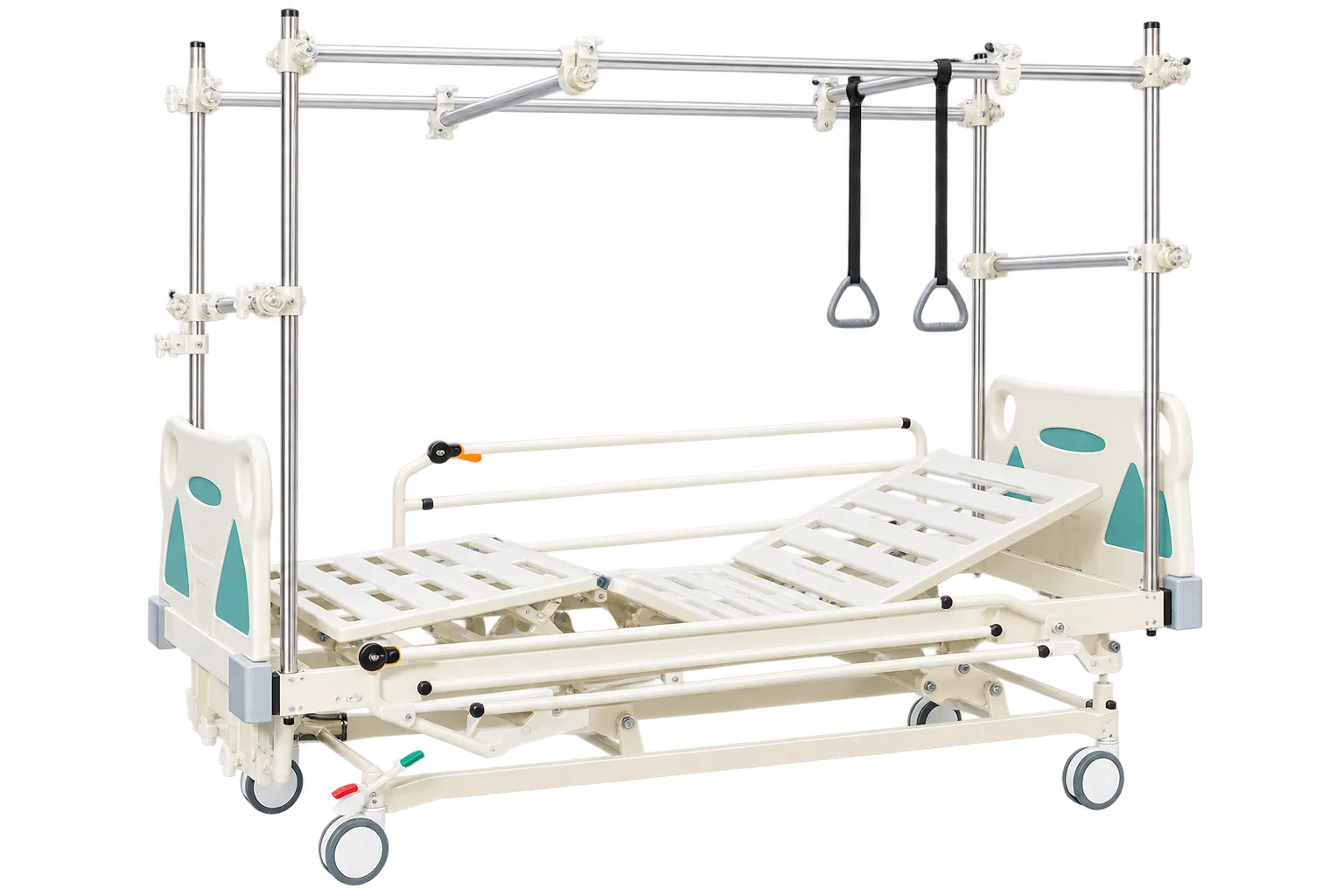
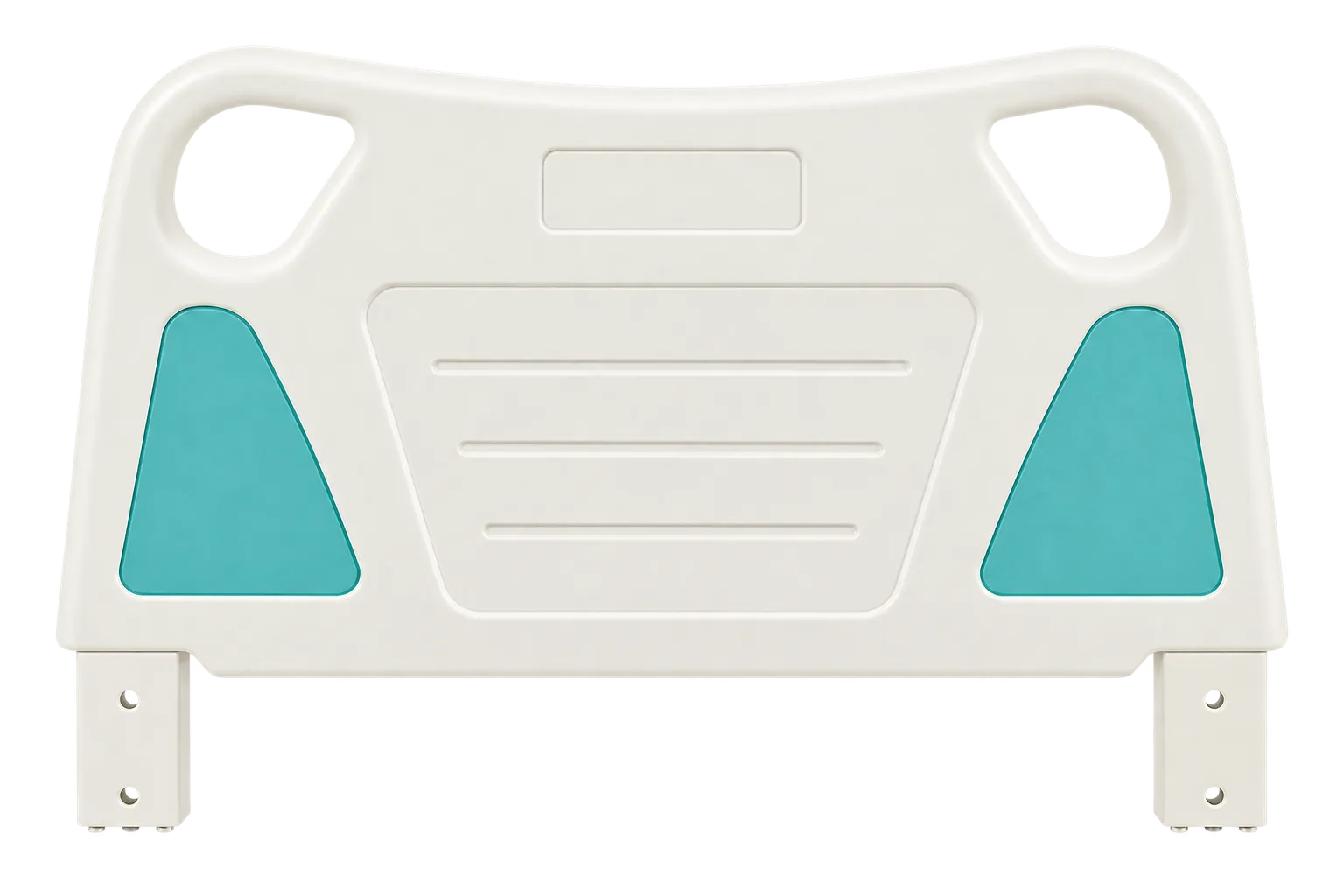

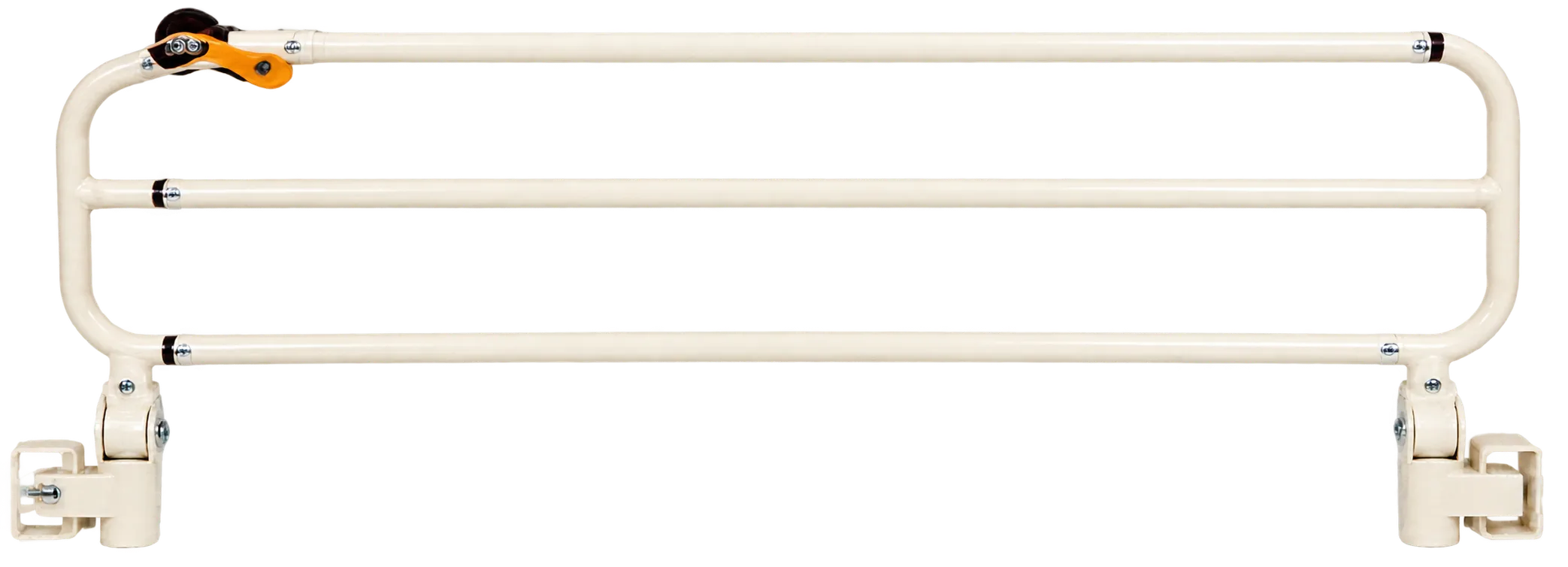
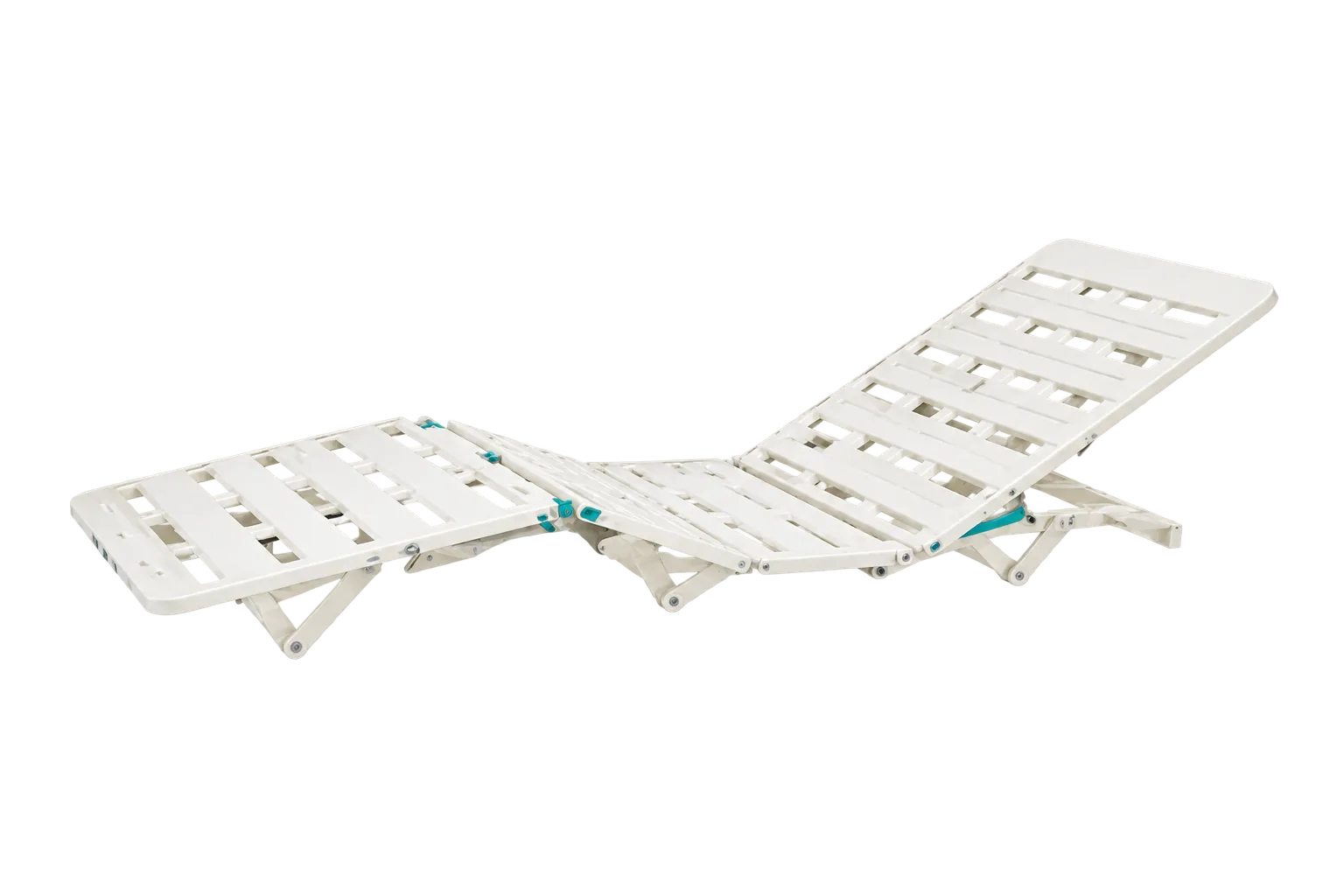
The QY-1 is specified for orthopaedic and trauma inpatient care: adults under fracture management, in skin or skeletal traction, or recovering from major lower-limb or pelvic surgery where one limb requires positioning independently of the other.
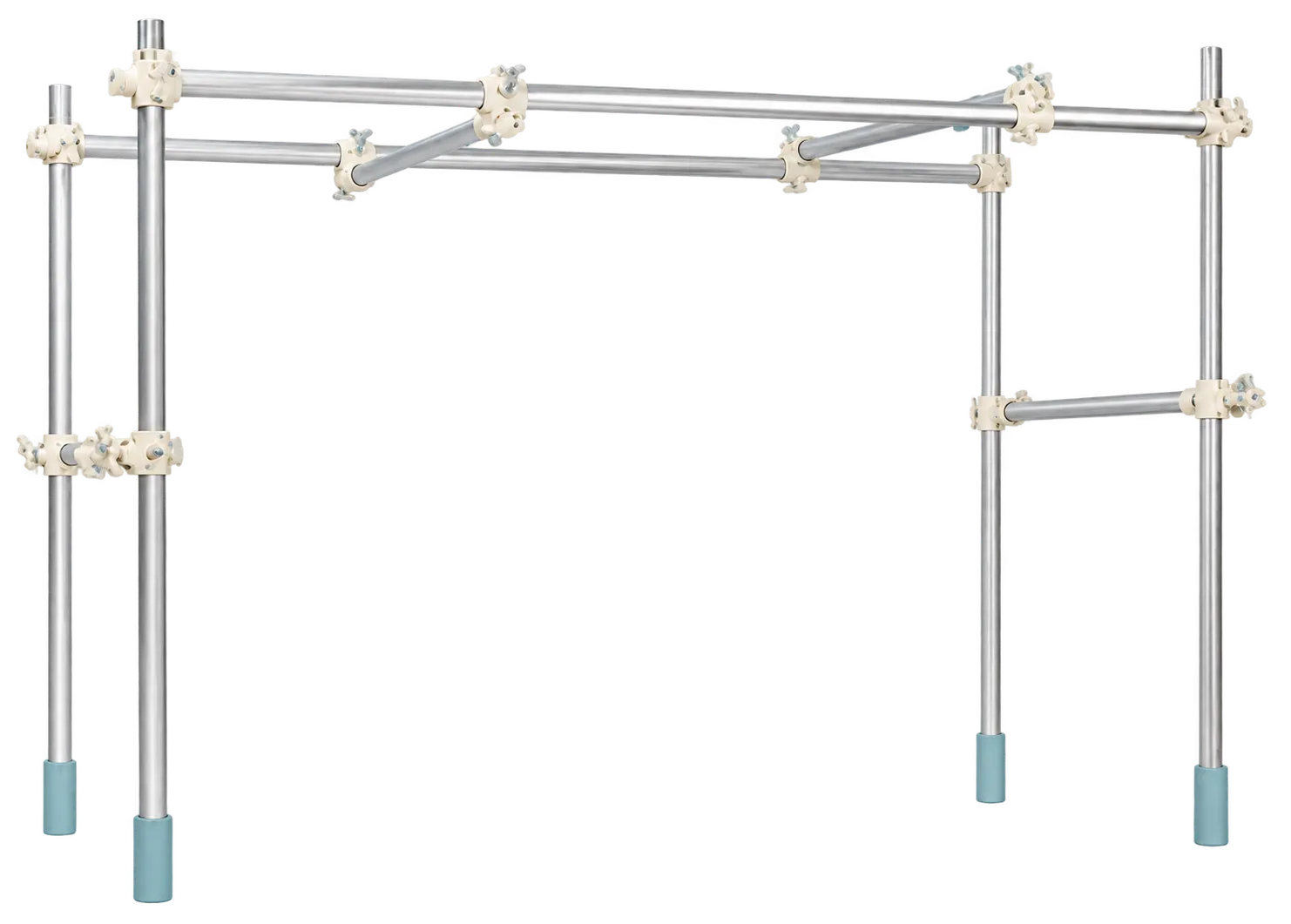
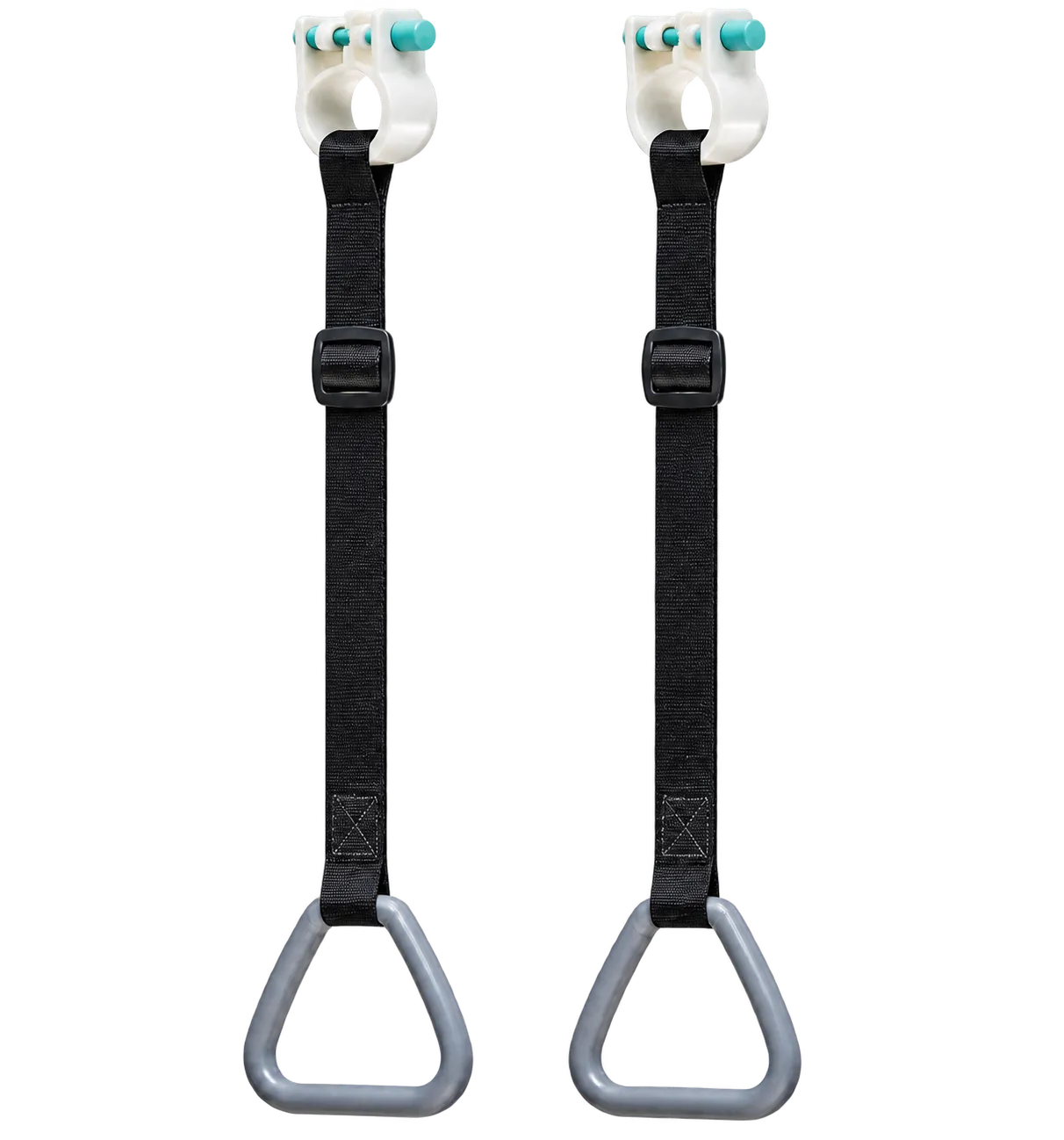
The overhead frame carries most of the clinical argument. A patient immobilised by a fracture spends weeks in the same bed, and every repositioning, bedpan use and pressure-relief manoeuvre either involves staff or does not. Two suspended grips within reach let a patient with adequate upper body strength lift their own weight, shift their own position and take some of the load off their sacrum without waiting. On a ward where the same patient needs repositioning around the clock for six weeks, that changes the cumulative demand on staff and gives the patient back a measure of control.
The frame is also the mounting structure for traction apparatus. Uprights and crossbars are the scaffold that pulleys, weight hangers, and cords attach to, and established practice is to check at least every eight hours that cords run free, weights hang clear, and alignment has been maintained so that all of that is visible and reachable from the working side.
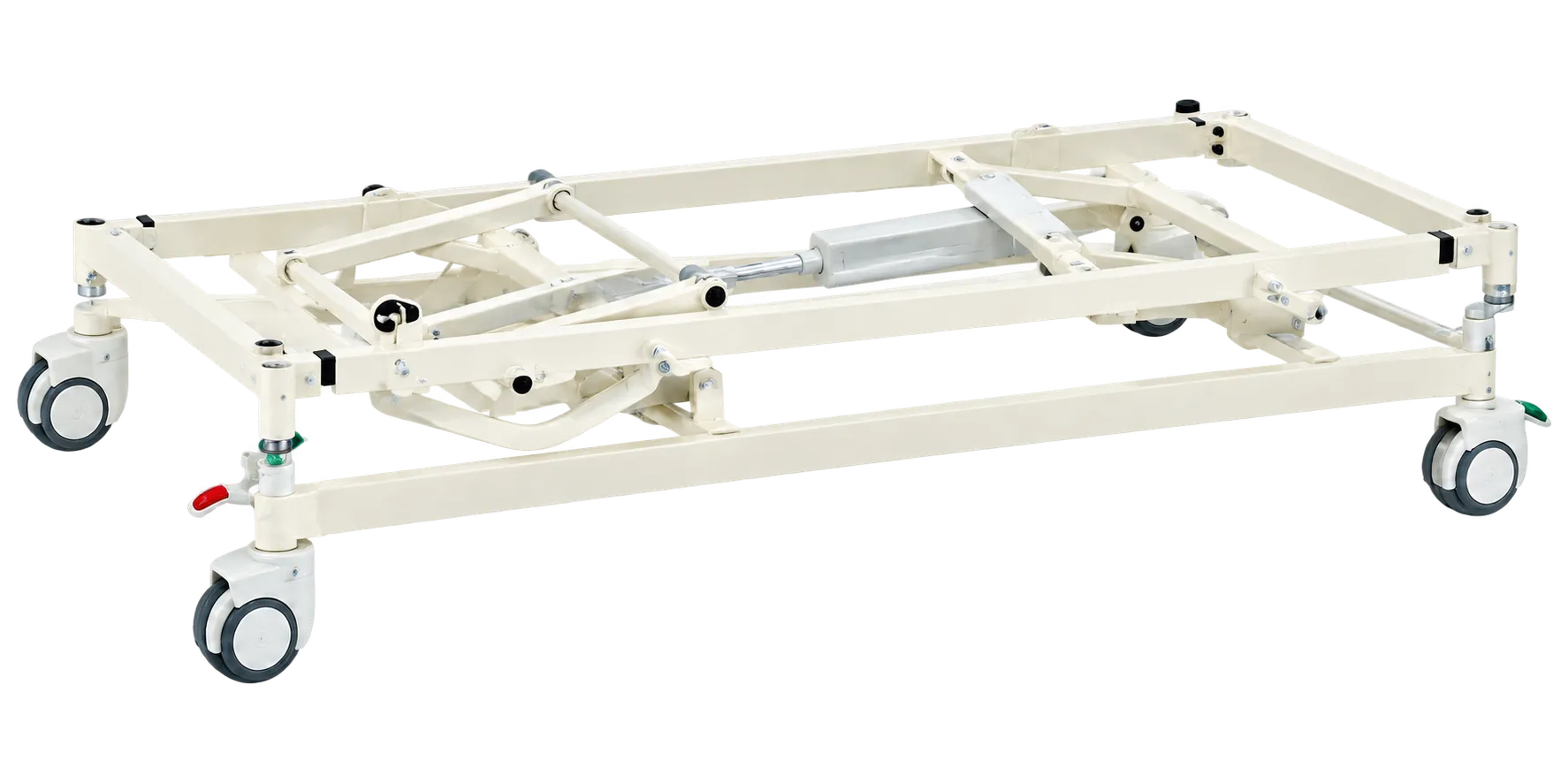
Divided leg sections meet the routine orthopaedic requirement to position each limb separately—one in traction or cast while the other rests comfortably, or abduction maintained after hip surgery.
The wider 1010 mm deck and the overhead structure make this a poor fit for a general ward, where footprint and overhead access matter more than traction capability. The conformity documentation that trust, Integrated Care Board and NHS Supply Chain procurement routes require is issued by the manufacturer and provided by the seller.