
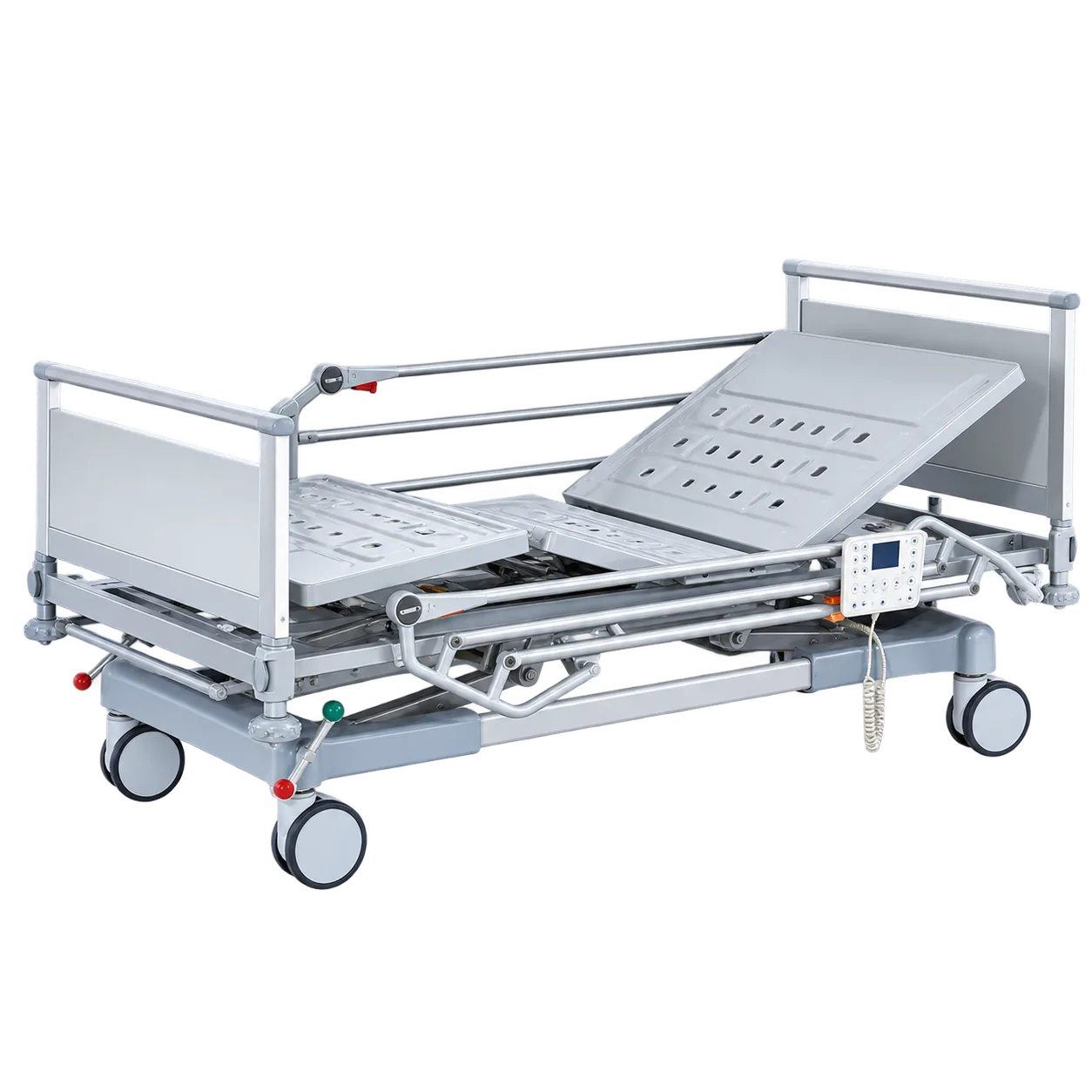


The DS-2 suits acute medical and surgical wards, step-down and assessment units, and community hospitals where patients may deteriorate, and beds move between departments. Its case is safety and risk transfer. The bed takes mains power out of the first minutes of an emergency, and the risk moves to battery care and staff readiness.
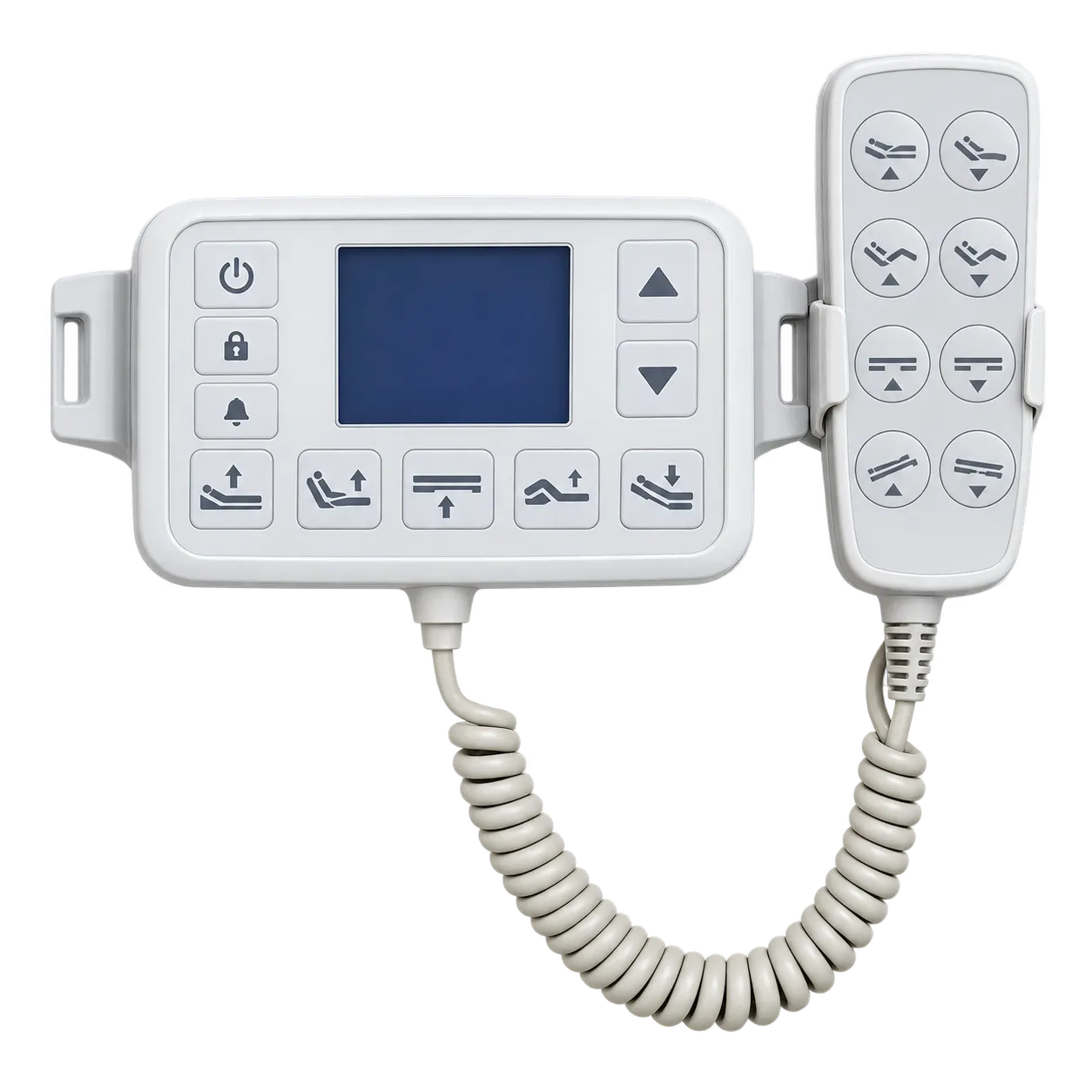
During a cardiac arrest, the team needs a flat, firm surface at once. Electric CPR flattens the deck by motor, and the manual route flattens it with no power, so an arrest during a power cut or in a corridor still starts on a flat deck. Battery backup keeps the other functions running in transit. Trendelenburg and reverse Trendelenburg support positioning plans, and the 480 to 880 mm range gives carers a working height under the Manual Handling Operations Regulations 1992.
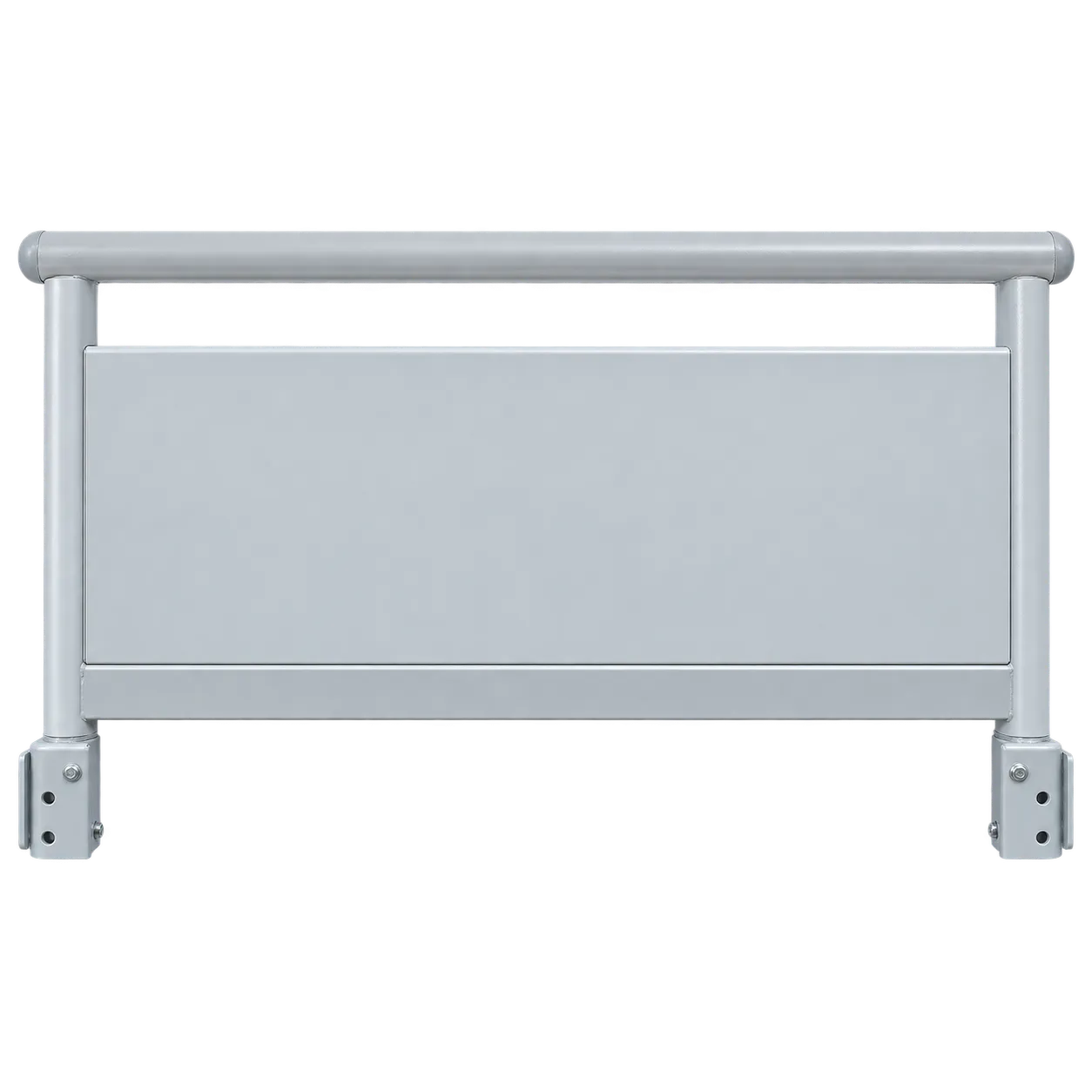
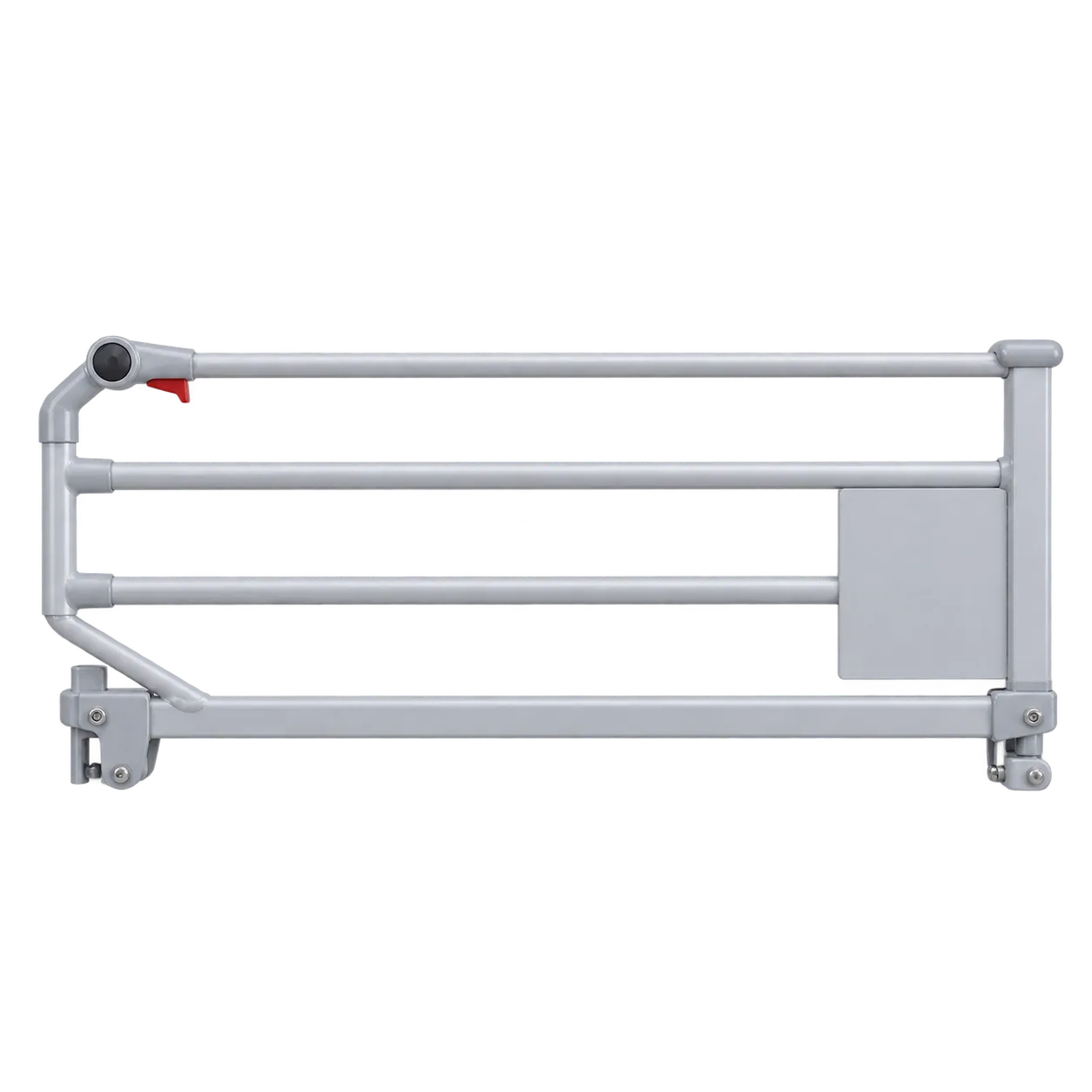
That transfer creates duties. A battery that has lost charge or reached the end of its life will not run the motors, so charging and replacement go into the planned maintenance record with IEC 62353 testing. A manual release nobody has used before an emergency slows the team, so CPR drills on the bed belong in training and induction. Rails should be raised and assessed before tilting, under MHRA bed rails guidance and NatPSA/2023/010/MHRA. The bed has no scale or turning, so weights and repositioning need other equipment, and the 480 mm low point does not suit high falls risk without other measures.
NHS procurement routes and public tenders abroad will ask for the device class and a declaration of conformity. The conformity documentation those procurement routes require is issued by the manufacturer and shared by the enquiry team.