
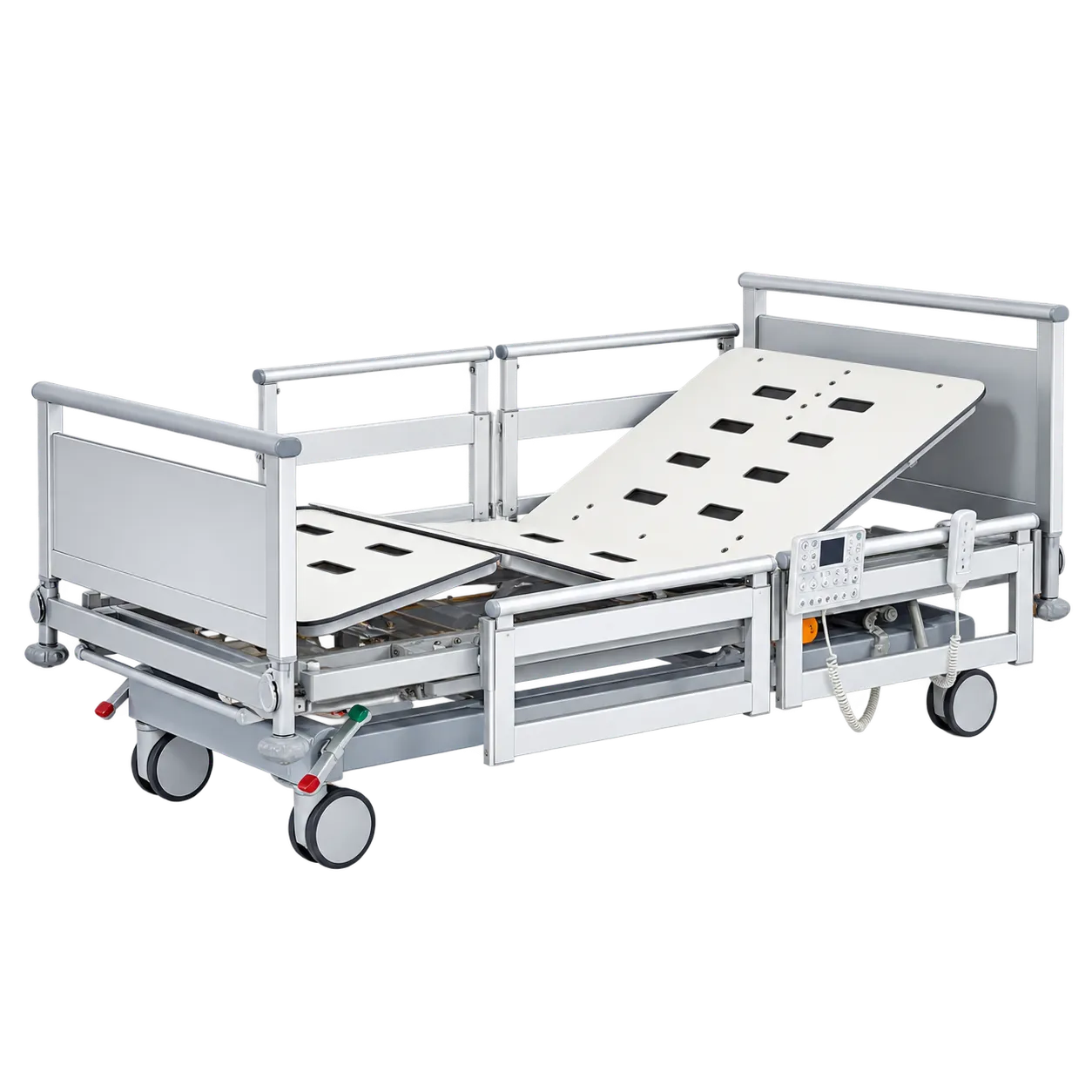


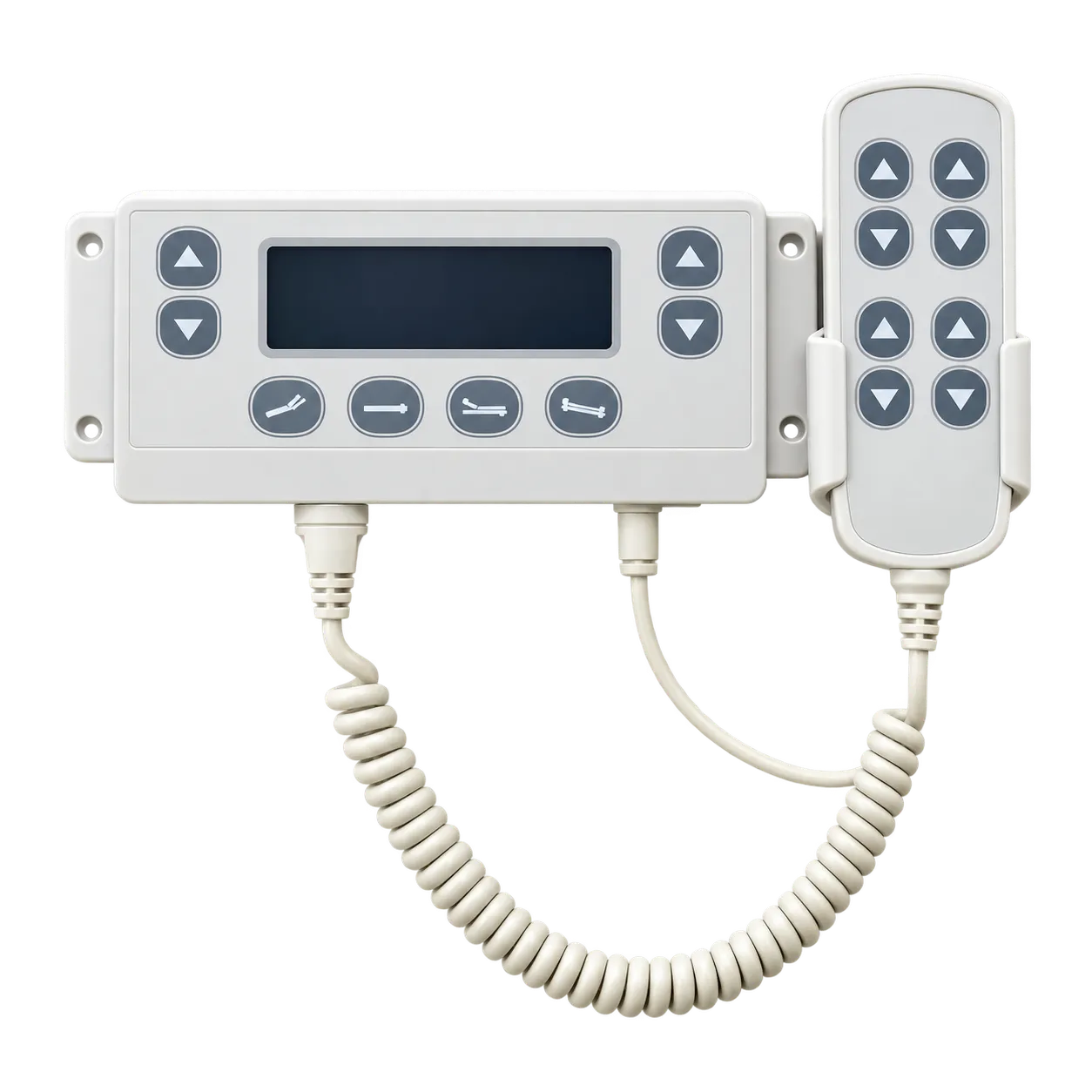

The DS-1 suits acute medical and surgical wards, high-dependency and step-down units, and long-stay settings for heavily dependent people, such as spinal injury, advanced neurological disease or prolonged ventilation. Its case is workflow. Each function on the frame removes a move that would otherwise take the patient off the bed, and the day around the patient is planned differently as a result.
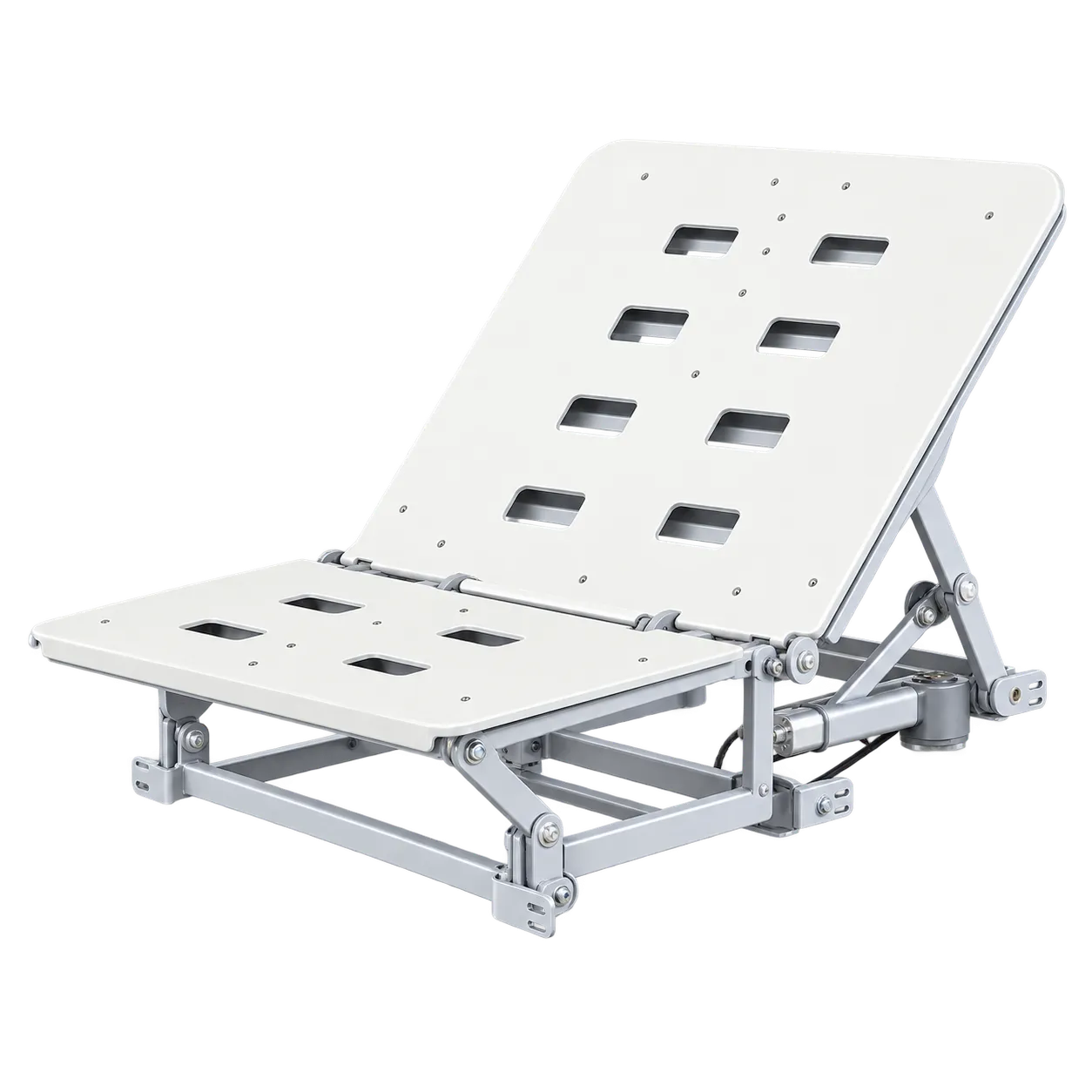
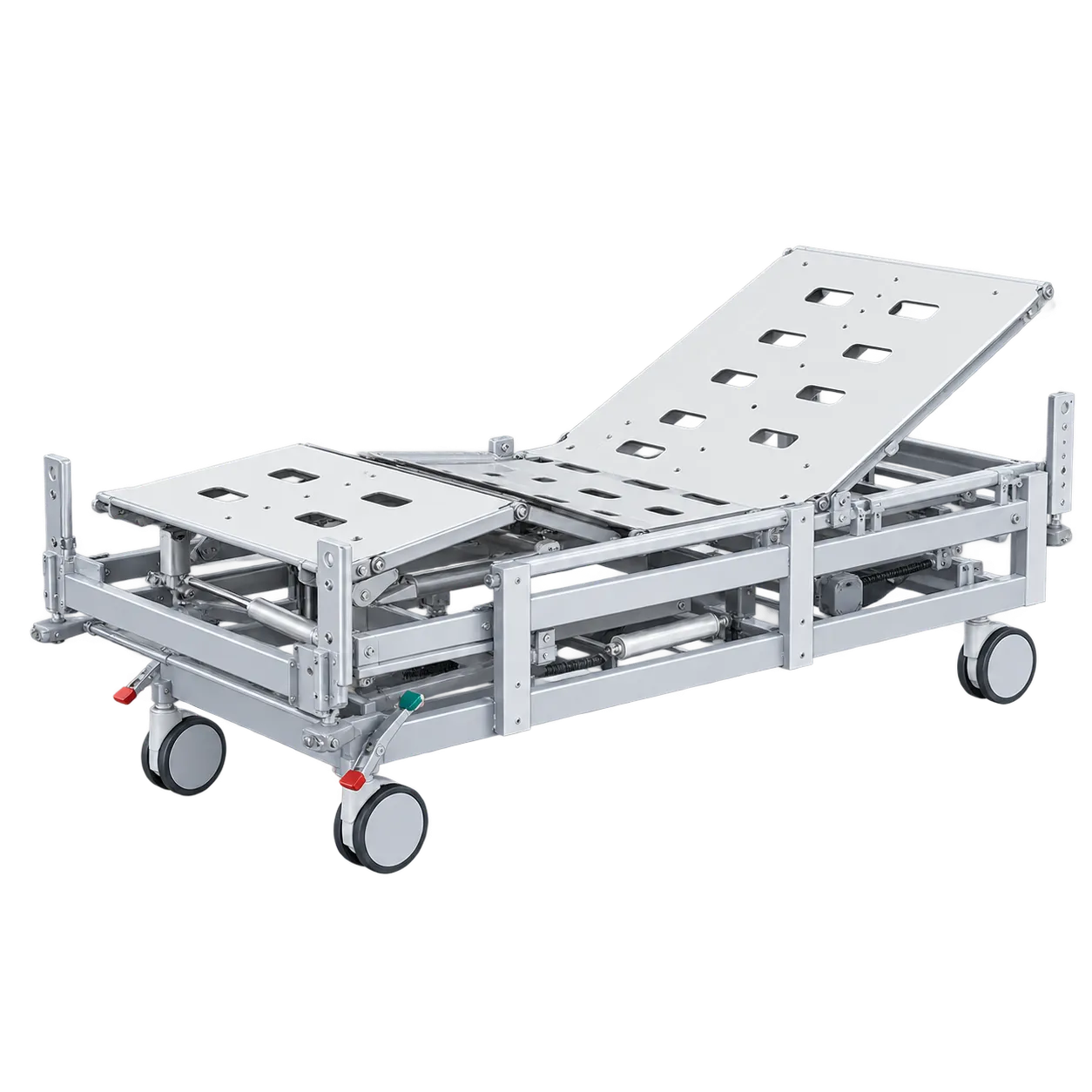
Weighing on the deck saves a hoist transfer to a scale, which matters for fluid balance and daily weights. In Great Britain, weights used for diagnosis or dosing need an instrument approved under the Non-automatic Weighing Instruments Regulations 2016, so check the scale’s approval. Chest imaging through the backrest lets a radiographer image the patient in place. Electric CPR flattens the bed with a motor, and manual CPR does so without power. Lateral turning supports washing, skin checks and the repositioning NICE sets for pressure care, at least every 6 hours at risk and every 4 hours at high risk. Trendelenburg and reverse Trendelenburg help with positioning, and the 500 to 900 mm range gives carers a working height under the Manual Handling Operations Regulations 1992. Battery backup keeps functions running in transit.
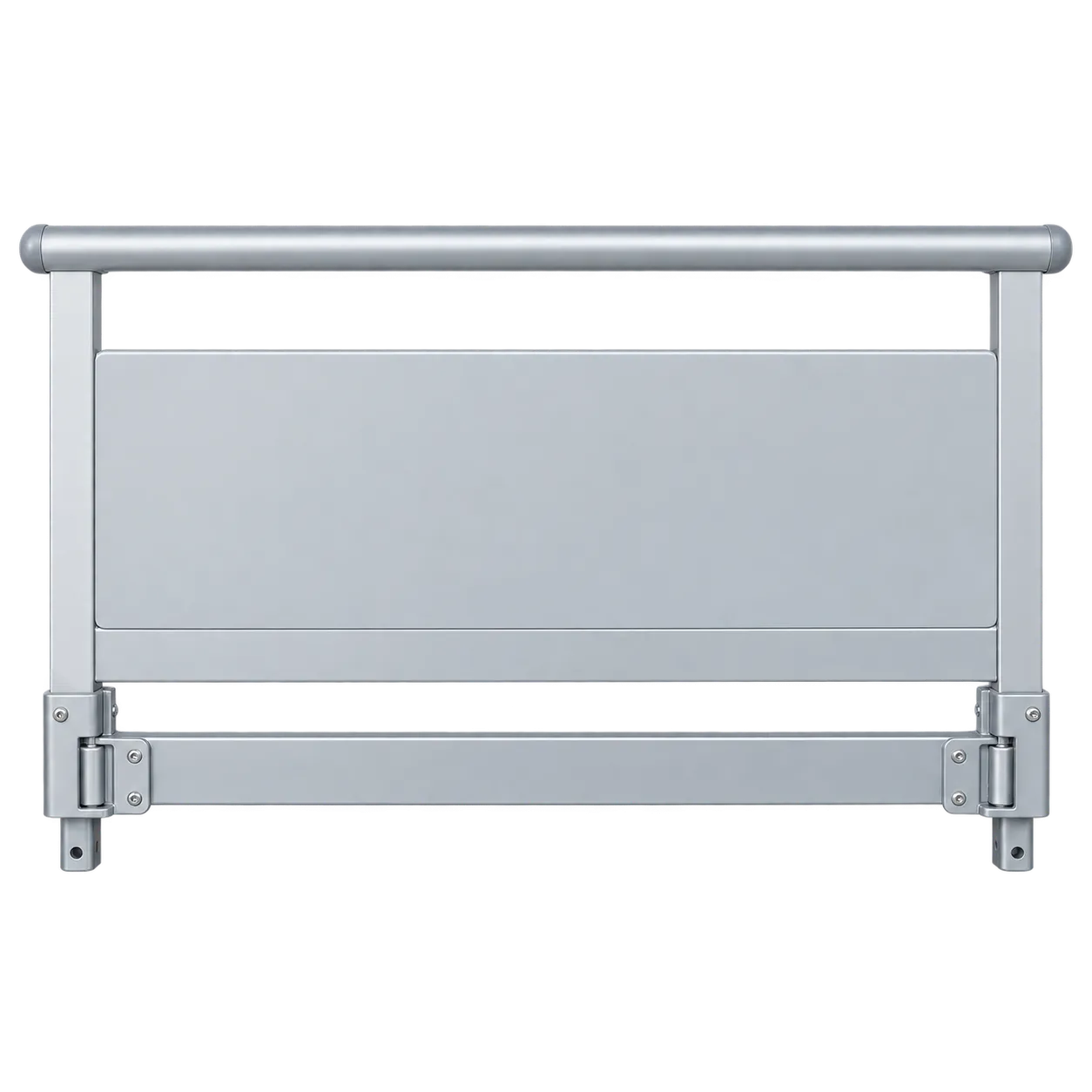
Workflow also means training. Each function needs a procedure, and the rail control panel needs a lockout policy. Turning needs raised rails and a carer present, since NatPSA/2023/010/MHRA lists lateral turning devices among equipment linked to entrapment and falls. The 500 mm low point does not suit high falls risk without other measures.
NHS procurement routes and public tenders in other markets will ask for the device class, the scale approval and a declaration of conformity. The manufacturer issues the conformity documentation required by those procurement routes, and the enquiry team shares it.