
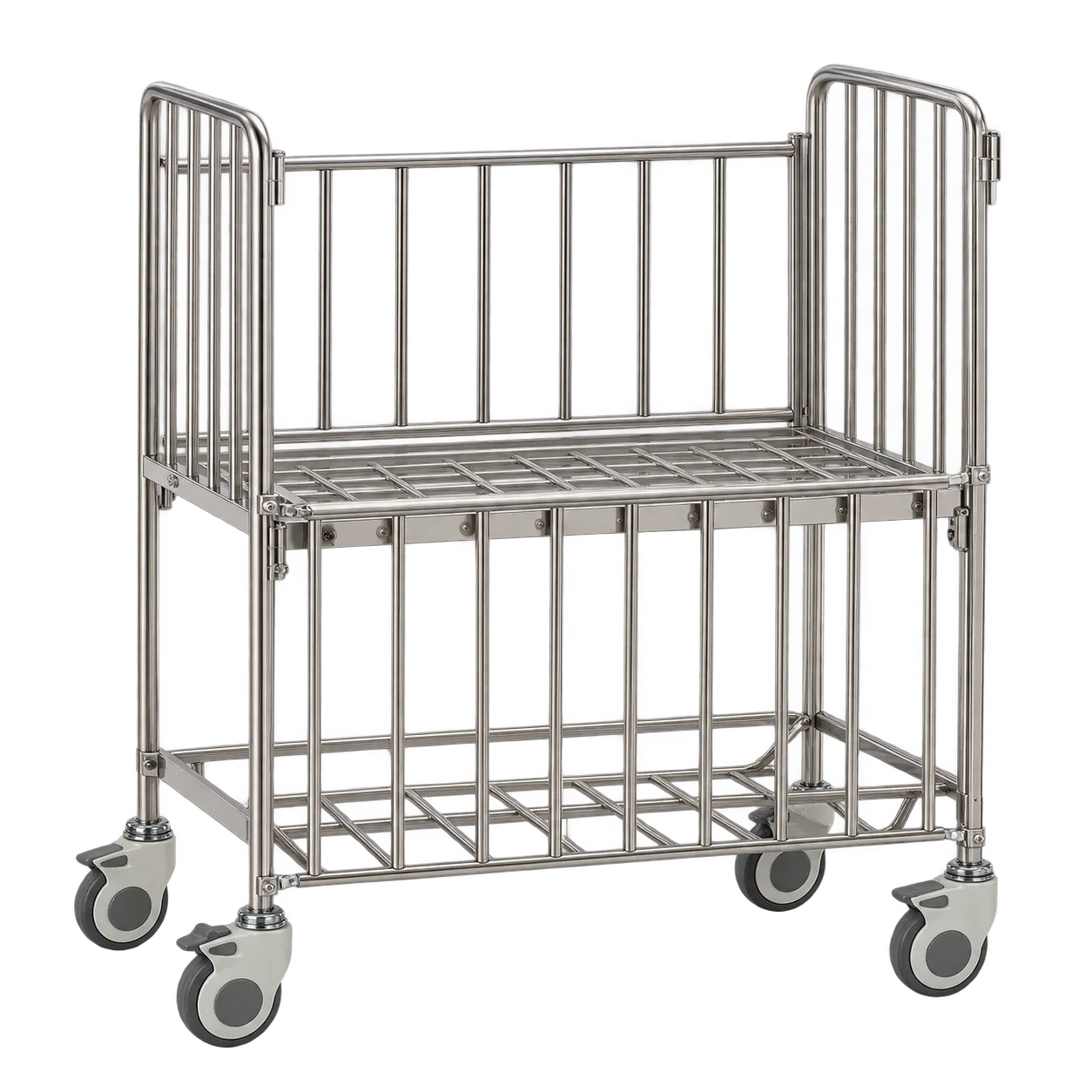



The D-1 suits maternity and postnatal wards, well-baby nurseries, birth centres, paediatric outpatient clinics, and health posts, providing a safe place for newborns and young infants to sleep. Its case is mechanism and effect. A raised platform on castors changes who bends, where the baby sleeps and how the cot is cleaned.
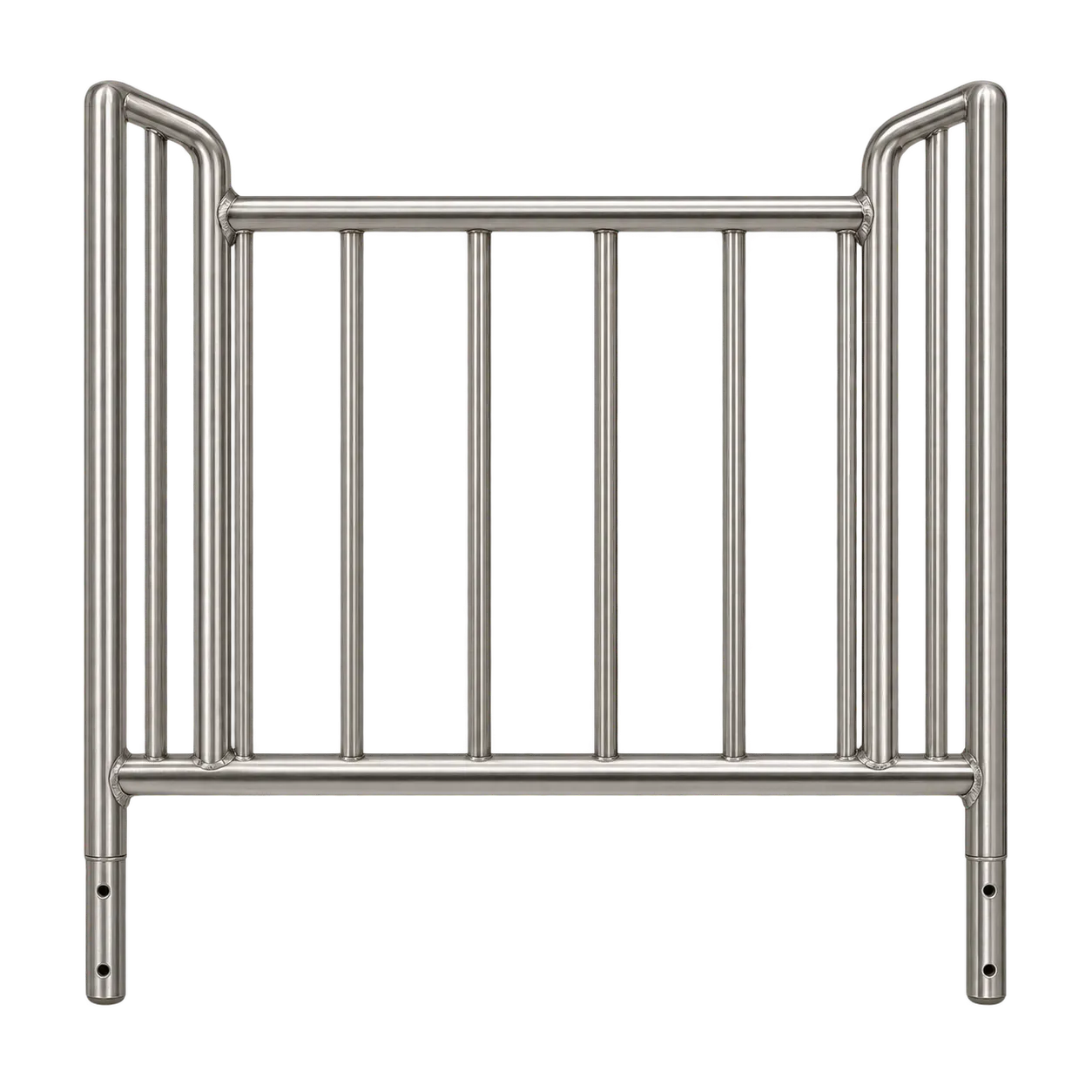
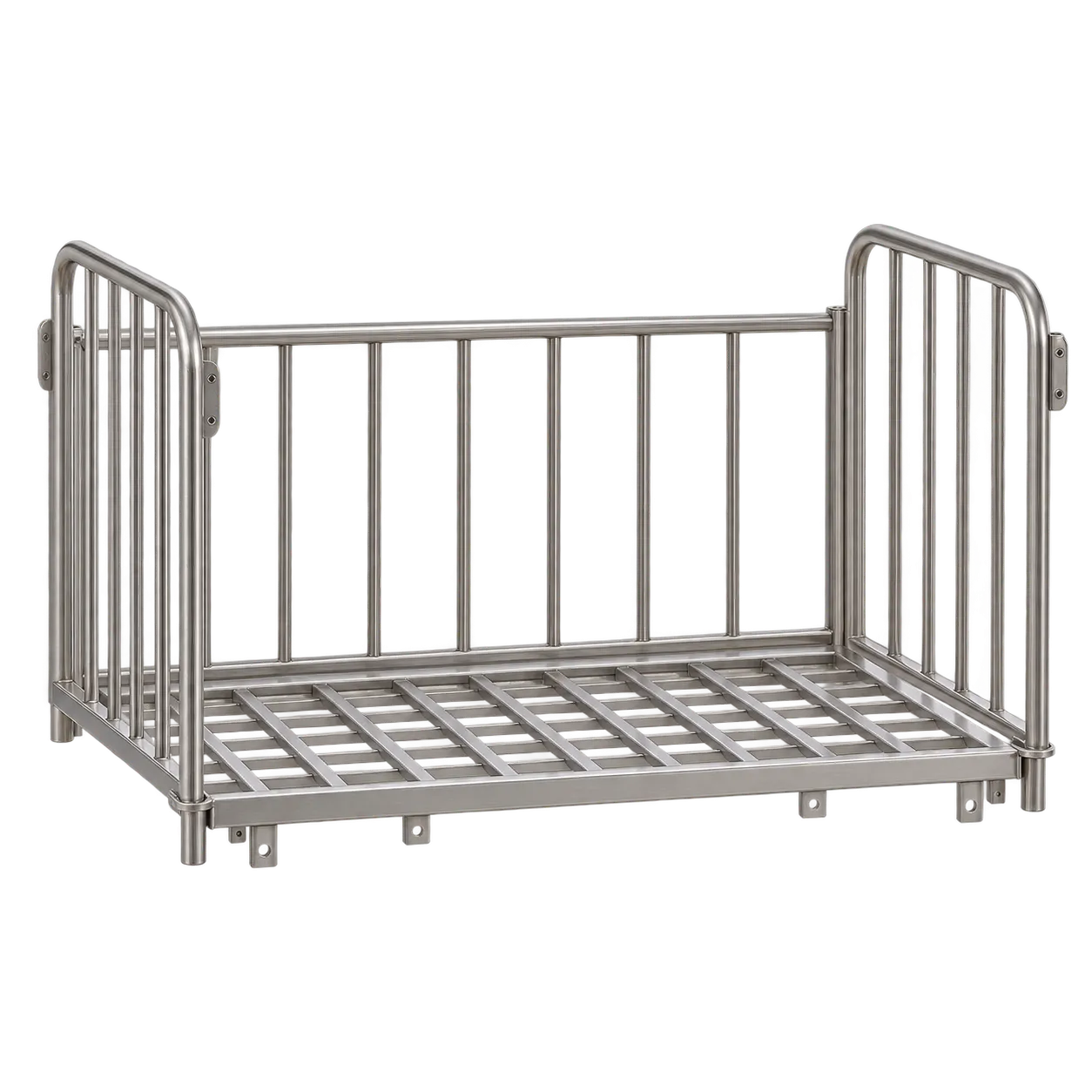
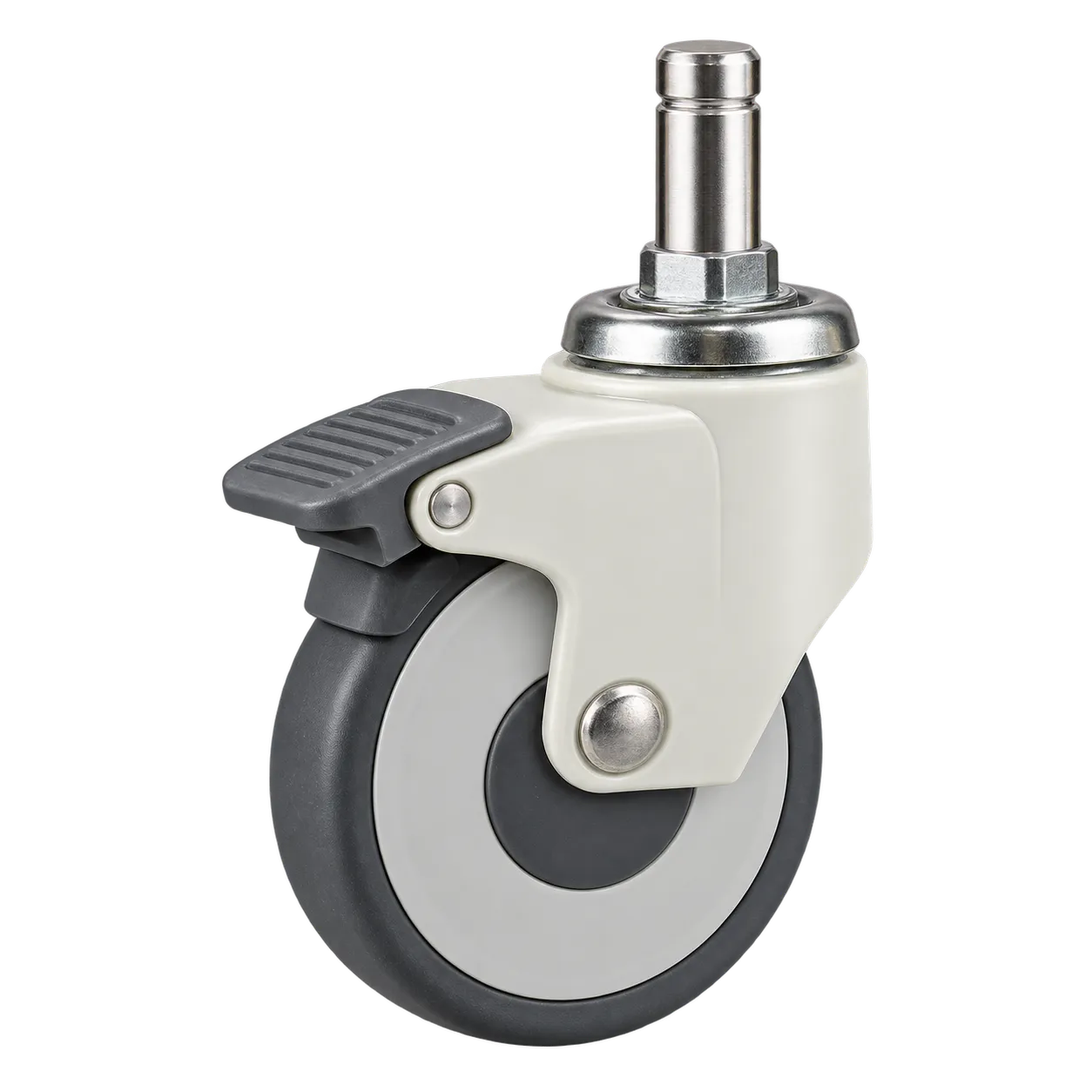
Raising the platform puts the baby at adult working level, sparing midwives repeated low lifts across a shift and helping a mother who is sore after birth or surgery. Castors let the cot stand against the mother’s bed for rooming-in and roll to the nursery for checks, with brakes on whenever it stops. Bars all round keep the baby in view from the bed and from the corridor, and an open metal frame with a slatted platform wipes down between babies. The shelf beneath holds nappies and linen.
Each effect has a condition. Raise and lock any lowering side before staff turn away. The mattress must be firm, flat and close-fitting, in line with NHS safer sleep advice, and bar spacing and gaps need checking against BS EN 50637:2017, which sets enclosed gaps at under 60 mm. NatPSA/2023/010/MHRA expects children’s beds and cots to meet that standard unless a reason is documented. The cot has no tilt, warming or monitoring, so babies needing special or intensive care belong in equipment made for it.
Maternity capital programmes, NHS procurement routes, and overseas health ministries will ask for device status, any BS EN 50637 evidence, and a declaration of conformity. The manufacturer issues the conformity documentation these procurement routes require, and the enquiry team shares it.