

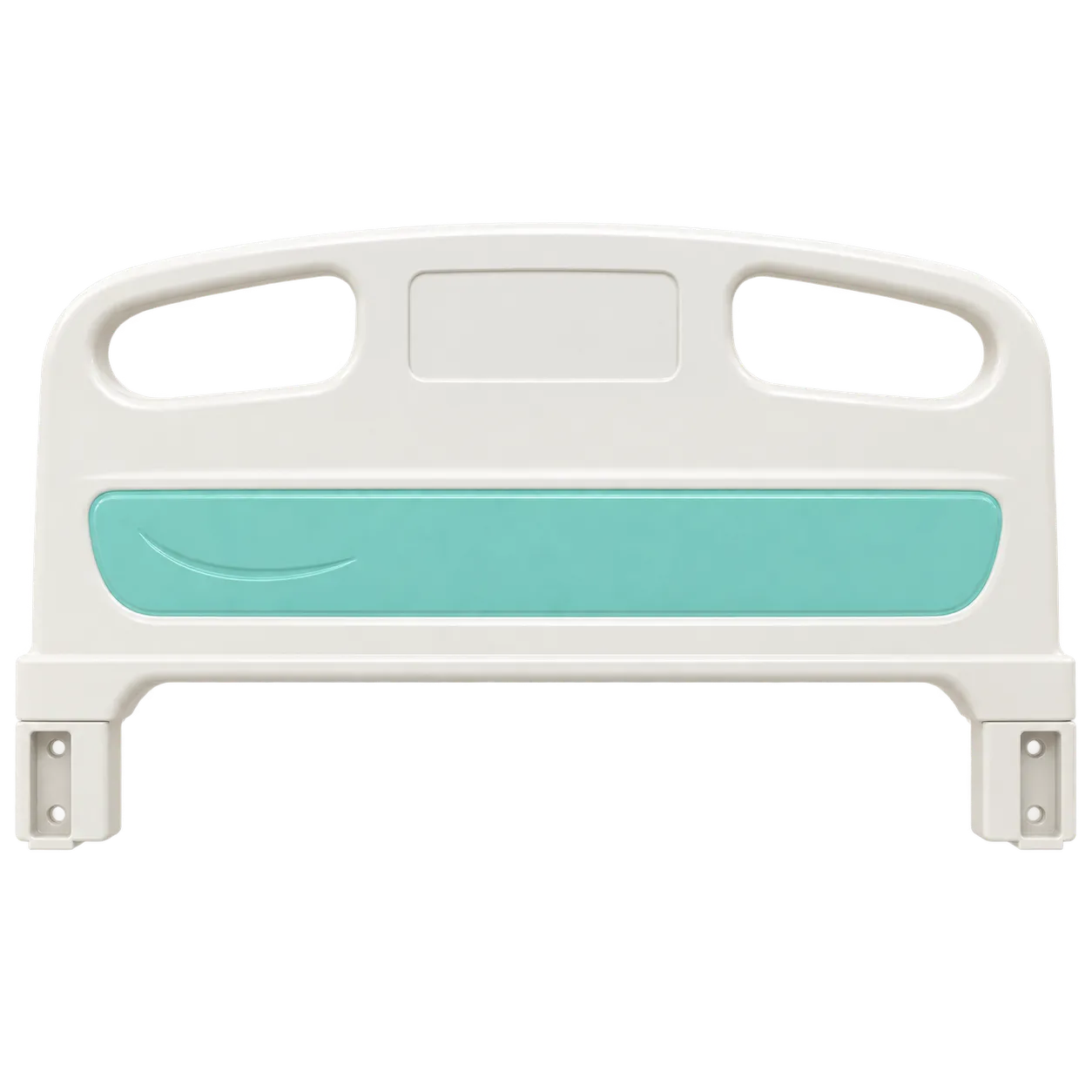
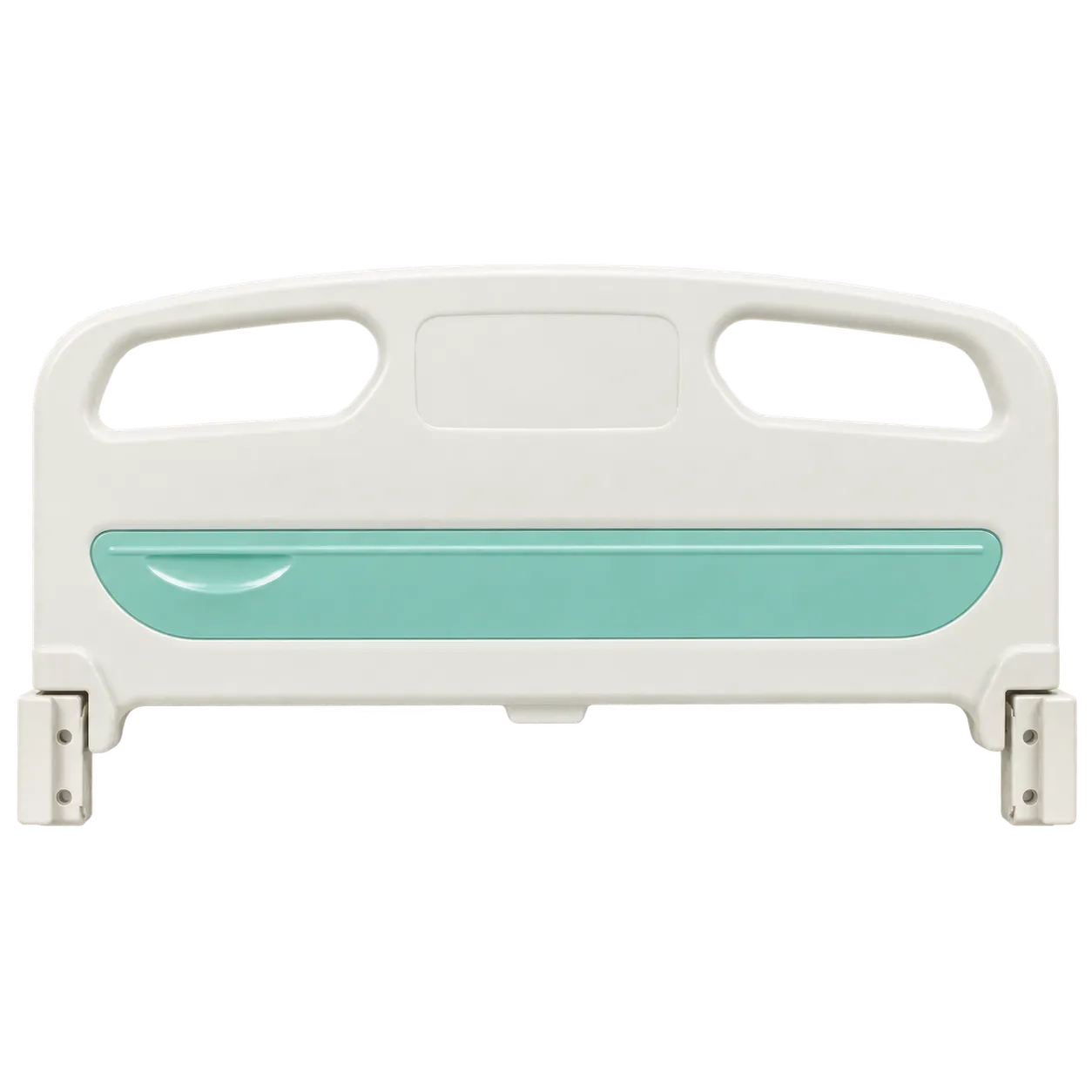

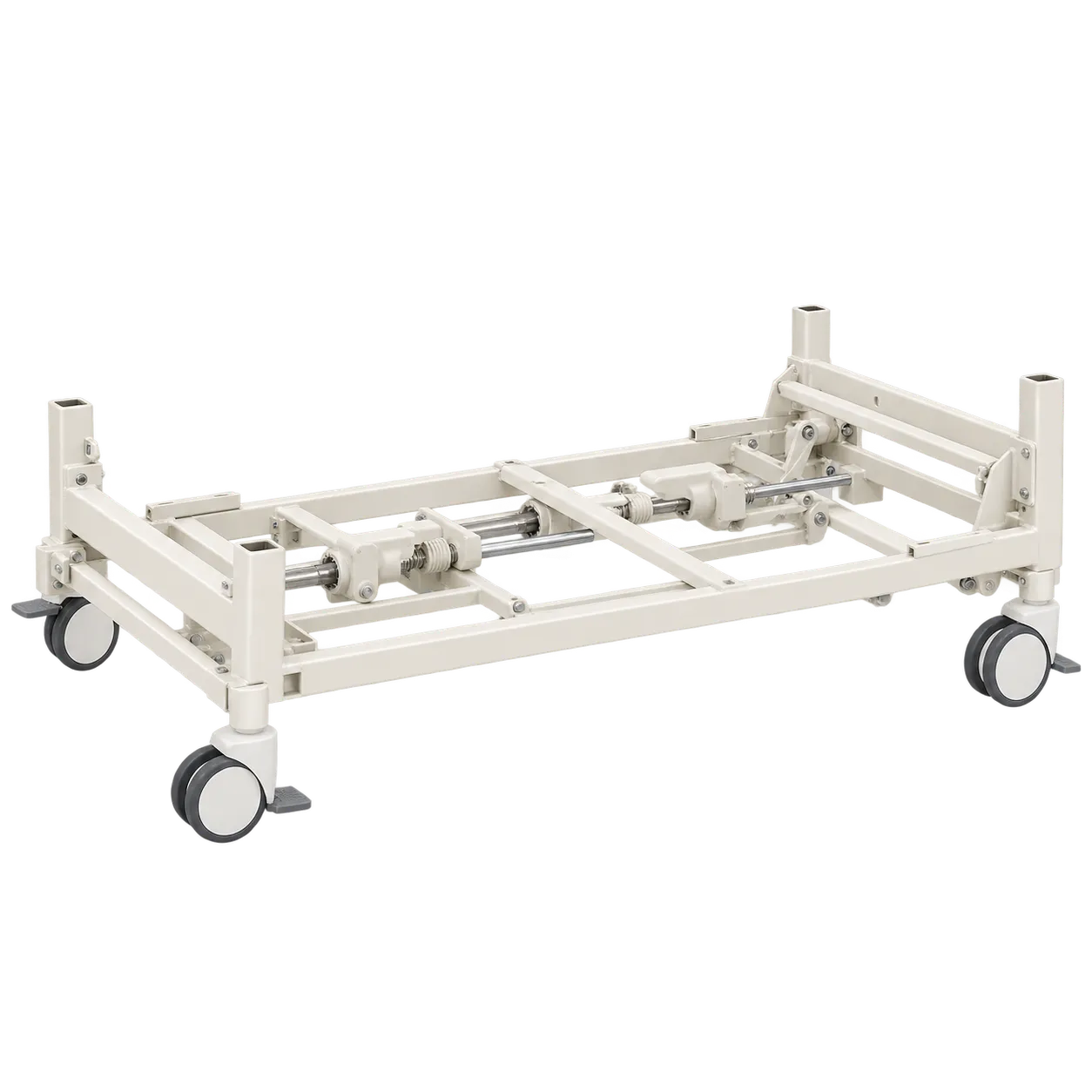

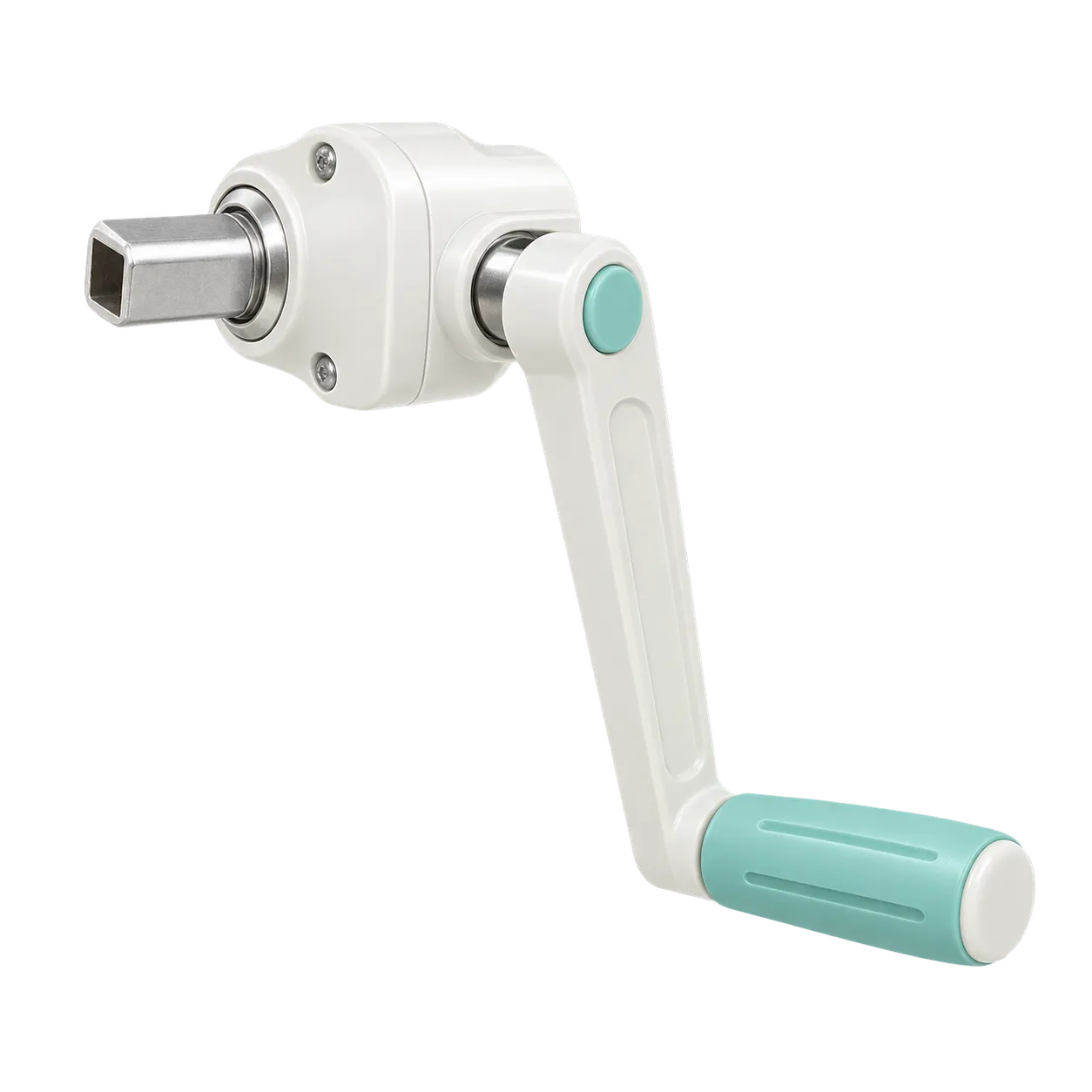
Community equipment loan, homecare and settings without reliable power are where a three-crank bed is most useful. It gives the three movements that matter most, backrest, leg section and height, without a socket, a battery or electrical testing. A bed that can be lowered for getting out and raised for care, entirely by hand, suits homes, older buildings and temporary accommodation. Community hospitals with occasional power cuts may also keep a few as a fallback.
The trade-off is time and effort. Every adjustment needs someone to wind a crank, so in busy settings the bed may be left at one height when it should be raised or lowered. That matters for staff, who may stoop to work at a low bed, and for patients, who may be left too high to get out safely. Where adjustments are frequent, the winding itself becomes a manual handling task to assess under the 1992 Regulations. Clear instructions on when to raise and lower the bed help keep it at the right height.
Resuscitation needs a plan before the bed is in use. Without a published quick-release, flattening the backrest by crank can delay compressions, so confirm what the bed offers and practise the chosen route. The same familiarisation should cover which crank does what and where the handles are stowed.
The bed is not a specification for children, who fall under a separate standard, and it is unlikely to suit bariatric patients. Its split rails bring the MHRA's 2023 National Patient Safety Alert on entrapment and falls into every allocation, with the mattress in use. Procurement will ask for the legal manufacturer, the standard used, the safe working load and rail dimensions. The conformity documentation those procurement routes require is issued by the manufacturer and provided by the seller.