
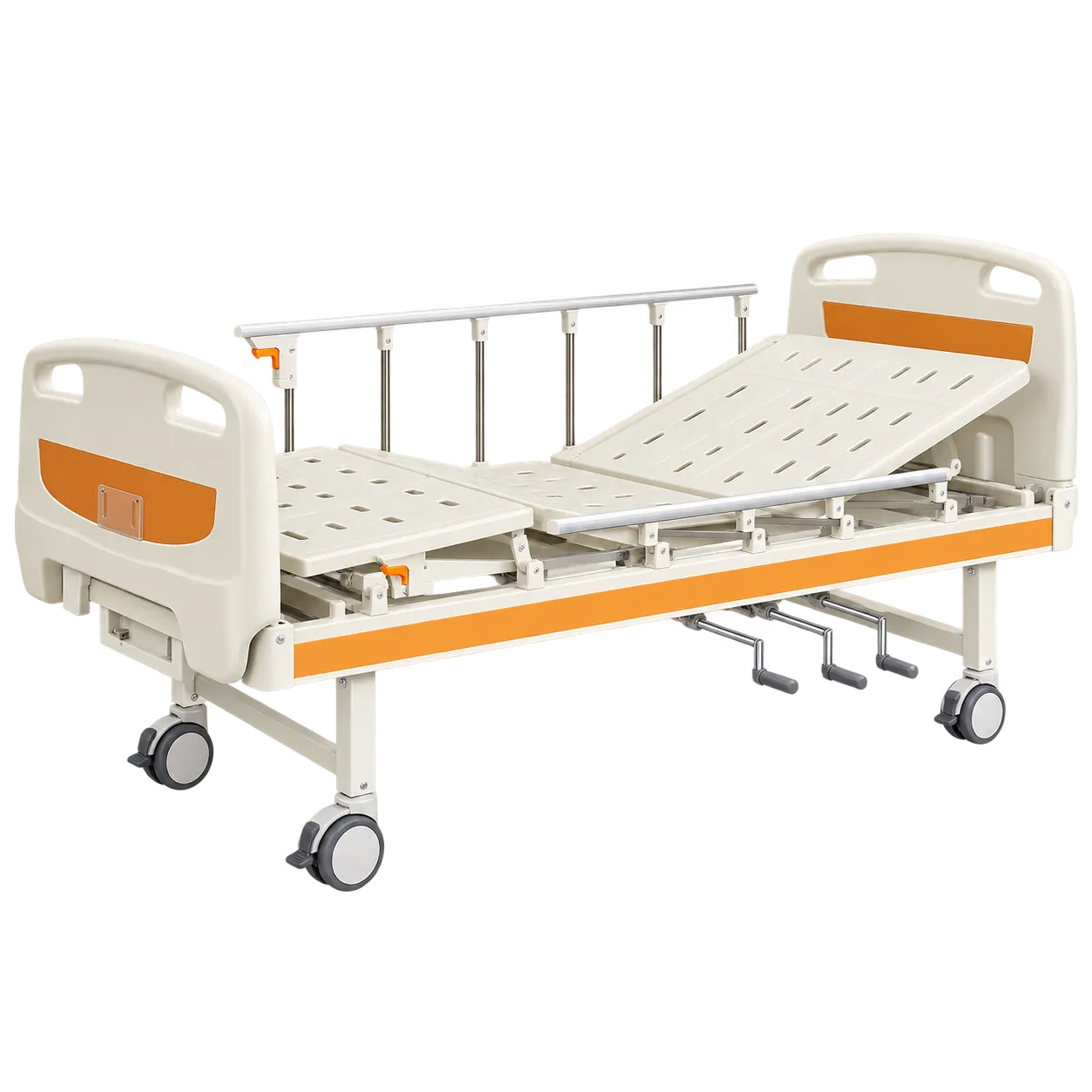
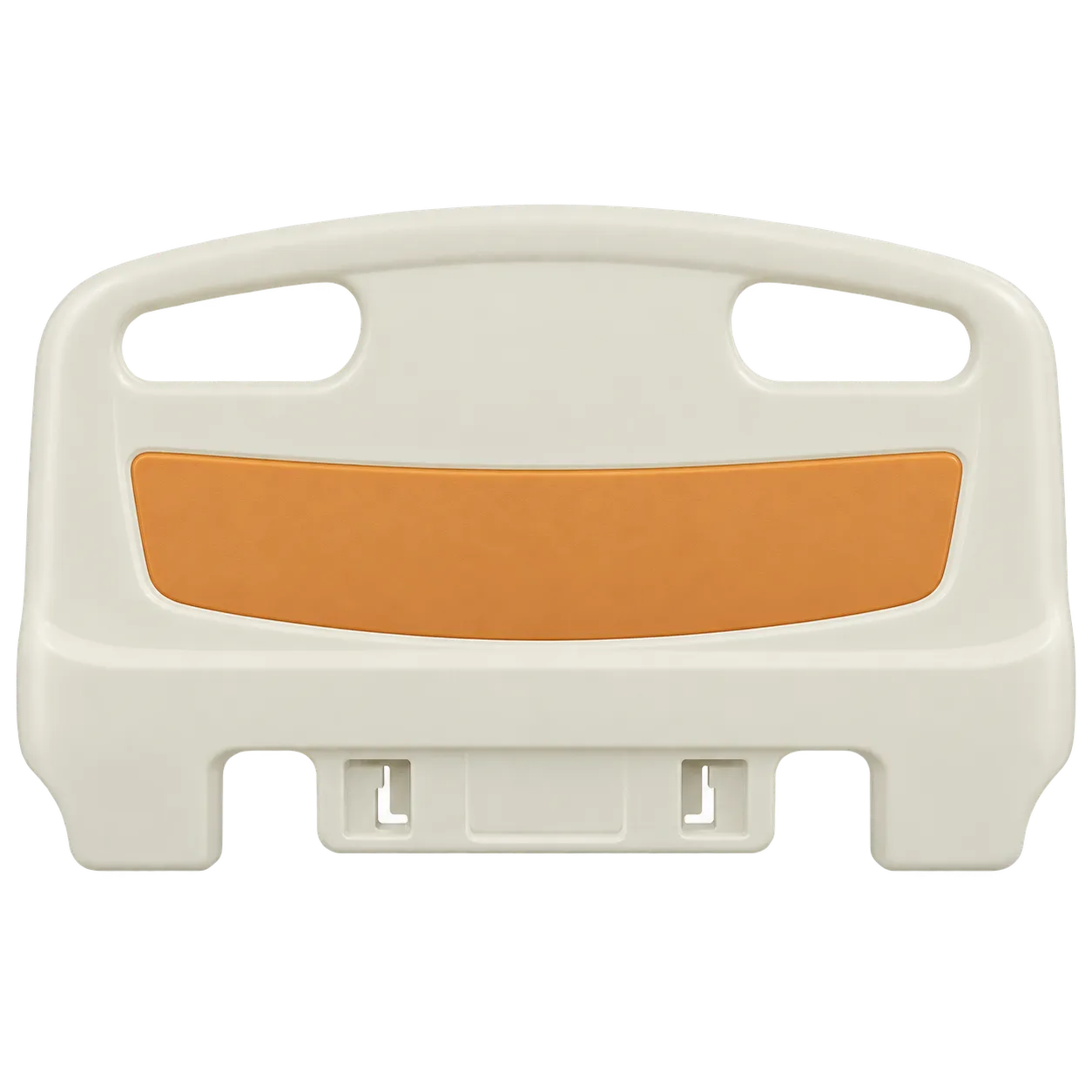
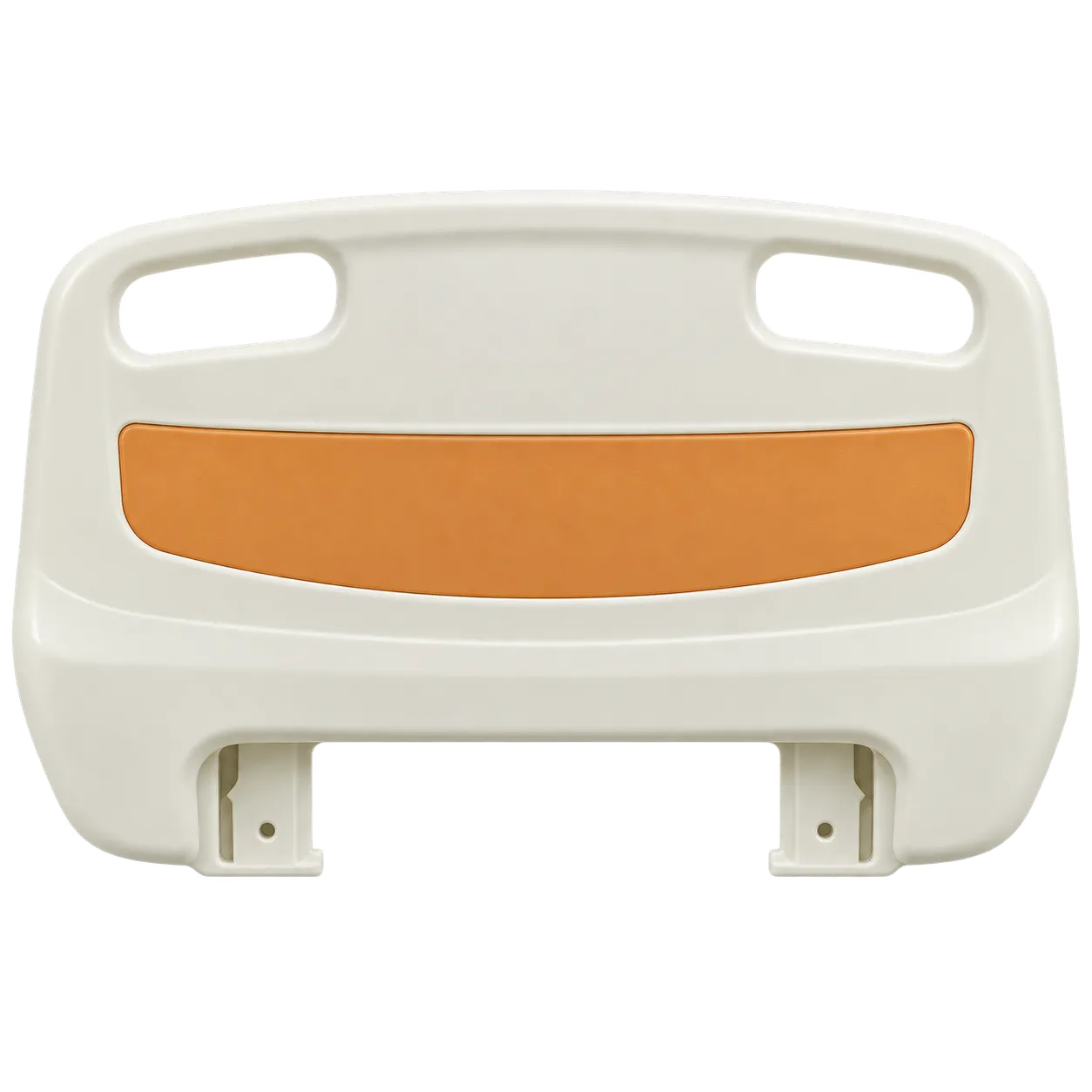

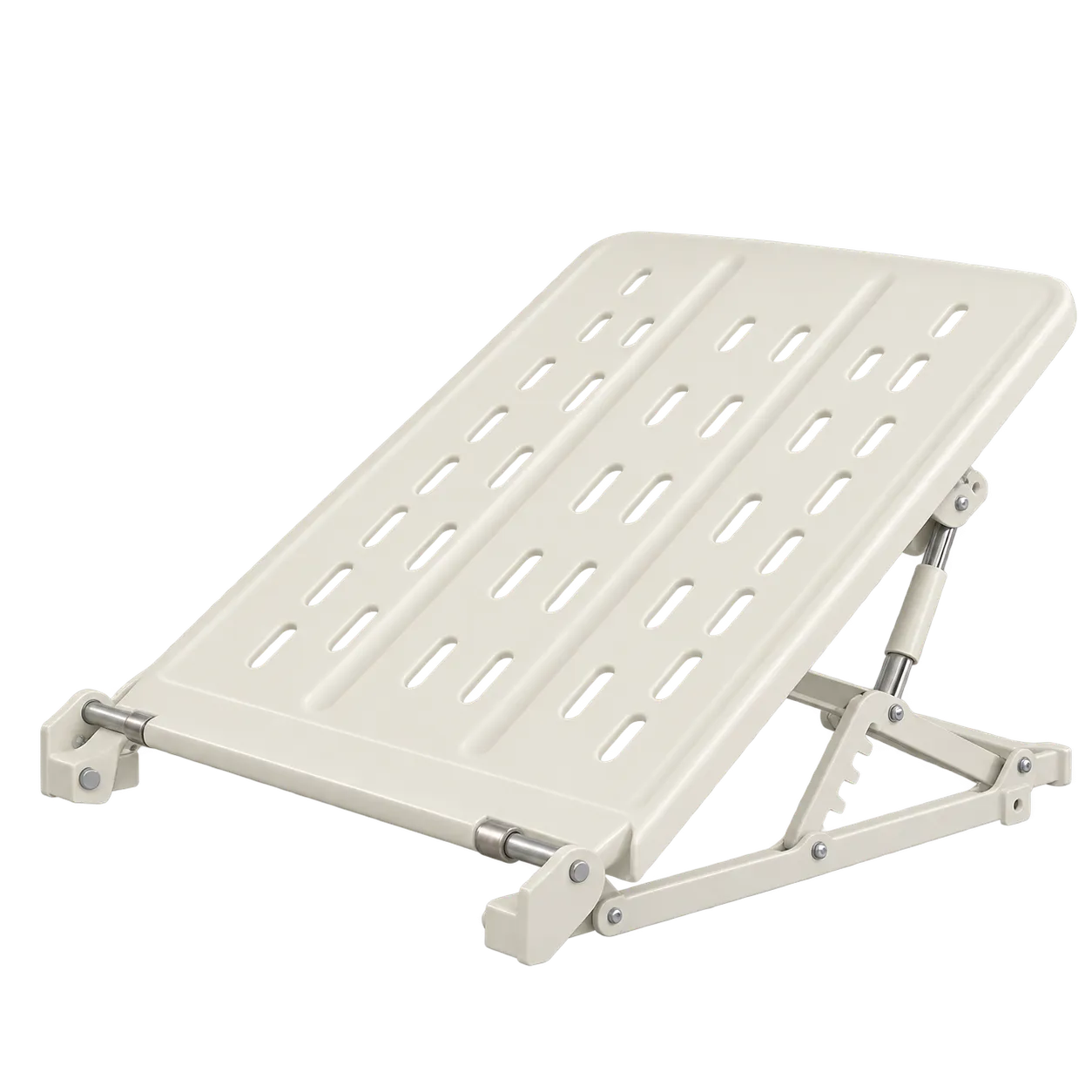


The B-4 B suits long-stay settings where residents spend much of the day in bed, eating, talking, and passing the time. Residential and nursing homes, hospice rooms, community hospital wards, rehabilitation units and home placements all fit that description. Its argument is the resident's experience of those hours. Together, the backrest, knee rest, and calf section put a person in a supported sitting position, facing the room.
Posture at meals is where the bed matters most, and the evidence argues for judgement. Many care routines default to sitting as upright as possible. Yet, a 2013 videofluoroscopy study in the Yonsei Medical Journal found that 34 patients with dysphagia aspirated small sips of thin liquid less often at a 45° recline. The same study found more residue in the pyriform sinuses with thicker foods in that position. Posture for eating is therefore a speech and language therapy decision, and a backrest adjustable from flat to 70° lets carers implement it.
Dignity also rests on the parts of the day the bed shapes. Sitting up to greet visitors, see the window and hold a drink unaided are small freedoms, and on this frame each one depends on a carer being there to turn the crank. Settings should plan staffing around the times residents want to move, especially early mornings and evenings.
The fixed 500 mm height, 830 mm platform and 240 kg load define the edges. Residents who need transfers from a low height, whole-bed tilt, or room-to-turn fall outside it. NHS procurement routes, and public purchasing in other markets, expect a device class and a declaration of conformity for every bed. The manufacturer issues the conformity documentation those procurement routes require, and the enquiry team shares it.