
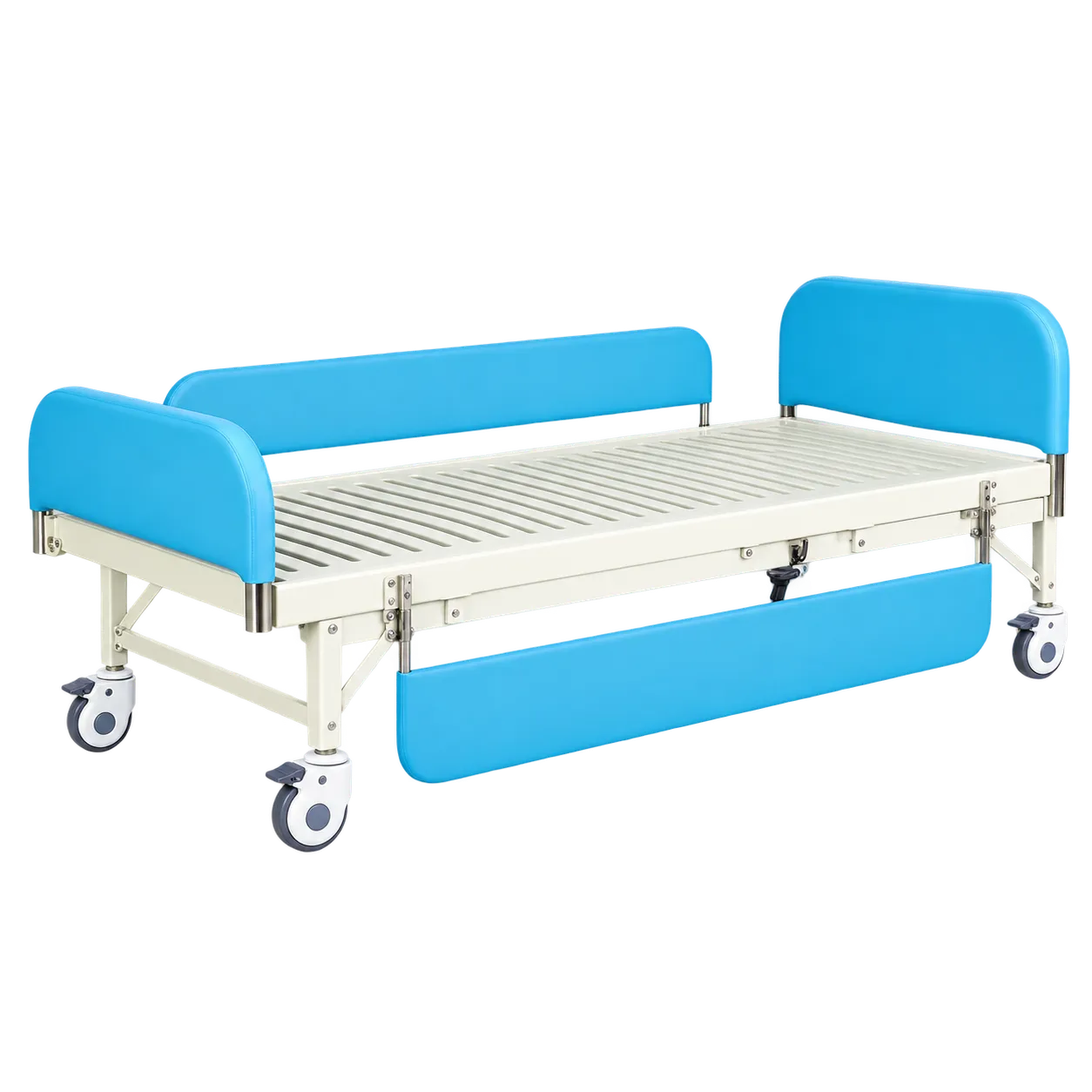
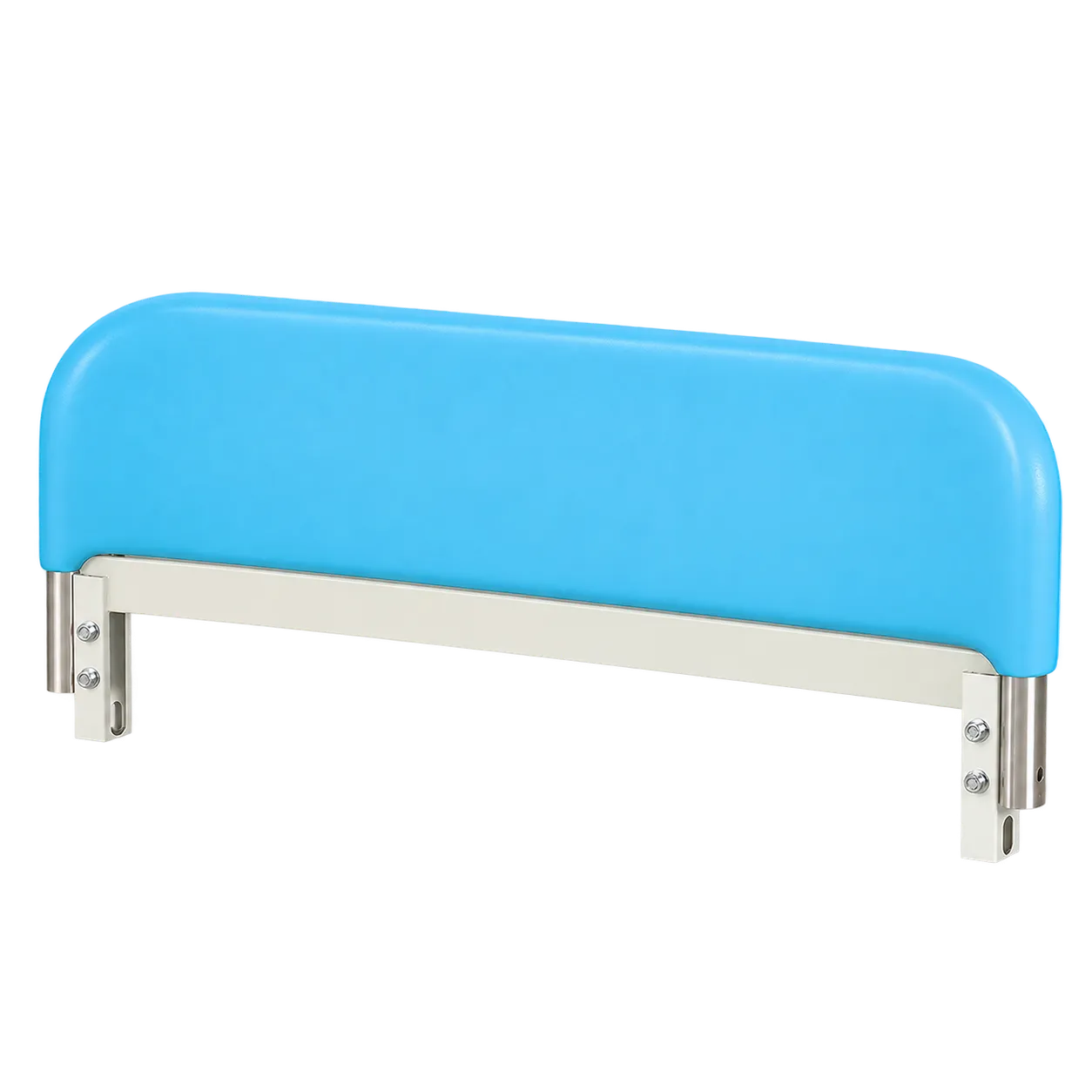
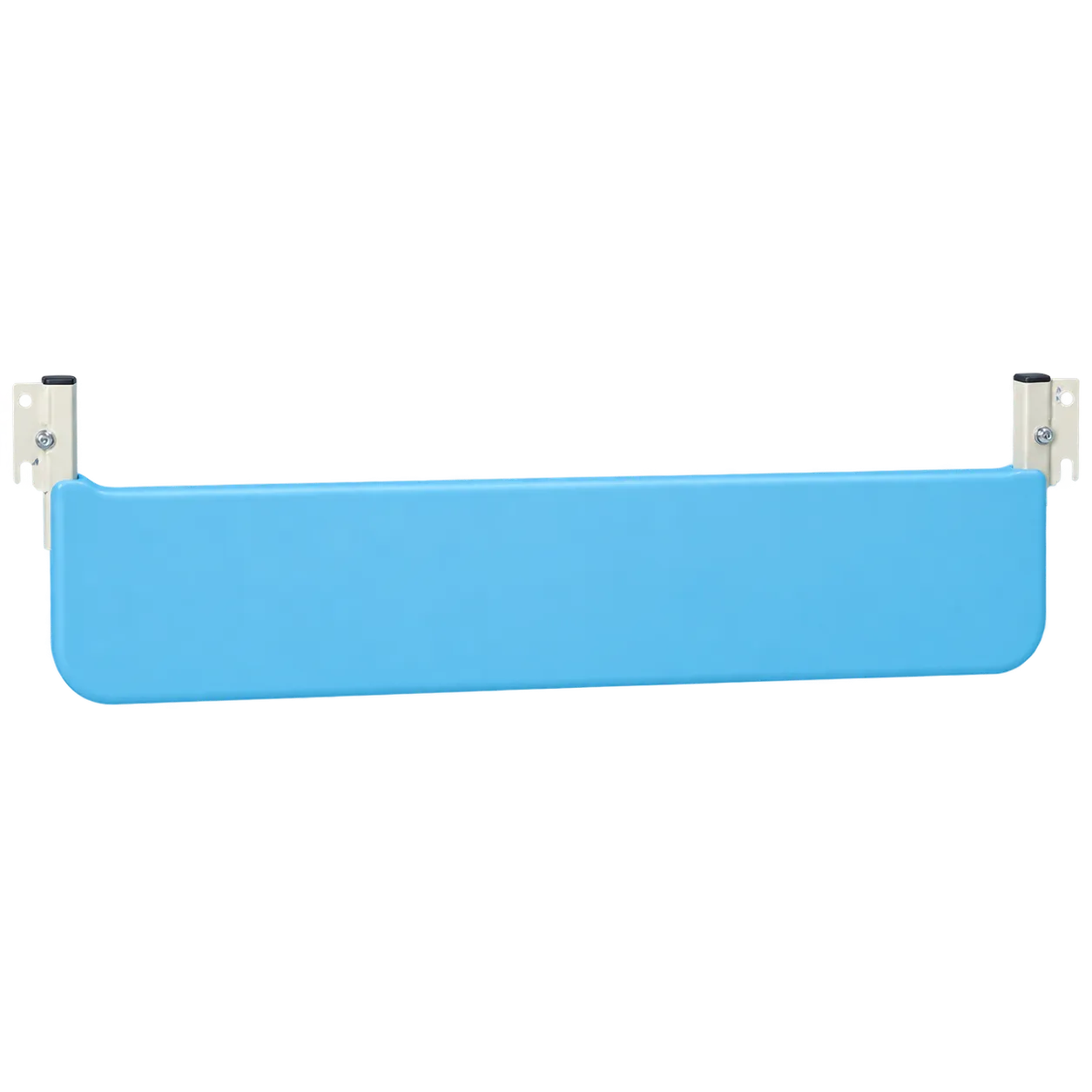
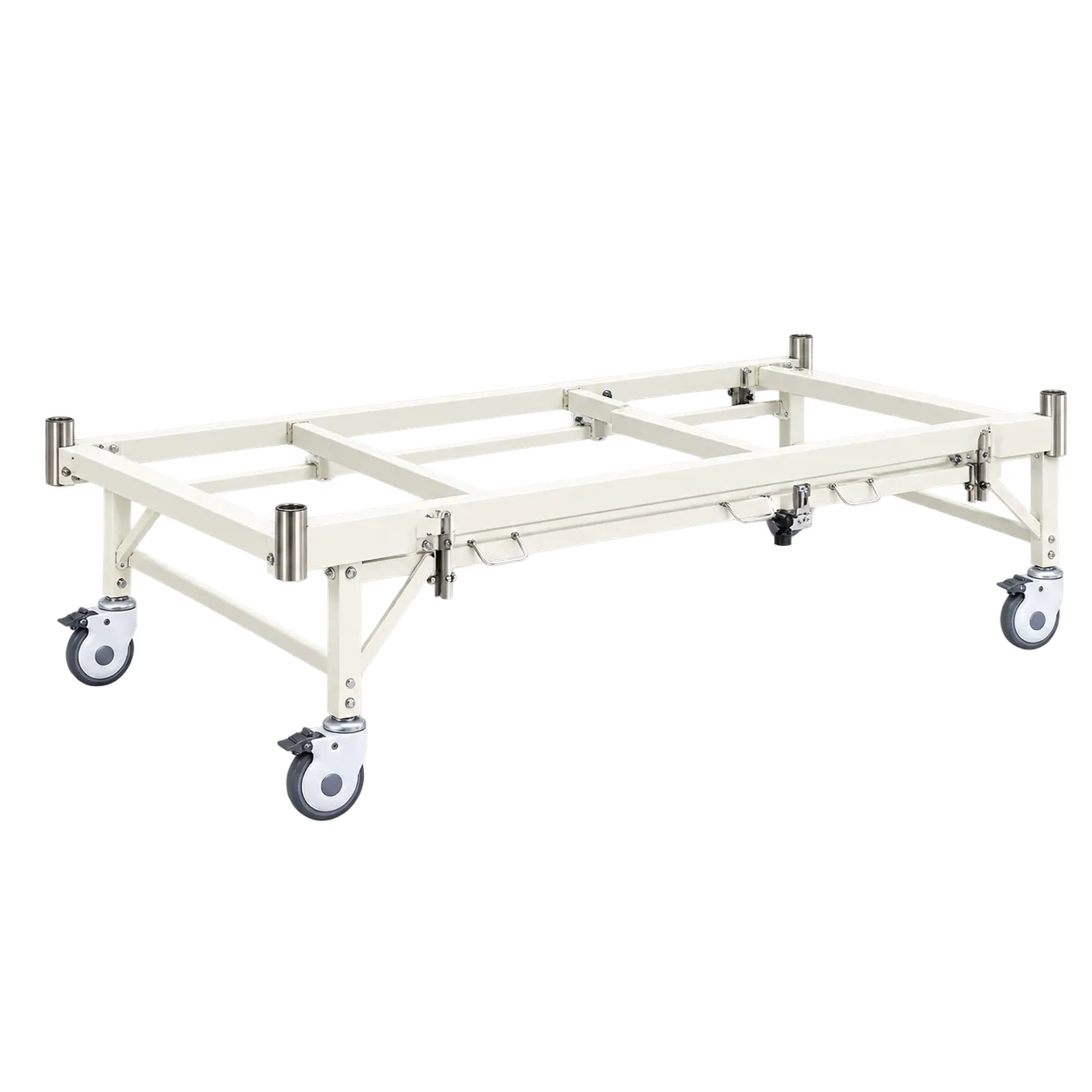
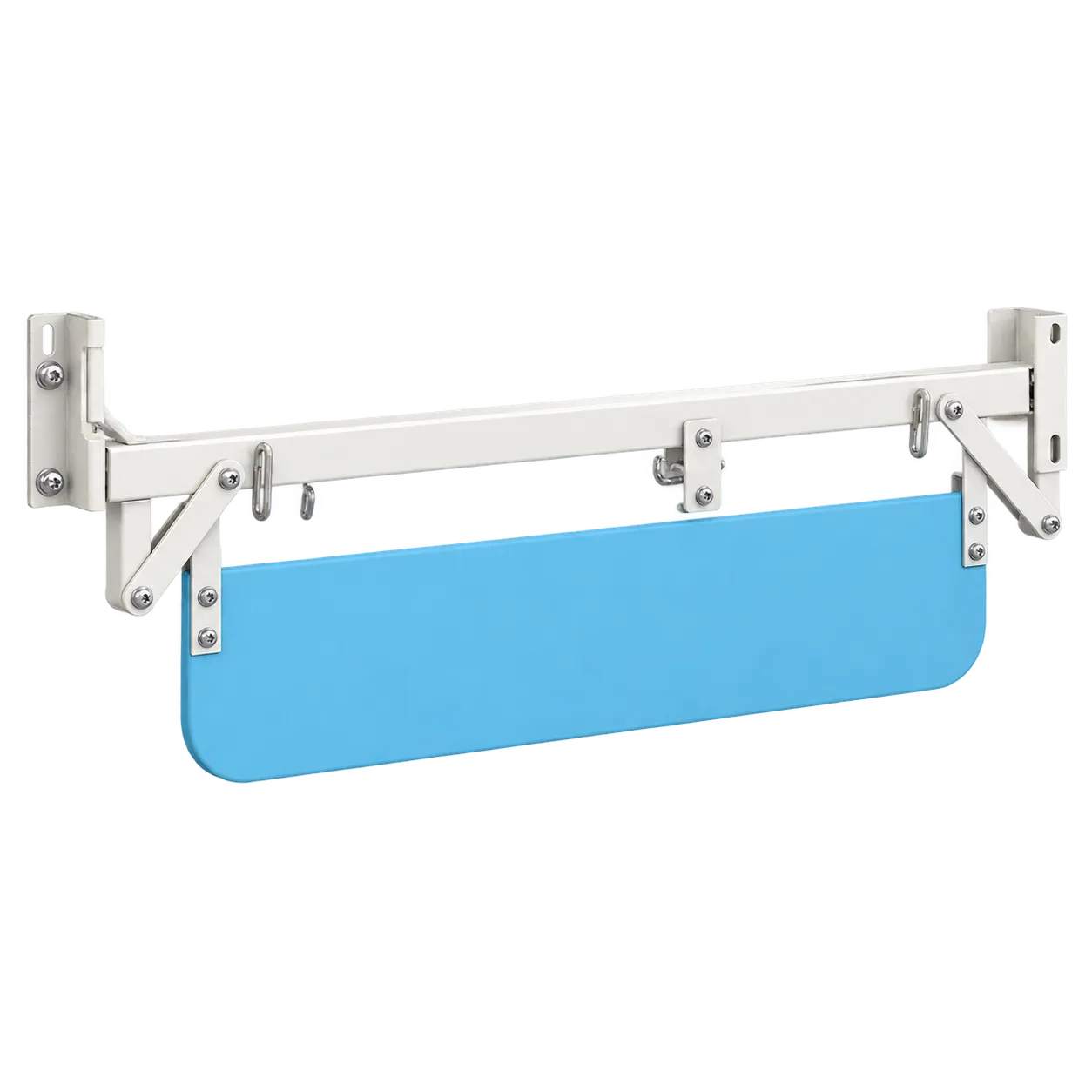

The B-20 suits patients who need a protected, padded space and don't need a bed that changes position. People with involuntary movements, restlessness or agitation fit that description, as do some mental health and learning disability settings, respite rooms and observation areas. The key issue is safety and risk transfer. The padded panels remove bar gaps and hard edges, but they also create new points the risk assessment must cover.
The hazards removed are real. Barred rails can trap an arm or a leg between the bars, and a patient who moves involuntarily can strike metal repeatedly. A continuous upholstered panel closes those gaps and softens every contact. For patients whose movements put them at risk of bruising or limb entrapment, that protection outweighs any adjustment the bed lacks.
The hazards introduced need the same attention. MHRA bed rails guidance identifies gaps over 60 mm between a rail end and the headboard as capable of trapping a neck, and warns that a compressible mattress edge against a rail widens gaps. Both apply to padded panels. A full-length barrier also raises the fall height for anyone who climbs over it, and NHS bed rail policies are clear that side barriers must never be used to stop a person leaving bed. The fixed 500 mm height gives no low position, and the flat deck means sitting up relies on pillows or a separate backrest.
NHS procurement routes, and public purchasers elsewhere, expect a device class and a declaration of conformity. The conformity documentation those procurement routes require is issued by the manufacturer and shared by the enquiry team.