
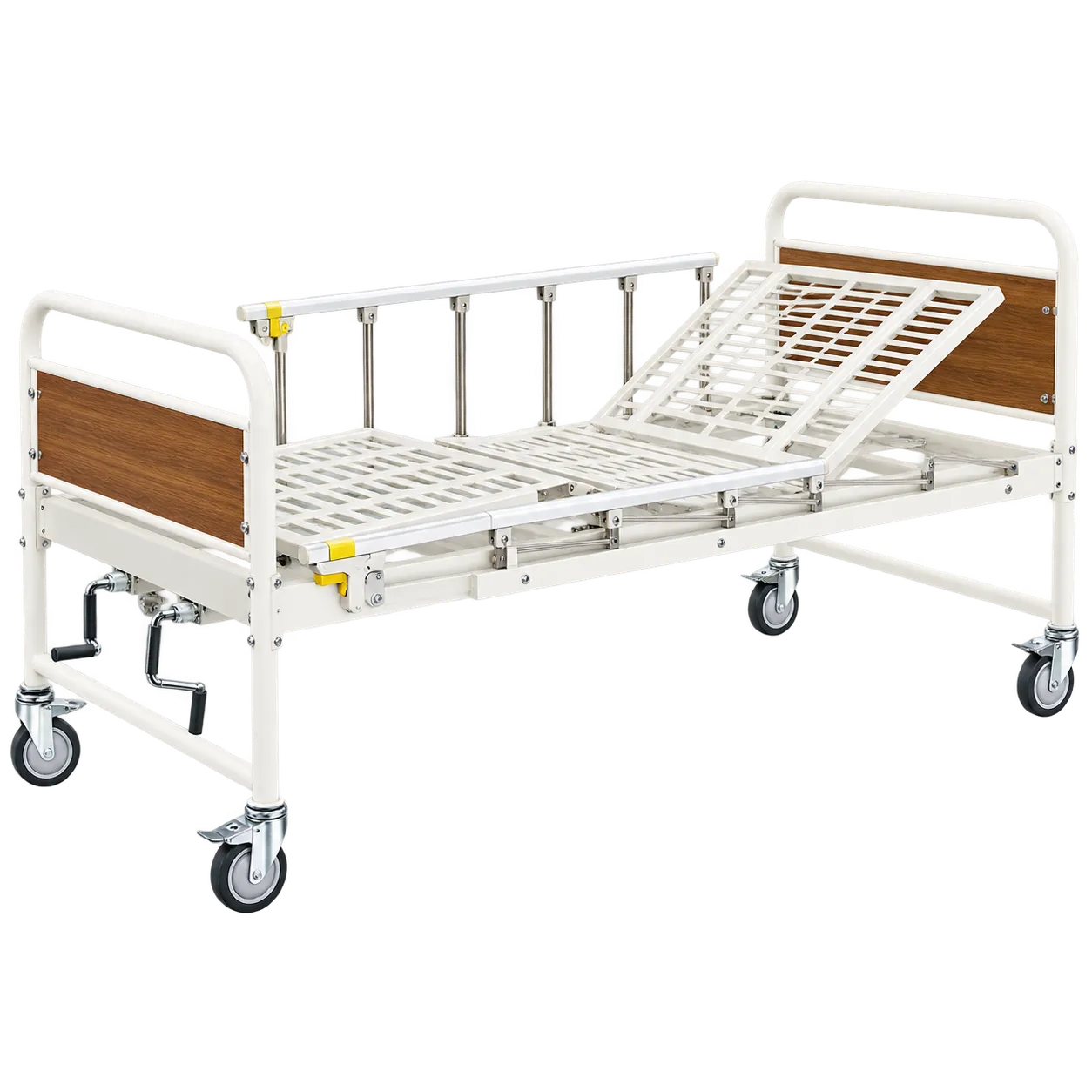
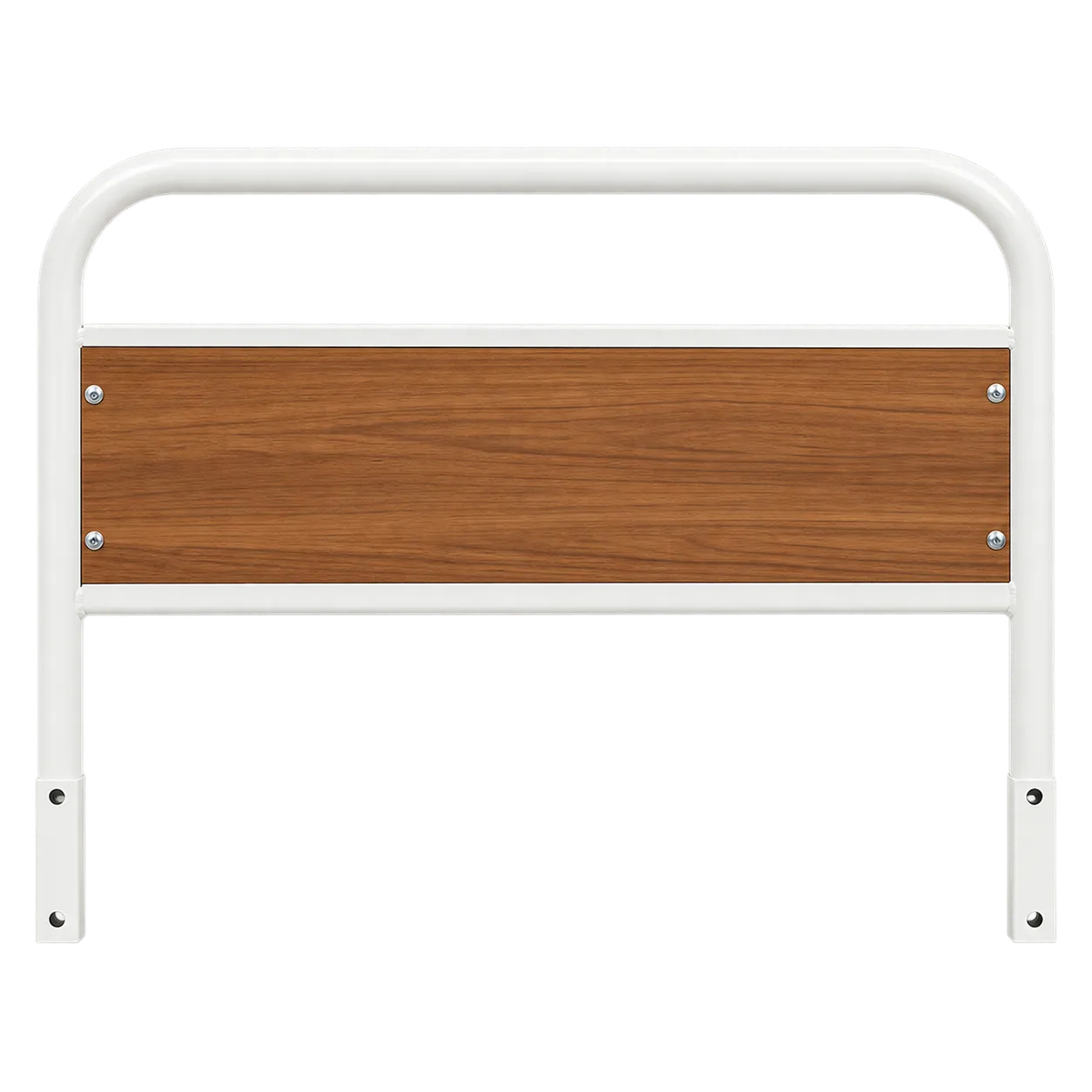

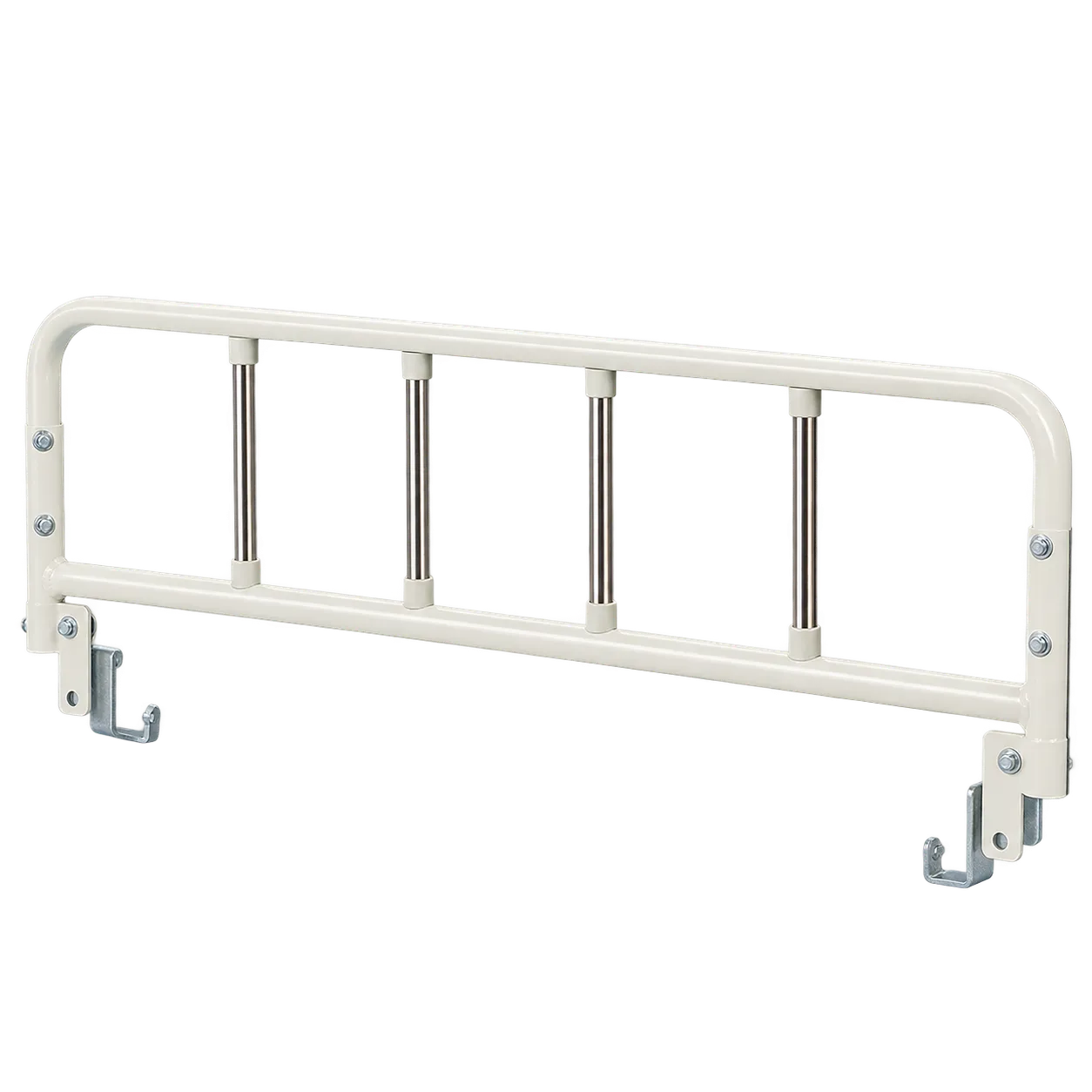
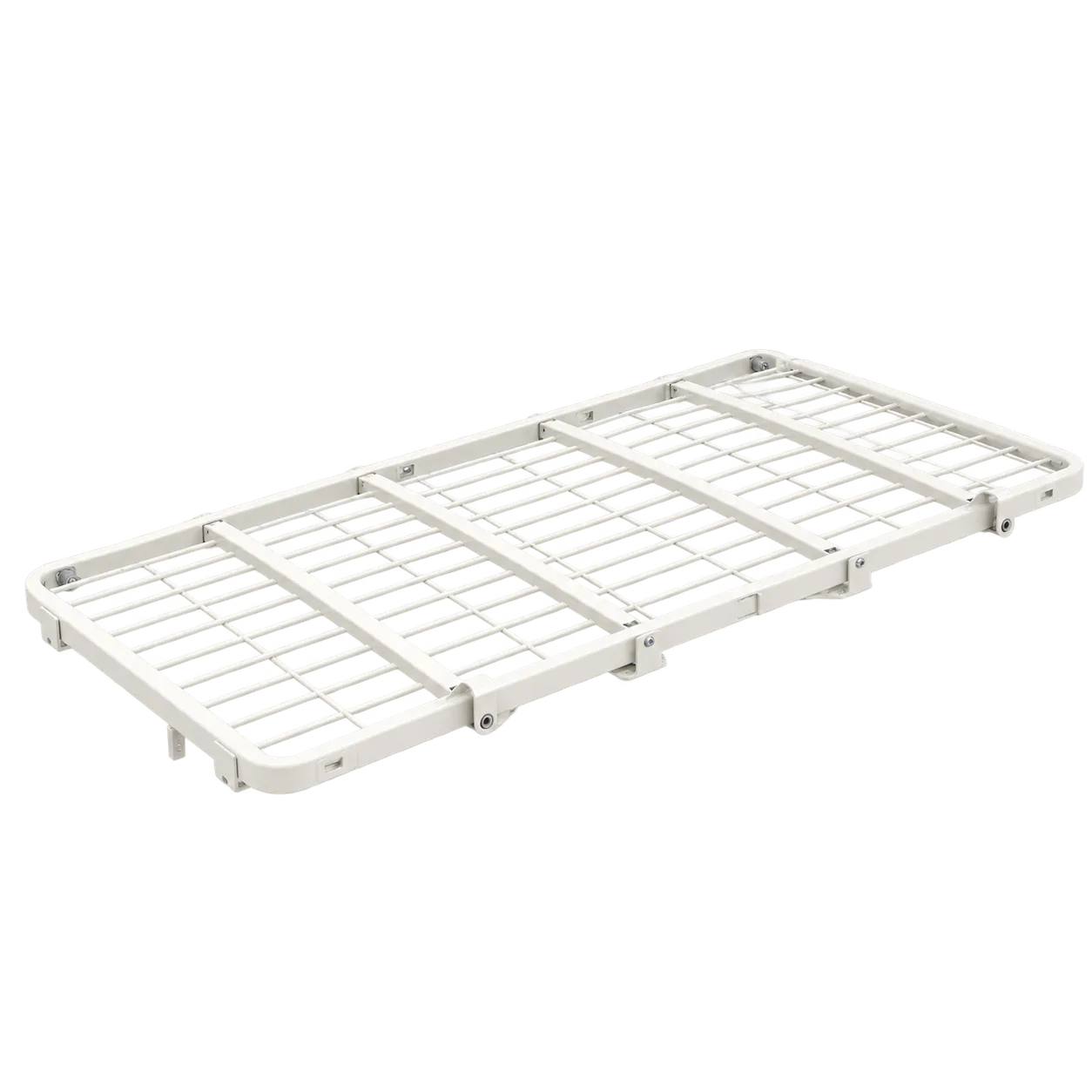
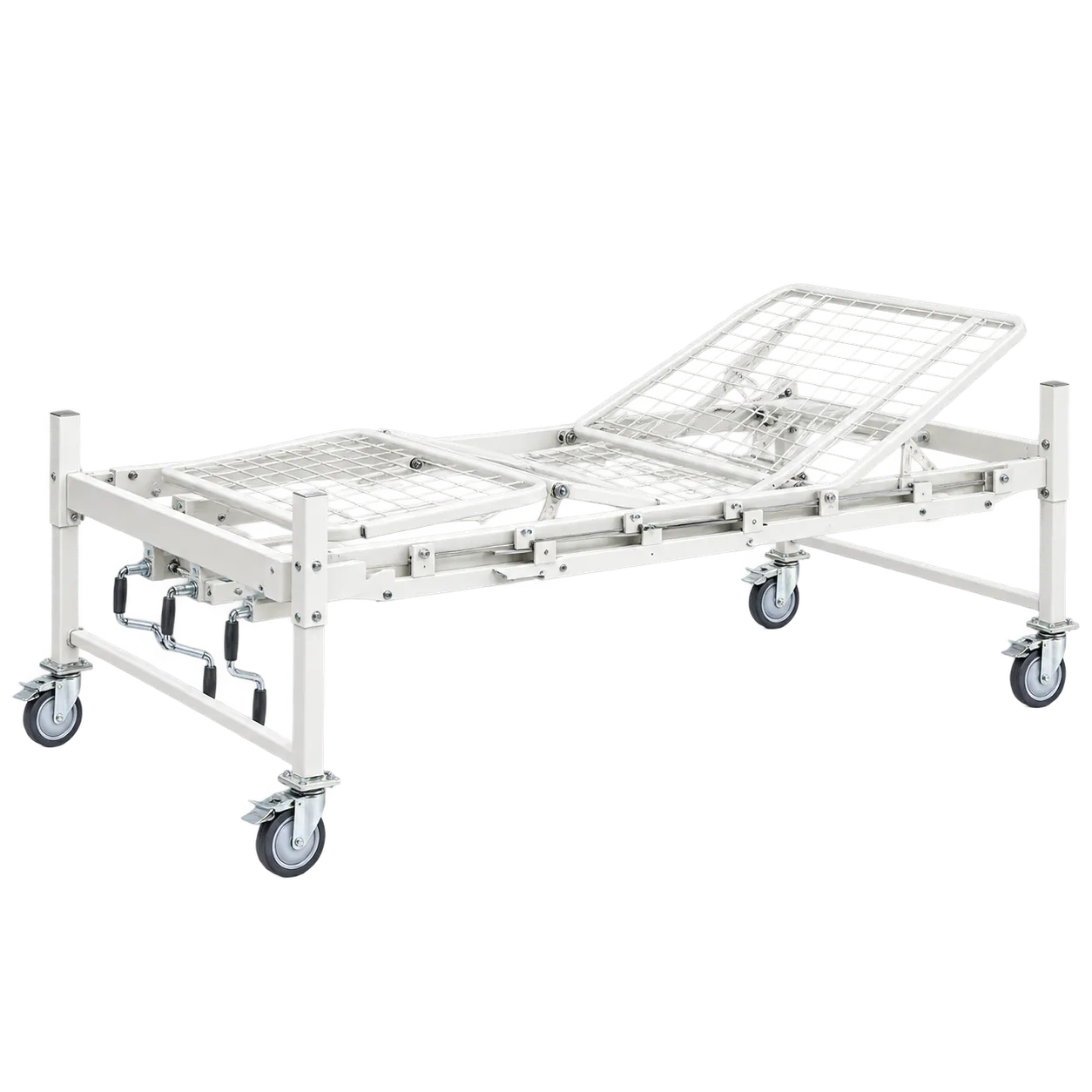
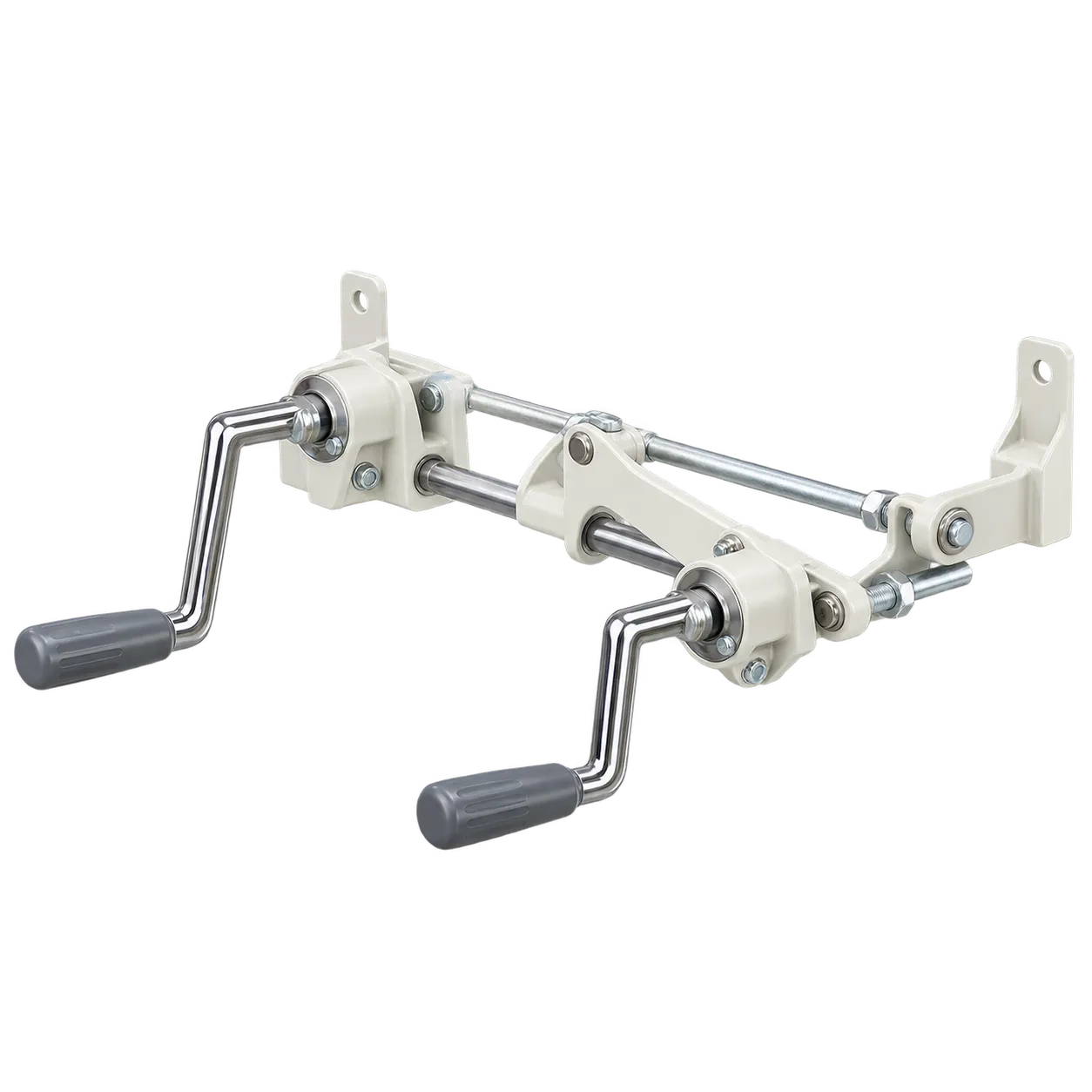

The B-17 suits bays and rooms where the bed stands against a wall or in a tight space with only the foot end open: older wards, side rooms, care homes, rehabilitation units and home placements. It also suits tall adult patients, since the 2000 mm platform gives them length to lie out. Its case is workflow. Both adjustments happen from one standing position, and the room can be laid out around that.
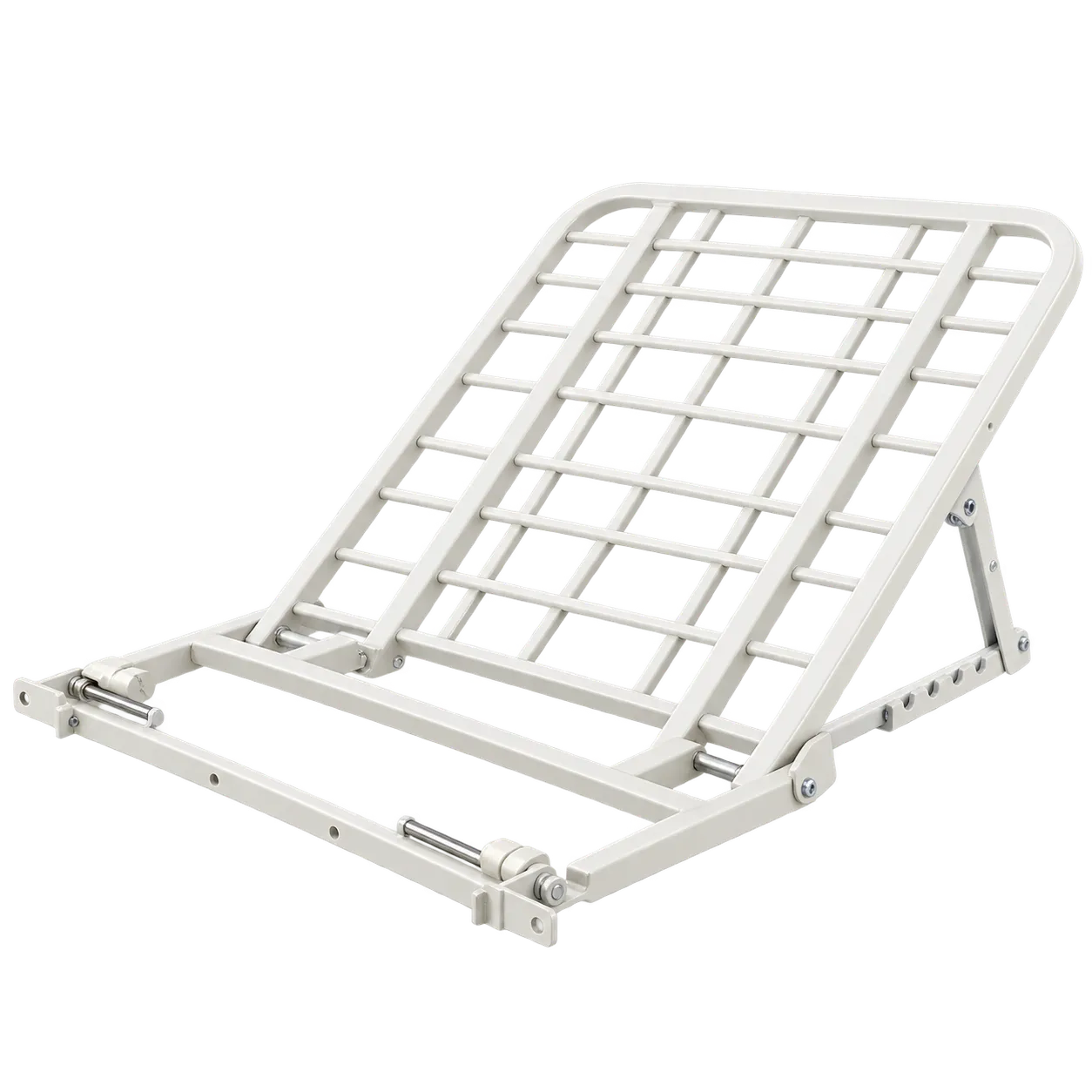
It offers the full-Fowler set of positions. A 70° backrest gives near-upright sitting for meals and conversation; the 35° knee break holds the pelvis in place, and the calf section supports the lower legs. On a 2000 mm surface, a tall patient raised to sitting still has room below the knee break, which helps keep the heels clear of the footboard.
Working from the foot end takes practice. The person turning the handle cannot see a patient's hands at the rail or a head against the headboard as closely as someone standing alongside. For patients who are confused, restless or unable to report discomfort, a second person at the bedside or a mid-adjustment check closes that gap. The fixed 525 mm height suits short bedside tasks, and it offers no low position for patients at high risk of falls.
The medical bed standard EN IEC 80601-2-52 defines an adult occupant as at least 146 cm tall, and assesses the mattress, rails, and entrapment gaps against adult proportions. NHS procurement routes, and public purchasers elsewhere, ask for a device class and a declaration of conformity. The manufacturer issues the conformity documentation those procurement routes require, and the enquiry team shares it.