
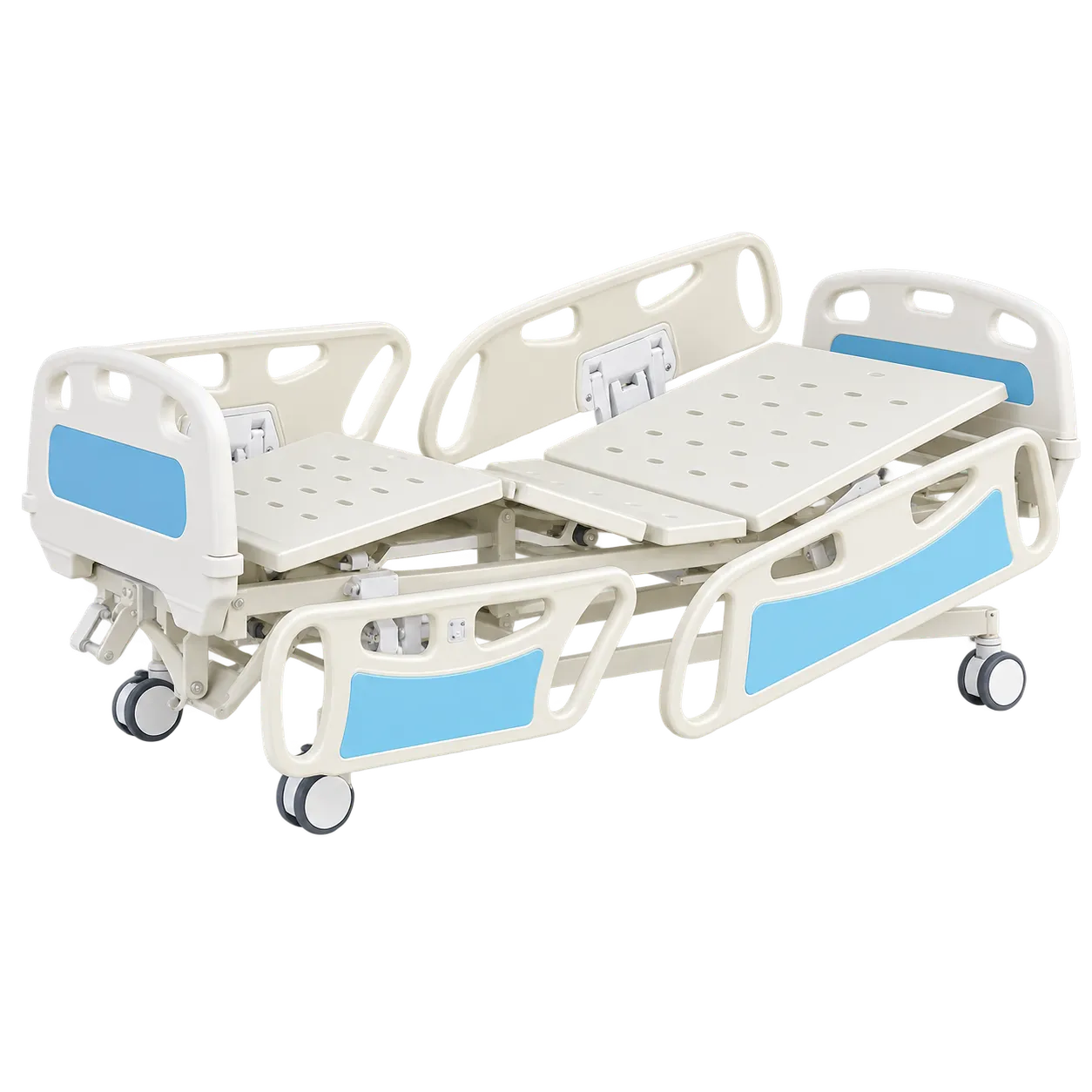


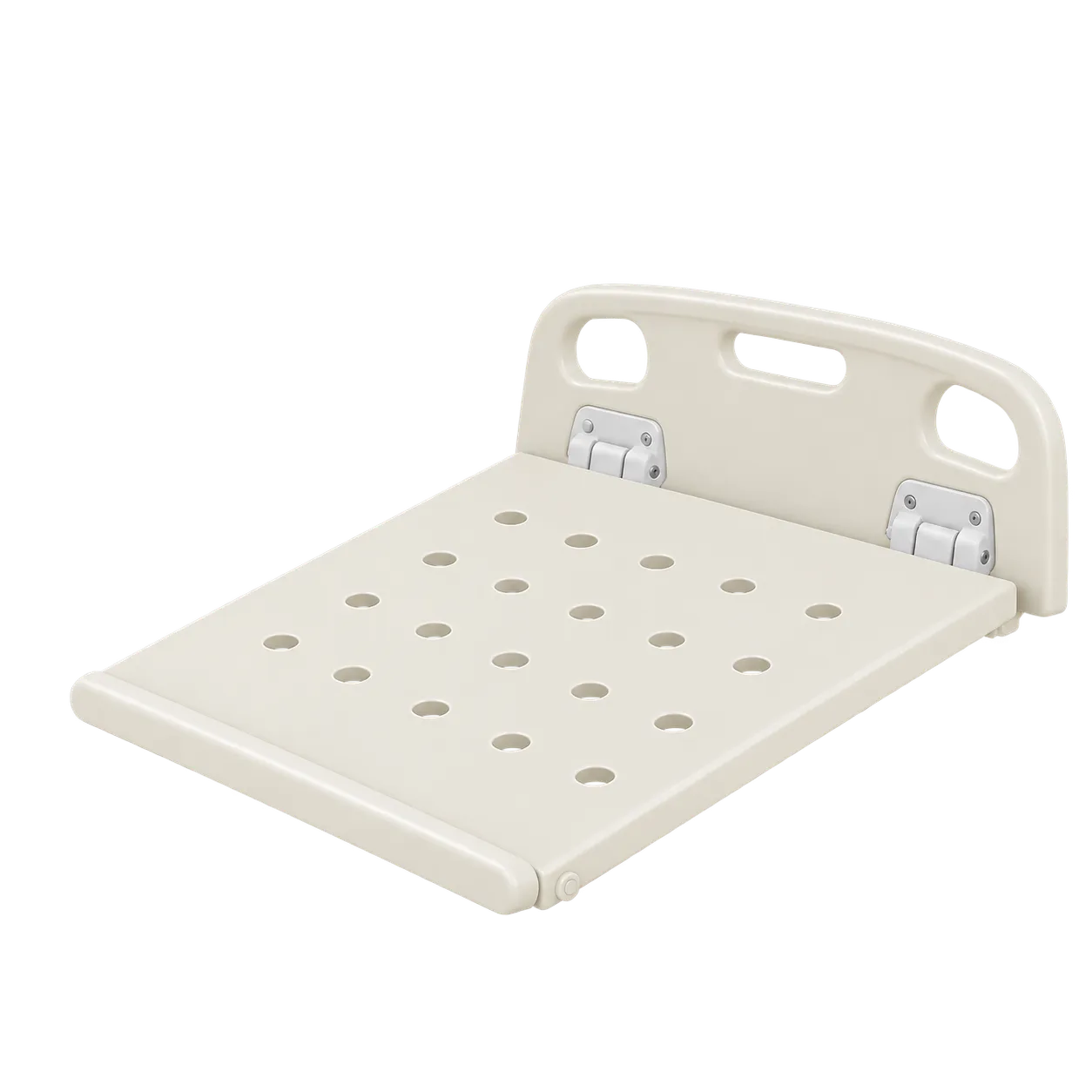


The A-1 suits settings where a bed must position a patient without depending on a socket or a stable grid. District and rural hospitals where supply fails for hours at a time, field and disaster-response hospitals running on rationed generator capacity, and surge wards opened in spaces never wired for powered beds can all deploy it without adding electrical load or a testing schedule.
On general and medical wards, the backrest supports sitting for meals, medication and breathing, and the leg section helps limit sliding down the mattress. The 430–780 mm height range lets staff bring the patient toward working height for care tasks and lower the bed for transfers. The lowest position is not a low-bed height, so patients at high risk of falling from bed need their own assessment and possibly different equipment.
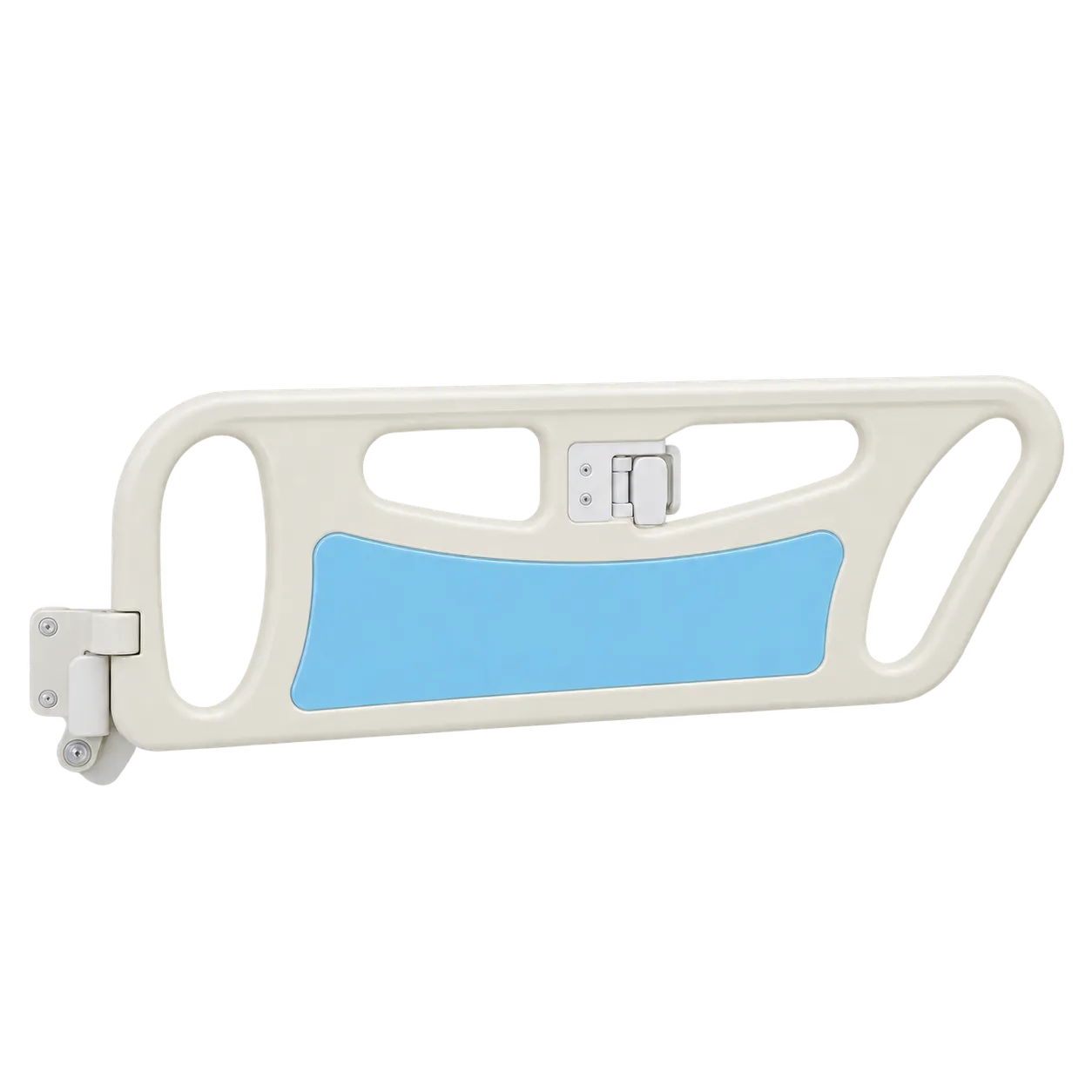
Nursing homes, convalescent units and long-stay wards use three-function beds for residents who spend part of the day sitting up. Where rails are fitted, MHRA guidance governs prescription, fitting and maintenance, and no rail should be issued without an individual risk assessment that covers the mattress in use.
The bed is a poor fit for wards where staff reposition patients in bed many times a shift, for intensive care positioning that depends on head-down tilt, for children, and for bariatric patients until a safe working load is published.
Public procurement routes, including NHS frameworks, and equivalent tenders elsewhere ask for the declaration of conformity, the standard the bed was tested to, and the device class. The conformity documentation those procurement routes require is issued by the manufacturer and provided by the seller.