

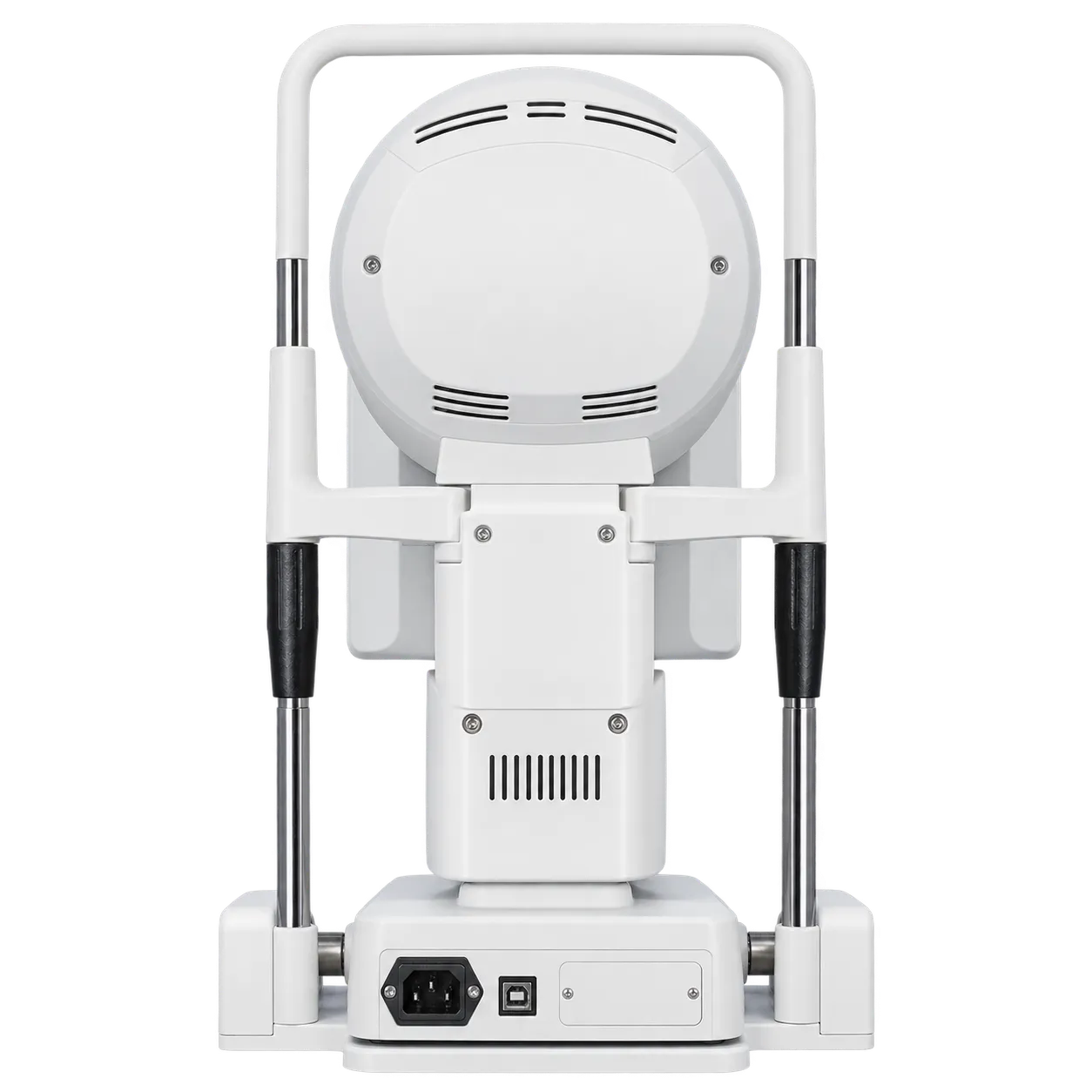
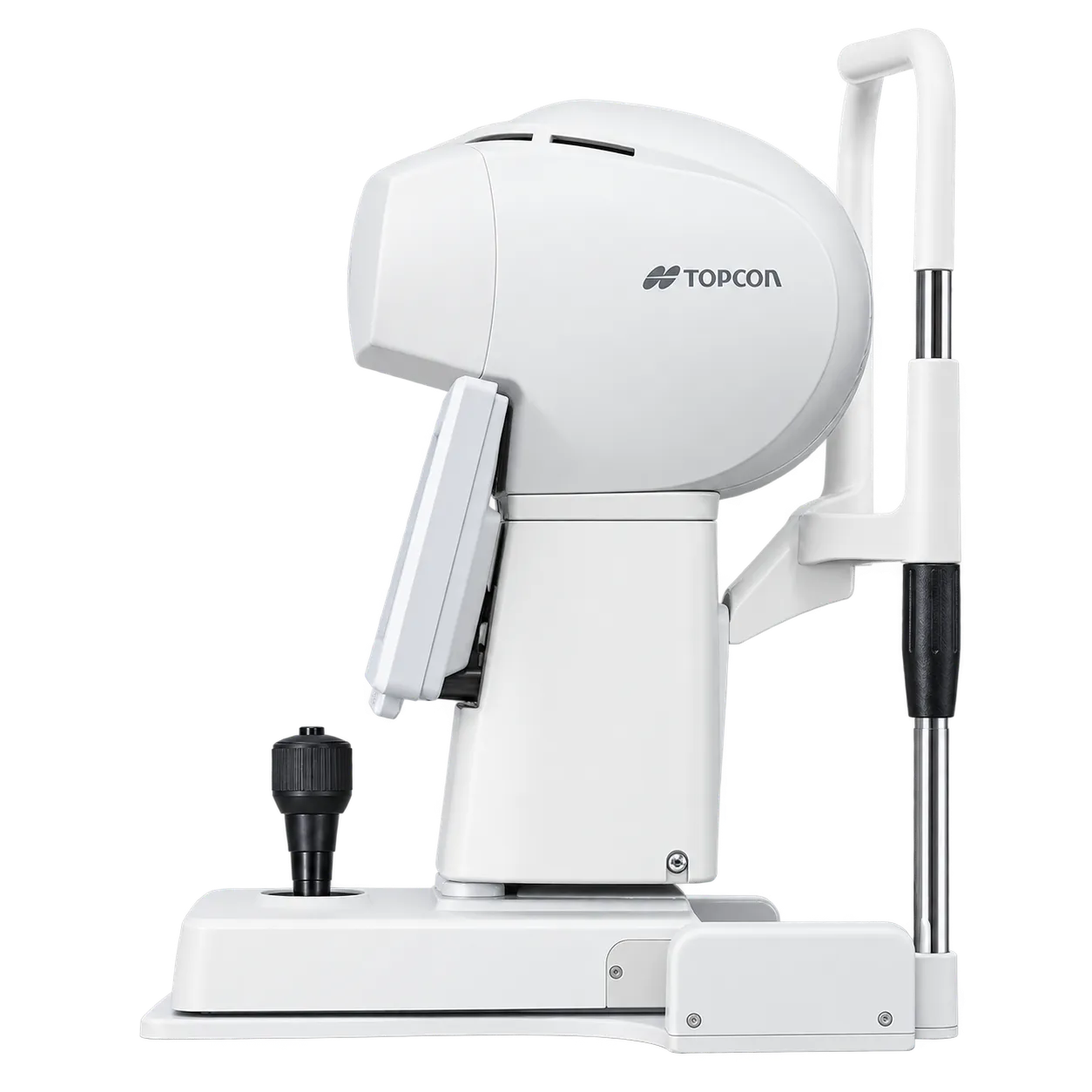

Contact lens practices, optometry and ophthalmology clinics, and corneal services use the CA-200F to map the eye's front surface and fit lenses. Optometrists, ophthalmologists, contact lens opticians and trained technicians operate it at the examination station, where the touch screen and on-board PC keep the routine on a single compact unit.
Lens fitting is the centre of the routine. Real-time fluorescein images show the tear layer under a trial lens, and the fluorescein image simulation previews the pattern a chosen design should give. The contact lens database proposes a lens, and the practitioner changes its parameters on screen until the simulated pattern suits the cornea. Rigid lens work, orthokeratology and lenses for irregular corneas all start from the same capture.
Corneal assessment uses 24 rings, over 100,000 analysed points, and covers 0.3 mm to 10.5 mm. Axial, instantaneous, and 3D maps, plus multiple and differential maps, show how the cornea changes between visits. Zernike analysis describes surface optical quality, and keratoconus screening flags corneal asymmetry for referral. Static and dynamic pupillometry record the pupil diameter, and the toric IOL calculation application supports lens planning.
The unit stores examinations for later comparison, and a USB port and WiFi send them to an external PC or printer. The CA-200F weighs 6.8 kg and measures 250 × 455 × 320 mm.