
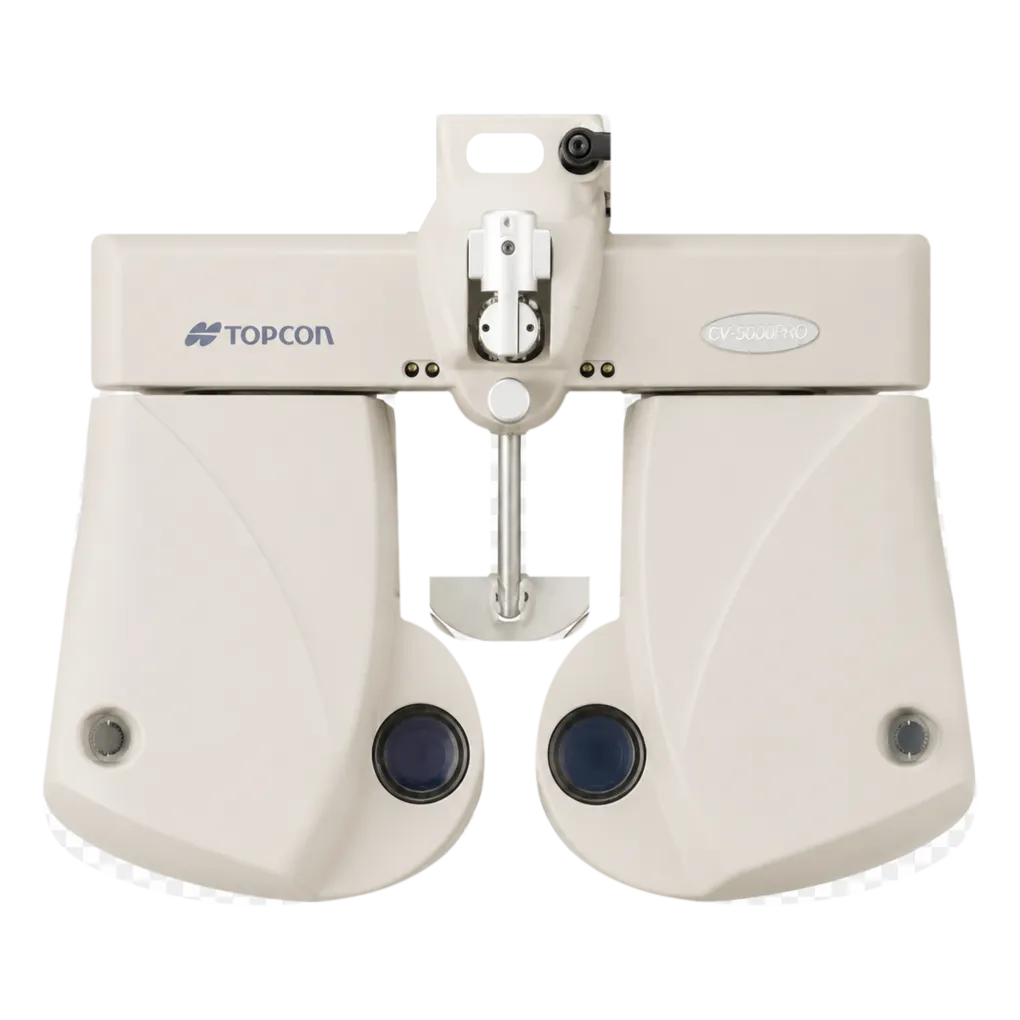
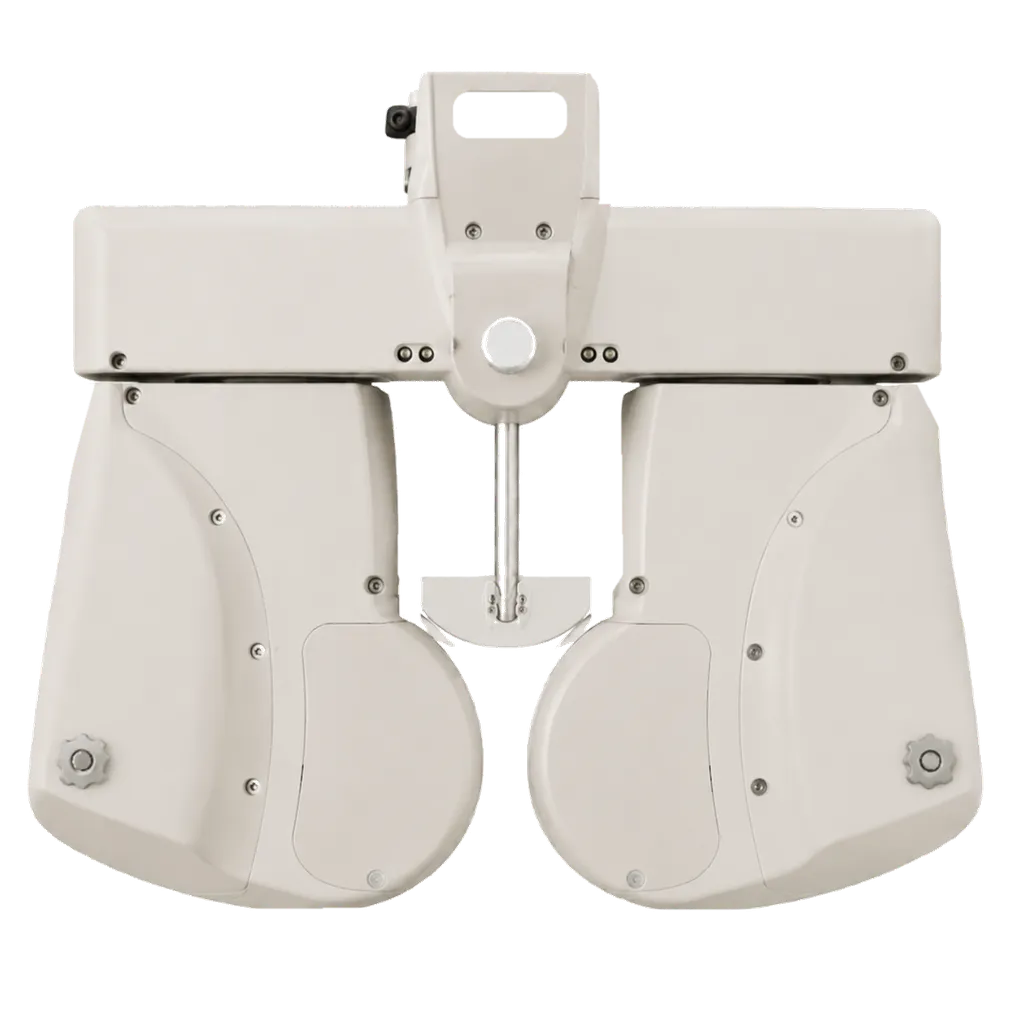
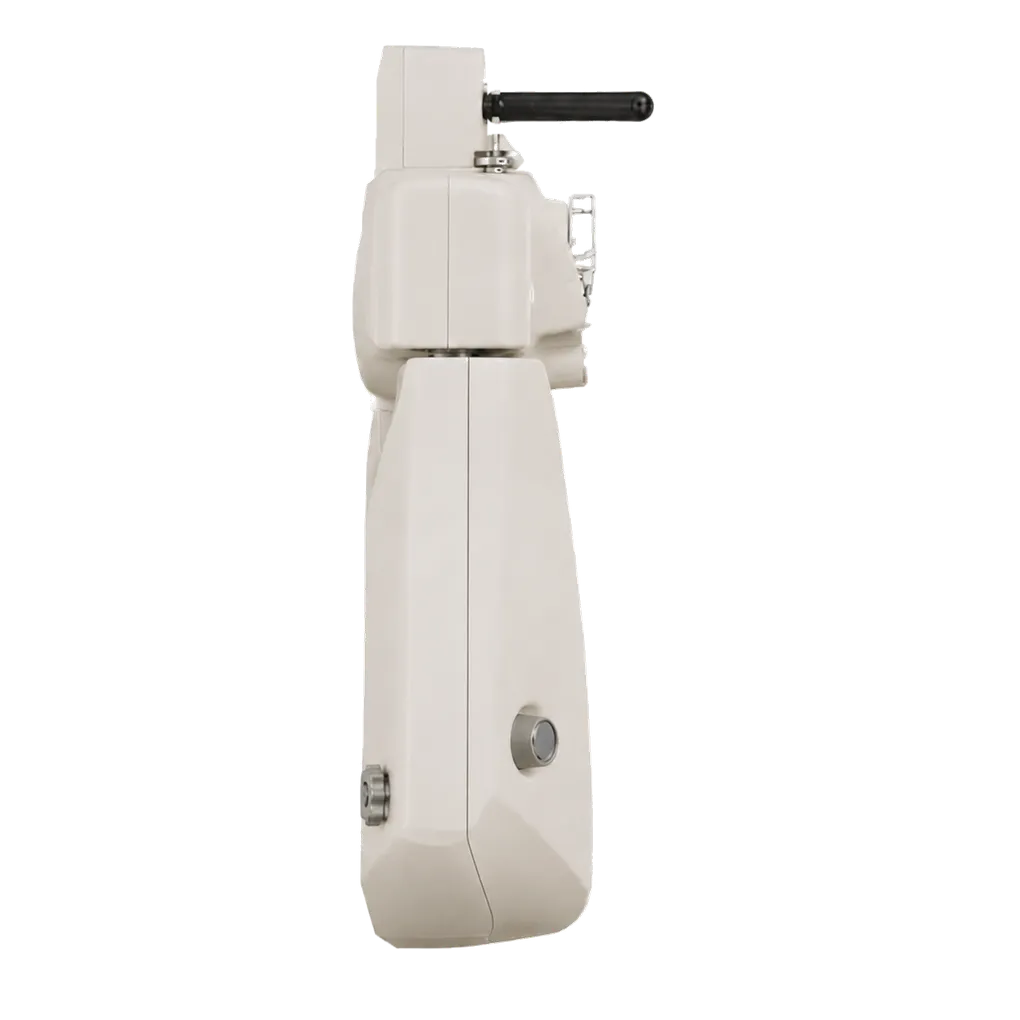
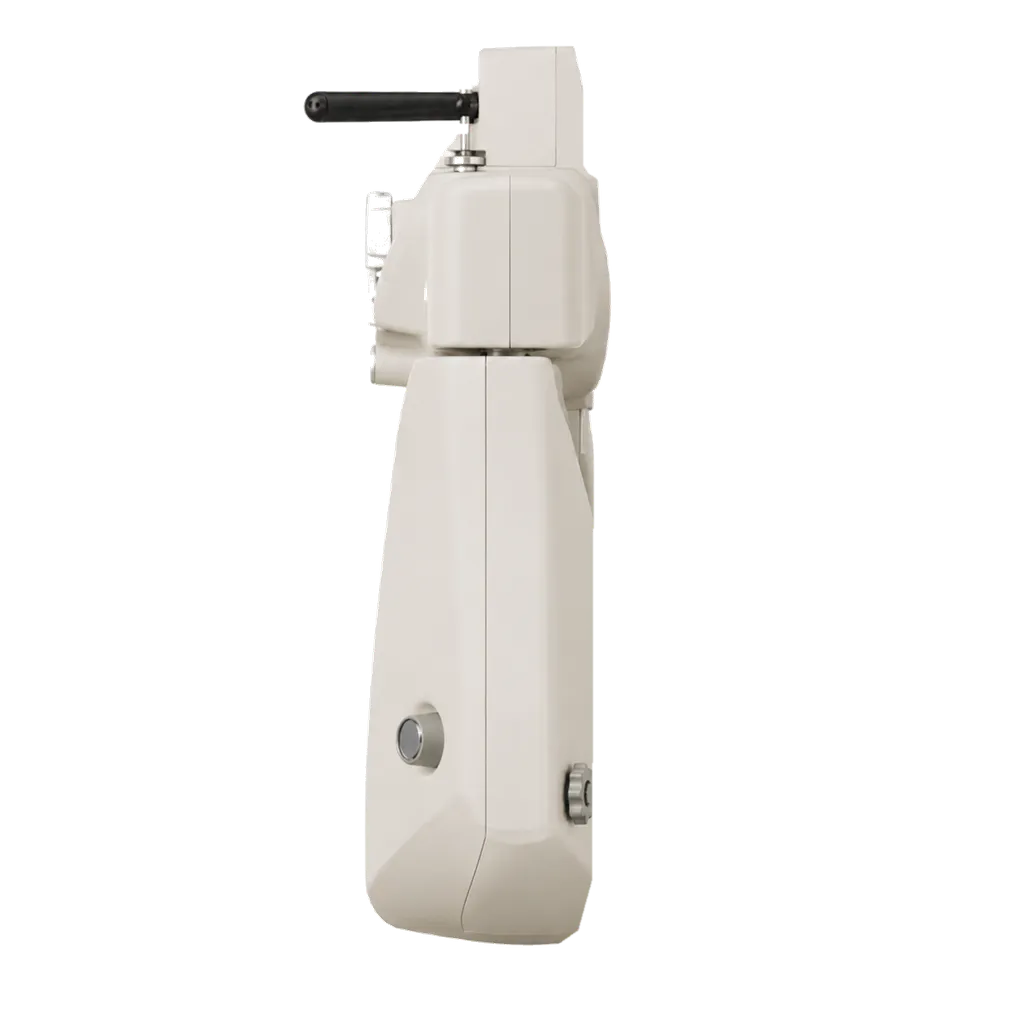
Optometry practices and ophthalmology clinics use the CV-5000 as the subjective refraction head of a lane. Pretest results from an autorefractor and the patient's current spectacles from a lensmeter arrive before the examination starts, so the refraction begins from imported values rather than typed ones. The final result can then be transferred to the electronic medical record without manual transcription.
Binocular work relies on the linked chart. Red-green filters or circular polarisation separate the images of the two eyes. Polarising filters at 45° and 135° sit in the auxiliary set, and prisms of 6 Δ and 10 Δ with a red Maddox rod support tests of binocular vision. Prism runs to 20 Δ in all directions, in steps as fine as 0.1 Δ.
Presbyopia and near work have their own tools. A ±0.50 D presbyopia cross cylinder sits among the auxiliary lenses, and near-point distances of 40 and 67 cm are built in. The head converges for near testing down to a 53 mm pupillary distance at 40 cm. Retinoscopy lenses of +1.5 and +2.0 D let the practitioner work through the head as well, and each prescription can be set to a vertex distance from 12 to 20 mm.
Room layout decides the controller. A practitioner seated at the desk uses the One-Dial Controller KB-50S and its touch panel, while an iPad lets you control it from anywhere in the room. Practitioners can run the operating software on an existing PC at the lane and keep other programmes open during the examination, saving desk space.