
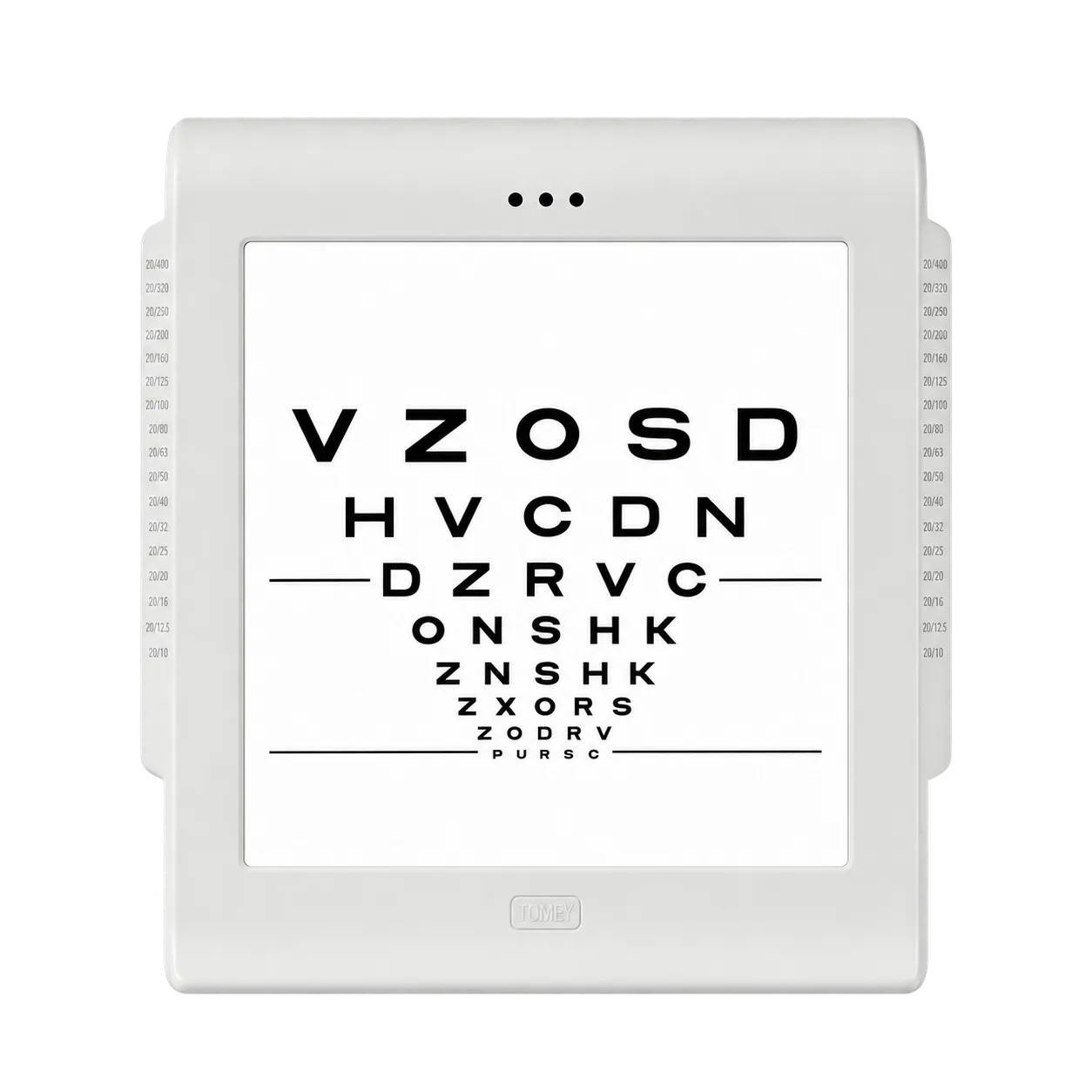
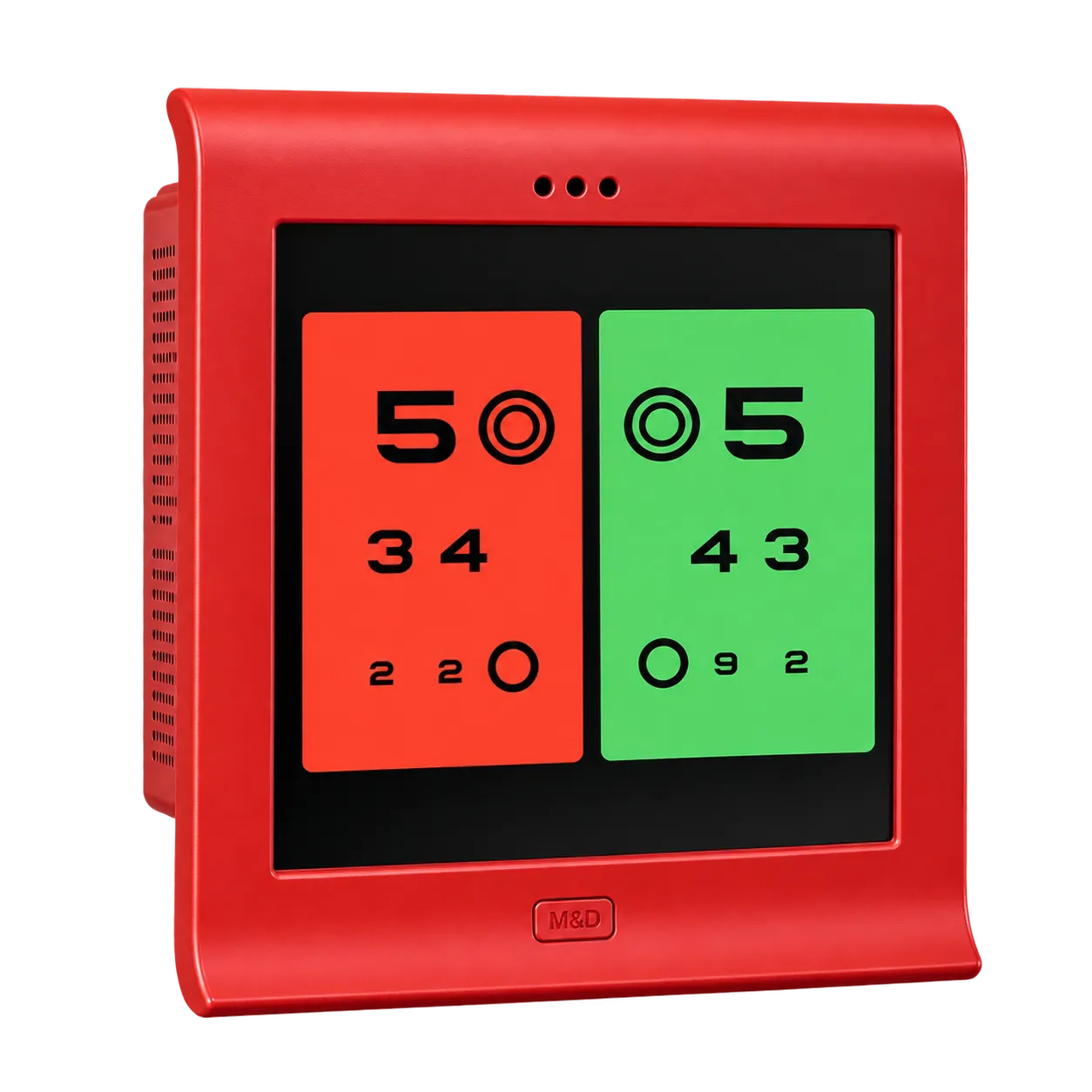
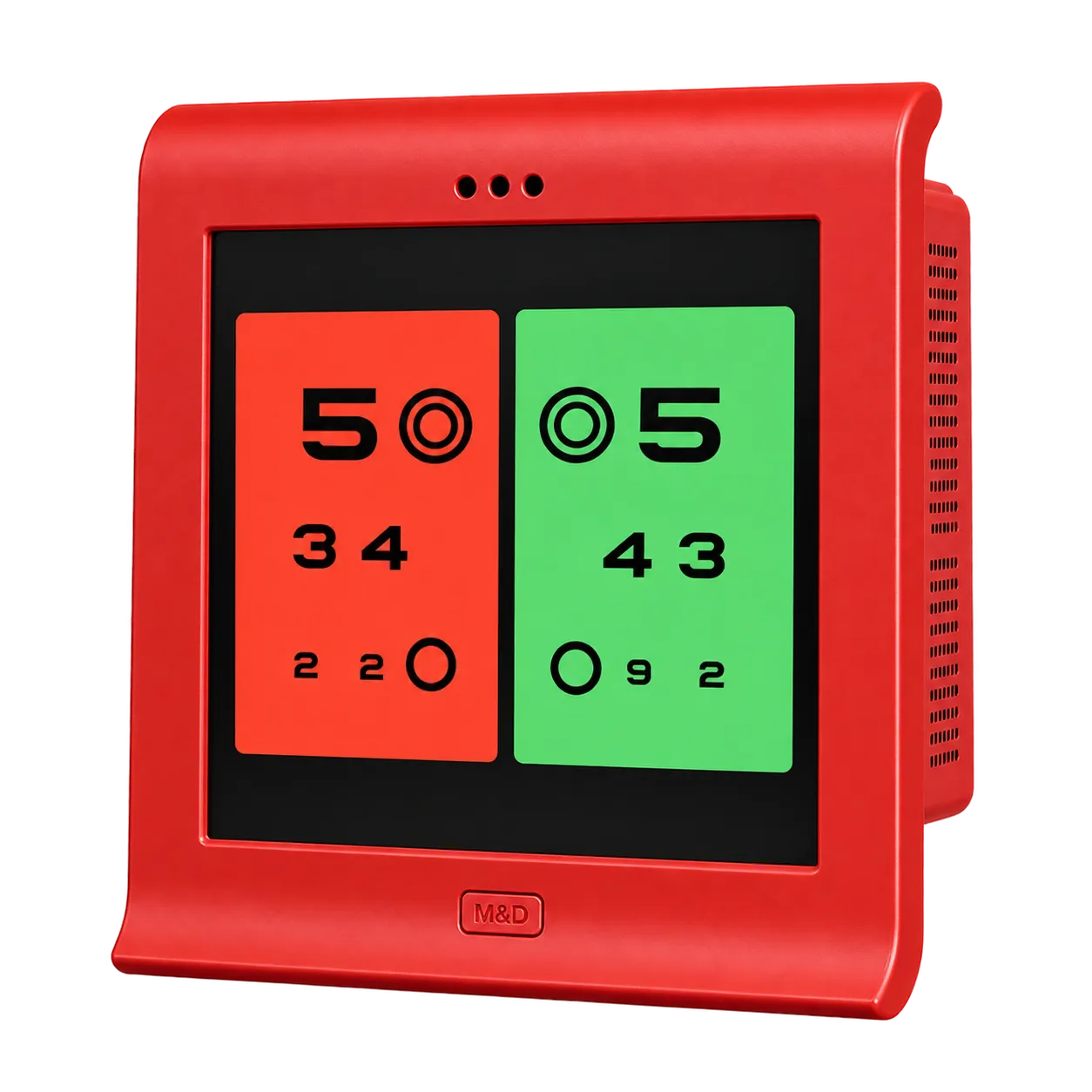
The CC-100XP serves optometry practices, ophthalmology clinics and refraction lanes that test at distances from 2.0 to 9.0 m. It suits examiners who prioritise binocular vision because circular polarisation shows each eye its own target against the same background. Phoria, fixation disparity and stereo findings then rest on targets that each eye sees cleanly.
Acuity work covers adults and children. Letters, numbers, tumbling E, and Landolt C serve adult patients; children's and illiterate charts serve young patients and non-readers; and fixation targets in images and movies give patients a point to fix on. Optotypes can appear in random order, and the ETDRS chart, with single-letter LogMAR scoring, provides a letter-by-letter record of acuity.
Refraction refinement uses the clock, half-clock, fan, cross-lines, and astigmatism charts; the balance chart; and the dots chart for cross-cylinder testing, which scales to the patient's acuity. For binocular assessment, the Schober, Worth, cross, coincidence and stereo tests run alongside the 12-step MKH sequence for phoria testing, and the white Maddox LED serves Maddox rod work.
Beyond refraction, the chart checks contrast sensitivity with an adjustable spatial frequency test and a sine wave test, and the result appears as a graph. The HRR test screens for red-green and blue-yellow deficiencies,d grades their severity, and includes an Amsler grid. In a CV-5000 lane, the examiner drives the chart from the KB-50, the CV-5000 PC software,e or the wireless tablet, following the refraction step by step. Outside a CV-5000 lane, the infrared remote runs the chart on its own in a standalone refraction room.