
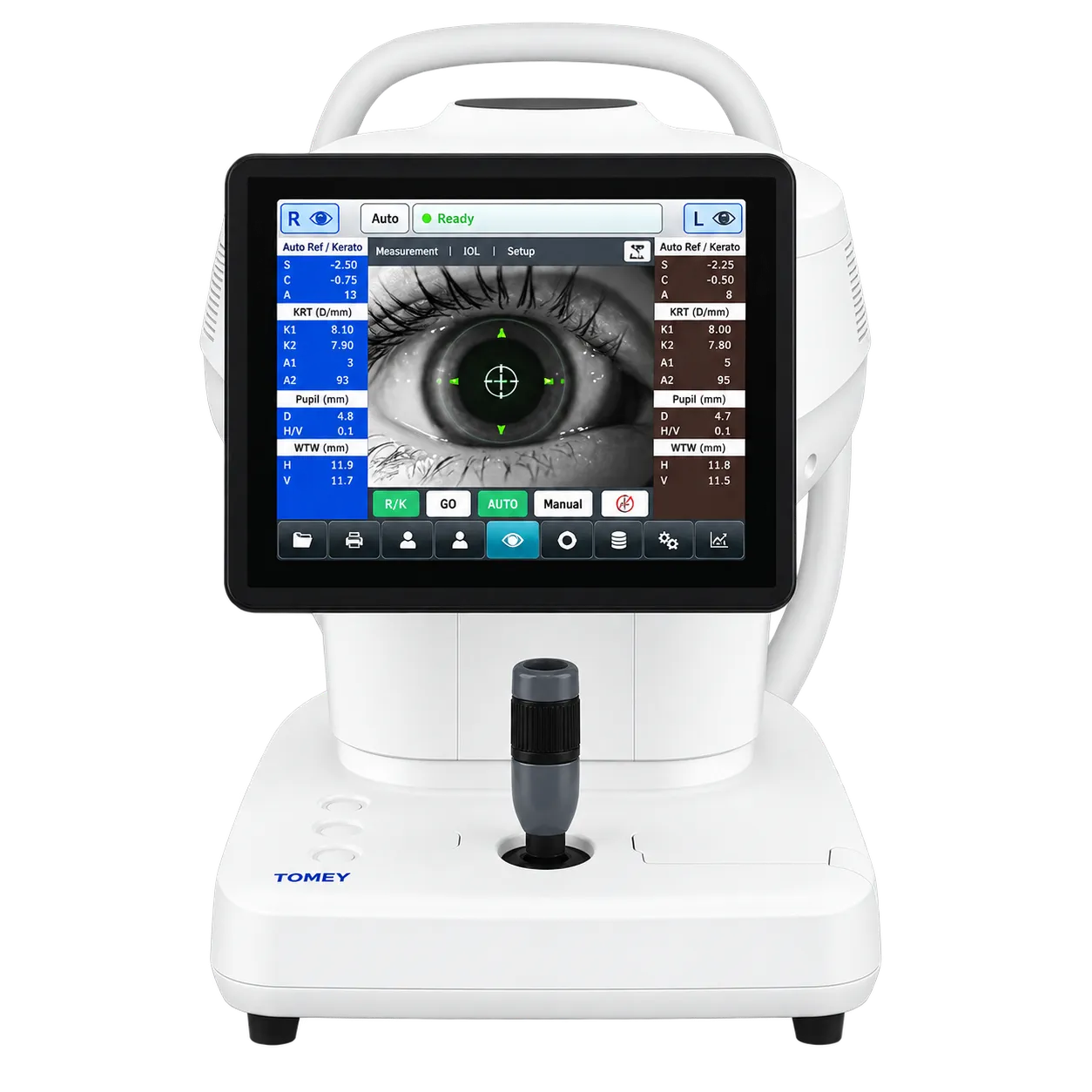
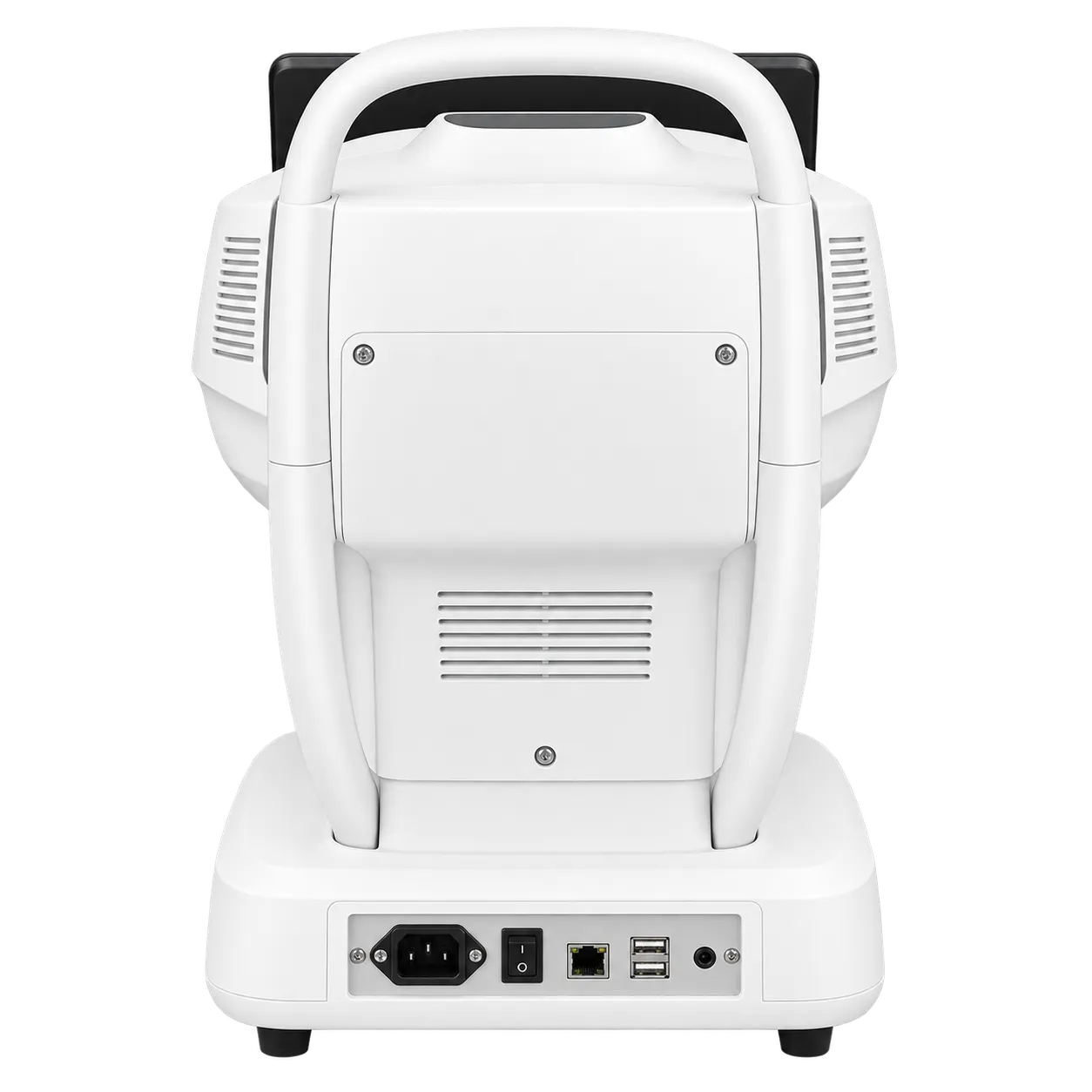
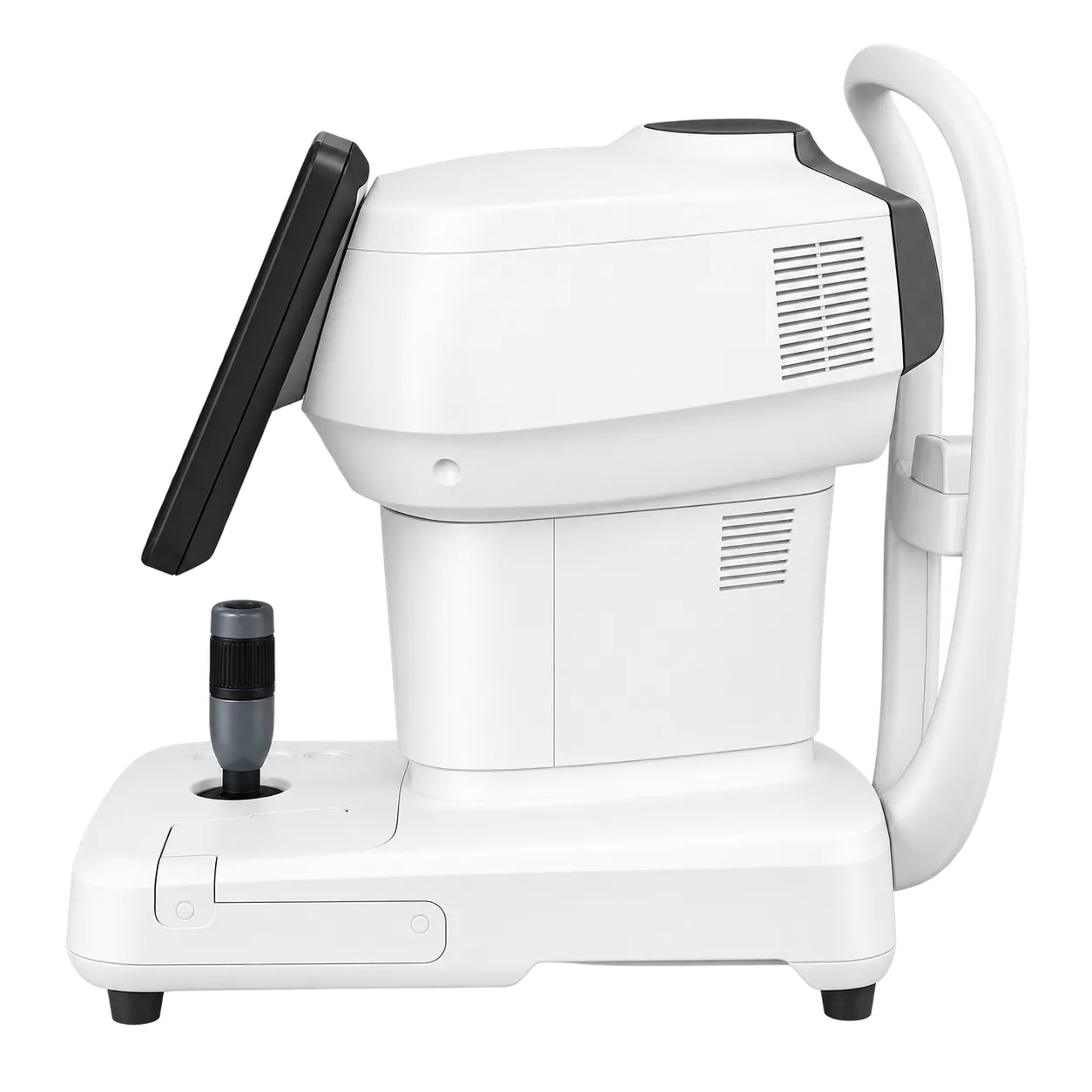
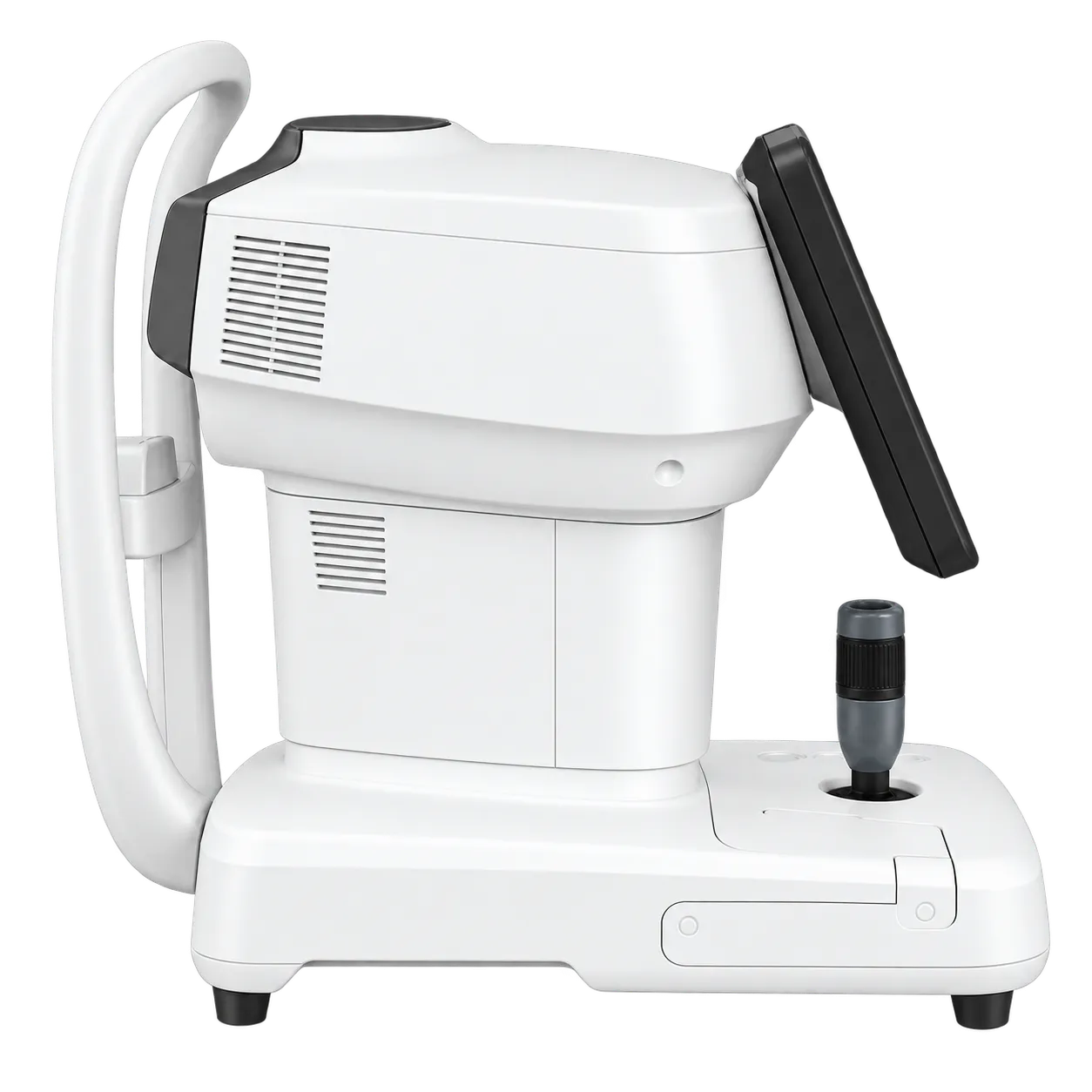
The MR-6000 suits optical practices, optometry clinics, ophthalmology departments, and hospital eye services that perform refraction, corneal shape, pressure, and thickness measurements in the same appointment.One instrument delivers five examinations, so the patient stays in one position while the cone switches between measurement modes in about four seconds. A full set of measurements takes about 90 seconds, according to the manufacturer
Optometrists, opticians, ophthalmologists, orthoptists, and eye clinic technicians can operate it because image recognition handles automatic alignment, and the auto shot handles positioning and triggering. The touch screen guides the operator through the examination, and the integrated thermal printer prints the result at the instrument.
Refraction covers a wide spherical range of −30.00 to +25.00 D, and Quick Refraction mode returns values within seconds when fixation is lost; ;it targets children, patients with nystagmus, ananduncooperative patients. Keratometry and topography describe the corneal surface, with 16 mire rings over an 8 mm area and map types that include Fourier analysis. Pupil and corneal diameters are recorded with each topography. The dry eye app adds blink frequency, tear meniscus height, hyperaemia, and meibomian gland observation to the same visit, and you can export results to a record system.
Tonometry and pachymetry sit in the same instrument, so it automatically corrects intraocular pressure with central corneal thickness. The dry eye observation app records blink frequency, tear meniscus height, hyperemia and meibomian glands for patients who report dry eye symptoms. Rarely, a central retinal SD card database is exported as MLed as ML, C, SV, JPDFnd PD, F for departments that file images and reports in their records system.