
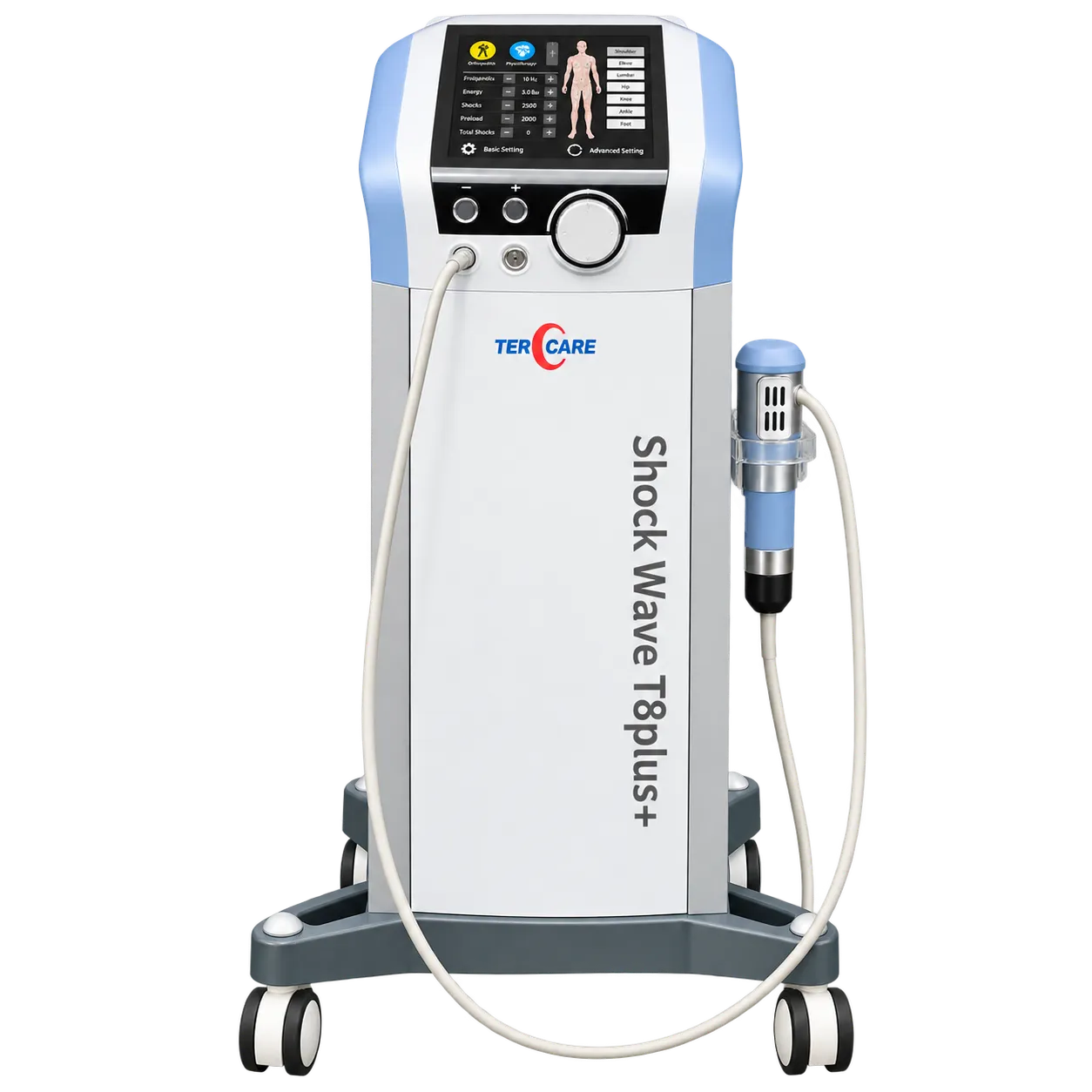
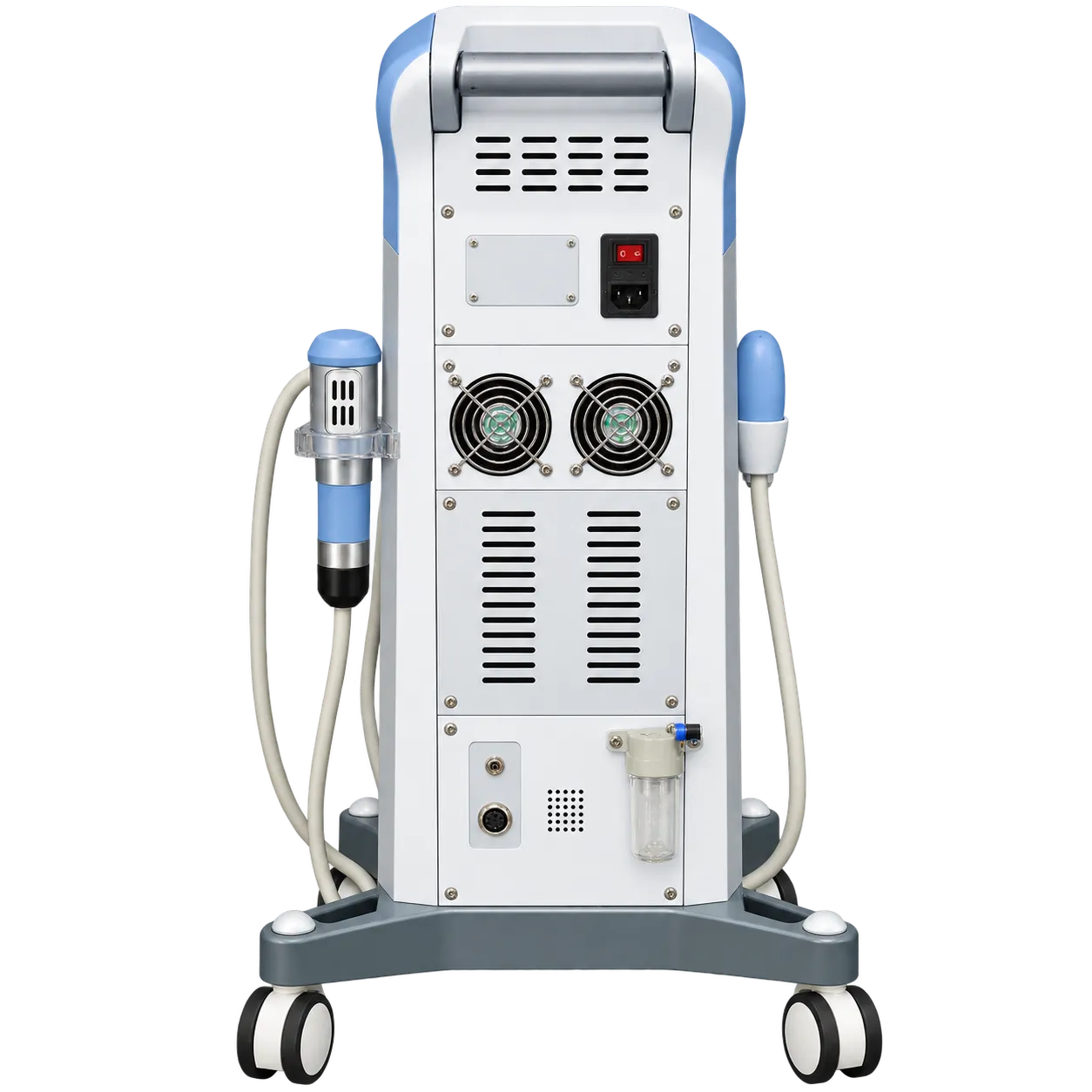
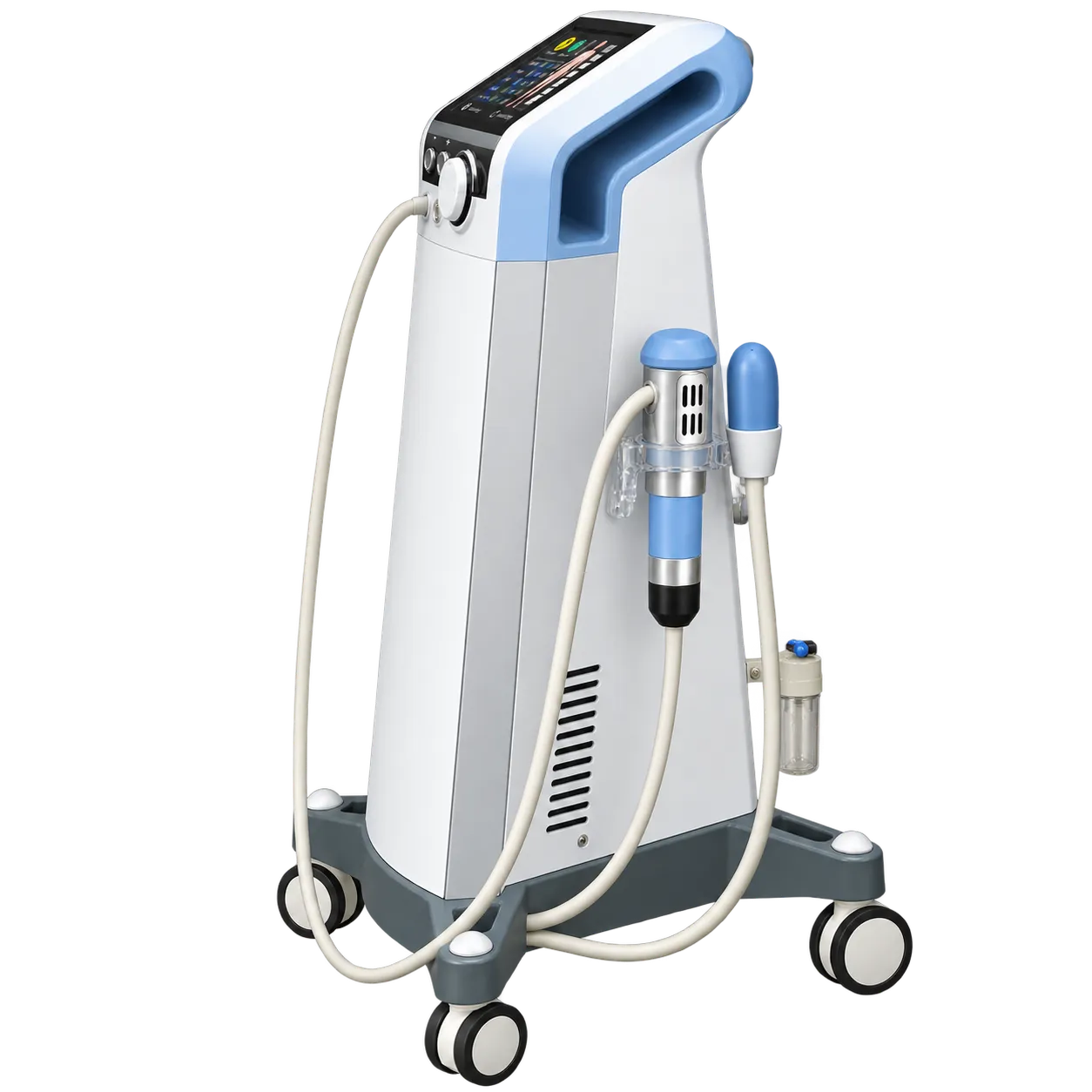
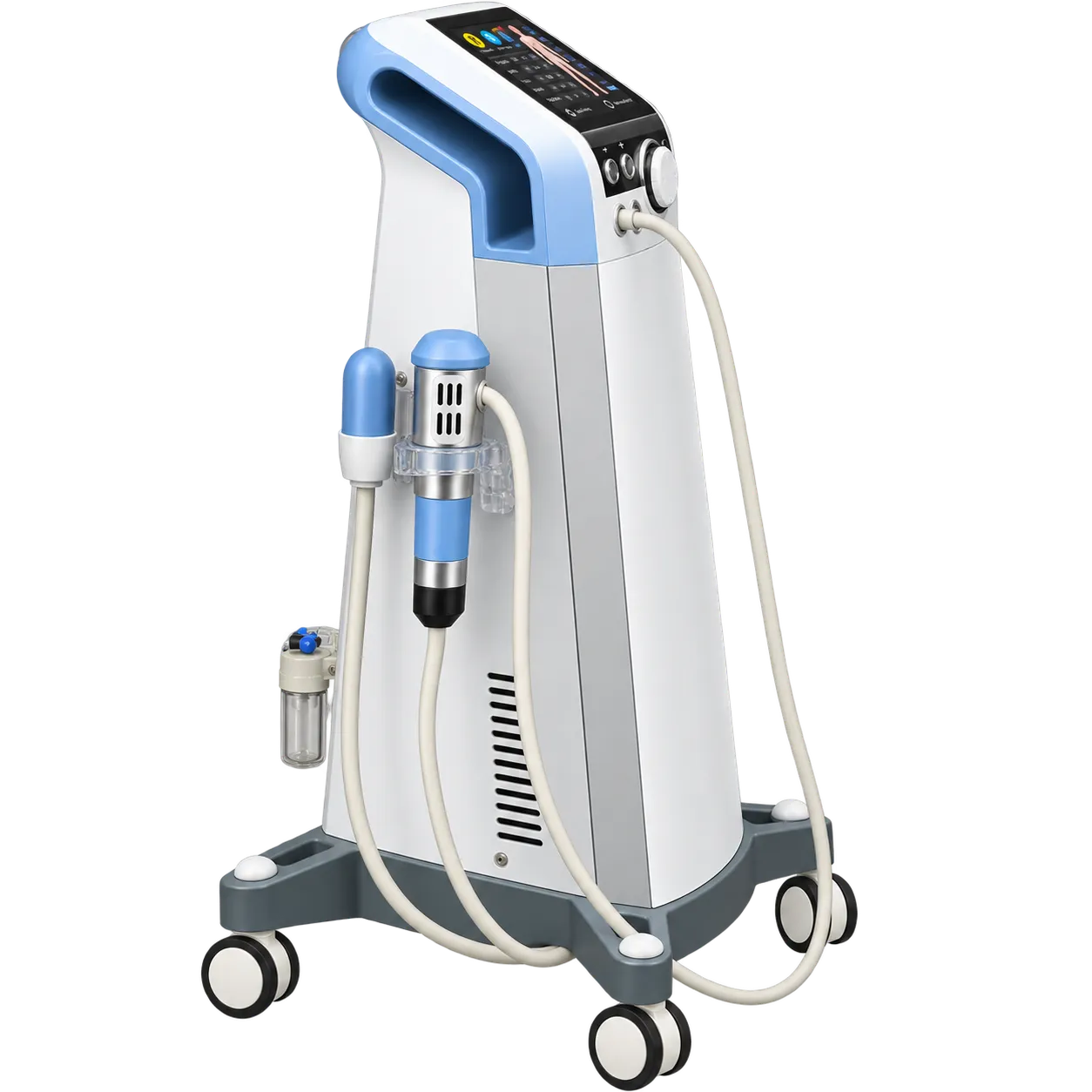
The T805+2 suits musculoskeletal physiotherapy departments, sports injury clinics, podiatry services and rehabilitation units where one treatment room serves several couches. The shock wave handle addresses chronic, treatment-resistant tendon and fascia problems. The ultrasonic handle belongs to the general soft tissue and joint work that physiotherapy has used ultrasound for over many decades.
Each modality carries its own evidence. For shock wave therapy, NICE judged the safety evidence reassuring for refractory plantar fasciitis and Achilles tendinopathy but found efficacy inconsistent, and recommends special arrangements for governance, consent and audit; for calcific shoulder tendinopathy it recommends use only in research. A placebo-controlled multicentre trial of 245 patients with chronic plantar fasciitis reported better pain and function after radial shock wave, while a 2024 Norwegian trial found no significant difference at six months when radial shock wave, sham or exercise was added to advice and foot orthoses.
Therapeutic ultrasound has a weaker record. A 1999 systematic review of 38 trials found no clinically important benefit in 11 of the 13 adequately conducted placebo-controlled studies, and a 2020 Cochrane review of chronic low back pain found little to no difference from placebo. More recent meta-analyses report small pain improvements in knee osteoarthritis and neck pain, while their authors describe the underlying trials as limited in quality.
For a buyer, that points to a clear use: shock wave treatment of refractory cases within an audited protocol, with the ultrasonic handle as a supplementary tool whose value depends on specifications not yet published. It is a sound choice for teams prepared to record outcomes and select patients carefully.
The conformity documentation those procurement routes require is issued by the manufacturer and provided by the seller.