
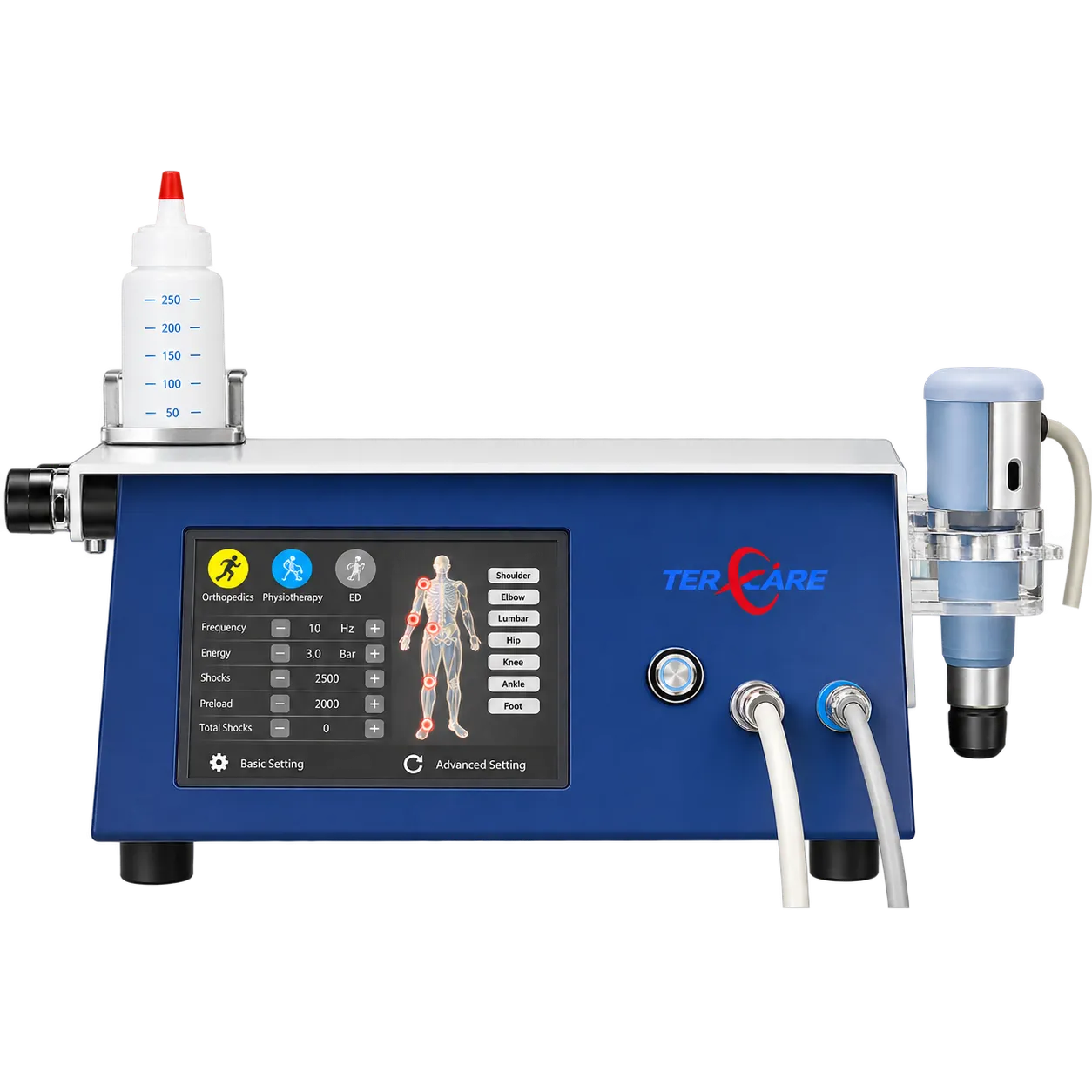
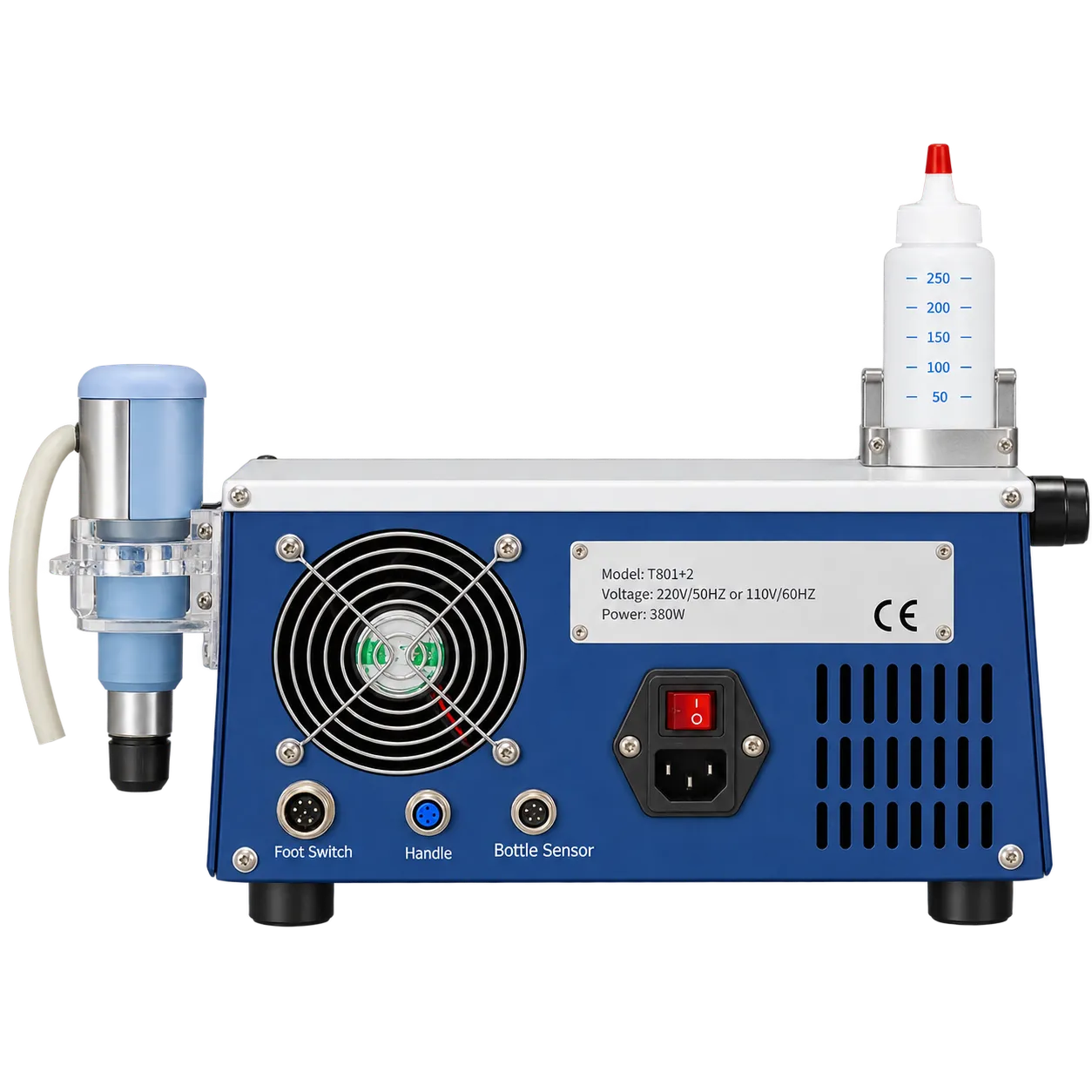
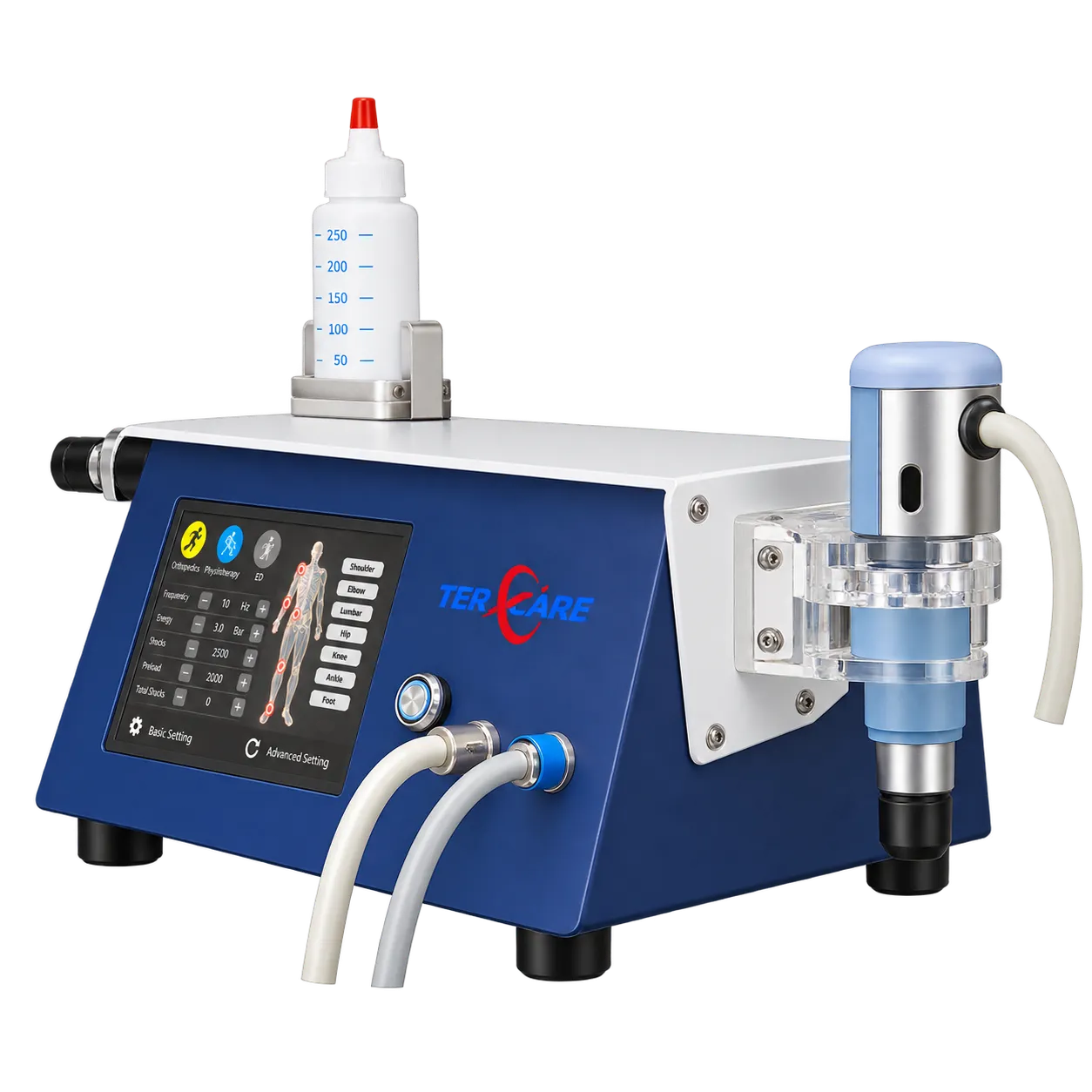
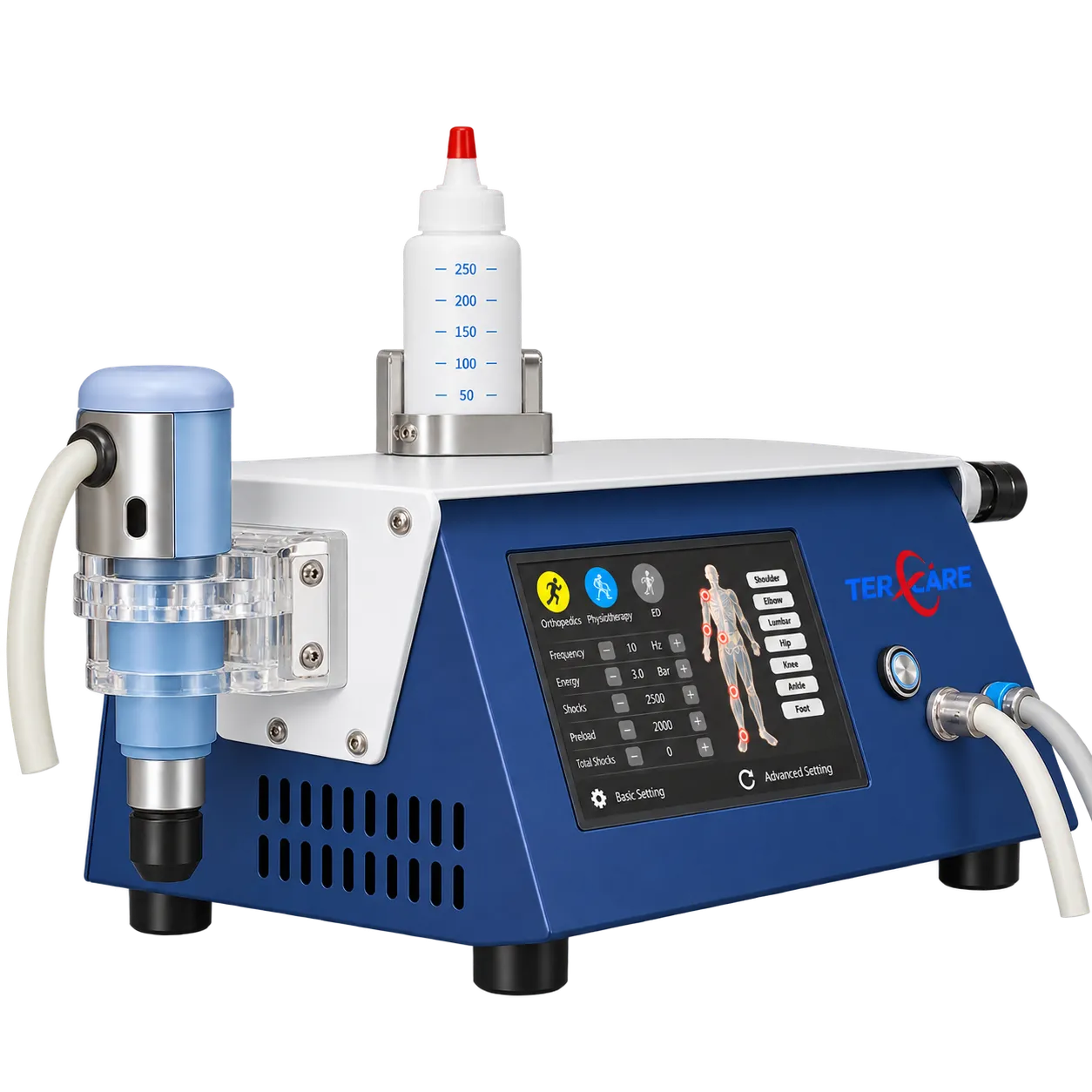
Practices that use more than one kind of energy on soft tissue are where a paired console fits. Osteopaths, musculoskeletal physiotherapists, sports medicine clinics, and chiropractors often use shockwave on a stubborn tendon insertion and ultrasound on surrounding soft tissue; having both on one console keeps the patient on the couch while the method changes.
On the shockwave side,e the target list is well defined. Radial output suits superficial tendon insertions, and the indications NICE has looked at are Achilles tendinopathy, plantar fasciitis, tennis elbow and greater trochanteric pain syndrome. That last one is largely a gluteal tendinopathy at the lateral hip, a presentation osteopathic and physiotherapy practices see often. Seven probes give a choice of face for a narrow insertion and a broader area, and the half-bar and single-hertz increments allow the gradual titration most protocols describe.
On the ultrasonic side, the plan waits on two numbers. Frequency decides whether the handle reaches a superficial structure or something deeper, and duty cycle decides whether it can warm tissue or only deliver a pulsed output. Until both are supplied in writing, a practice cannot say what the ultrasound will be used for, and should not build it into a protocol, a rota or patient information. Once they are known, the ultrasound can be slotted into the indication list alongside the shockwave work rather than guessed at.
Guidance differs between the two. Shockwave needs special arrangements for governance, consent and audit across tendon indications; ultrasound is advised against in low back pain and in osteoarthritis. Procurement runs through private practices, trust services and sports medicine providers under their own rules, with a Class IIa or IIb device clearing clinical governance alongside finance. Adverse incidents go to the MHRA through the Yellow Card scheme.