
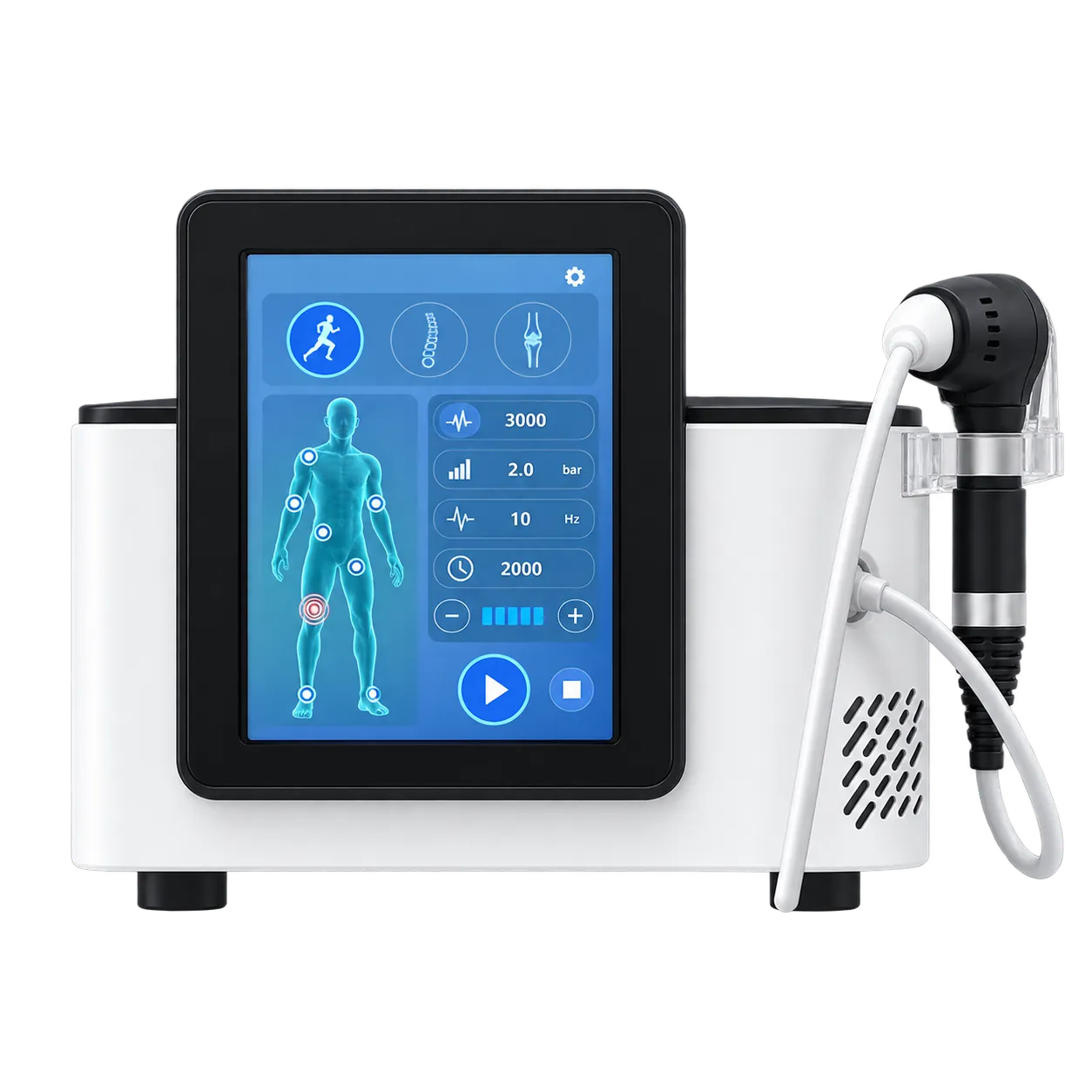
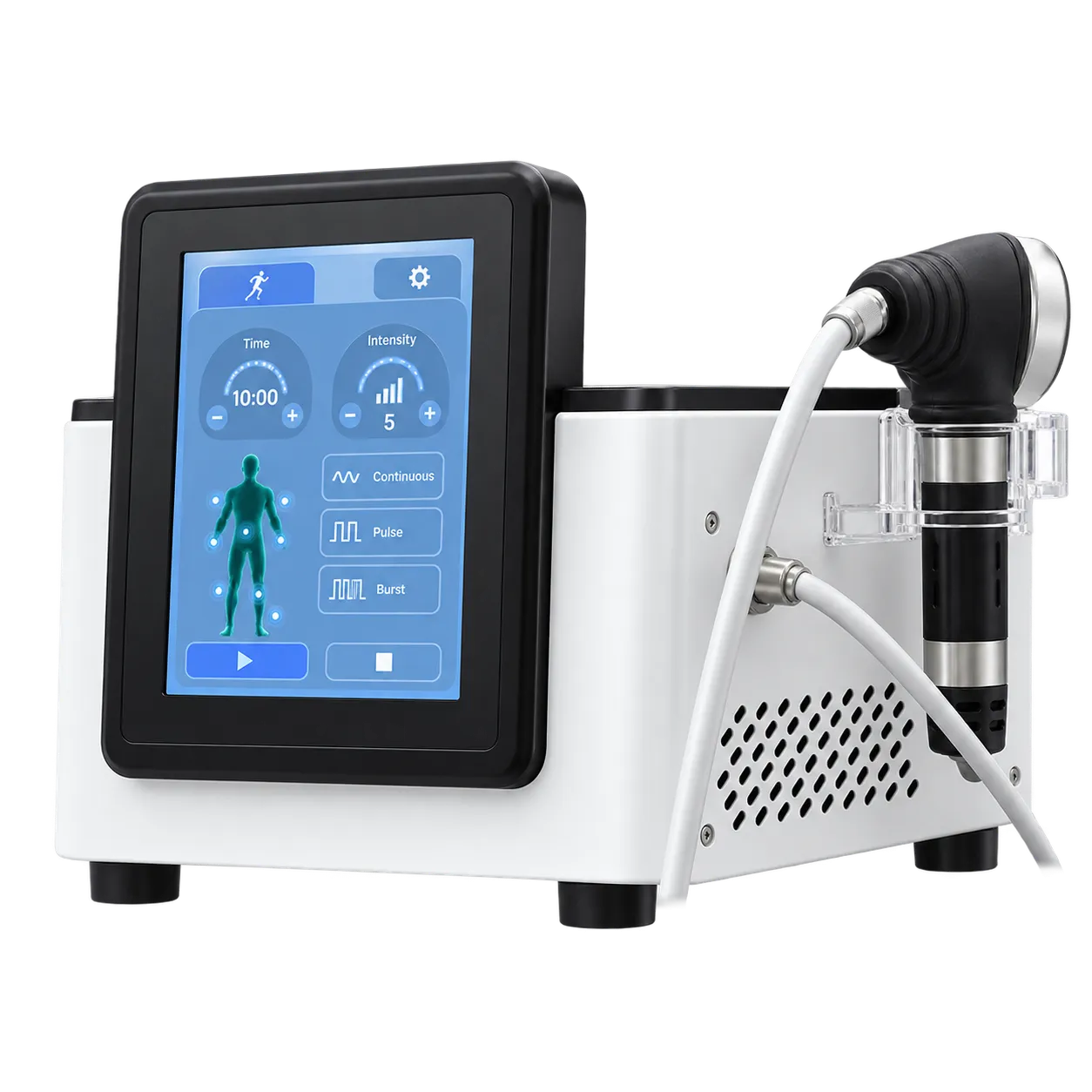
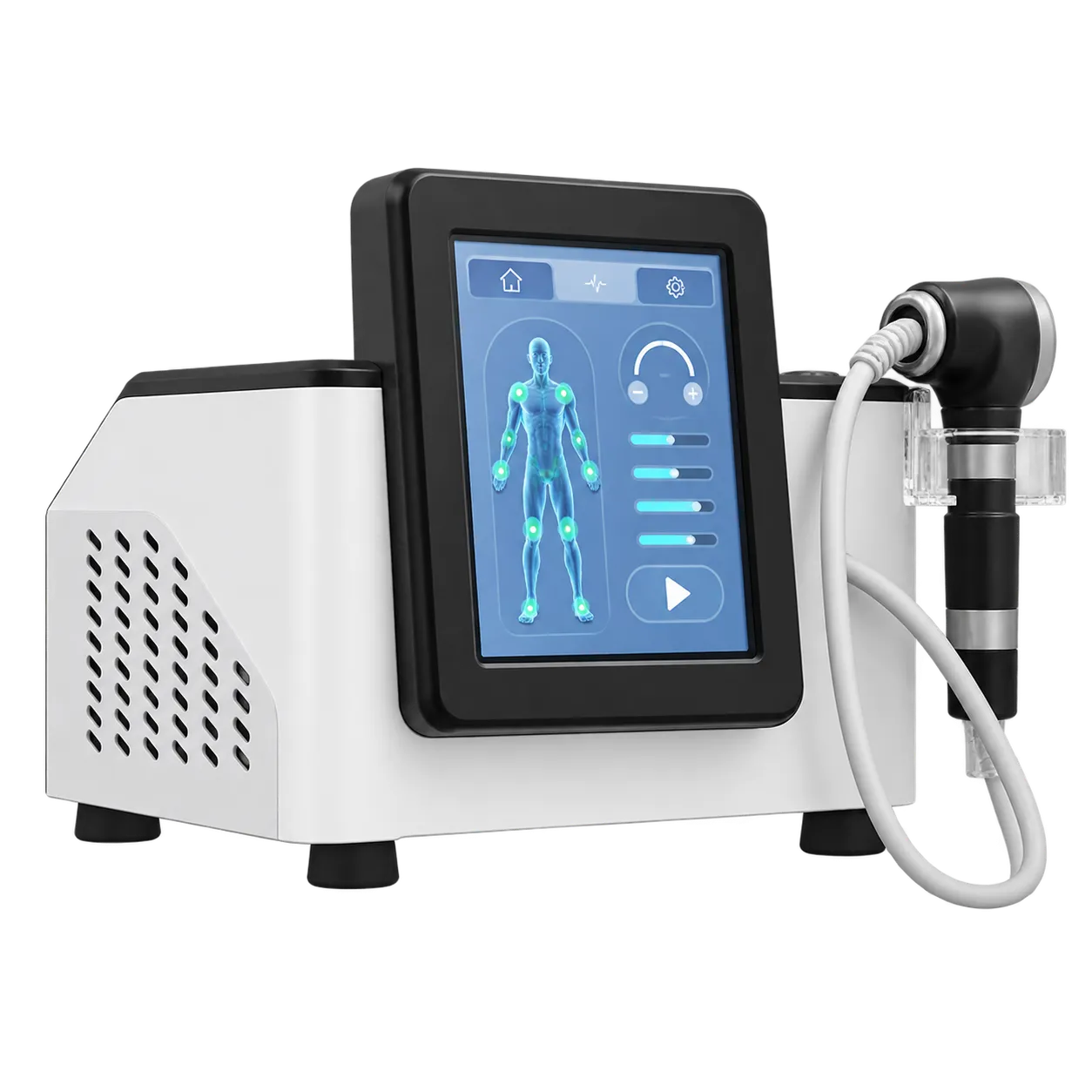
Sports medicine services, physiotherapy practices, podiatry clinics and musculoskeletal pain teams are the buyers. The treated conditions are those with published guidance: Achilles tendinopathy, plantar fasciitis, tennis elbow, and greater trochanteric pain syndrome, each delivered as a short course alongside a loading programme.
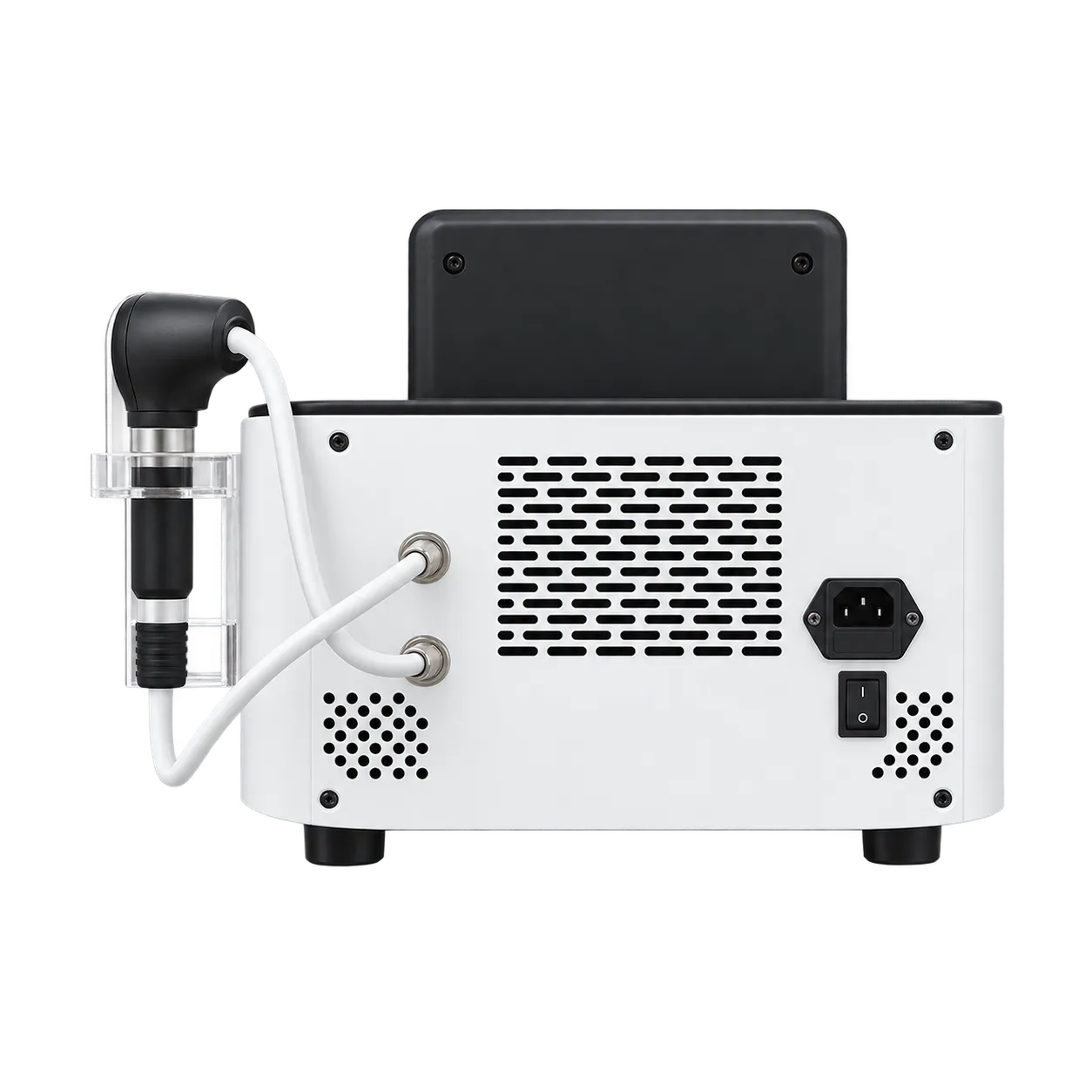
A low console suits a site where the treatment room does other work. Sports clubs and multi-use rooms rarely have a dedicated shockwave bay, so a unit that sits under a cupboard and leaves the plinth clear earns its space. Clinics that share a building with quiet consulting rooms should consider the wall it sits against before the first list, not after the first complaint.
The clinical routine does not change with the layout. Screening against the contraindications in the instructions for use, a consent conversation that names the uncertainty in the evidence, gel at the interface, the head chosen for the area, and a note of the pressure, rate and impulse count for every area treated. Patients are told that soreness for a day or two is usual.
Estate duties come with the purchase. The employer assesses noise exposure, the console joins the electrical testing schedule, and the probes need a cleaning routine and a clean place to live. An NHS service routes the machine through medical devices management before it reaches a clinic room, and the seller passes on the conformity documents the team will ask for. Independent sites keep the same records themselves, since insurers ask the same questions in the same order.