
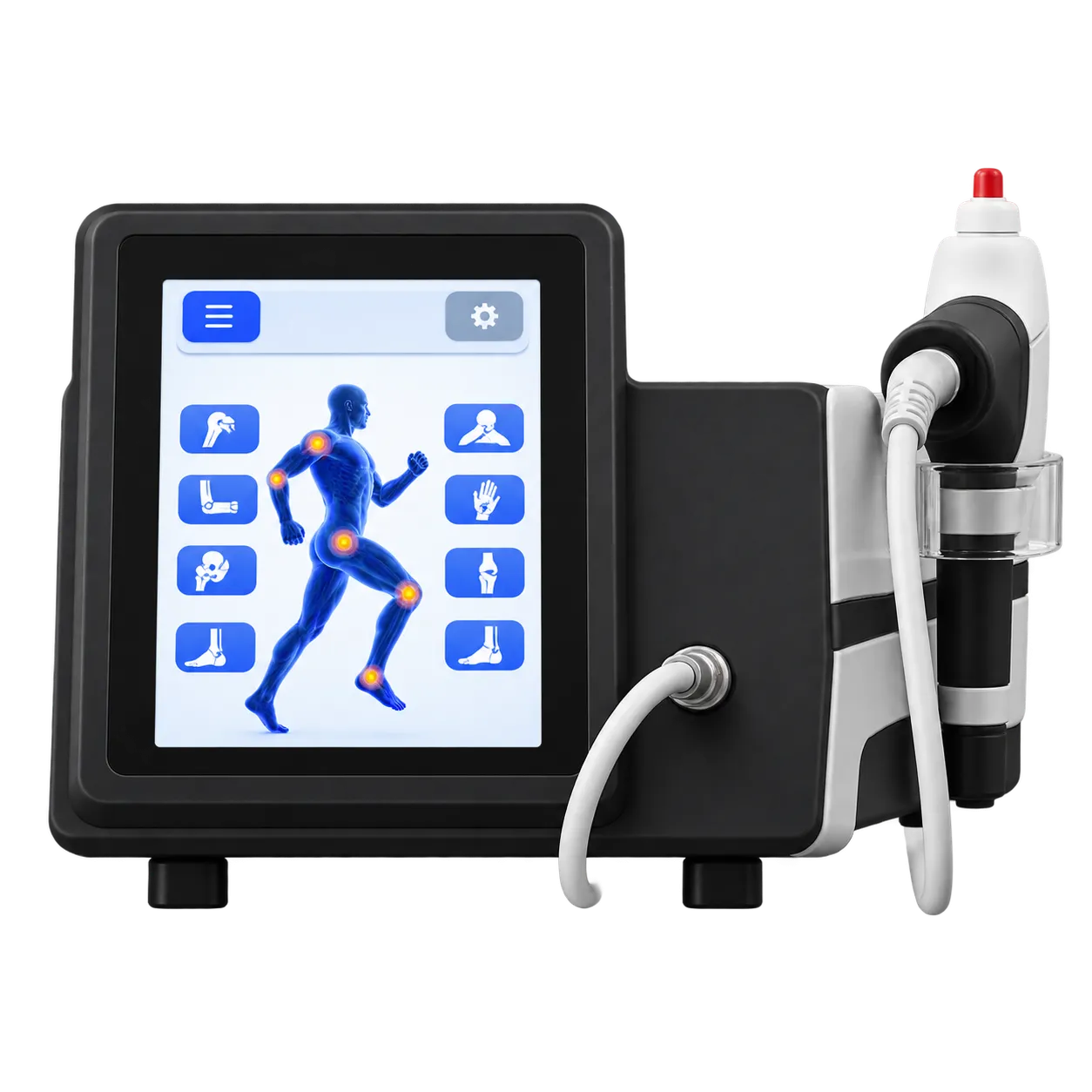
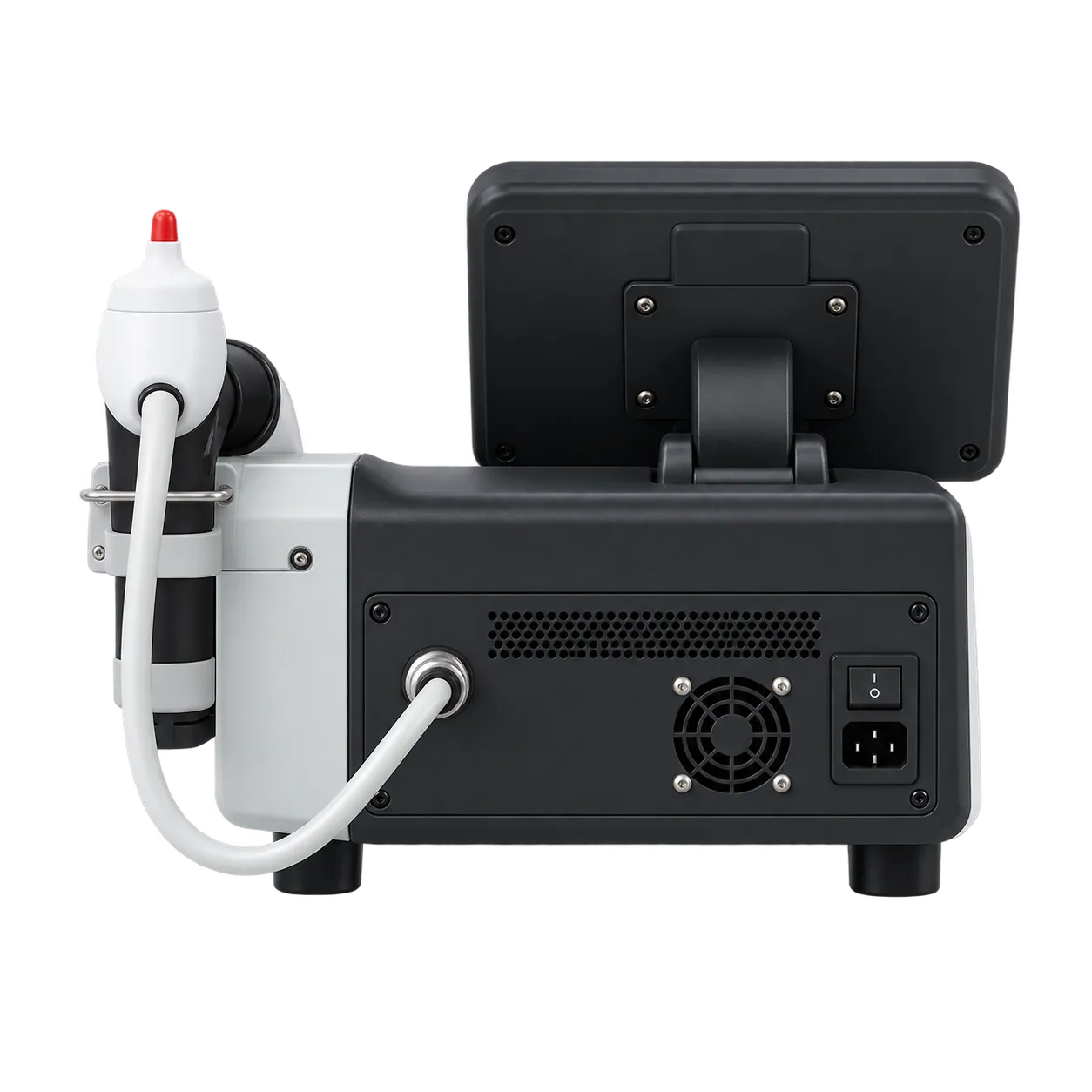
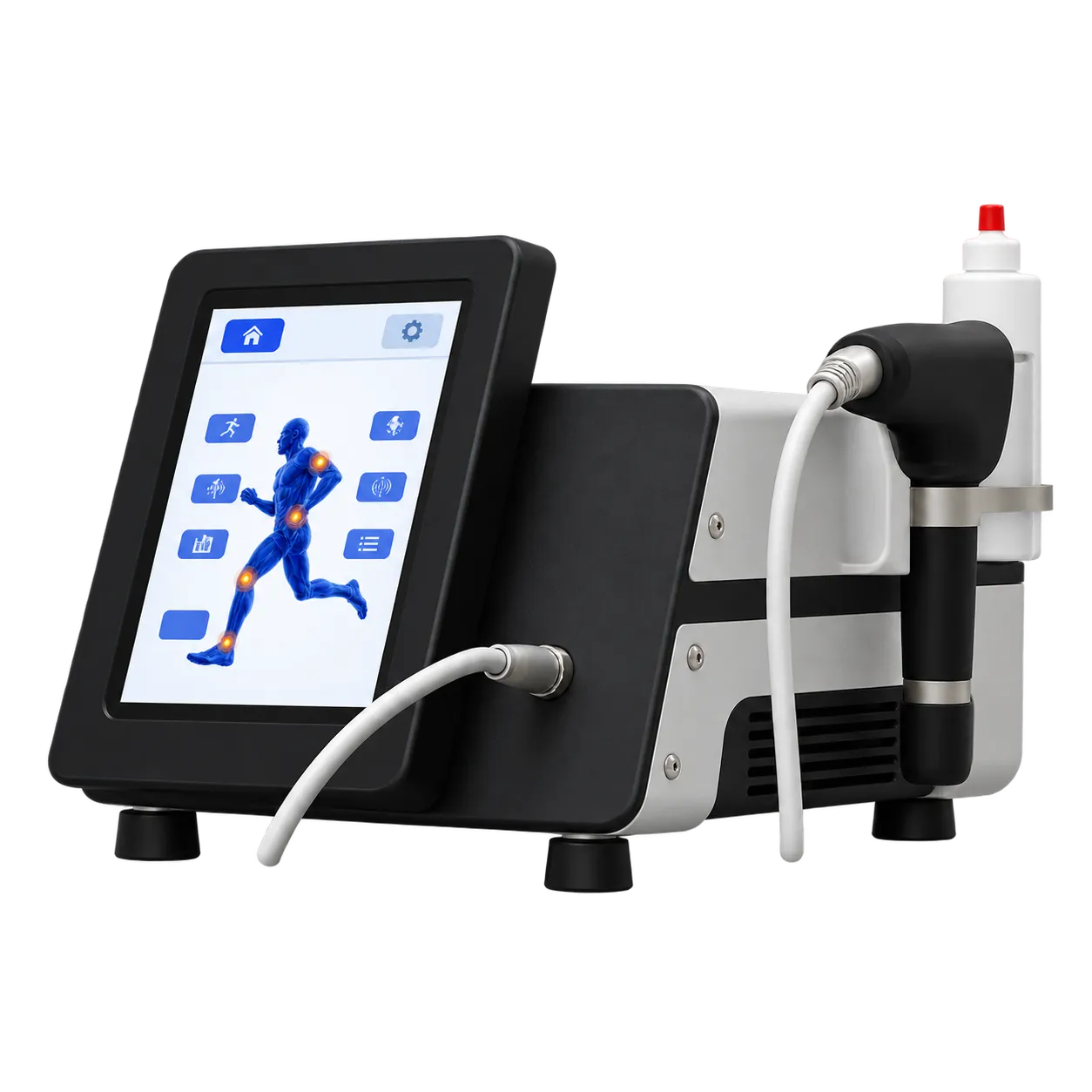
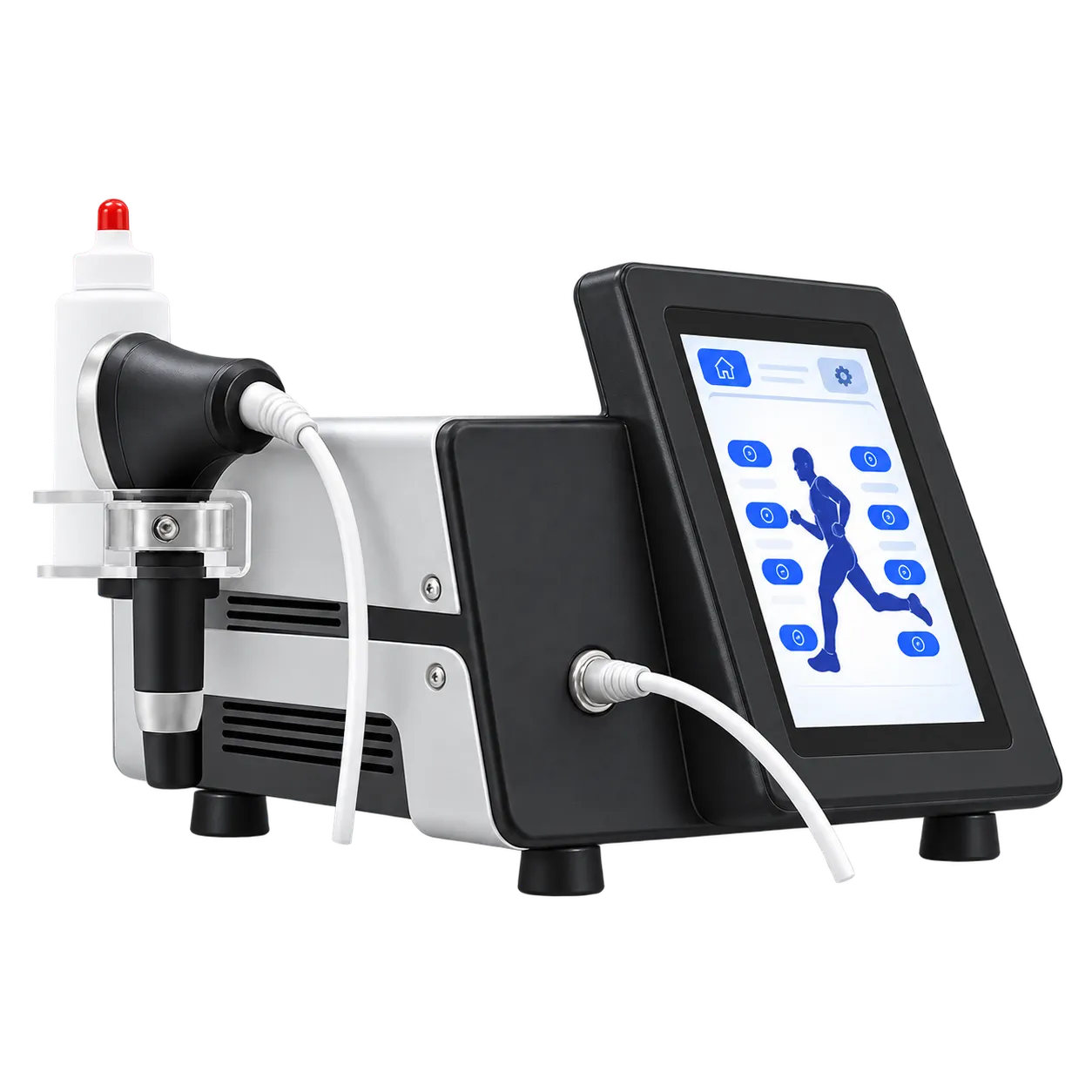
Physiotherapy practices, sports rehabilitation services, podiatry clinics and musculoskeletal pain services are the buyers. The work targets tendinopathy in the heel, elbow, patellar tendon, and shoulder, along with myofascial trigger points and the fascia of the foot, usually delivered as a short course alongside a loading programme rather than on its own.
The probe set is what decides the range of that work. Small heads suit points and superficial structures, mid-size heads suit tendon insertions, and the largest heads suit muscle and connective tissue over a broad area. A clinic buying a nine-head set should map each head to the areas it treats before the machine goes into service, because an unmapped set turns into two heads that get used and seven that sit in a drawer.
Screening and consent sit where they do for any shockwave service. The instructions for use carry the contraindications, patients are told that soreness and reddening are normal for a day or two, and the notes record the head, the pressure, the rate and the count for every area treated. Where a course runs over several weeks, those numbers are what make session two a continuation, not a fresh start.
Room and paperwork finish the picture. Impulse noise puts the room within the scope of the Noise at Work assessment, the console joins the electrical testing schedule, and an NHS service will route it through medical devices management before it reaches a clinic room. The manufacturer issues the declaration of conformity, and the seller passes it on with the quotation.