
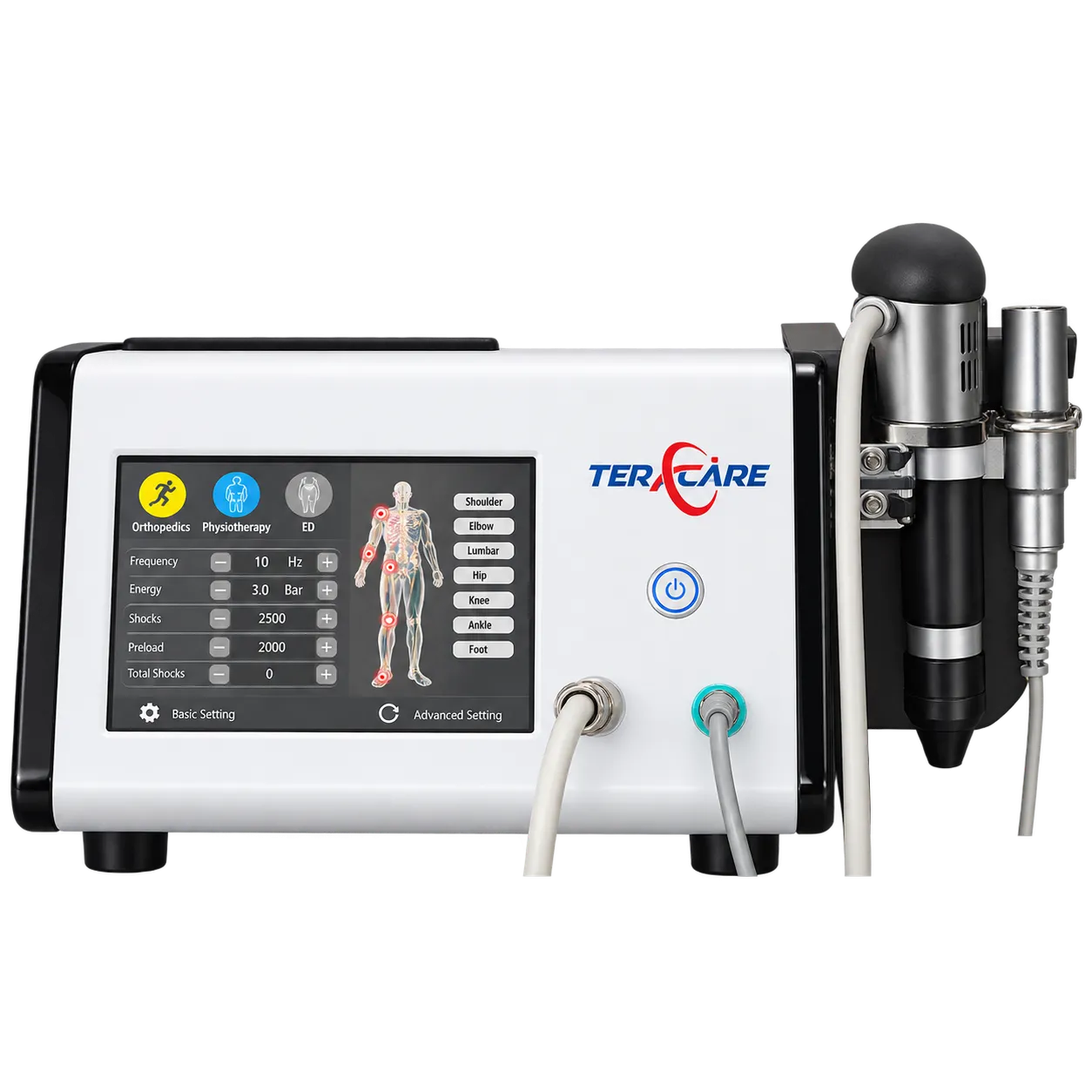
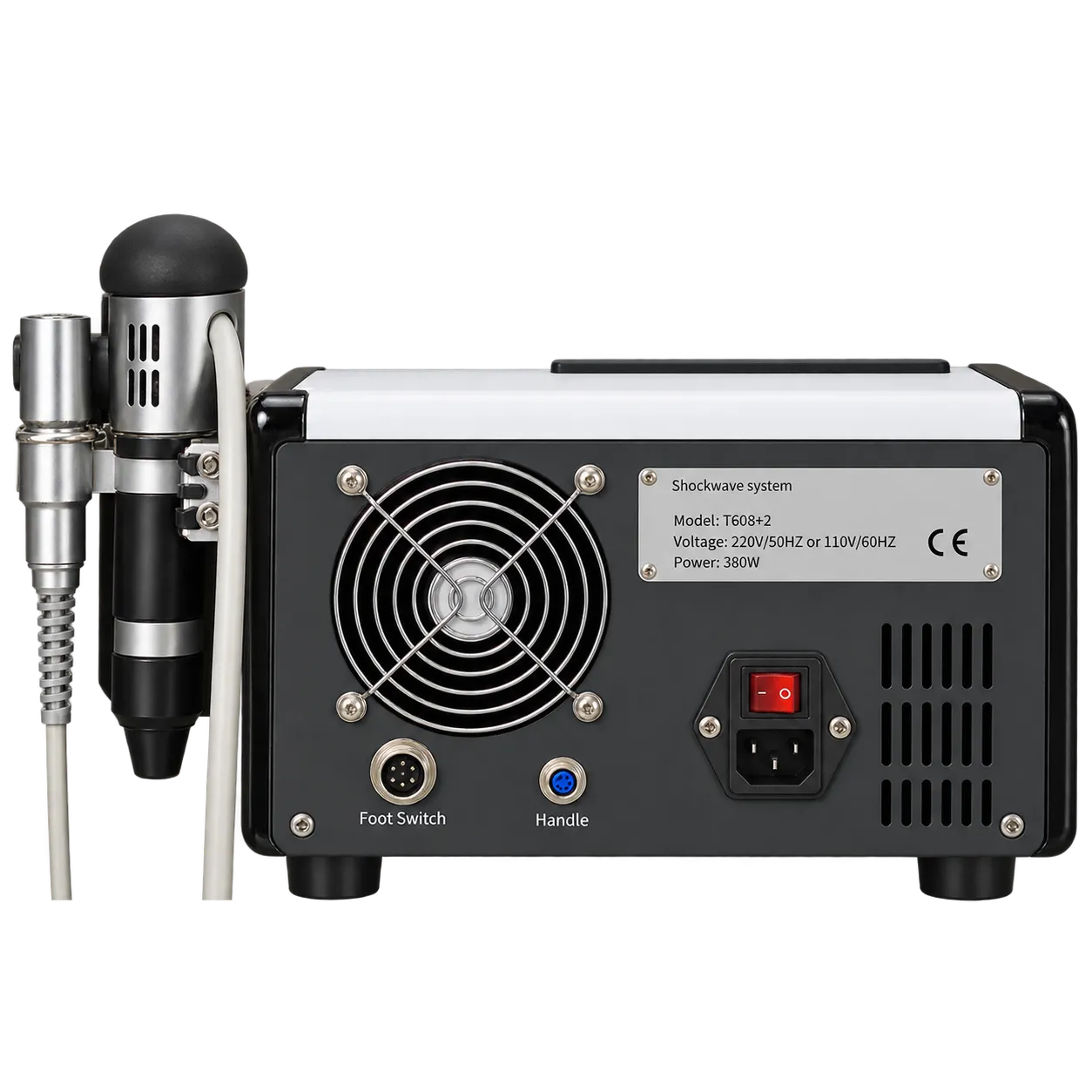
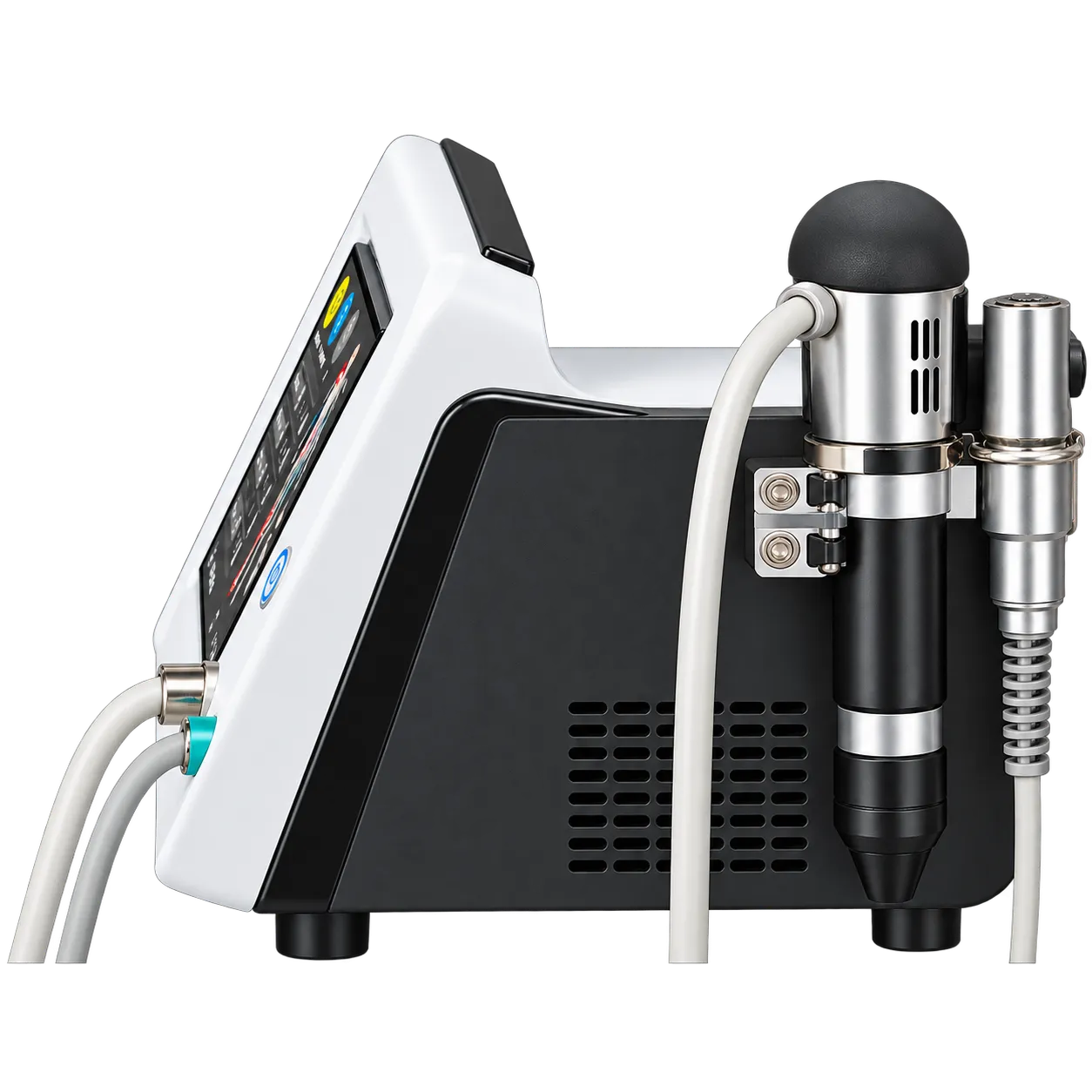
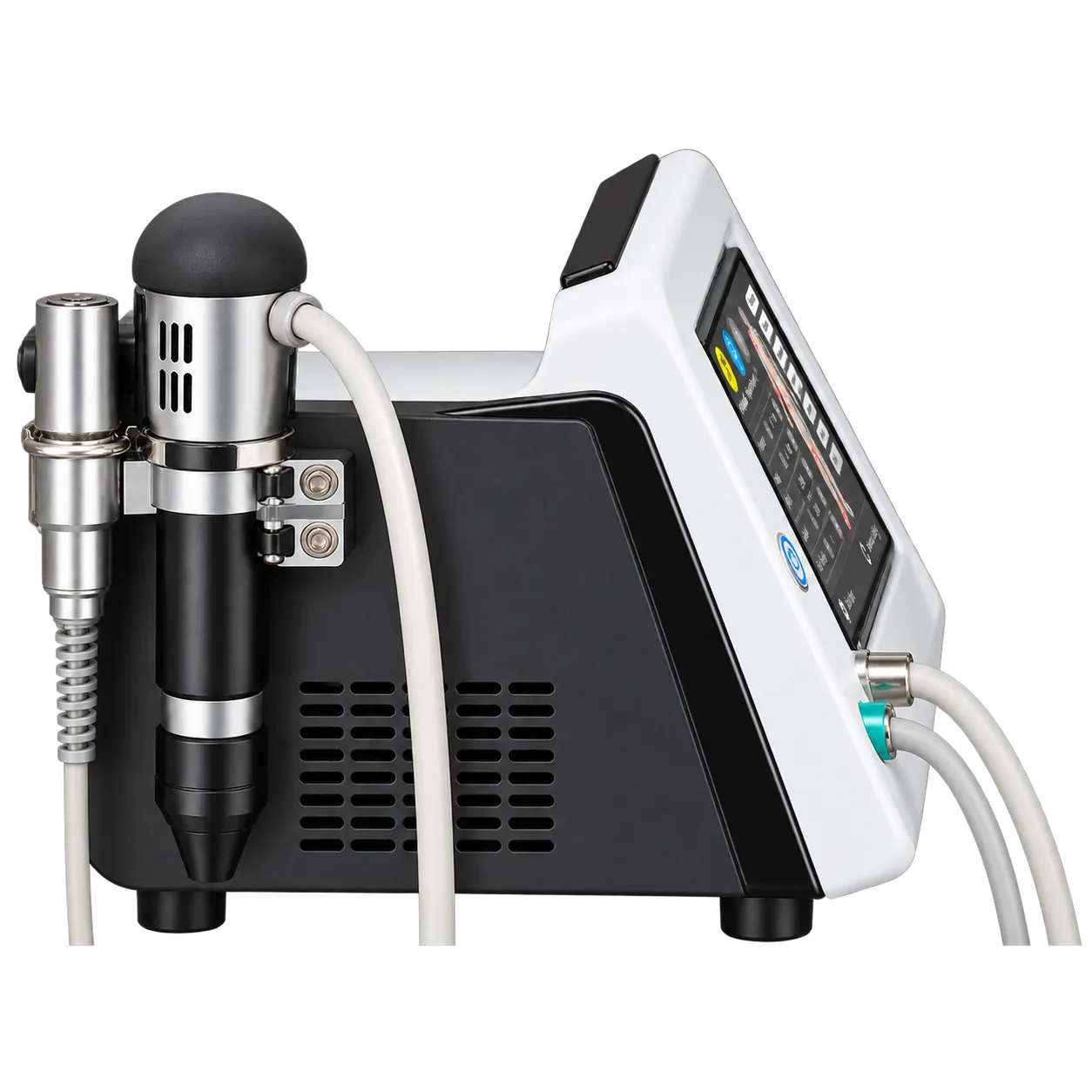
A combination console suits the treatment room, offering both modalities and room for one machine. Musculoskeletal physiotherapy, sports medicine and rehabilitation departments commonly use shockwave for tendon insertions and ultrasound for soft tissue, and each device usually needs its own bench position, socket and handpiece rest. Where the room is small or shared, fitting both into one footprint is the practical argument.
On the shockwave side, the configuration is fully described. Radial output from 0.5 to 10 bar suits superficial tendon insertions: the Achilles, the plantar fascia at the heel, the common extensor origin at the elbow, the greater trochanter and the proximal hamstring, a presentation sports medicine services see regularly. Seven probes give a choice of face for narrow insertions and broader areas.
On the ultrasonic side, nothing is described so that nothing can be planned. Whether the handle reaches superficial structures only or deeper tissue depends on a frequency the sheet does not give, and whether it suits a particular protocol depends on an intensity it does not give either. A service should treat the ultrasound as unconfirmed until the seller provides those figures in writing, and should not build it into a protocol, a rota or a patient information leaflet before then.
The two modalities also carry different guidance, which a service needs to reflect in how it uses each. Shockwave needs special arrangements for governance, consent and audit across tendon indications; ultrasound is advised against in low back pain and in osteoarthritis. Procurement runs through trust services, private practices and sports medicine providers under their own rules, with a Class IIa or IIb device clearing clinical governance alongside finance. Adverse incidents go to the MHRA through the Yellow Card scheme.