
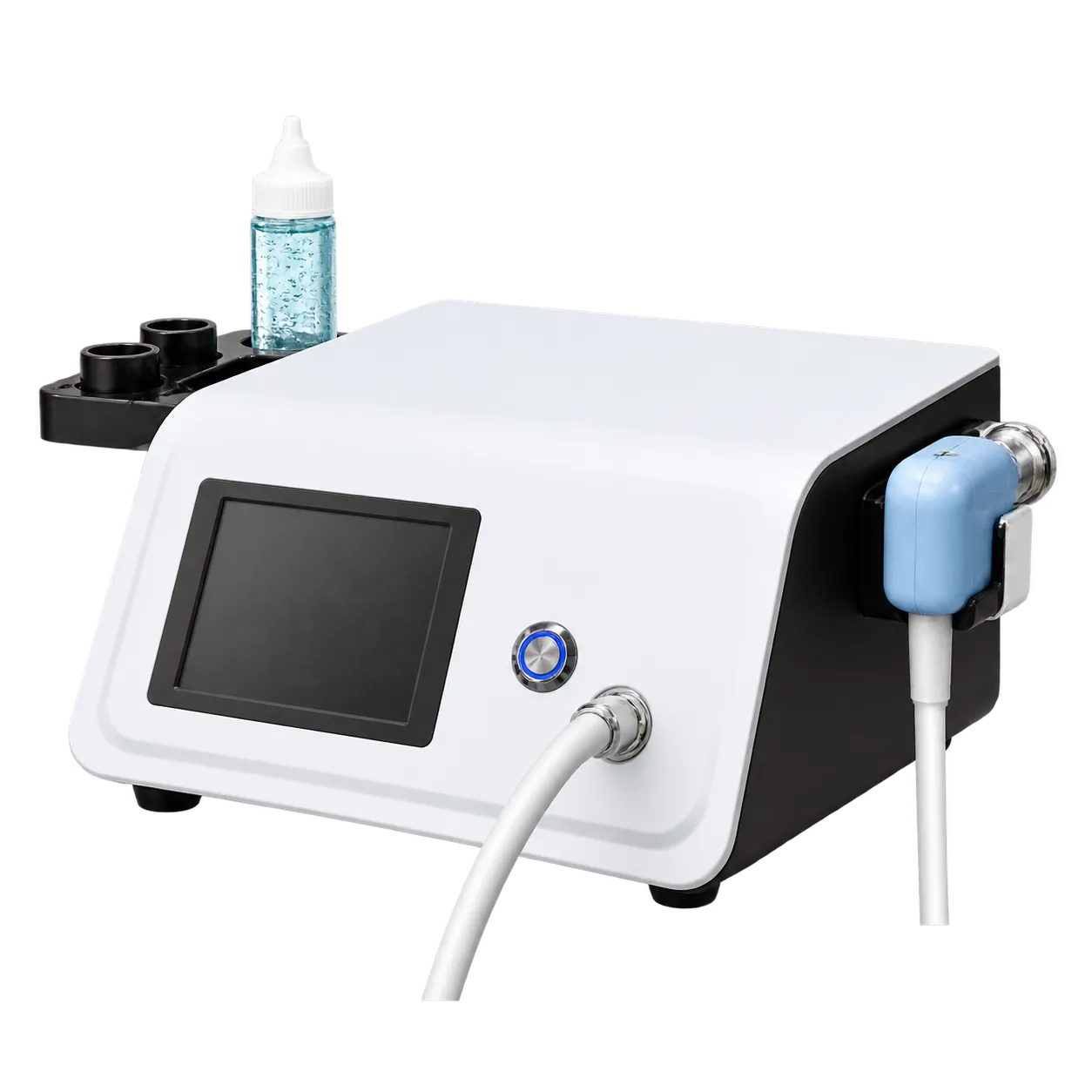
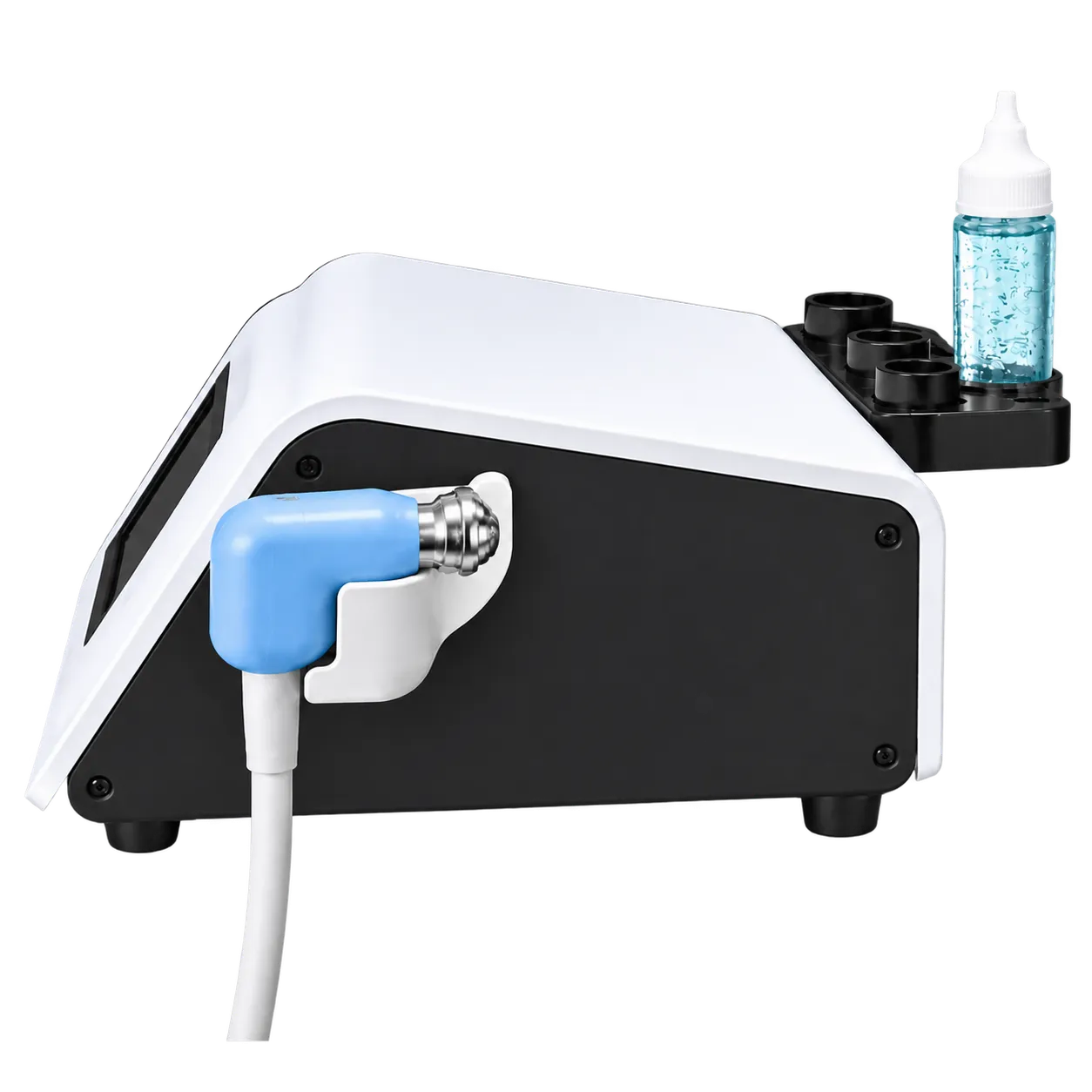
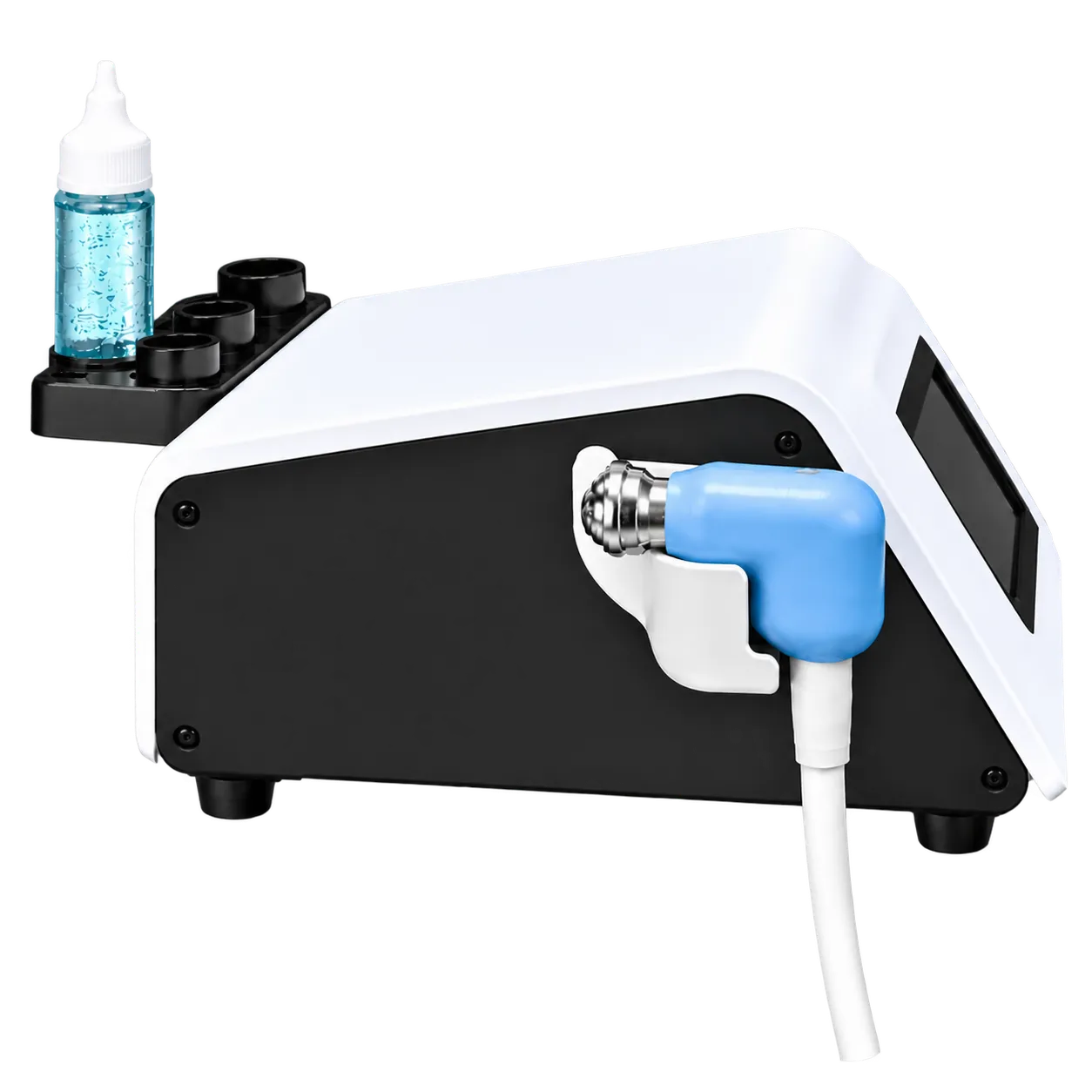
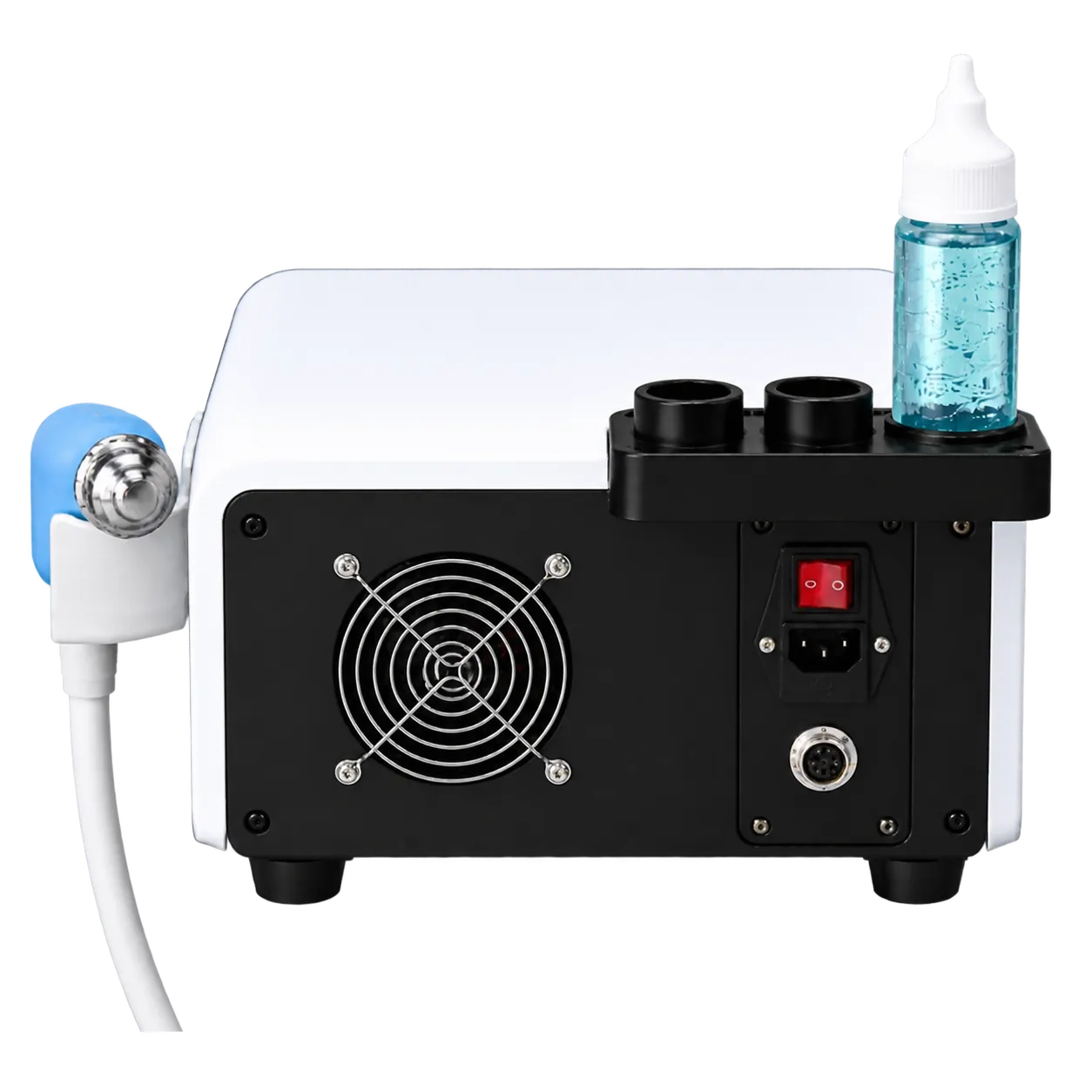
The T601 suits a service whose list moves around the body. Musculoskeletal departments, physiotherapy clinics, podiatry practices, and sports injury services may see a shoulder, a lateral hip, an elbow, and a heel in the same afternoon, and each needs a different contact area against very different amounts of overlying soft tissue. Seven probes allow one bench unit to follow that list rather than dictating which parts can be treated.
Shockwave therapy is most often used for Achilles tendinopathy, plantar fasciitis, tennis elbow, and greater trochanteric pain syndrome, generally after conservative treatment has been tried without resolving the problem. Those four sit at very different depths and over very different amounts of tissue, which is precisely why the head matters.
Depth is where the fit stops. Radial output is highest at the skin and disperses inward, and no probe changes that. A service treating superficial tendon and muscle targets is well matched; one whose intended targets sit deep should establish what this modality reaches before committing, because the specification makes no claim in either direction, and no probe in the set changes it.
Buying runs through the usual routes. NHS musculoskeletal services, private physiotherapy and podiatry groups, sports medicine practices, and veterinary users each apply their own procurement rules, and a Class IIa or IIb device must clear clinical governance alongside finance. Conformity documentation is issued by the manufacturer and provided by the seller. Report adverse incidents involving the device to the MHRA through the Yellow Card scheme.