
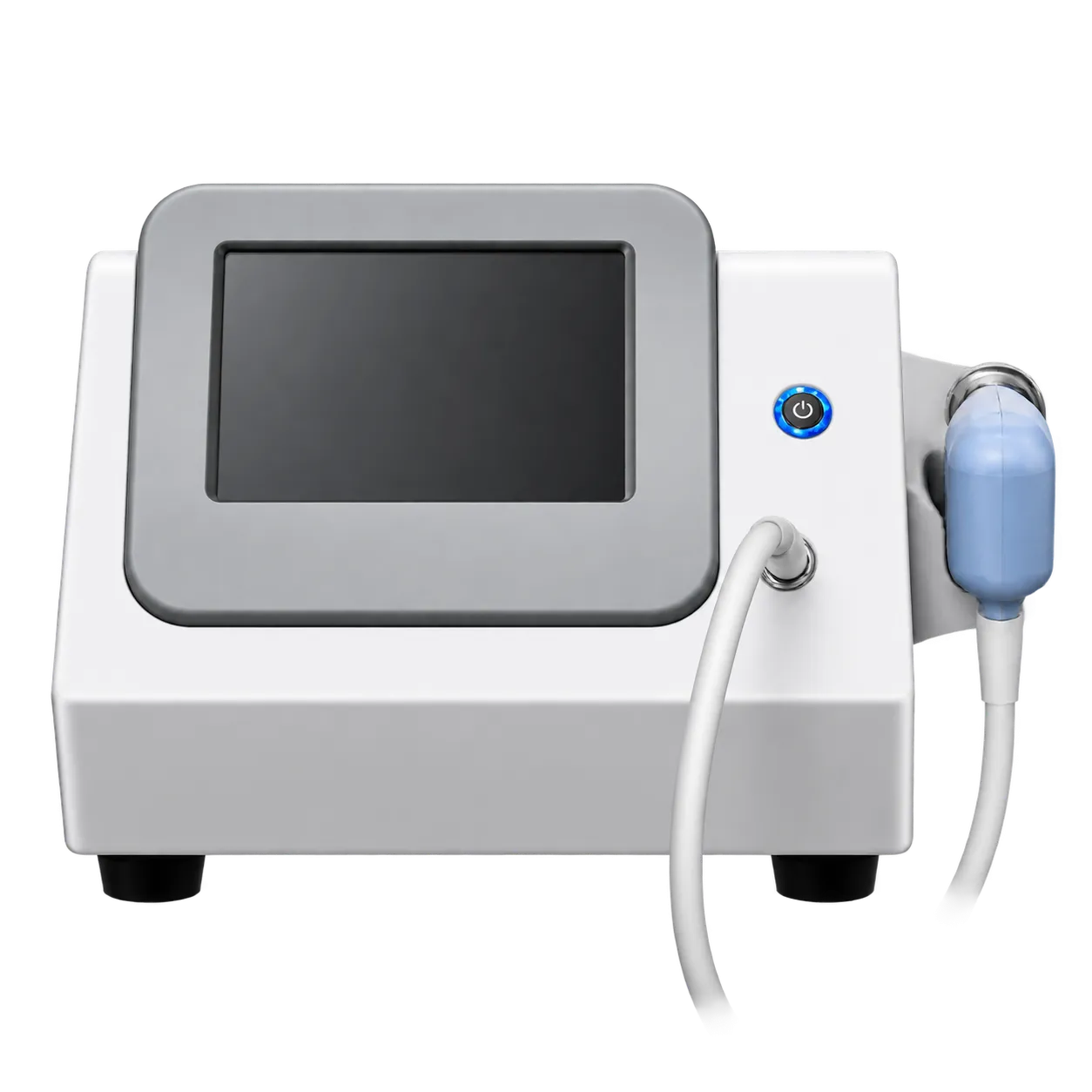
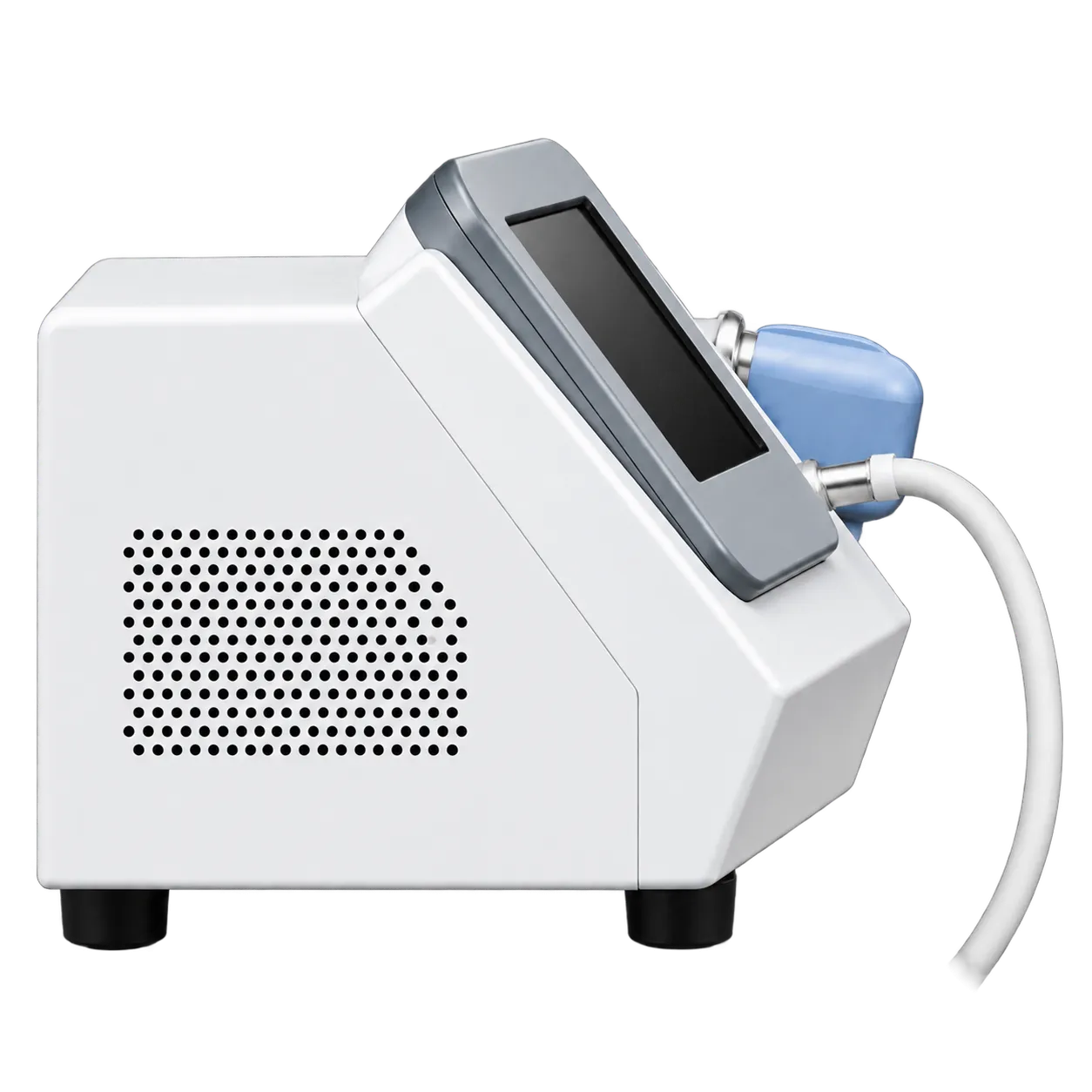
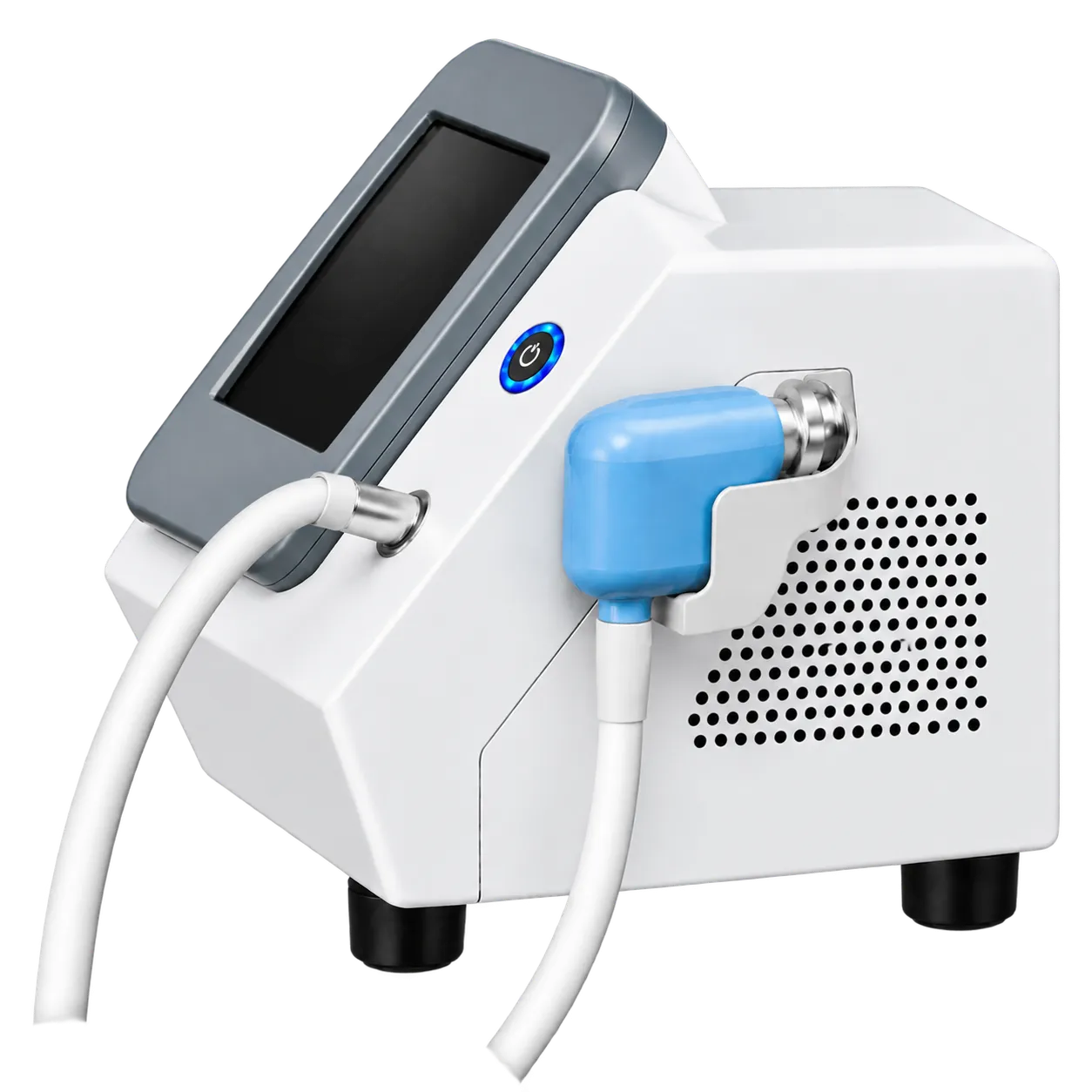
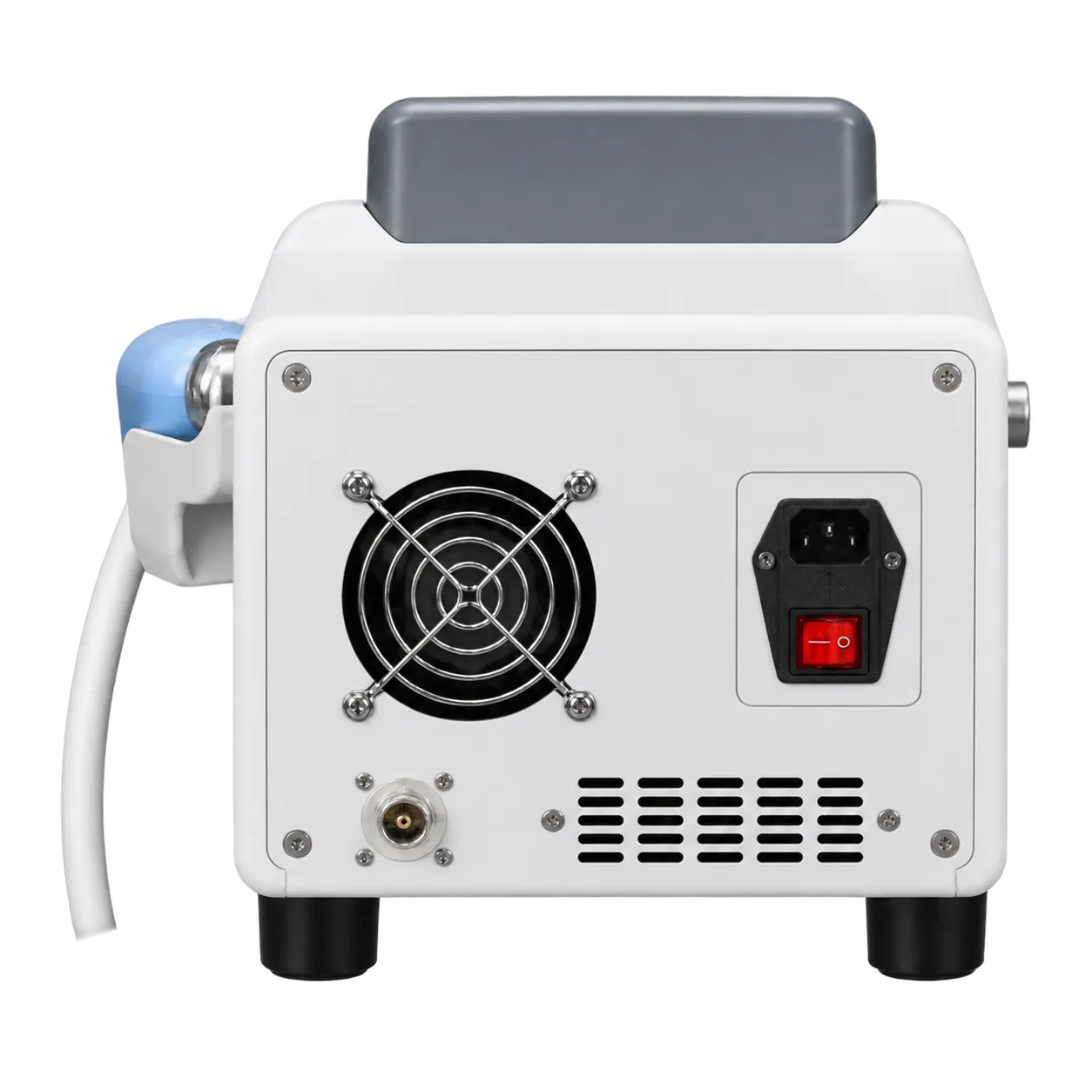
The T301 is best suited for conservative soft-tissue treatment, such as in physiotherapy departments, podiatry clinics, sports injury practices, and musculoskeletal services. Achilles tendinopathy, plantar fasciitis, tennis elbow and greater trochanteric pain syndrome are the indications shockwave therapy is most often used for, generally once conservative treatment has been tried and the problem has not resolved.
A screen earns its place in the rhythm of a session. Pressure comes up in half-bar steps during the opening shots while the clinician watches the patient rather than the machine, and the shot count runs down in view. Across a list of six or eight patients, each with different tolerance and a different probe, having all three in view is what keeps the session moving. The shot count runs down on screen as the treatment progresses.
Radial output shapes the clinical fit. Energy is highest at the skin and disperses with depth, which suits superficial tendon and muscle targets and behaves differently on deeper structures. A service planning deeper work should establish what this modality reaches before committing, because the specification makes no claim in either direction.
Buying runs through the usual routes. NHS musculoskeletal services, private physiotherapy and podiatry groups, sports medicine practices, and veterinary users each apply their own procurement rules, and a Class IIa or IIb device must clear clinical governance alongside finance. Conformity documentation is issued by the manufacturer and provided by the seller. Report adverse incidents involving the device to the MHRA through the Yellow Card scheme.