
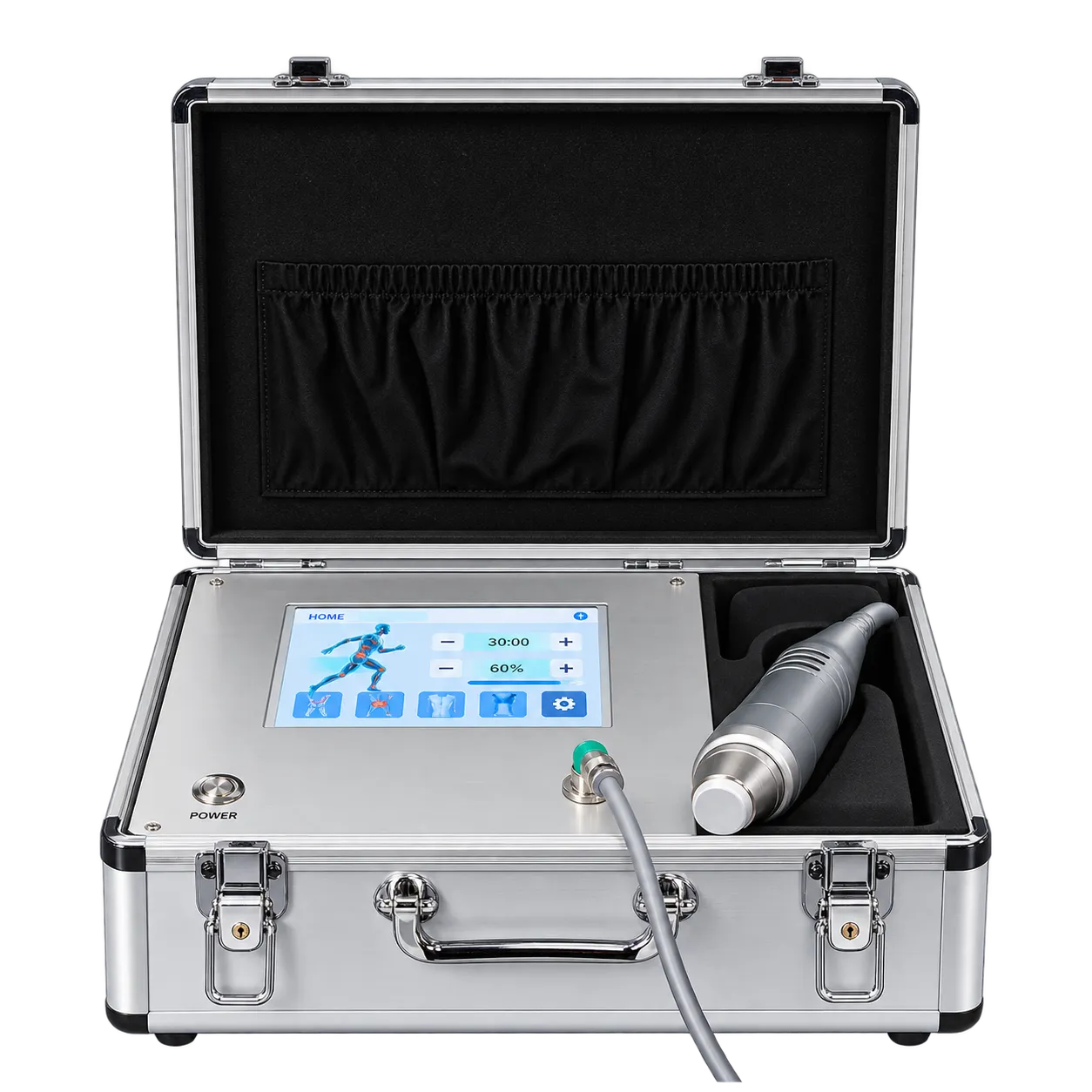
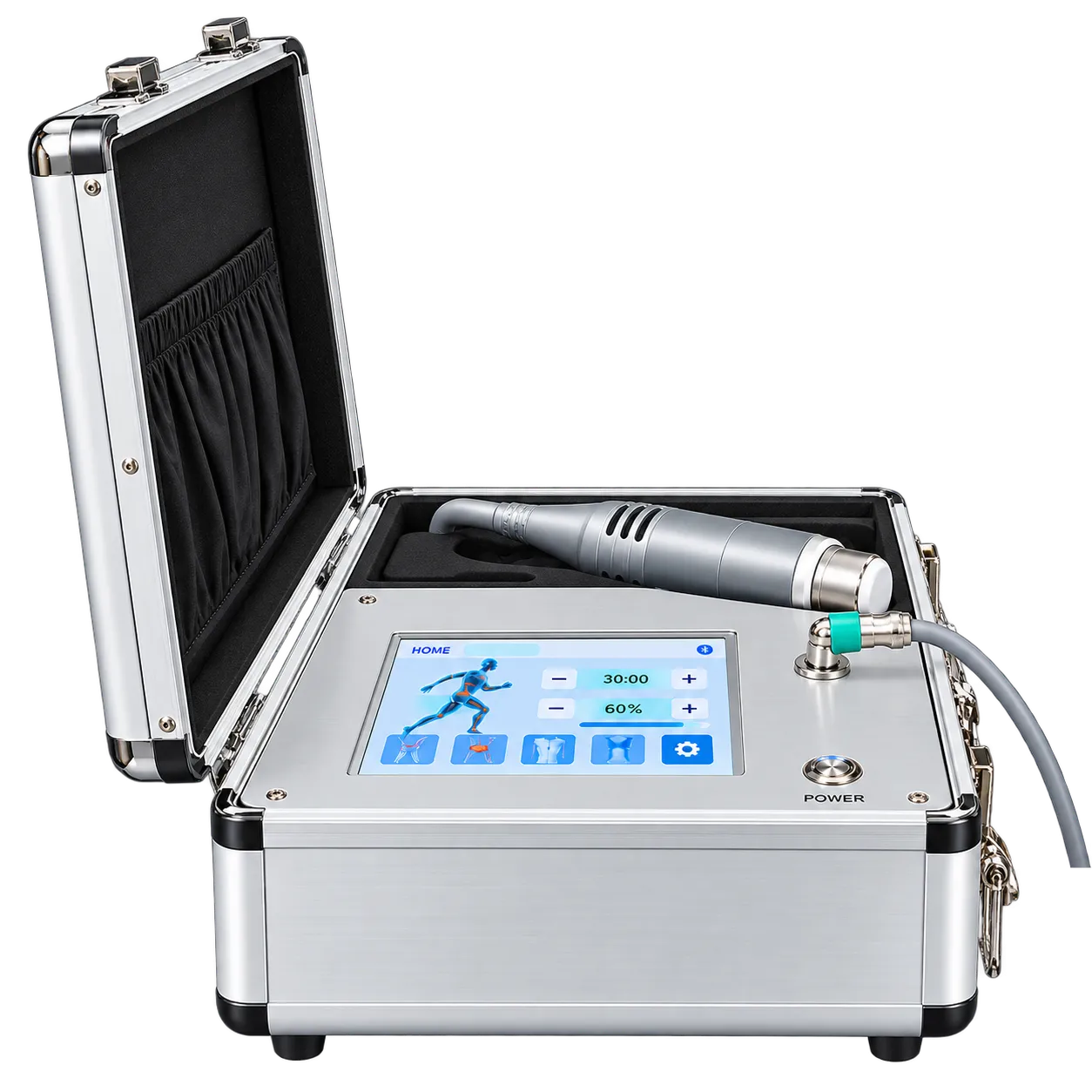
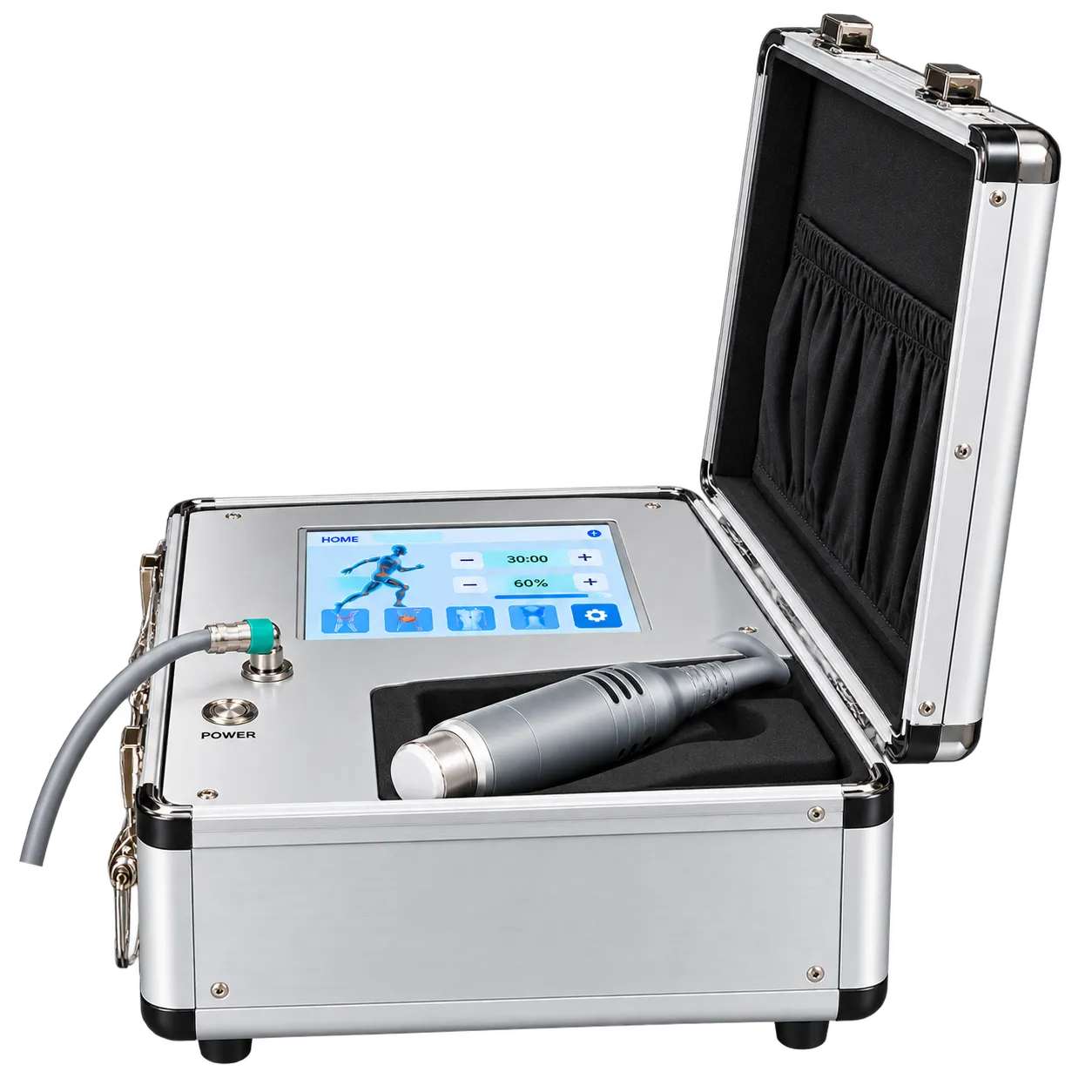
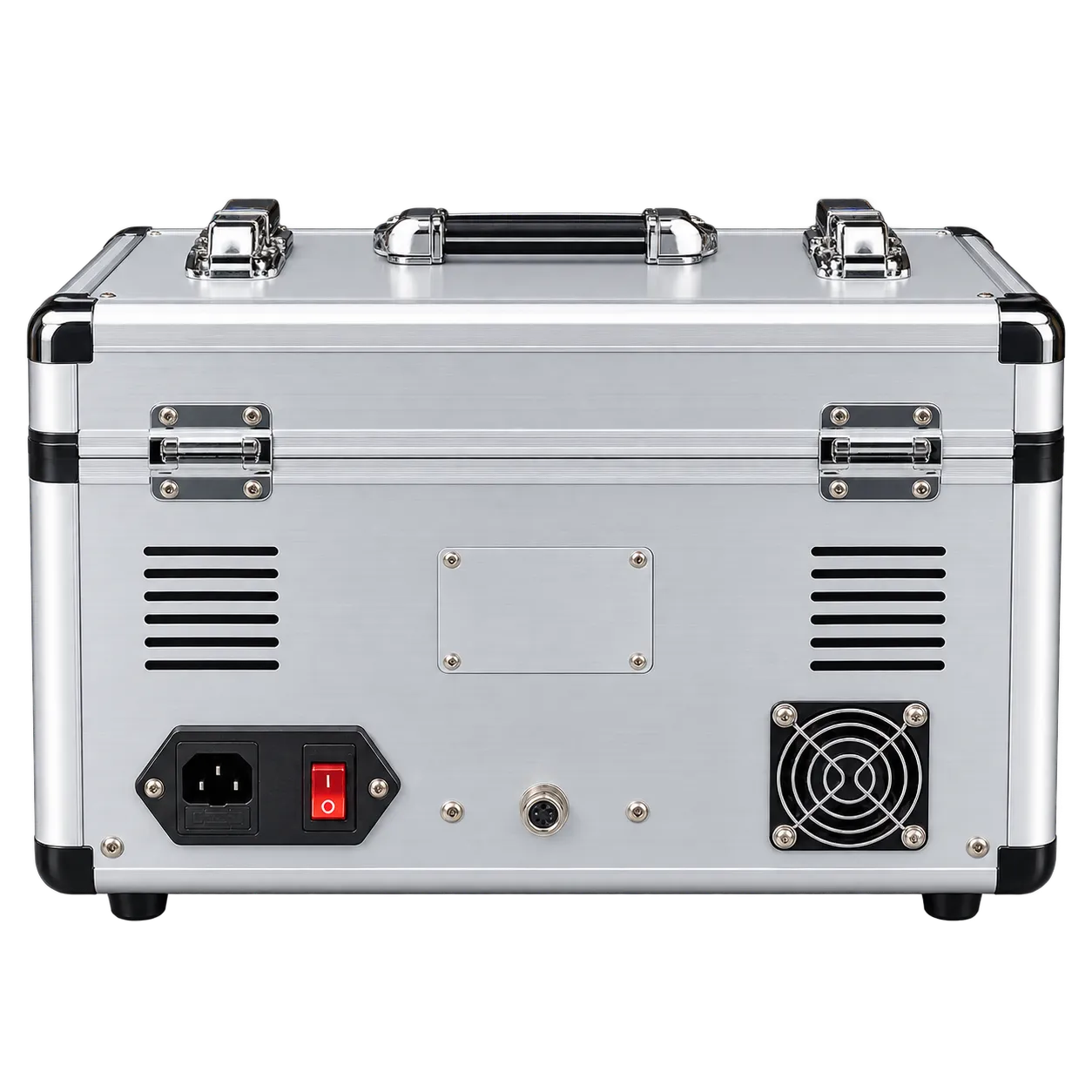
Services that go to the patient are what a case format exists for. Domiciliary physiotherapy, mobile musculoskeletal teams, sports clubs treating at the ground, occupational health visiting employers' premises and intermediate care teams working across several sites all share one constraint: whatever the clinician needs has to be carried in and carried out again, usually alongside a bag of other equipment.
Within that, three megahertz sets what can be offered. Energy is absorbed in the first centimetre or two, so superficial tendon and muscle, myofascial trigger points, shallow calcific deposits and scar work are reachable. Structures three to five centimetres in are not, and a service that expects to treat them will need a different frequency.
Acute presentations suit the format well. Pulsing towards the lower end of the duty cycle range reduces heating, which is the usual selection in the days following an injury, and an injury seen at a ground or in a home is precisely the case that would otherwise wait for a clinic slot. Continuous output for chronic work is available on the same unit.
The indication list still governs. Guidance advises against ultrasound in low back pain, sciatica, and osteoarthritis, and a 2025 rotator cuff guideline agrees, so a visiting service should be as clear about what it will not use it for as a departmental one. Procurement runs through Trust Community Services, private practices, sports organisations, and occupational health providers under their own rules, with adverse incidents reported to the MHRA via Yellow Card.