
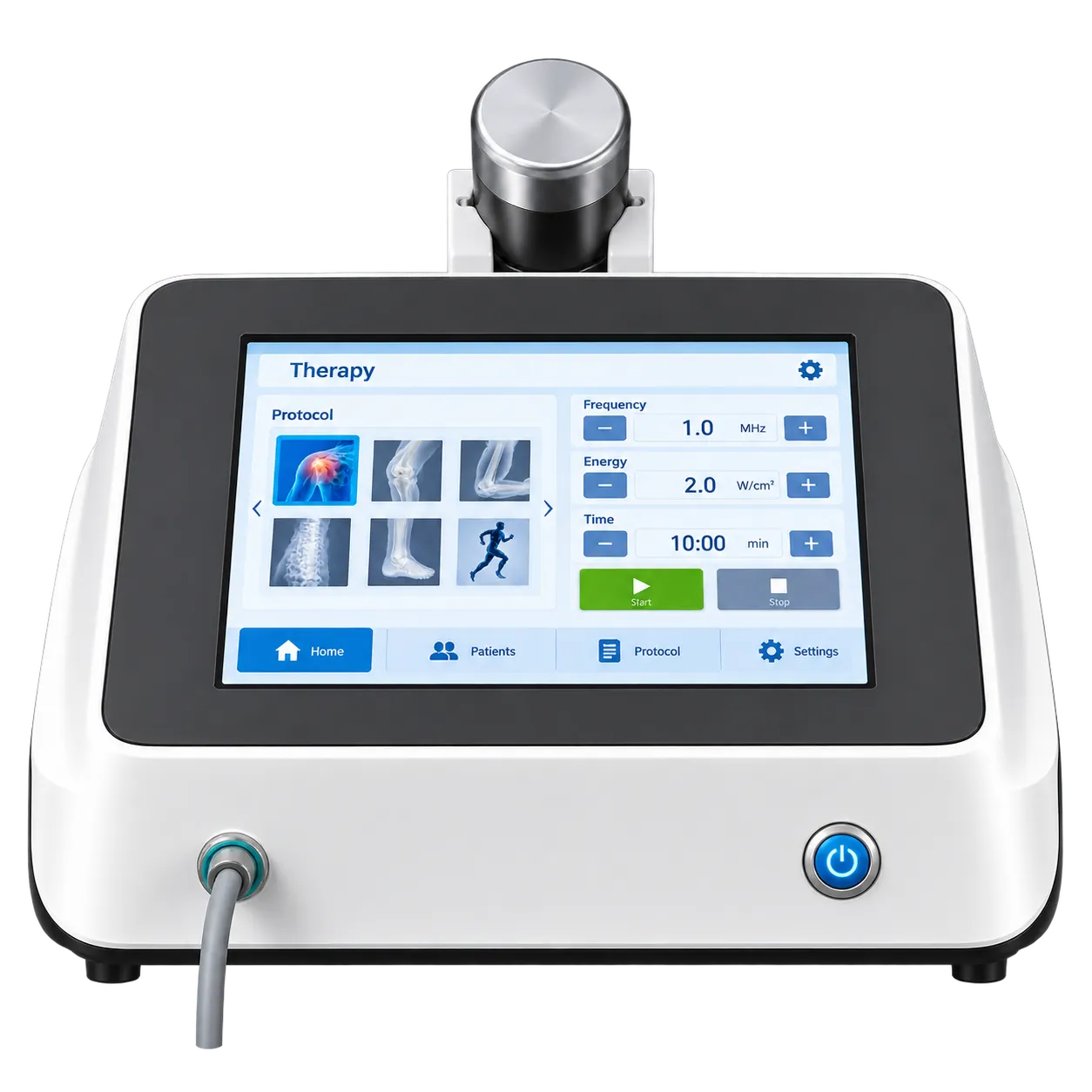
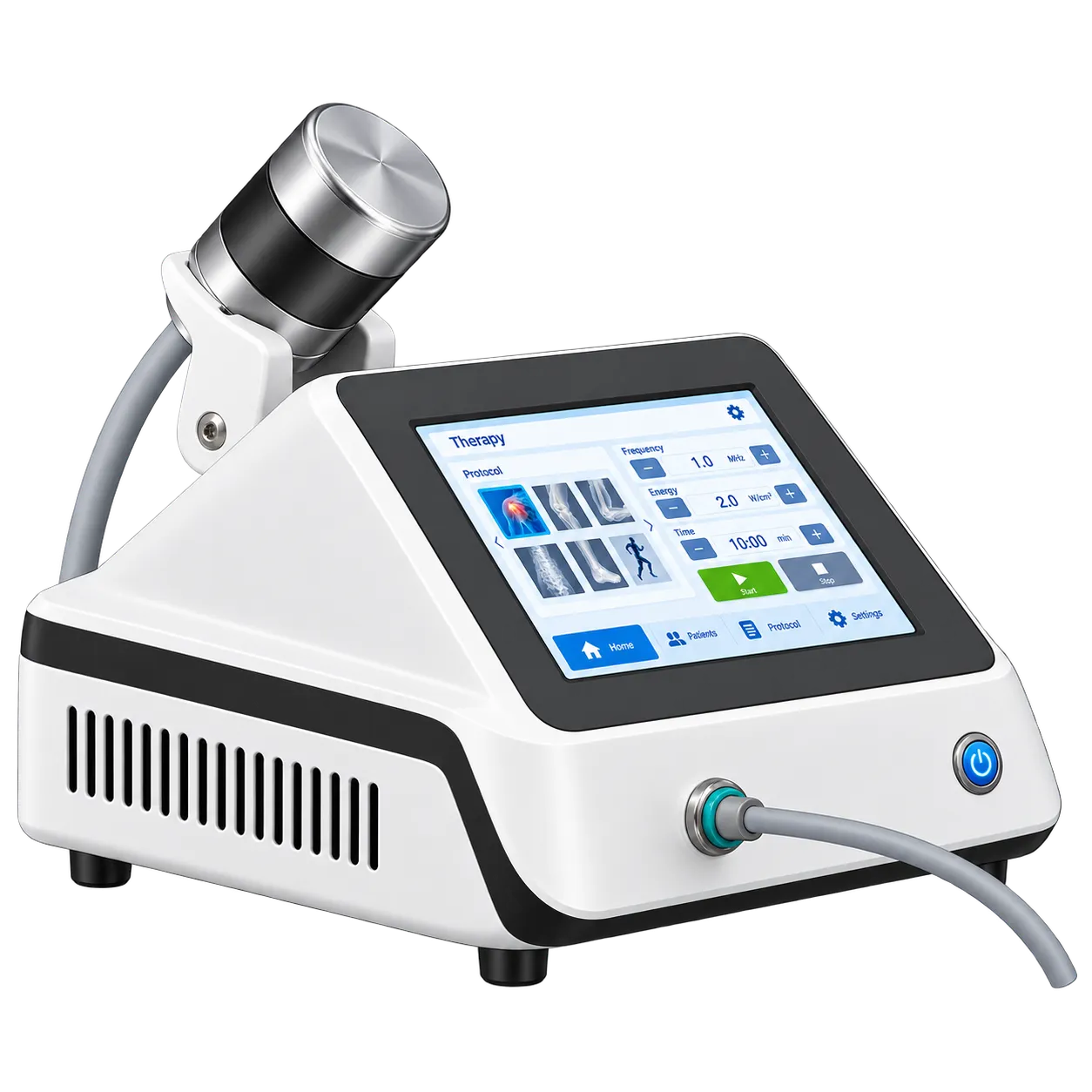
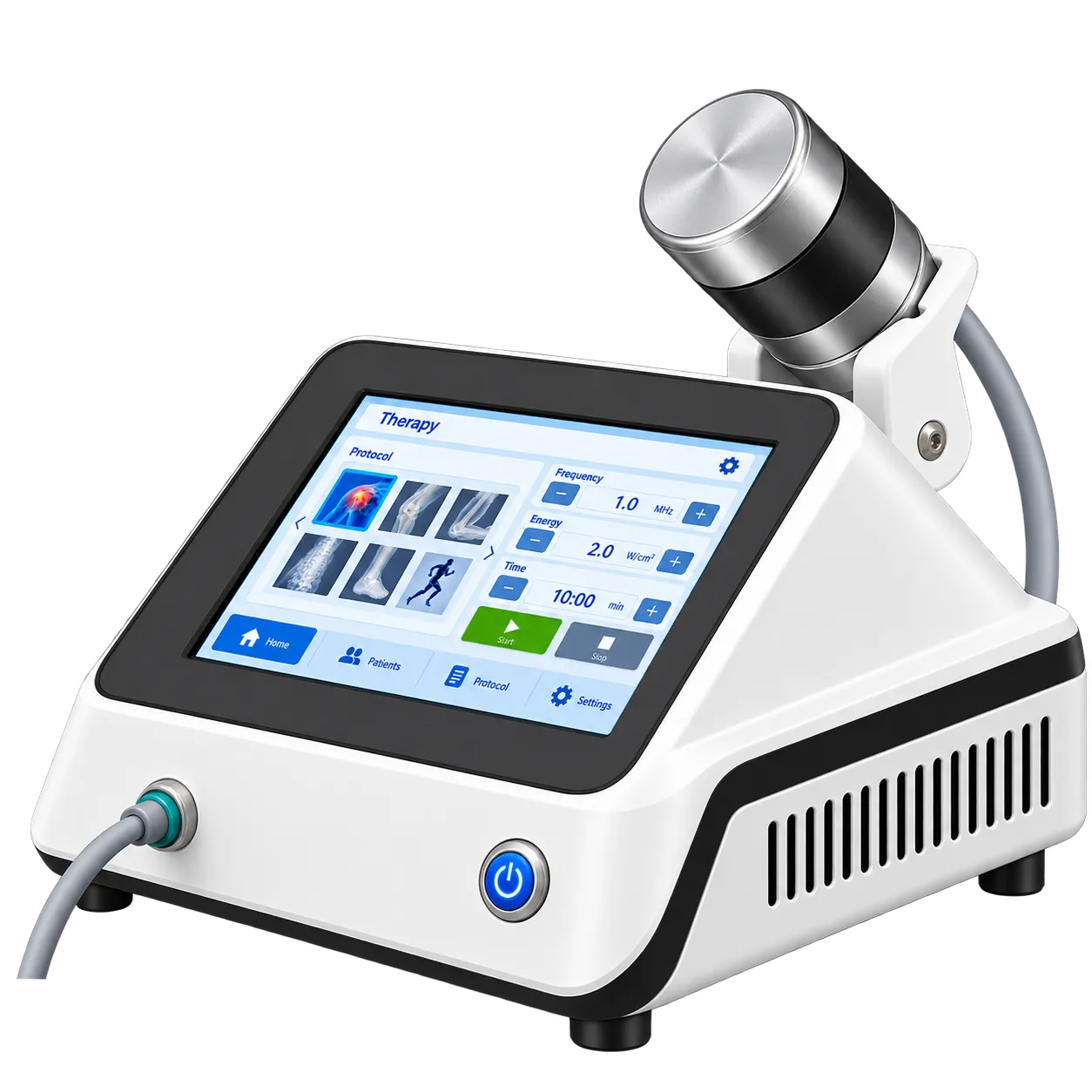
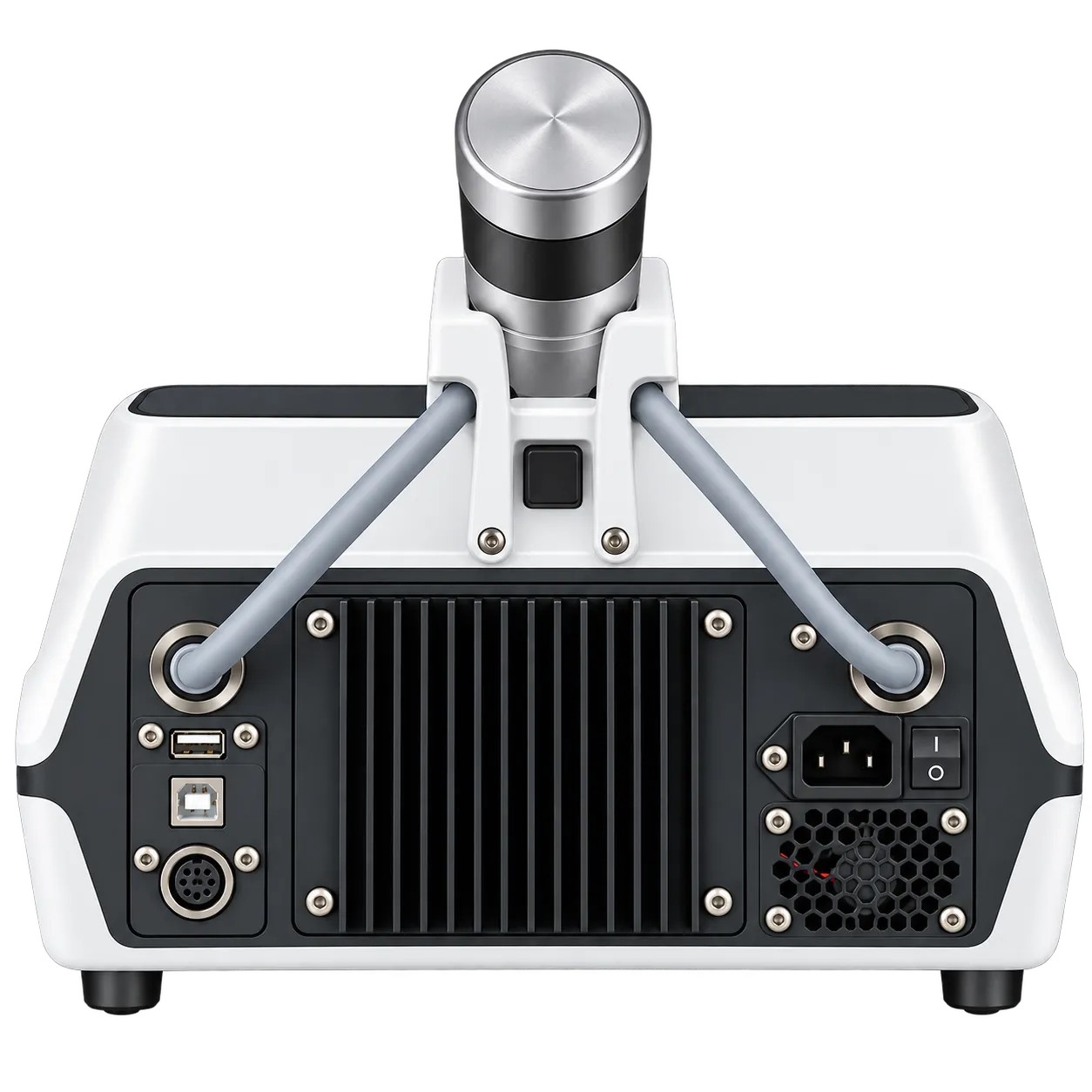
Treatment room worktops are crowded before any equipment arrives. Notes, a keyboard, a glove box, gel, a sharps bin, and whatever the last clinician left there all compete for the same surface, and a console that takes up a third of it gets moved, unplugged, and eventually parked in a cupboard. A depth of 85 millimetres against the wall is the difference between equipment that lives in the room and equipment that has to be fetched.
That matters most where the room is shared. Outpatient physiotherapy, musculoskeletal clinics, sports medicine and rehabilitation departments all run several clinicians through the same space across a week, and a machine only gets used if it is there when the appointment starts.
Two frequencies keep the room capable rather than specialised. Superficial targets take three megahertz — trigger points, surface tendon, shallow calcific deposits, elbow and wrist presentations. Deeper muscle takes one megahertz. A clinician seeing whoever the referral sends does not have to decide in advance which kind of case the room can handle.
The indication list governs regardless of footprint. Guidance advises against ultrasound in low back pain, sciatica, and osteoarthritis, and a 2025 rotator cuff tendinopathy guideline agrees, so a service should record what it will and will not treat. Procurement runs through trust outpatient services, private practices, sports medicine providers and teaching departments, each under their own rules. Conformity paperwork moves from the manufacturer to the buyer through the seller, and adverse incidents are reported to the MHRA via Yellow Card.