
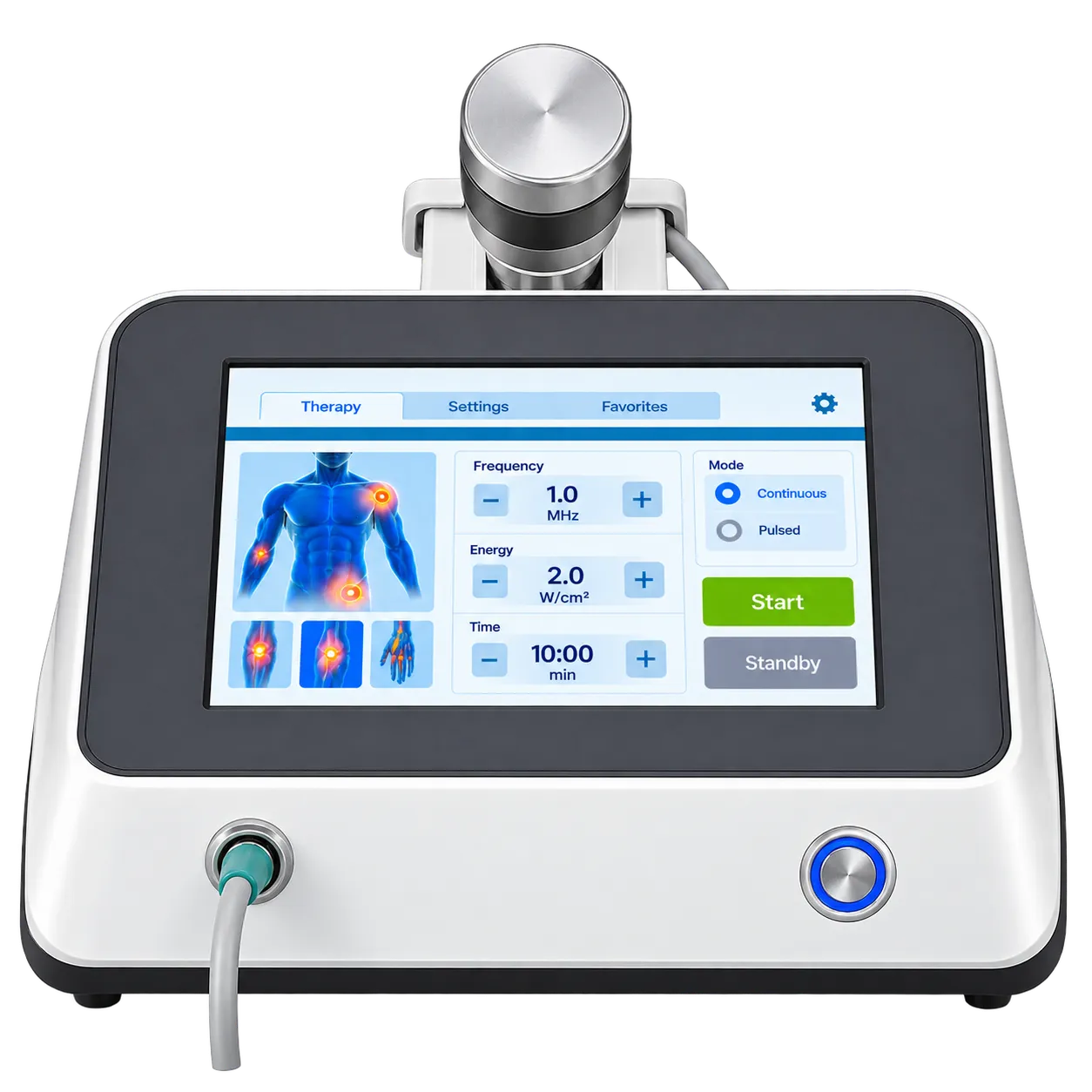
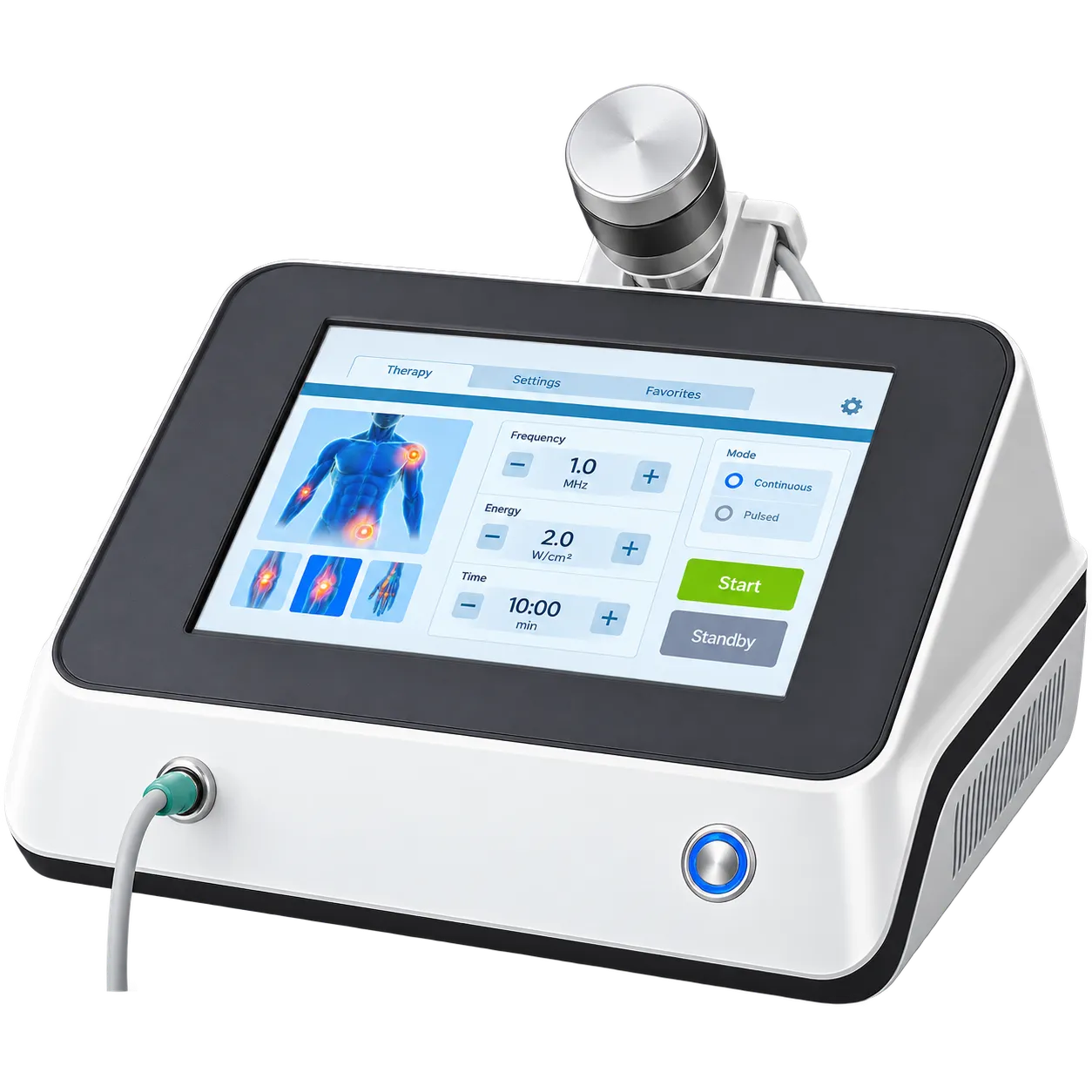
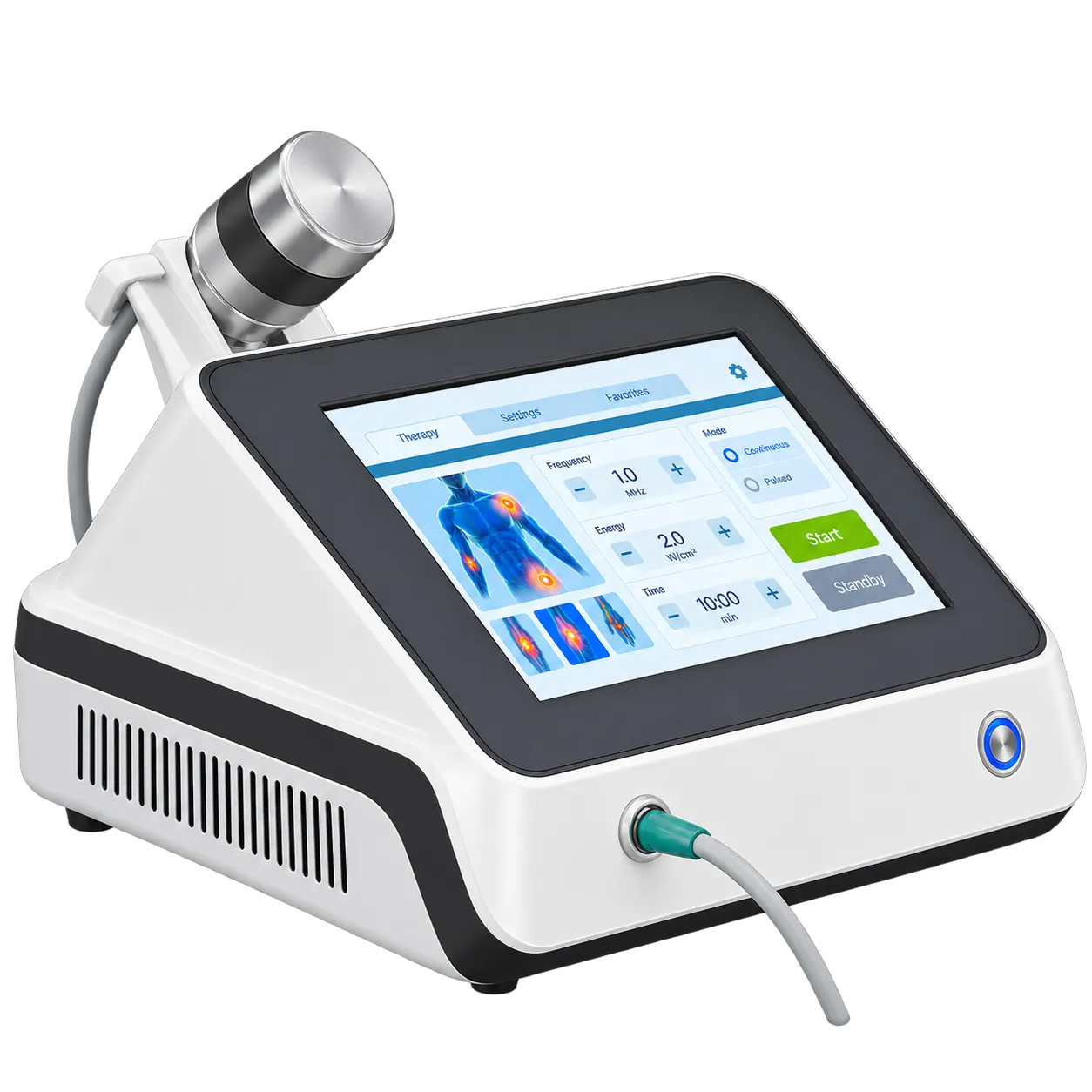
Rooms where somebody other than the clinician is looking at the machine are where the panel pays for itself. Teaching departments running students through a treatment, services where an assistant or rehabilitation technician works alongside, and any appointment with a patient who wants to understand what is being done to them rather than receive it.
That last group is larger than it sounds. A treatment that involves a head moving slowly over a painful area for several minutes invites the question of how much longer and how strong it is. Being able to point to the answer changes the tenor of the session, and an anxious patient who can watch the count descend is generally easier to treat.
What the panel does not alter is reach. Three megahertz places the energy in the first centimetre or two, which suits trigger points, superficial tendon, shallow calcific deposits, scar tissue and ankle or wrist presentations close to the surface. Deeper muscle bellies sit outside it, and no console setting changes that.
The indication list sits above all of it. Guidance advises against ultrasound for low back pain, sciatica, and osteoarthritis, and a 2025 rotator cuff tendinopathy guideline agrees, so what a service treats should be settled regardless of how legible the display is. Procurement runs through trust services, private practices and teaching institutions under their own rules. Conformity paperwork reaches the buyer from the manufacturer through the seller, and adverse incidents are reported to the MHRA via the Yellow Card scheme.