
Two frequencies give the JC03-100W two working depths. Three megahertz stays within roughly the first two centimetres, suiting tendons and ligaments near the skin, while 1 MHz reaches larger muscle groups such as the hamstrings, gluteals, and thigh. Heating protocols for shortened soft tissue at 1 MHz commonly call for 1.5 to 2.5 W/cm² of continuous output for five to ten minutes, which sits inside this console's range.
Myofascial trigger points show how central the patient becomes near the ceiling. A 2004 randomised trial in a hospital physiotherapy unit tested a high-power pain-threshold technique, in which continuous 1 MHz intensity is raised over a stationary head until the patient reports discomfort, held briefly, then eased while the head moves around the point. It outperformed a standard moving-head approach and shortened the course of treatment; the authors noted that it demands concentration and communication. With a non-uniformity coefficient of 6, those stationary moments should be counted in seconds.
Patient selection follows from the same logic. Thermal doses belong to people who can feel heat normally over the area and say what they feel, so a sensation test comes before the first continuous treatment and low-intensity pulsed output covers everyone else. Work close to bone needs lower intensities and constant movement.
Guidance narrows the list further. NICE recommends not offering ultrasound for low back pain or osteoarthritis, and a 2025 rotator cuff guideline advises against it for calcific and non-calcific tendinopathy alike. NHS physiotherapy departments, private clinics and sports medicine services each buy through their own routes, and in every case the conformity documentation is issued by the manufacturer and passed
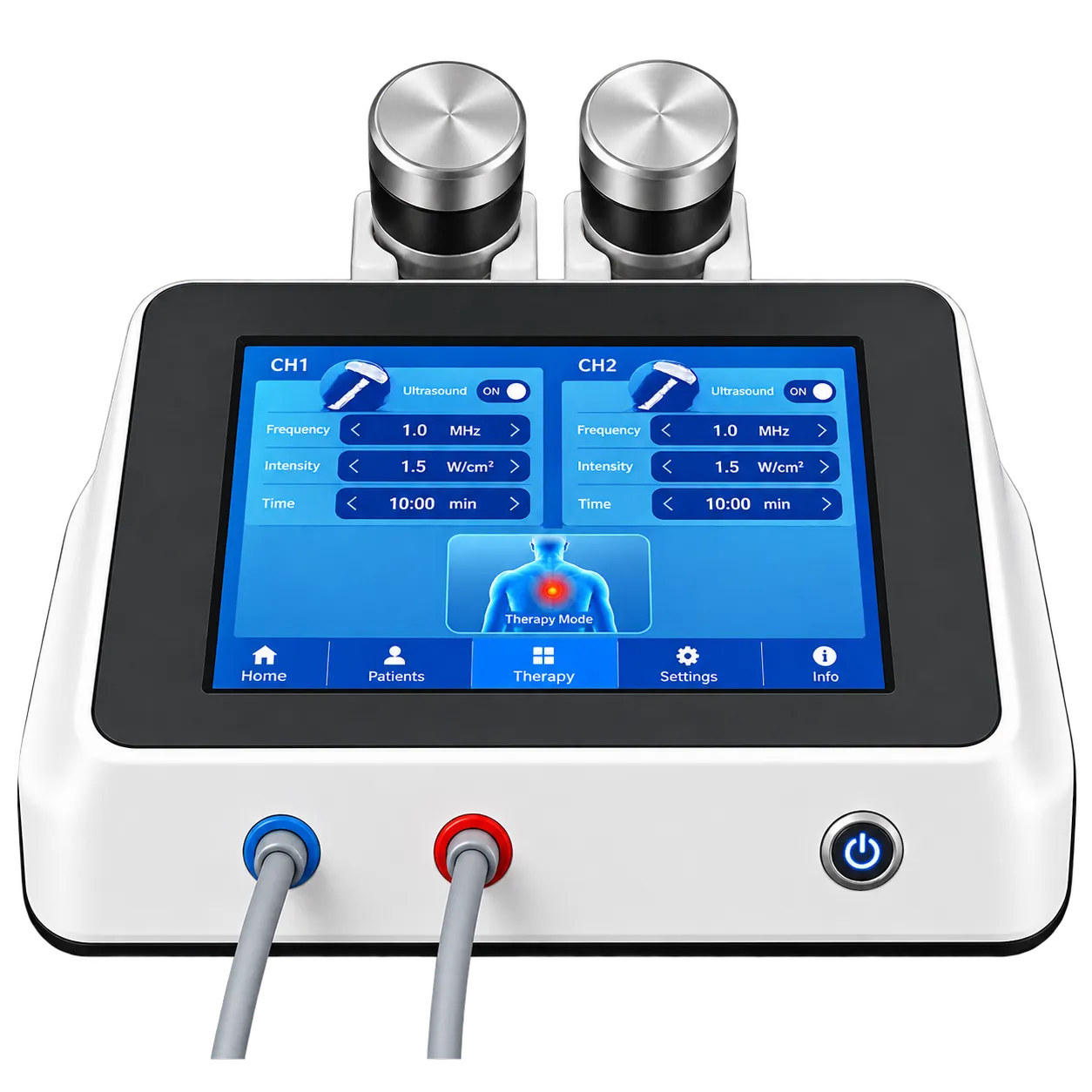
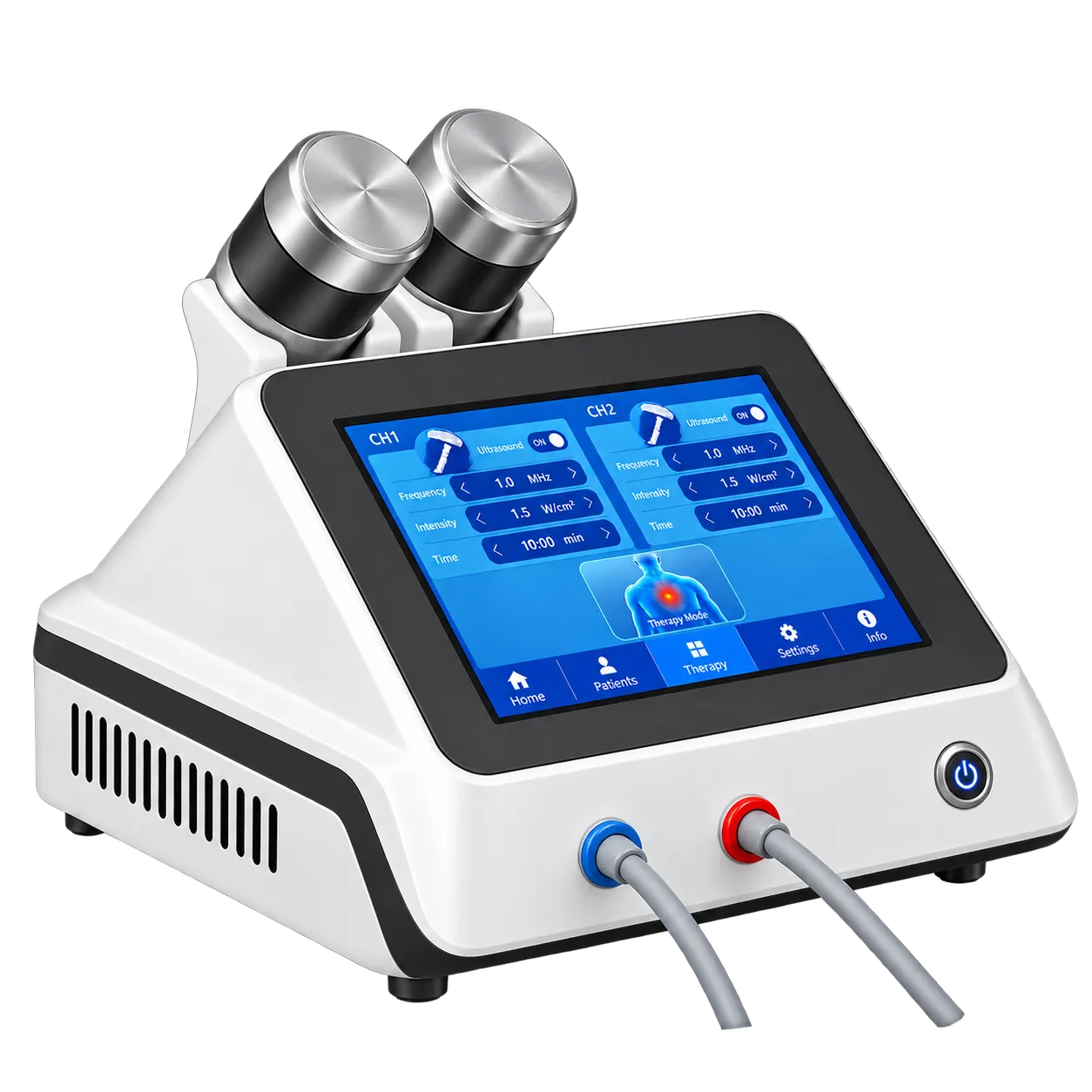
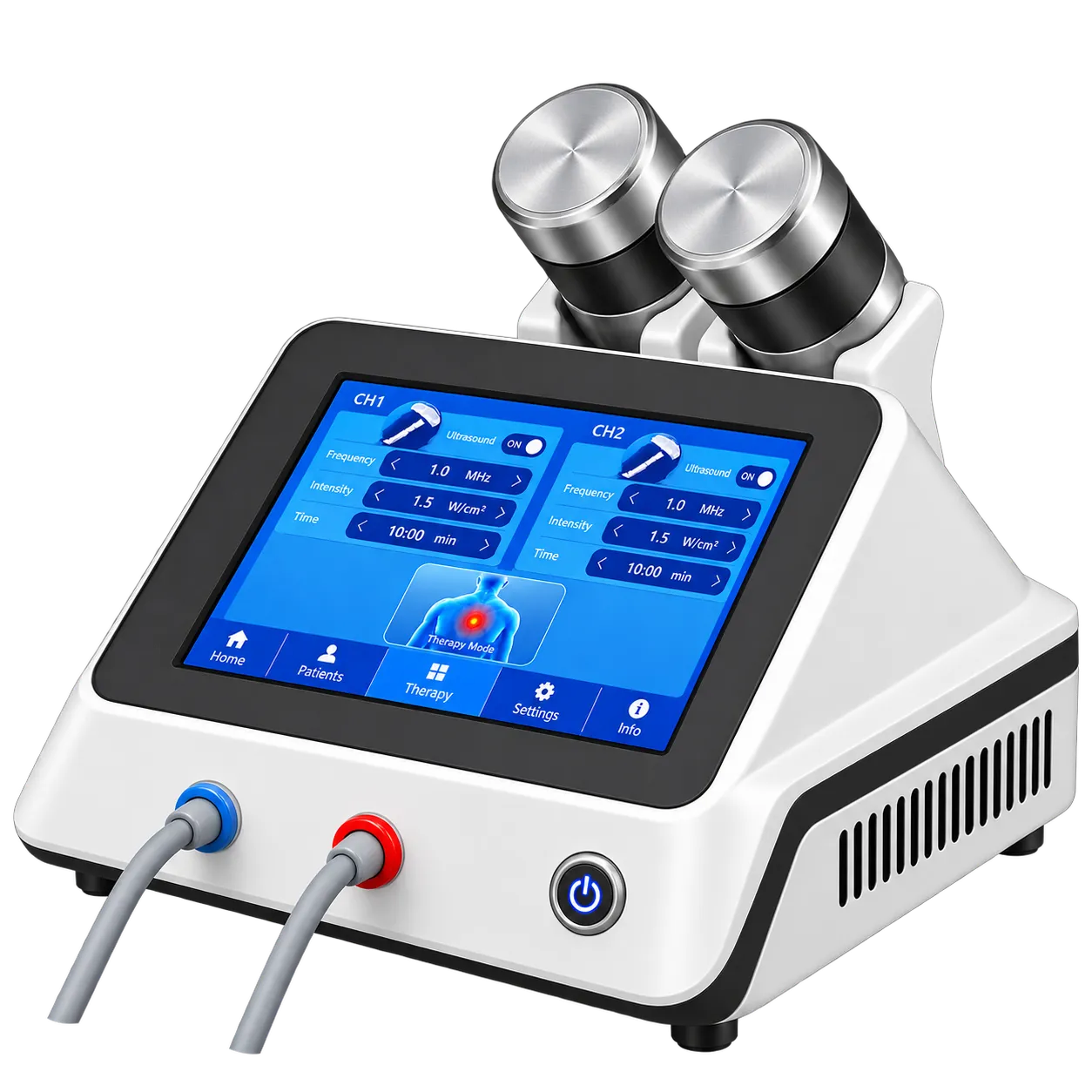
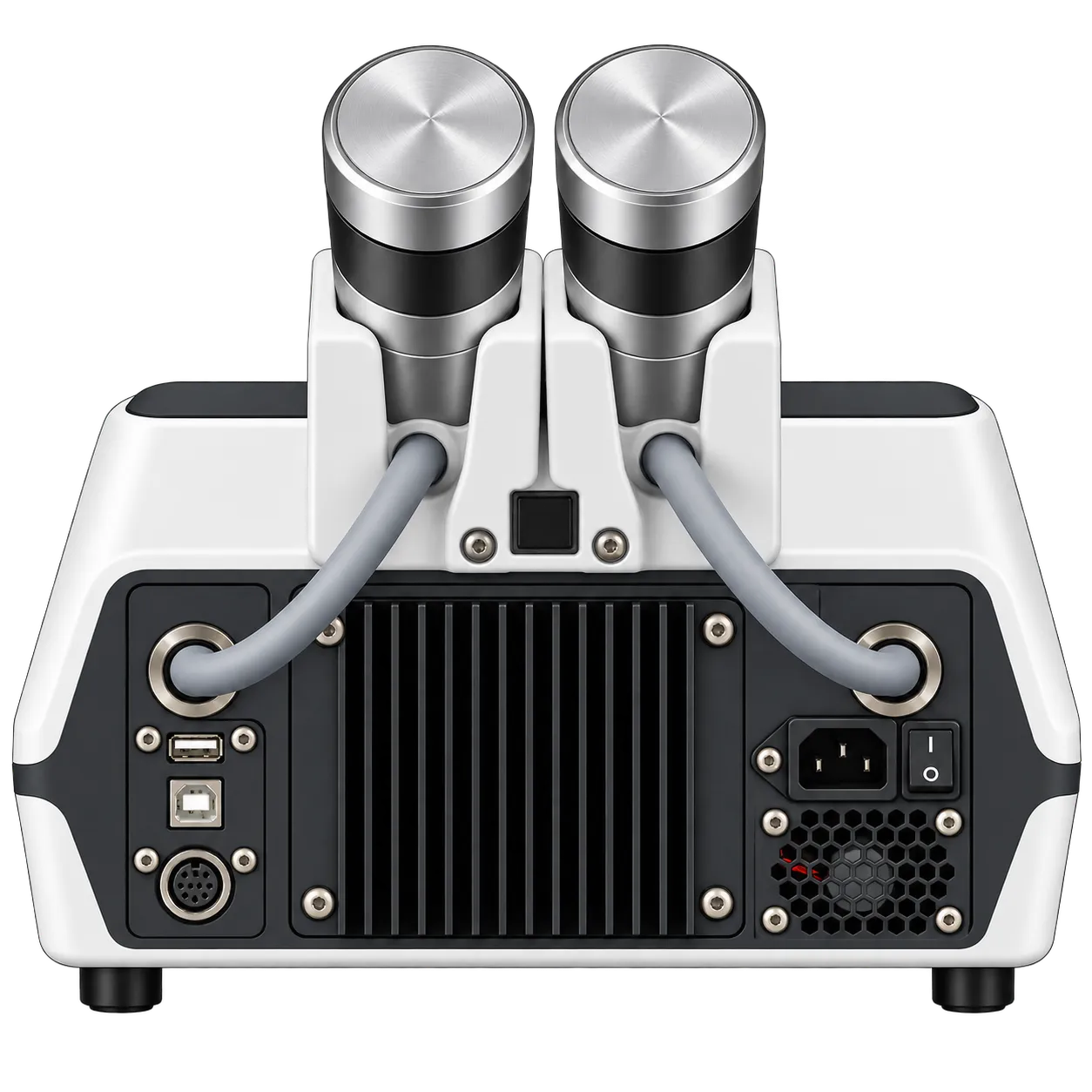
Two frequencies give the JC03-100W two working depths. Three megahertz stays within roughly the first two centimetres, suiting tendons and ligaments near the skin, while 1 MHz reaches larger muscle groups such as the hamstrings, the gluteals and the thigh. Heating protocols for shortened soft tissue at 1 MHz commonly call for 1.5 to 2.5 W/cm² of continuous output for five to ten minutes, which sits inside this console's range.
Myofascial trigger points show how central the patient becomes near the ceiling. A 2004 randomised trial in a hospital physiotherapy unit tested a high-power pain-threshold technique, in which continuous 1 MHz intensity is raised over a stationary head until the patient reports discomfort, held briefly, then eased while the head moves around the point. It outperformed a standard moving-head approach and shortened the course of treatment; the authors noted that it demands concentration and communication. With a non-uniformity coefficient of 6, those stationary moments should be counted in seconds.
Patient selection follows from the same logic. Thermal doses belong to people who can feel heat normally over the area and say what they feel, so a sensation test comes before the first continuous treatment and low-intensity pulsed output covers everyone else. Work close to bone needs lower intensities and constant movement.
Guidance narrows the list further. NICE recommends not offering ultrasound for low back pain or osteoarthritis, and a 2025 rotator cuff guideline advises against it for calcific and non-calcific tendinopathy alike. NHS physiotherapy departments, private clinics and sports medicine services each buy through their own routes, and in every case the conformity documentation is issued by the manufacturer and passed