
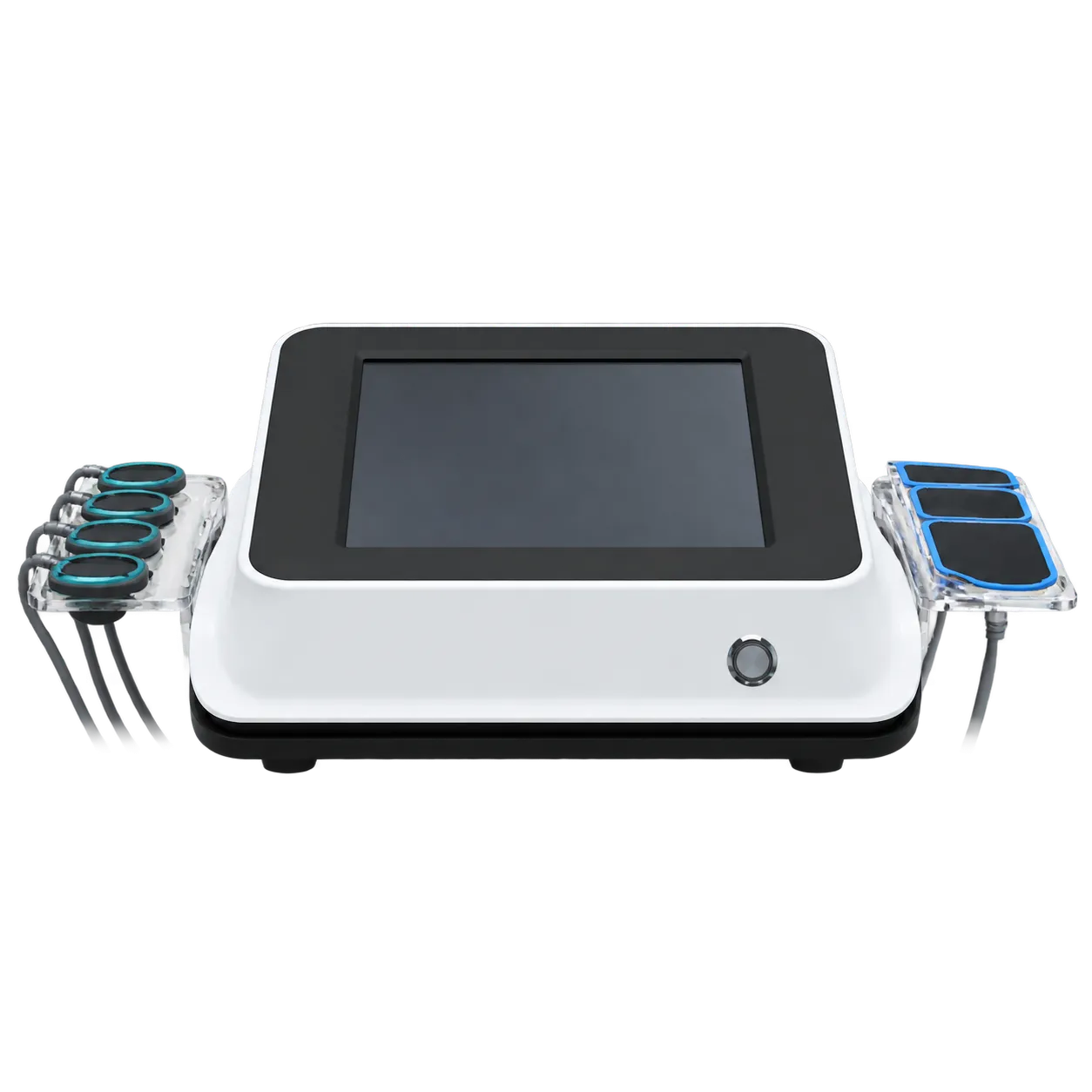
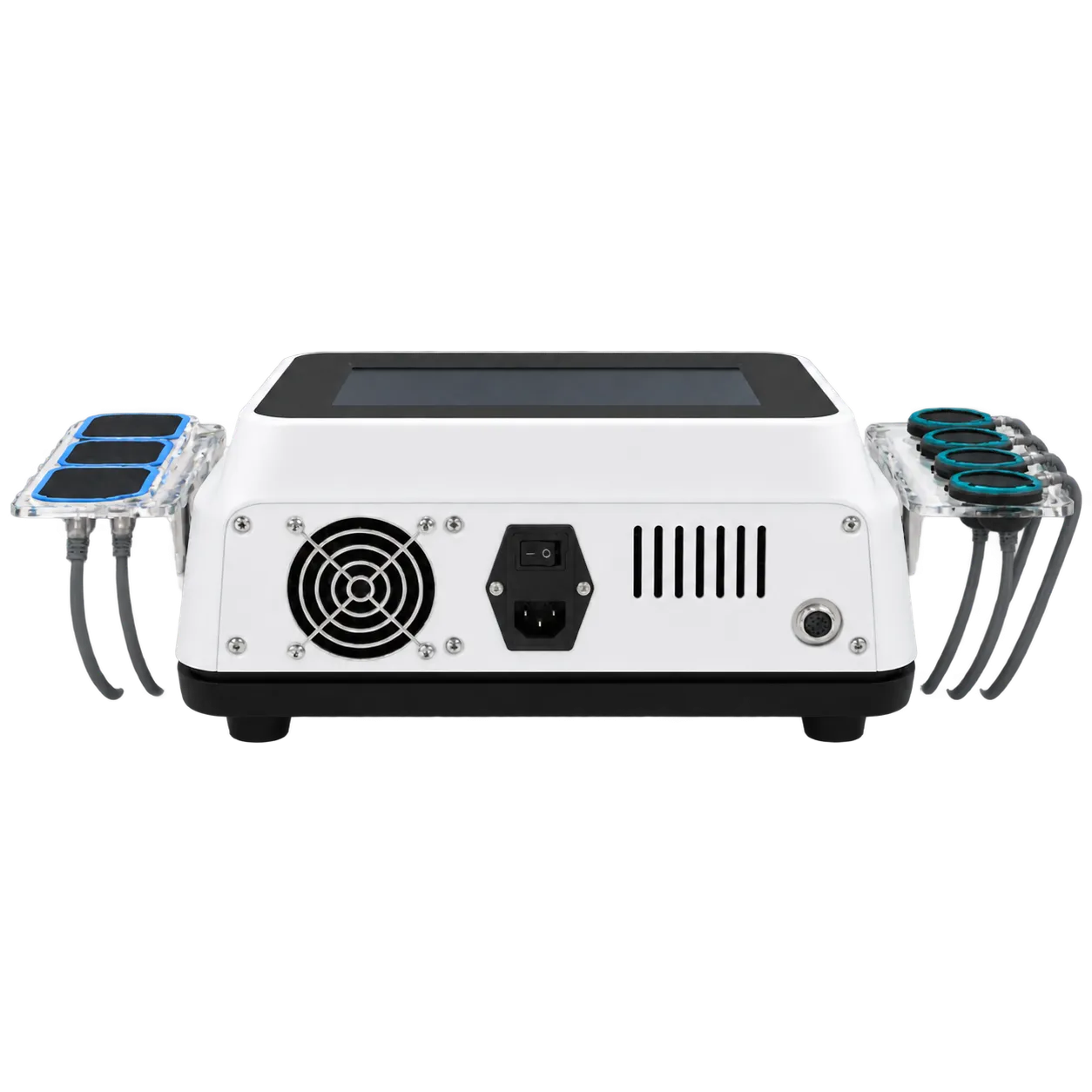
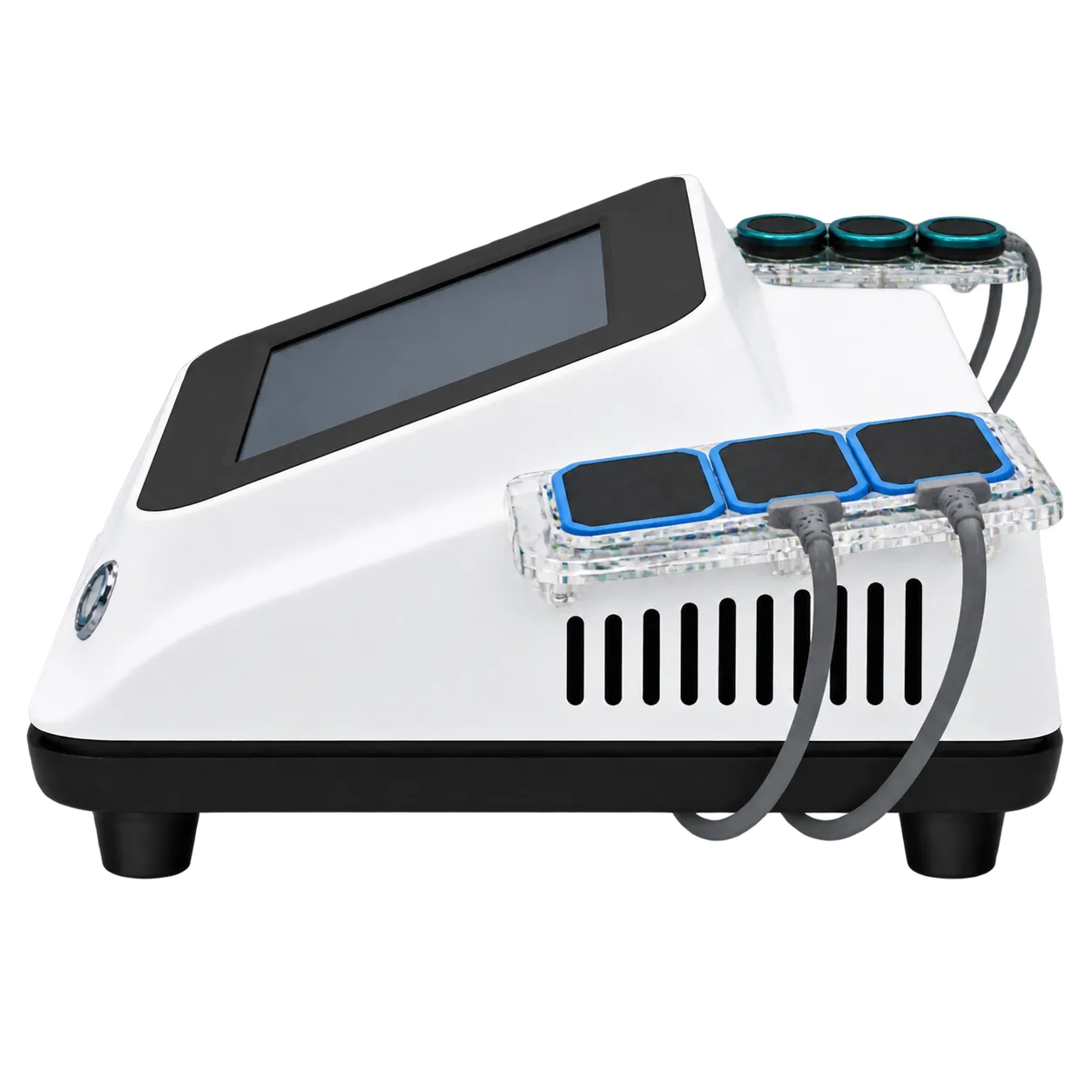
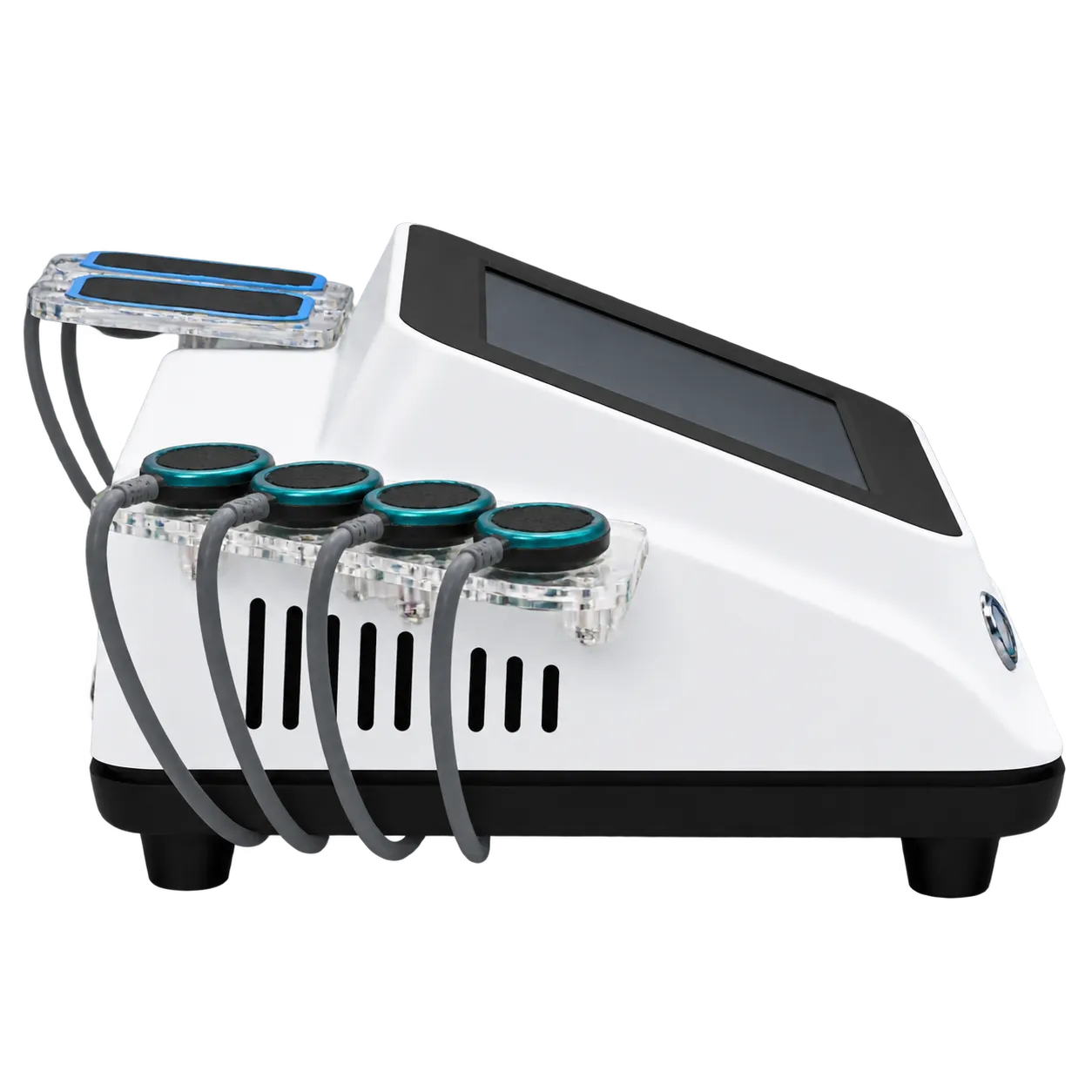
Physiotherapy clinics and sports rehabilitation services are the natural home for the EMS+4, with muscle stimulation to strengthen muscles after surgery or injury and TENS for short-term pain relief, in line with NICE recommendations. Post-operative knee rehabilitation is the clearest fit, because the strongest trial evidence for muscle stimulation concerns quadriceps strength after anterior cruciate ligament surgery. Osteopaths, chiropractors and pain services that already use electrotherapy can apply the same console within their own scope of practice.
The two electrode systems practically divide the body. Suction cups suit the quadriceps, hamstrings, calves and shoulder girdle, where a cup can seal quickly on a broad surface. Adhesive patches suit the forearm, wrist, knee and ankle, where contours break a seal. A clinician can therefore plan a session around the muscle group and choose the electrode system to match.
Screening comes before any electrode goes on. Staff should ask about pacemakers, defibrillators, and other implanted electronic devices; check skin integrity and sensation at the treatment site; and keep electrodes away from the front of the neck, the chest, and the eyes. The manufacturer's instructions for use should set out the full list of contraindications.
Hygiene and stock control run through the whole service. Reusable cups need cleaning between patients to a written procedure, patches need to be assigned to named patients, and replacement patches must match the lead wire connector. In an NHS trust, the unit passes through medical device management before first use, and in independent practice it joins the clinic's electrical safety testing schedule. The manufacturer provides the declaration of conformity and supporting certificates, and the seller supplies them to buyers.