
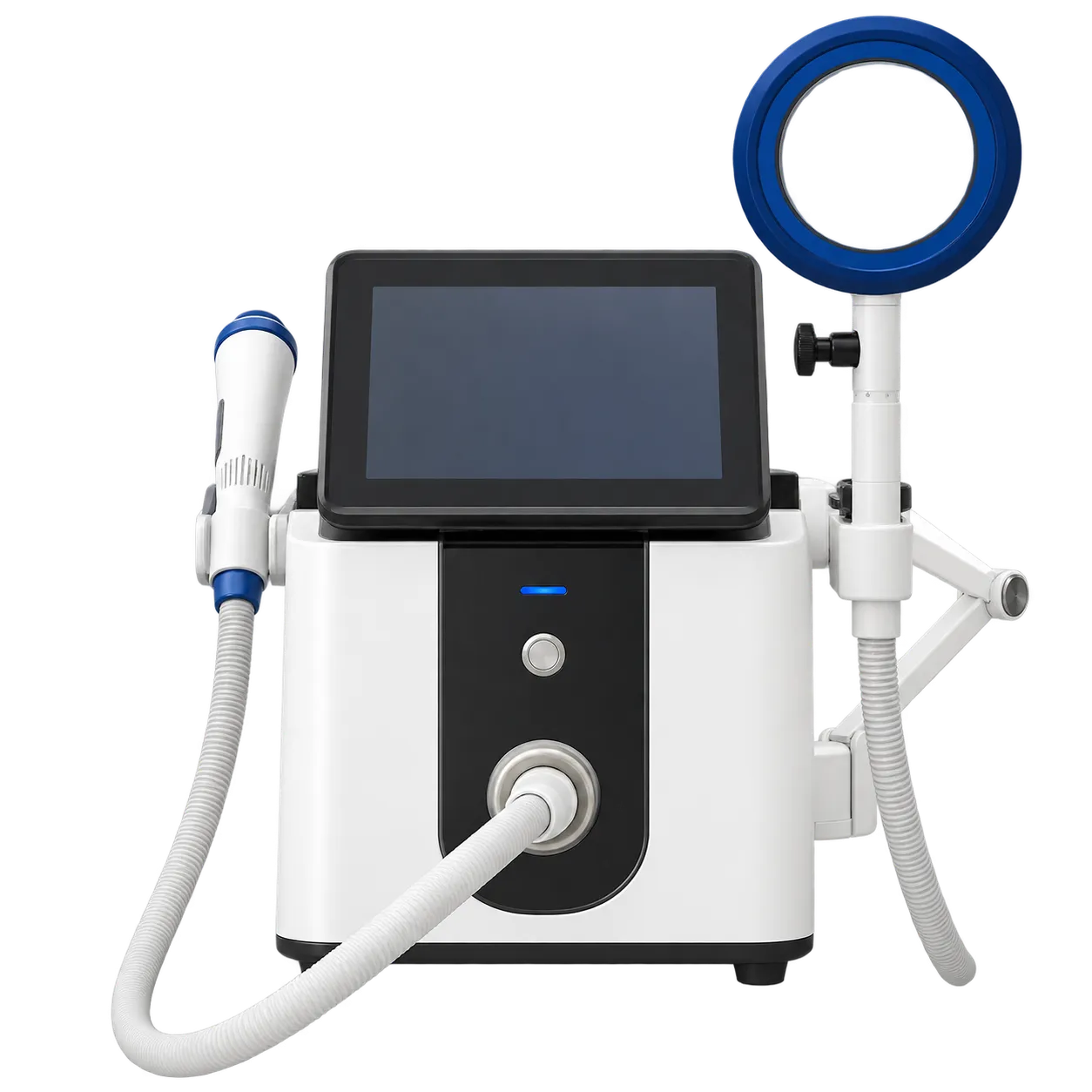
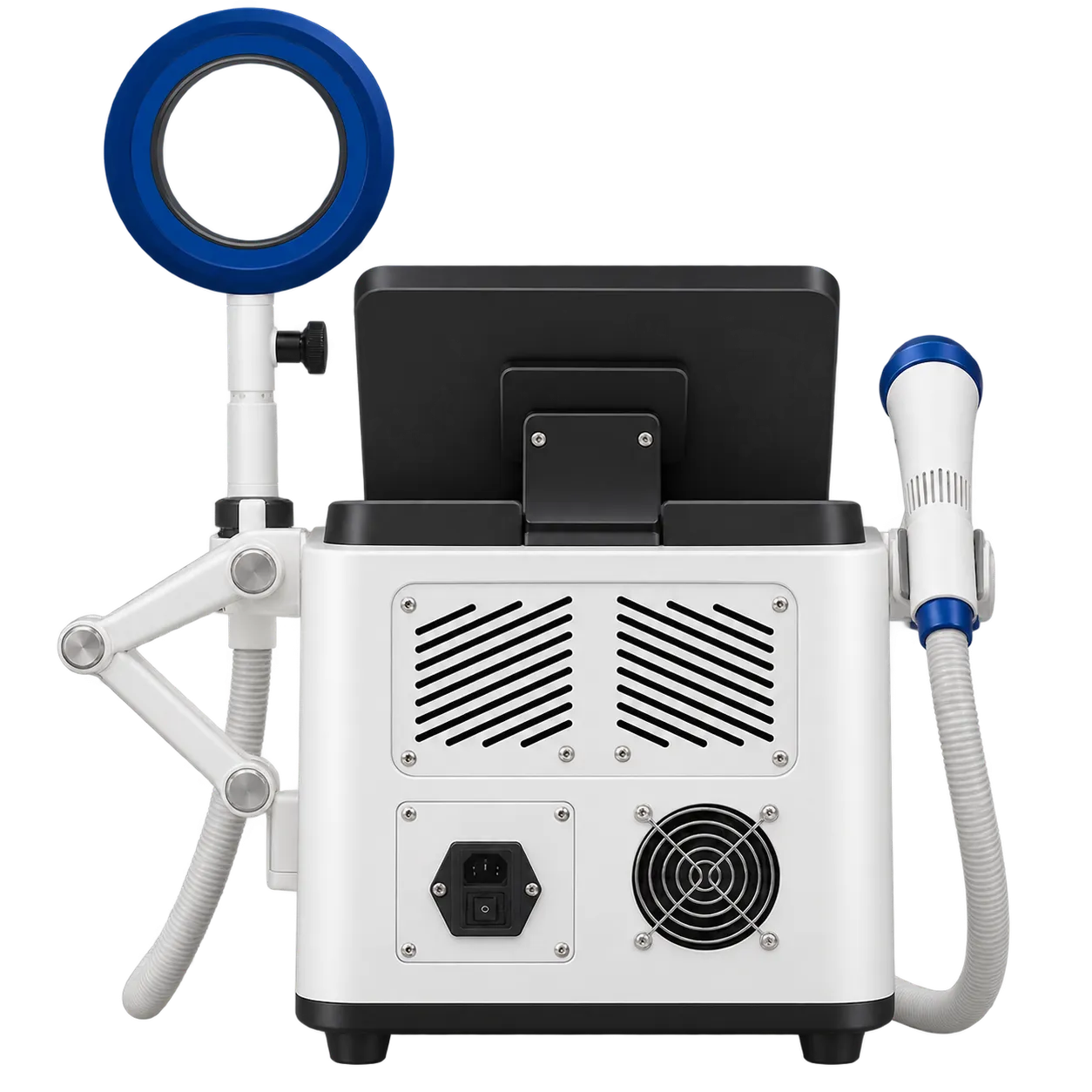
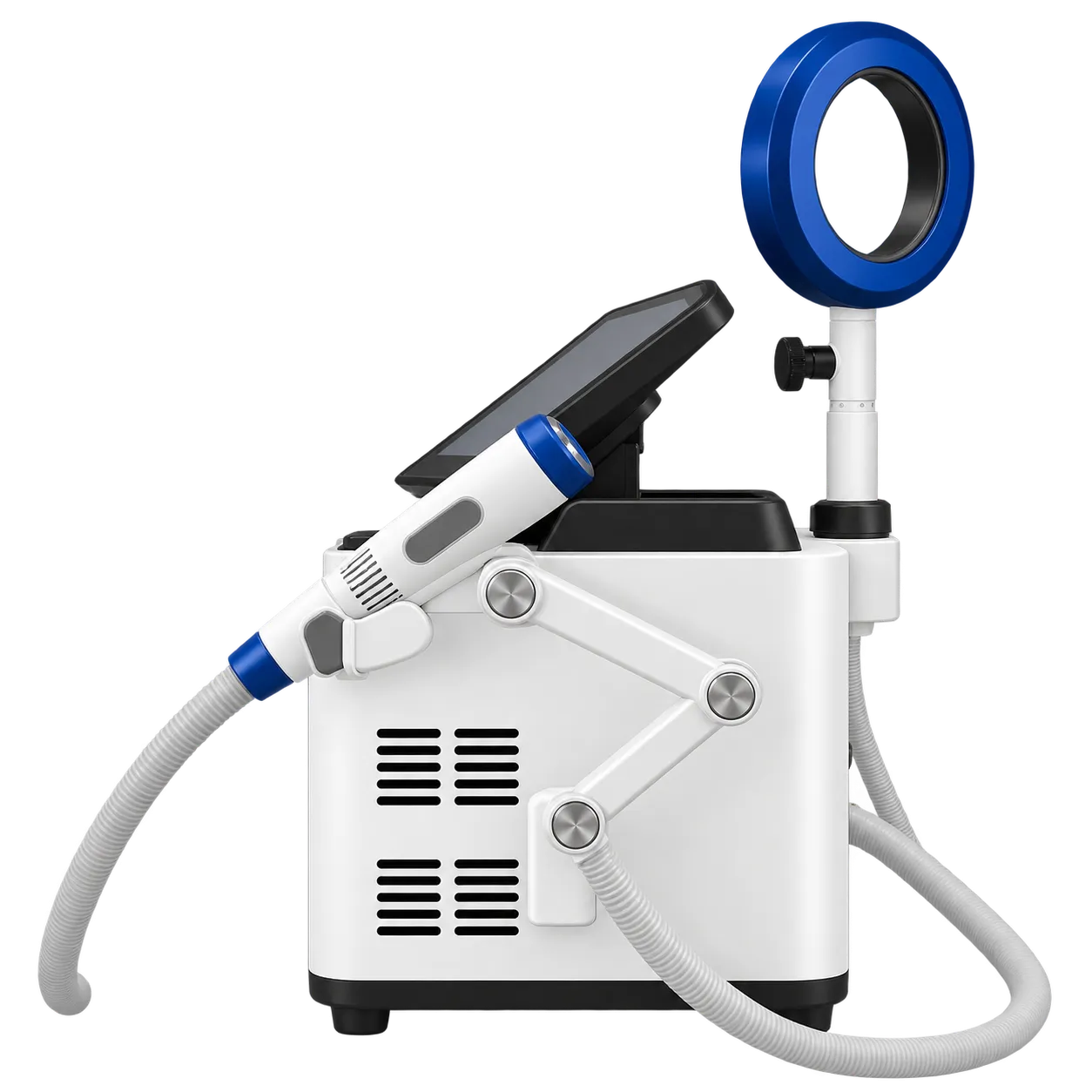
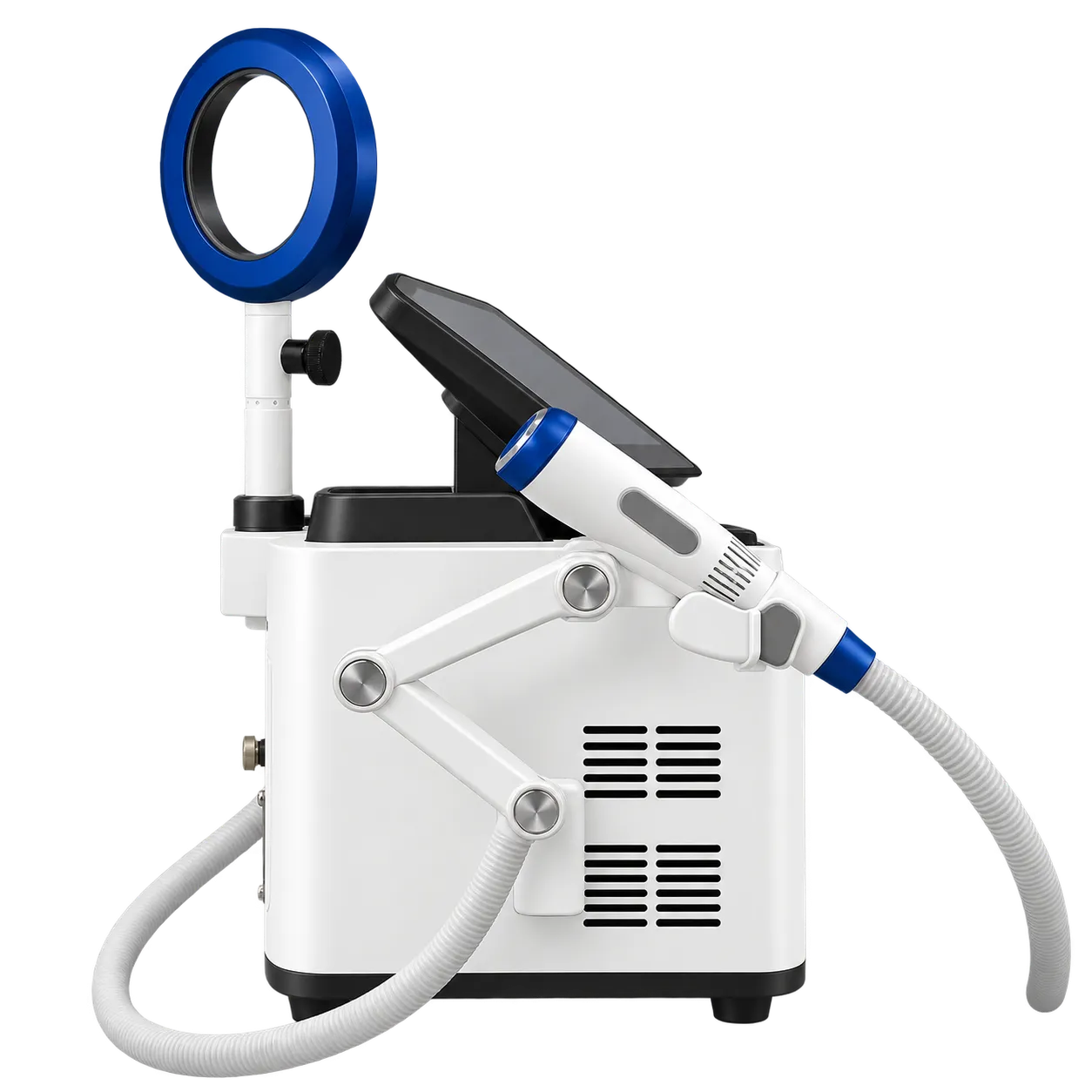
Sports clubs, academies, single-practitioner clinics and visiting practitioners are the natural buyers for a benchtop magnetic console. Published trials focus on foot and ankle soft-tissue problems, knee and joint pain, and post-training recovery work, and treatment is usually added to exercise rather than replacing it.
With a single applicator, treatment covers one area per session, and appointment length follows the session time in the manufacturer's instructions, which the sheet withholds. Before purchase, decide how many treatments a day you expect and whether one applicator supports that.
The receiving room matters as much as the caseload. Practical conditions include a solid surface that takes 19.3 kg, a socket within cable reach, and enough clearance for staff to stand back while the coil runs. Where the console moves between rooms or sites, a dedicated trolley turns each move into a push, and the ring arm should be folded first. Anyone carrying it to away fixtures also needs a plan for securing it in the vehicle.
Screening runs at booking and covers cardiac devices, other active implants, metalwork, anything worn on the body and pregnancy. Employees in those same categories need their own assessment before working near the coil.
In England, registration with the Care Quality Commission depends on the treatment offered and who provides it, and the devolved nations run their own arrangements. Clubs and private practices usually buy direct, while NHS services route new equipment through their own device management process first. The conformity documentation those procurement routes require is issued by the manufacturer and provided by the seller.