
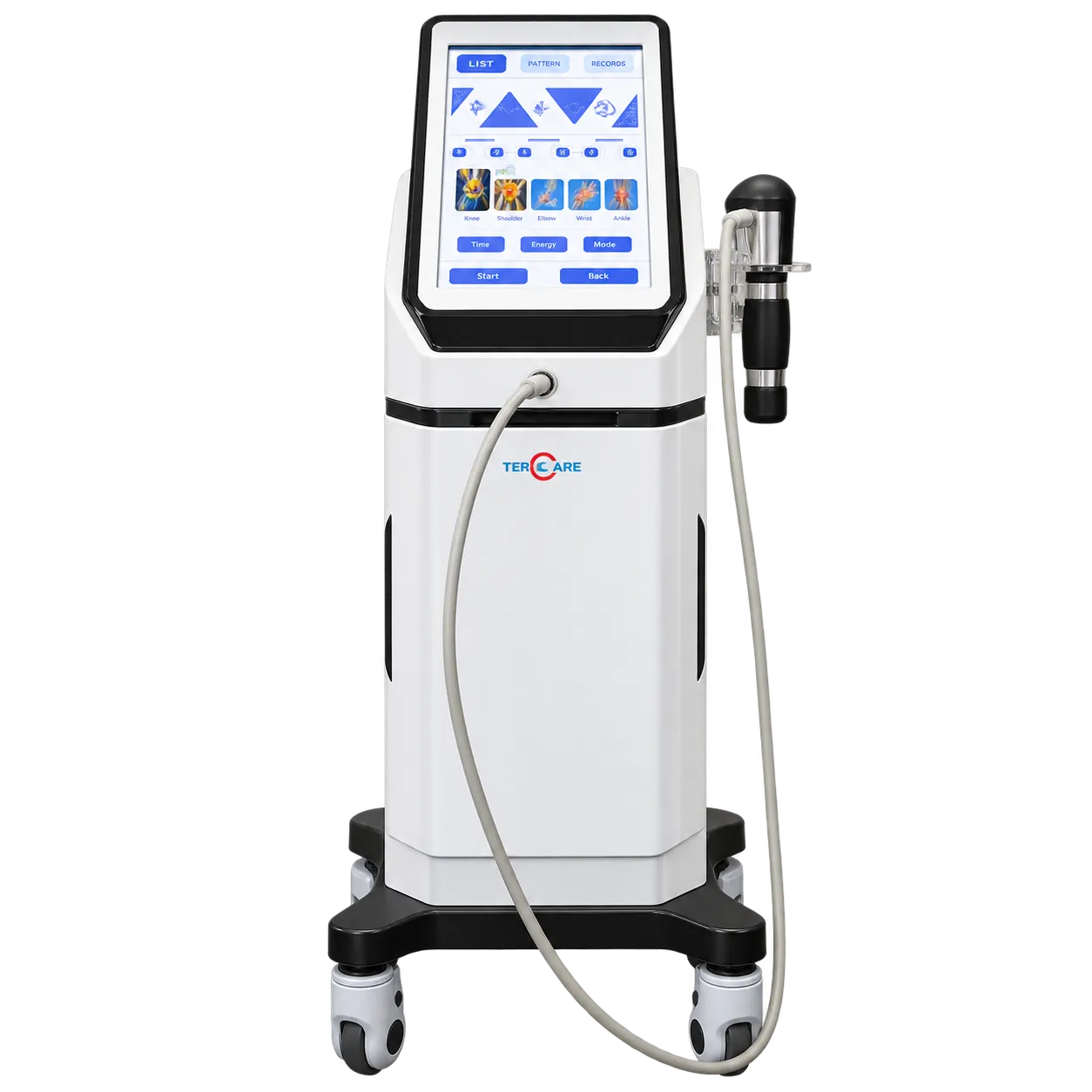
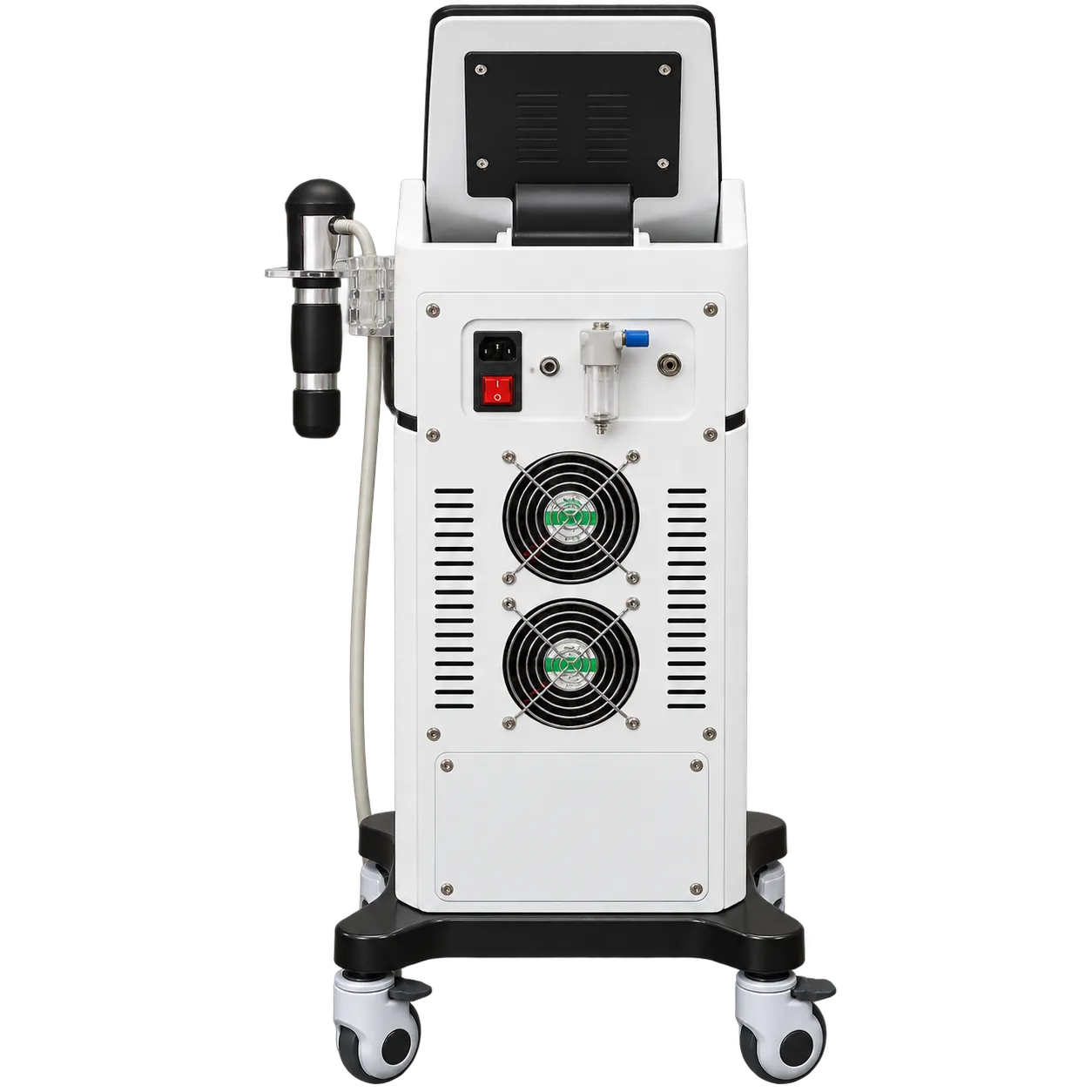
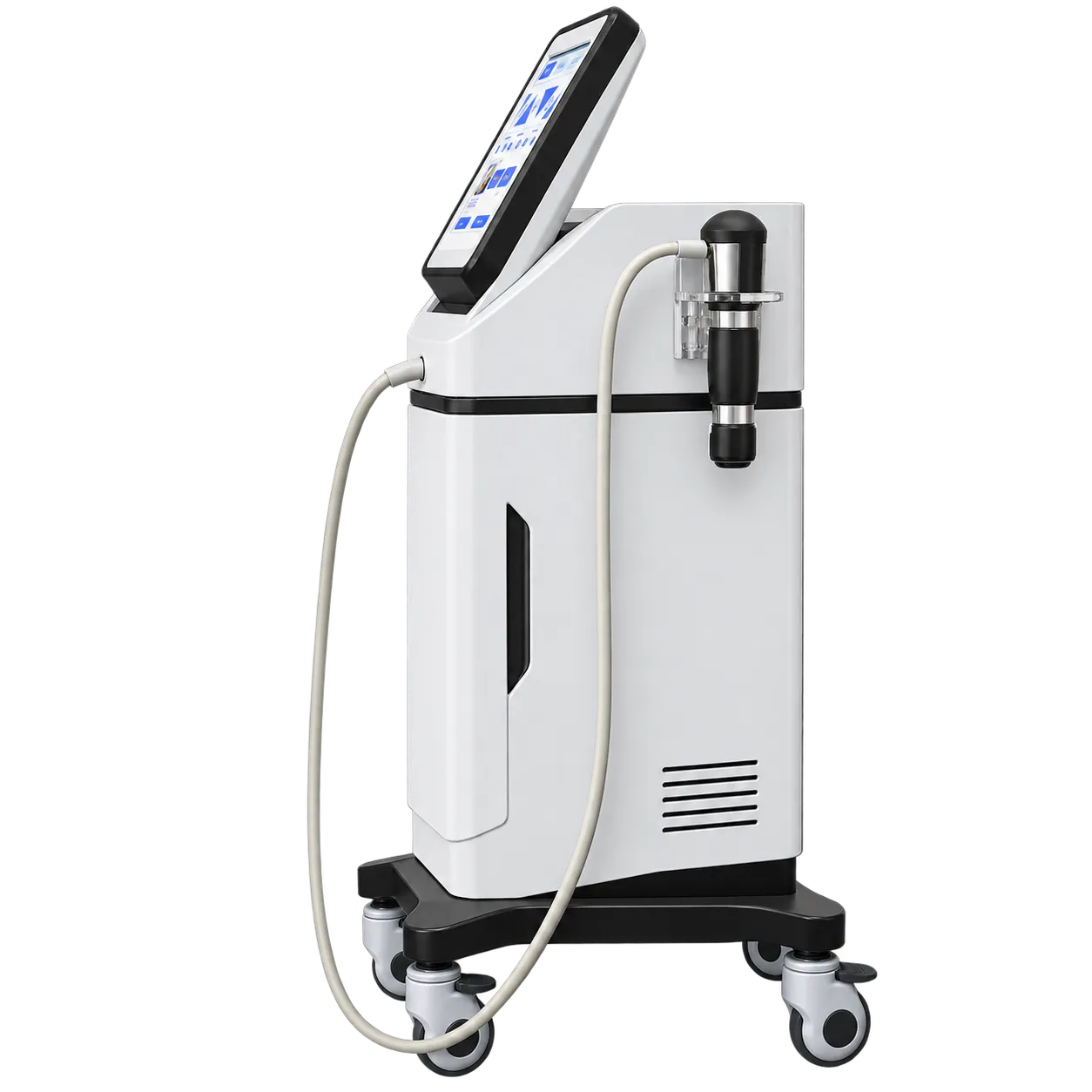
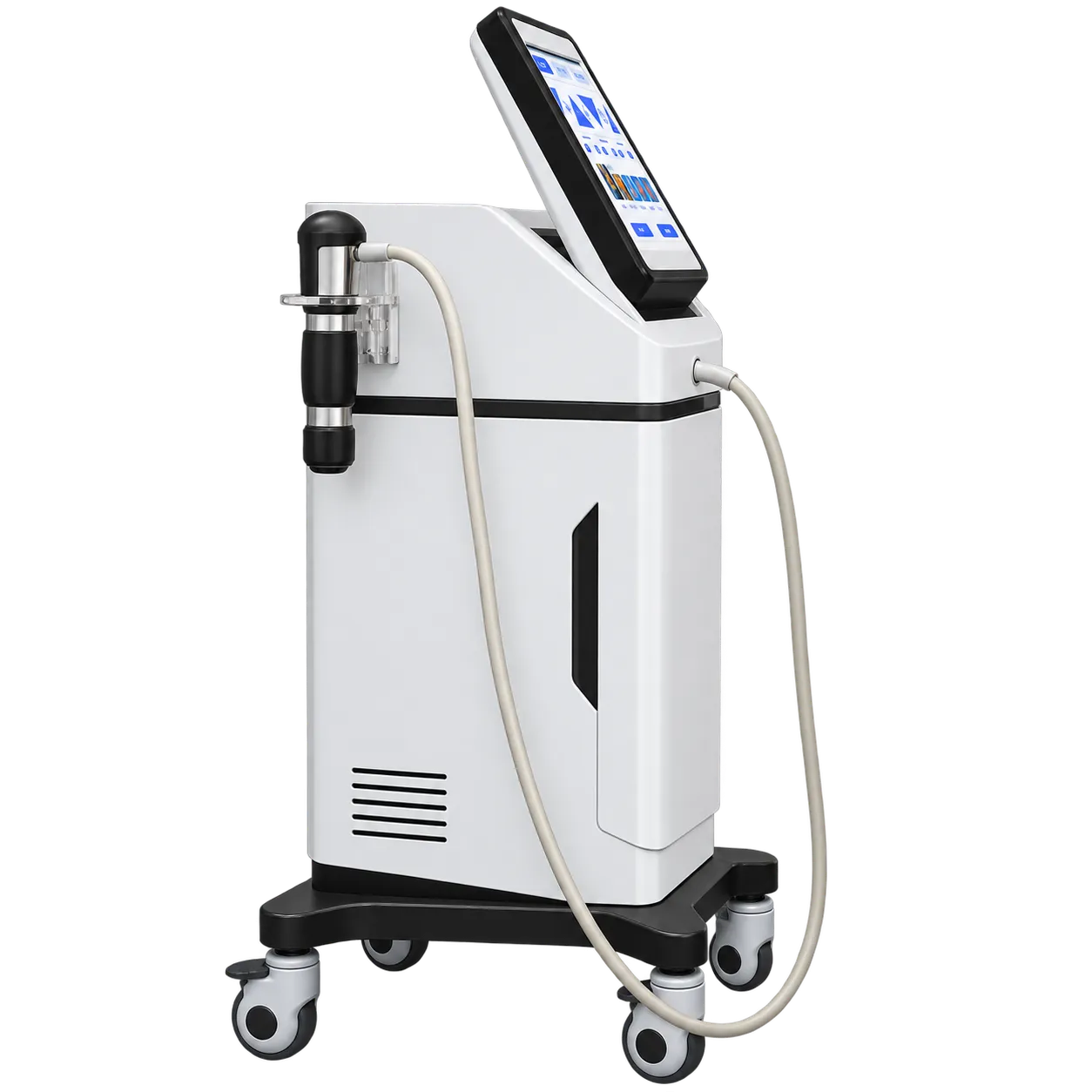
The 2202 suits private musculoskeletal and sports clinics, independent podiatry practices, and multi-therapist physiotherapy services where several clinicians share one shock wave station. It targets chronic tendon and fascia problems that have not settled with a structured course of exercise and load management, including plantar heel pain, lateral elbow pain, Achilles tendinopathy, and greater trochanteric pain.
The evidence base shapes how a clinic should offer it. NICE has assessed shock wave therapy for each of these conditions and, across the set, found either inconsistent efficacy evidence with no major safety concerns or evidence limited in both quality and quantity. It recommends use only with special arrangements for clinical governance, consent and audit or research, and asks that patients receive clear written information about the uncertainty. Individual trials pull in different directions: a large placebo-controlled study in chronic plantar fasciitis reported benefit after radial treatment. At the same time, a 2024 Norwegian trial found no significant advantage at six months over sham or exercise when all patients also had advice and orthoses.
For a private clinic, the practical conclusion is to use shockwave as a defined pathway: select patients who have genuinely failed conservative care, treat them to a written protocol that every therapist applies the same way, record outcomes at each visit and present the evidence honestly in consent discussions and marketing. The large screen supports the shared-protocol part of that approach, provided the underlying software is confirmed.
The conformity documentation those procurement routes require is issued by the manufacturer and provided by the seller.