
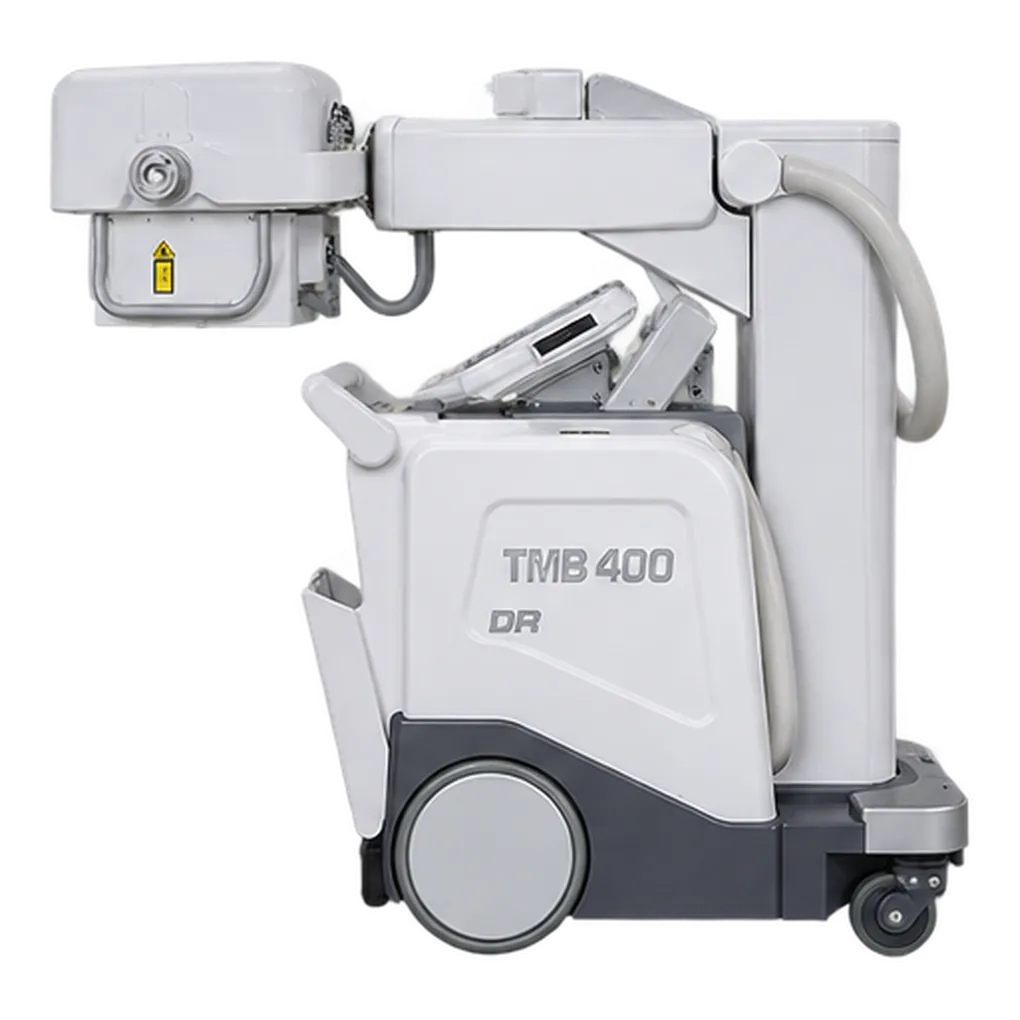
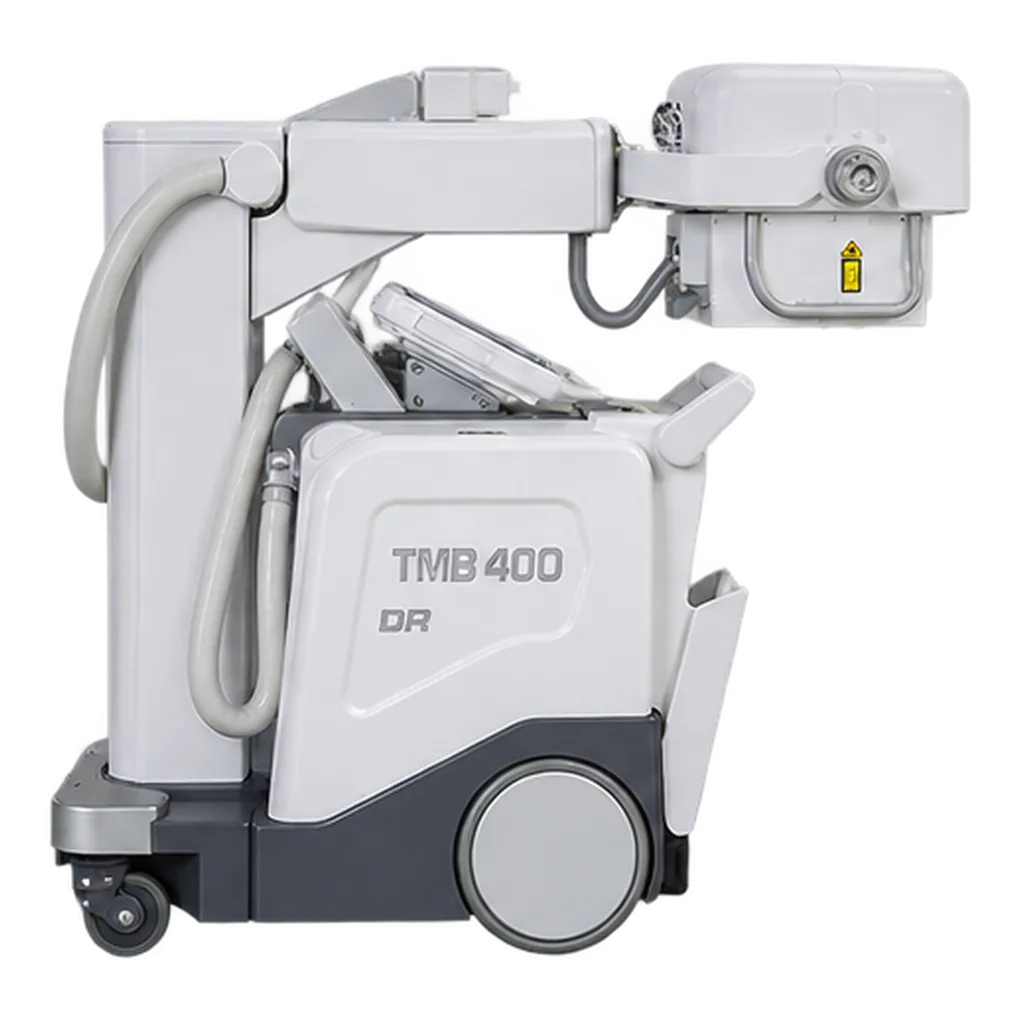
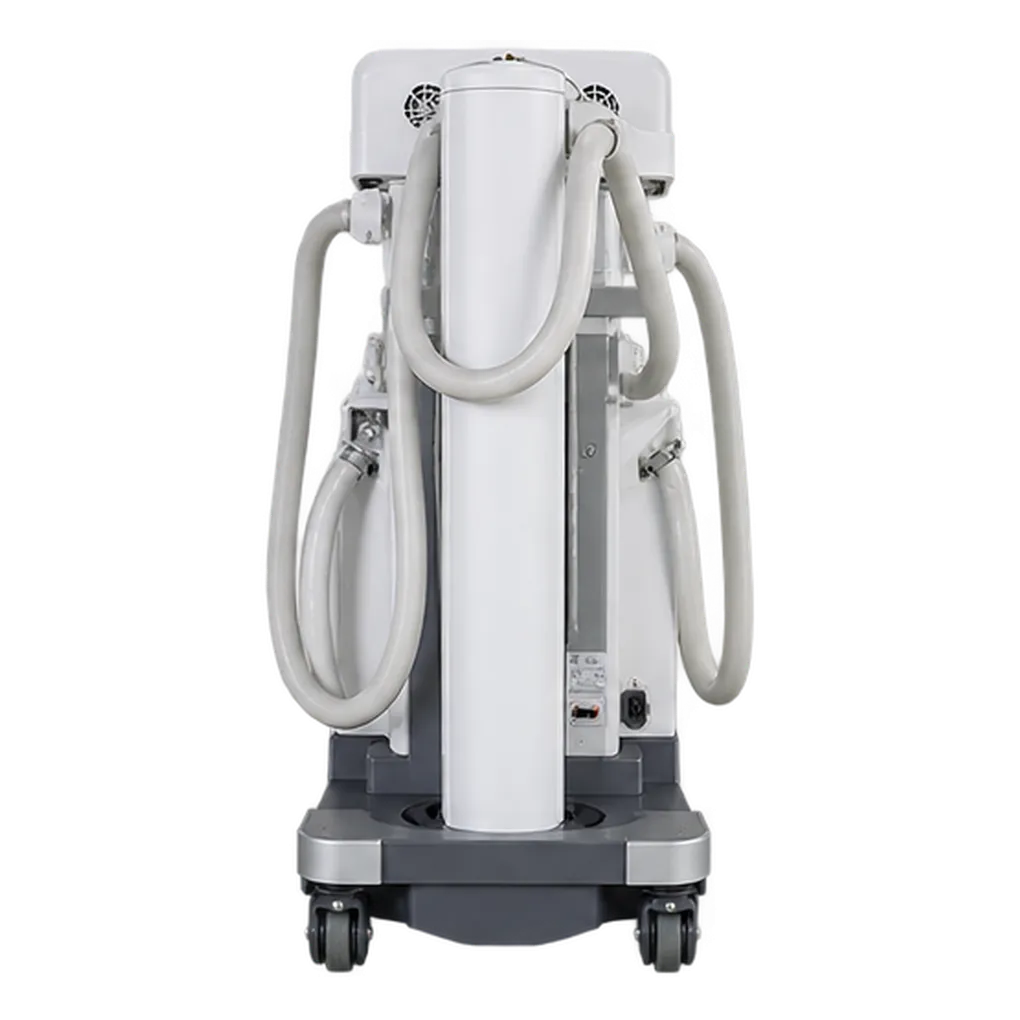
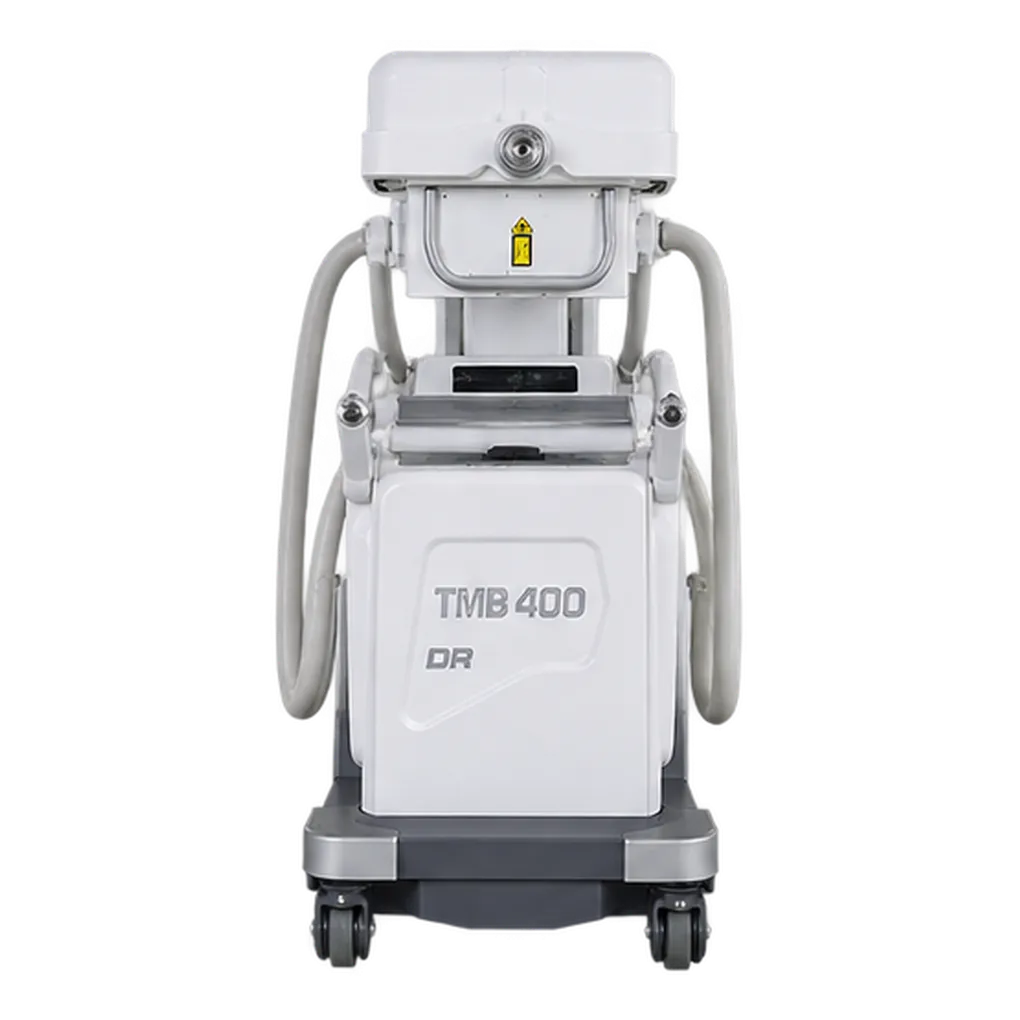
Bedside digital radiography is the job the TMB 400 DR is built for. It reaches patients who stay in bed, captures radiographs on a flat panel detector, and displays each image on its own screen, so radiographers finish the examination where it started.
Critical areas are demanding, and intensive care is a clear case. Equipment surrounds every bed, so the telescopic column version earns its place by keeping the route visible as the unit is driven in. Fine positioning happens at the tube head, and the infrared remote lets staff release the exposure from behind leaded glass.
On inpatient wards, the unit travels on battery power from one patient to the next. The radiographer checks each image on the 19-inch touchscreen before leaving the bedside, and studies go to the archive over DICOM as the round continues.
The emergency ward benefits from a unit that runs on its own power and rides over obstacles and steps. Images reach a diagnostic workstation over the network for reporting while the patient stays in the department.
Theatre teams stay in place while the unit is precisely positioned and the exposure is released remotely. Orthopaedics and the plaster room use the TMB 400 DR to check images after a reduction or cast, and sports medicine uses the same musculoskeletal imaging.
Paediatric radiography uses copper and aluminium filters in the collimator, making the unit suitable for children, with the double laser line guiding the reference focal distance.
Radiology departments run the TMB 400 DR as their digital link to patients on the wards.