
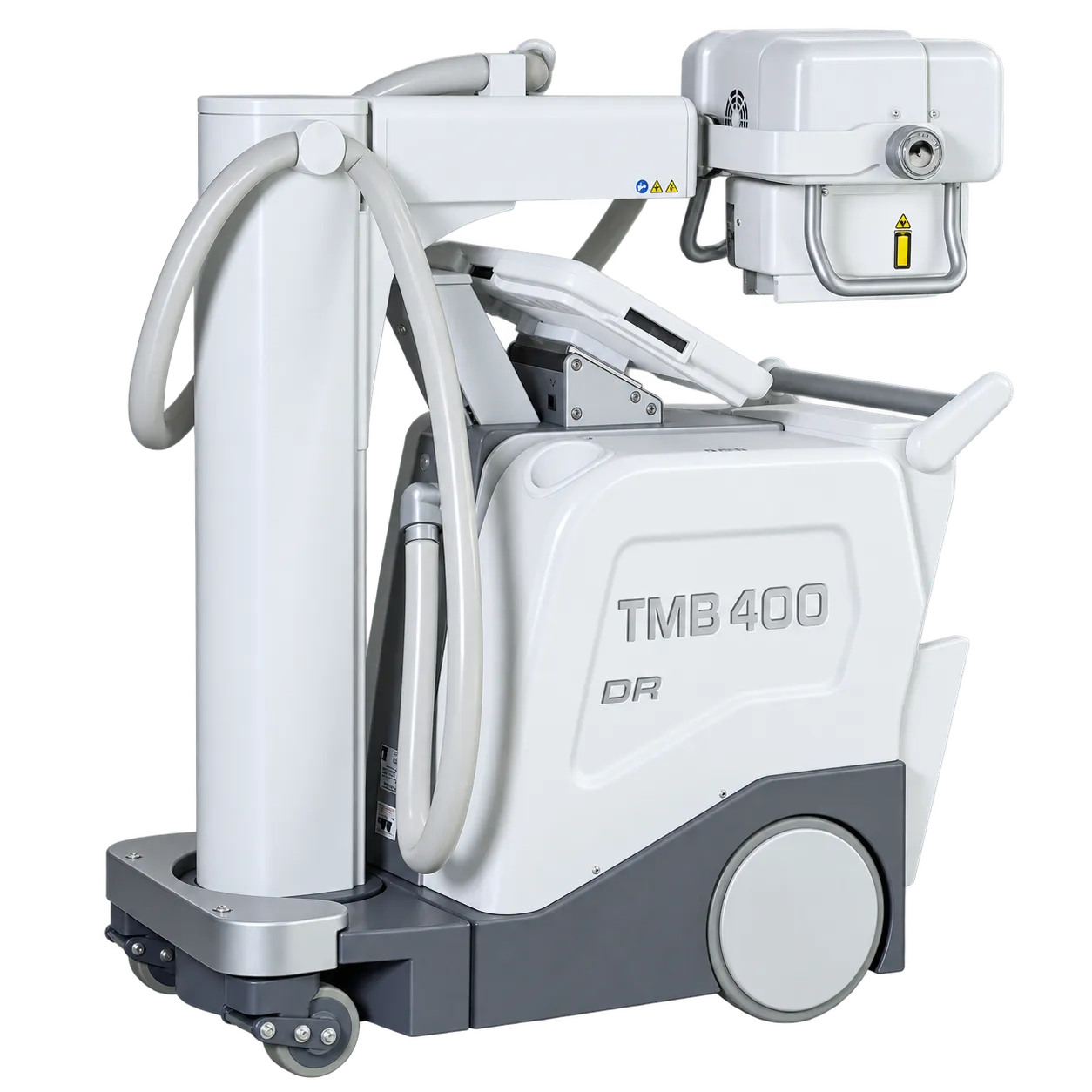
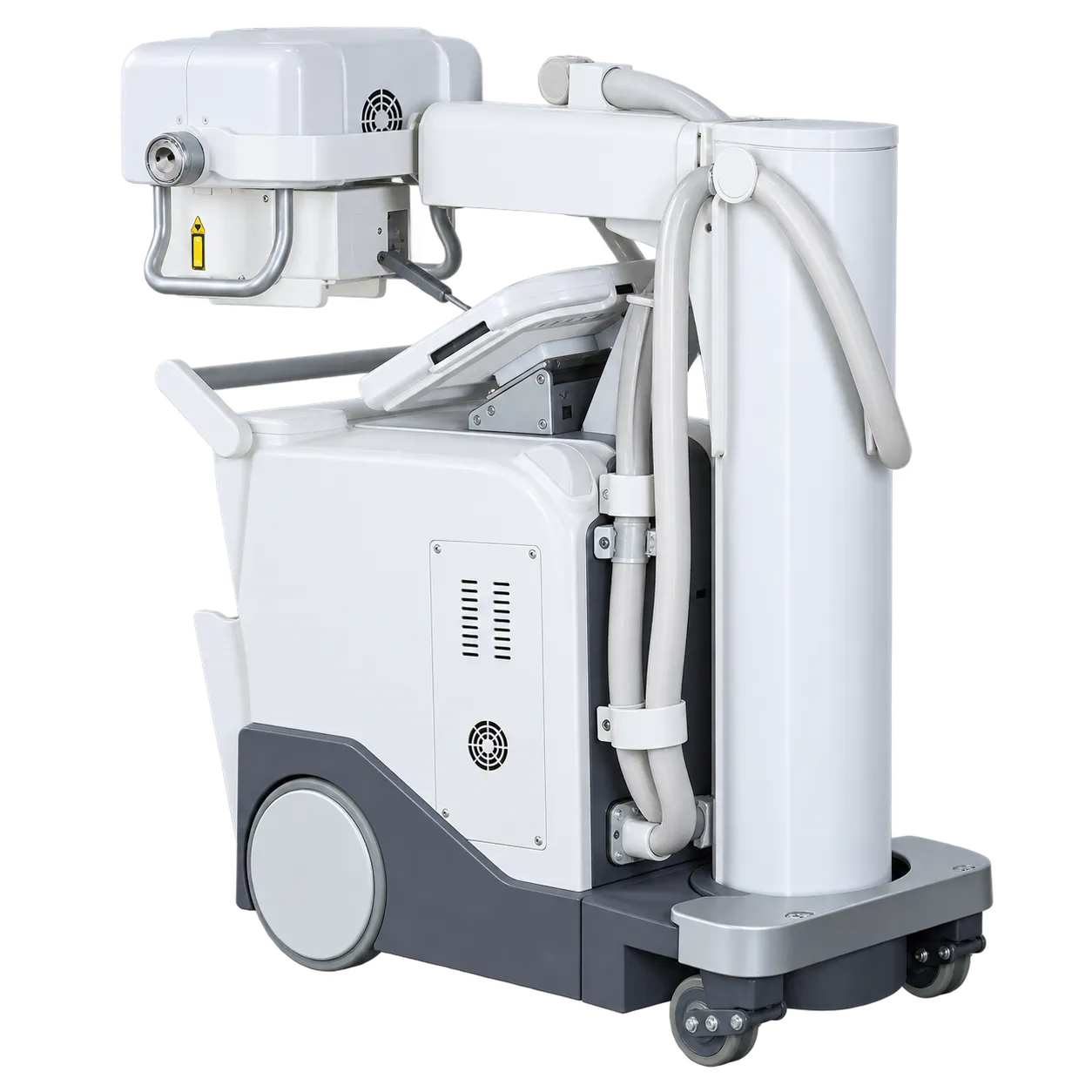
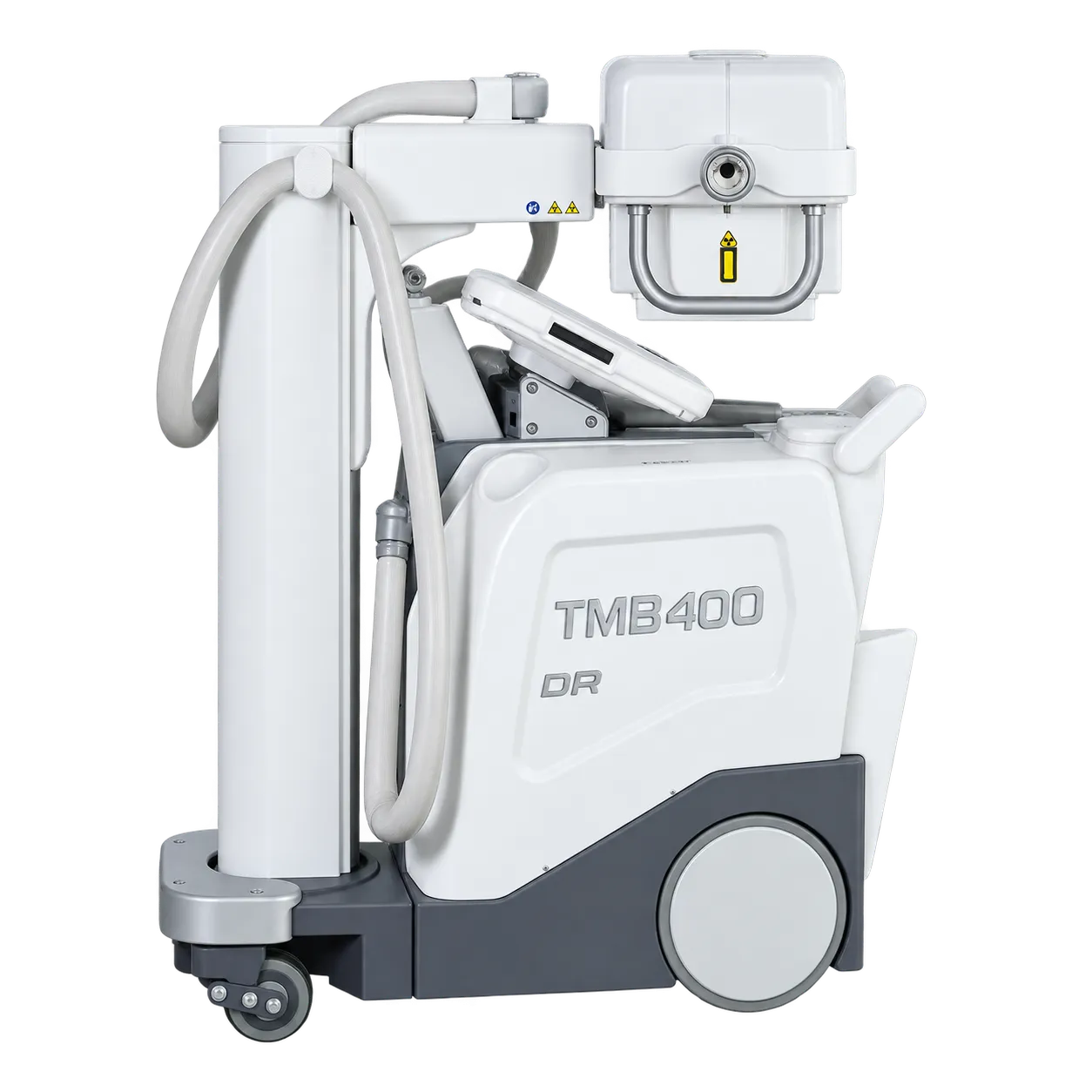
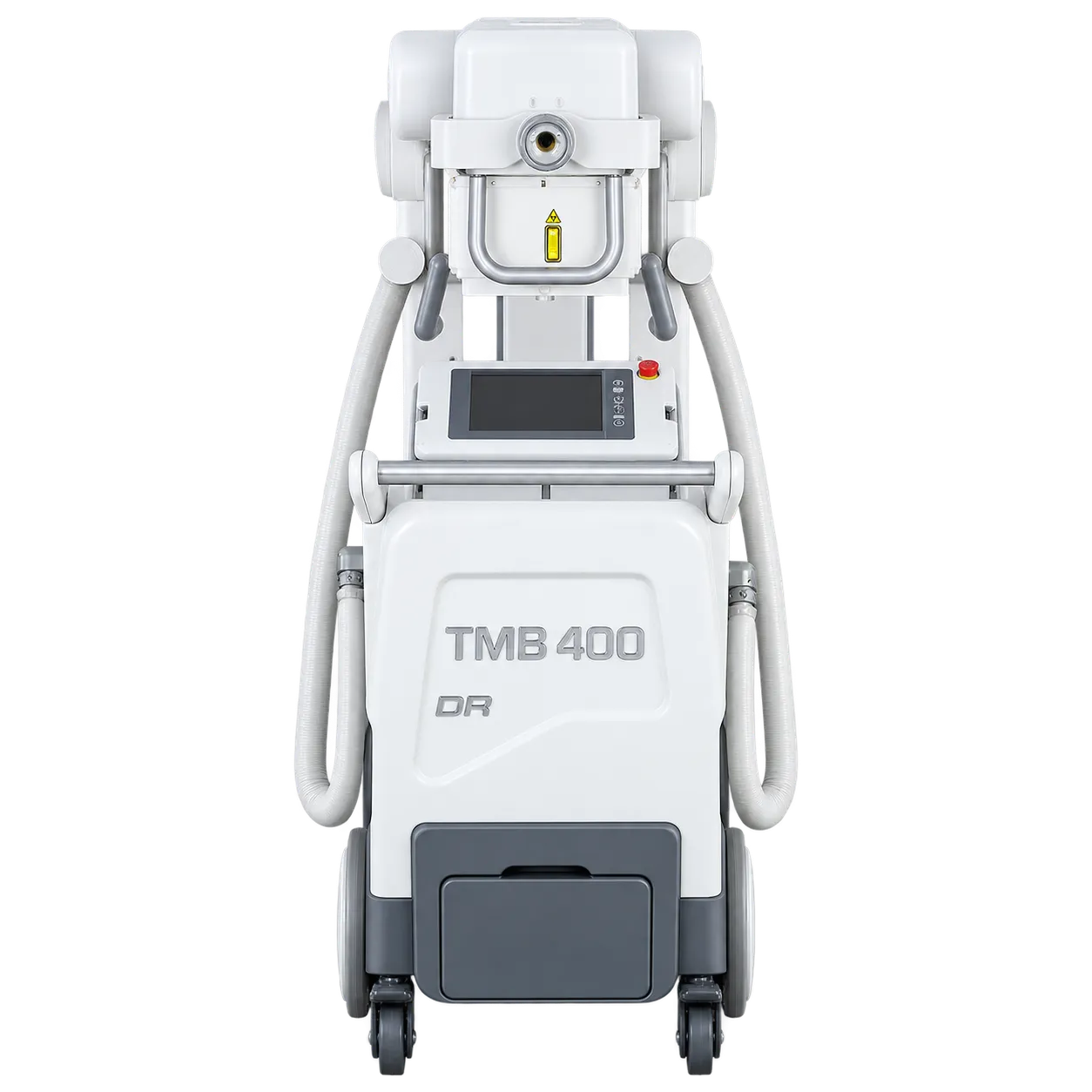
The TMB 400 is designed for bedridden patients. The unit comes to the bedside, and the radiographer images the patient on standard or CR cassettes.
Inpatient wards are its daily ground. One radiographer drives the unit on battery power from bed to bed, turns it on on the spot between them, and finishes each setup with motorised micro-movements at the tube head. The narrow 57.6 cm chassis fits the gaps between beds.
Intensive care bays are crowded with equipment. The telescopic column version collapses for a clear view as it moves among ventilators, pumps, and monitors. The infrared remote control works through glass and leaded glass, so an operator can release an exposure from behind a protective screen up to 10 m away.
The emergency ward gets a unit ready on battery power that handles obstacles and steps on its way to the trolley. In the operating theatre, the same remote release and fine positioning support radiographs taken around the surgical team.
Orthopaedics and the plaster room use the TMB 400 for check radiographs after reduction and casting, taken where the patient lies. Sports medicine applies it to the same musculoskeletal imaging.
Paediatric work relies on the copper and aluminium filters in the collimator, which allow the unit to be used on children, while the double laser line helps set the reference focal distance before each exposure.
Radiology departments keep the TMB 400 as a mobile resource and send it wherever a bedside examination is needed.