
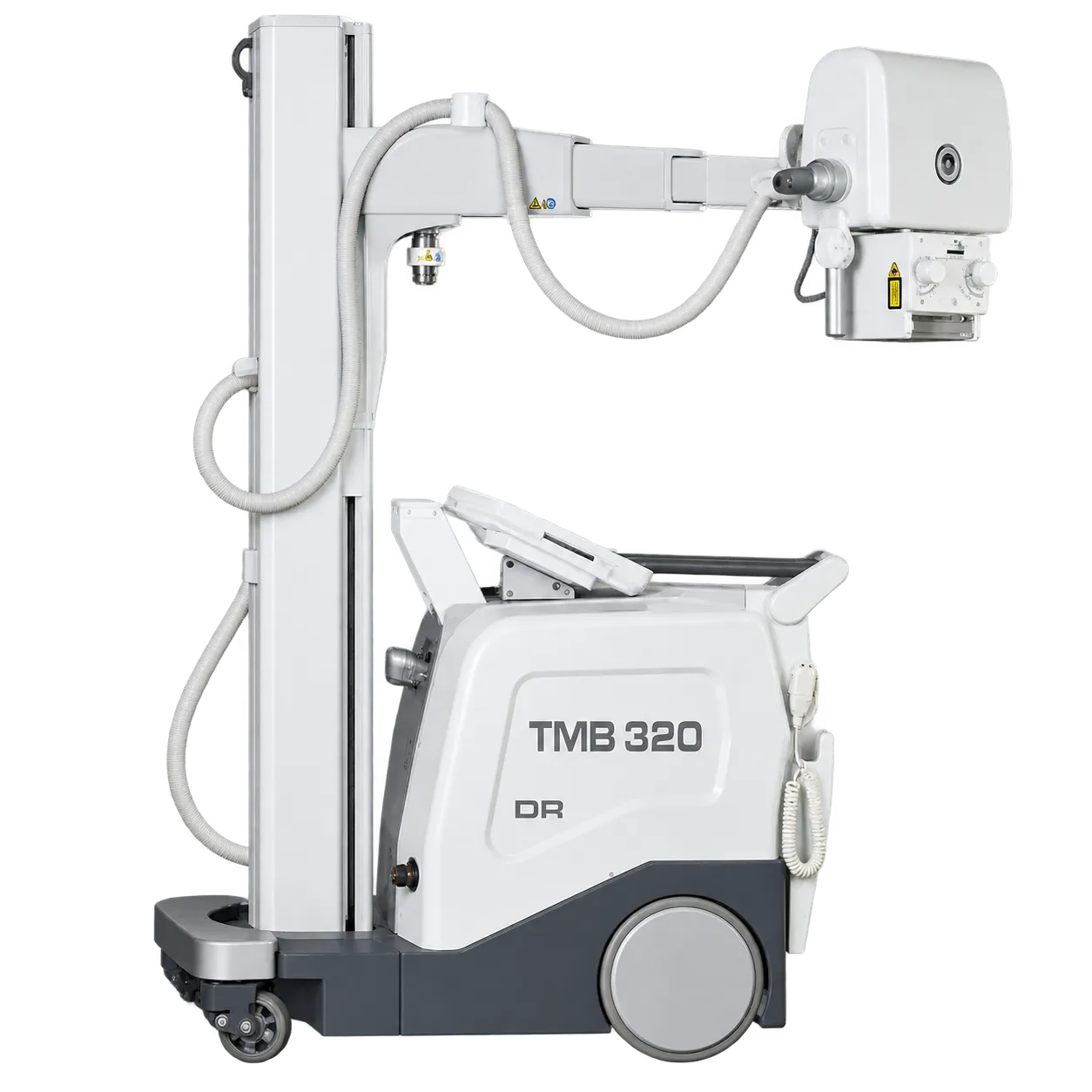
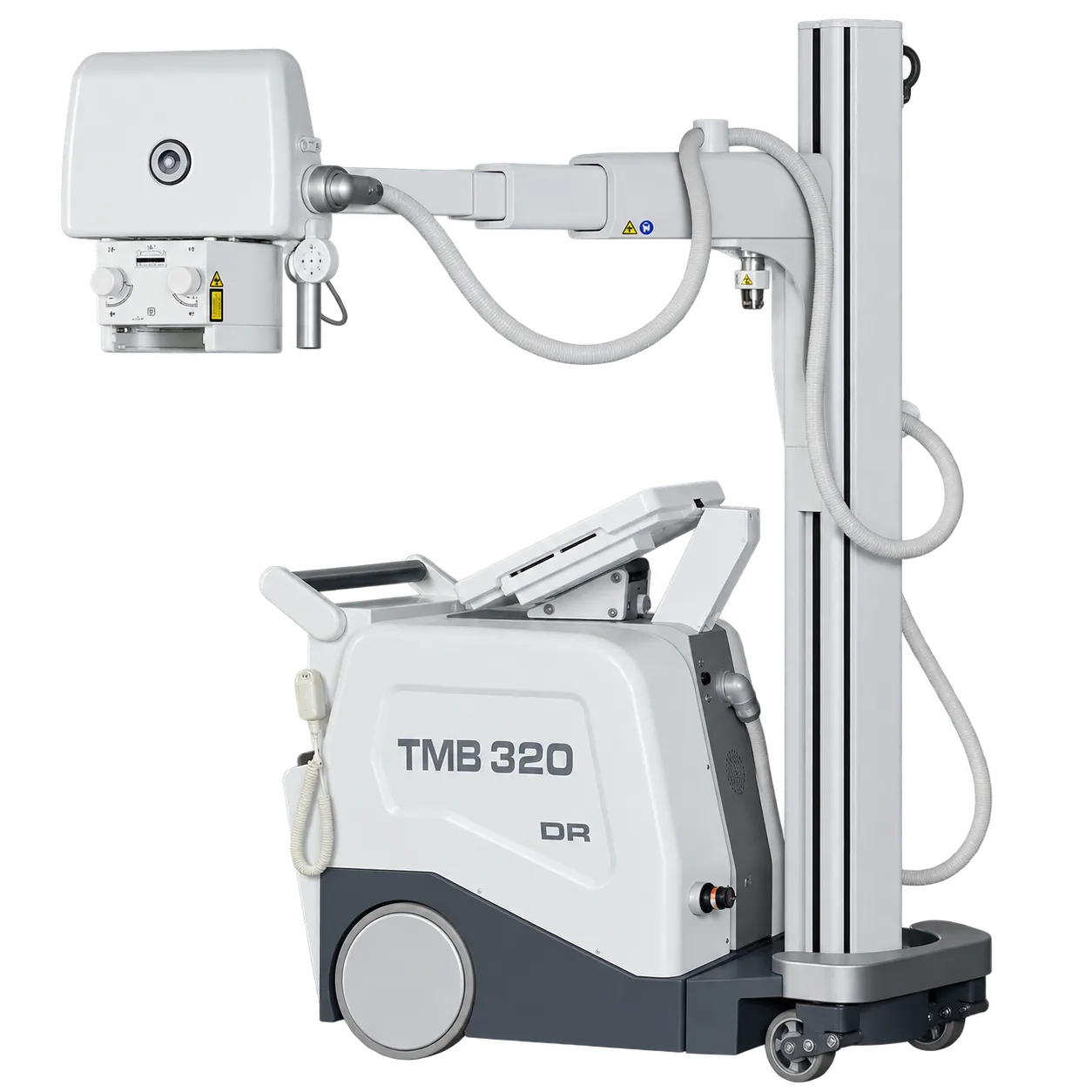
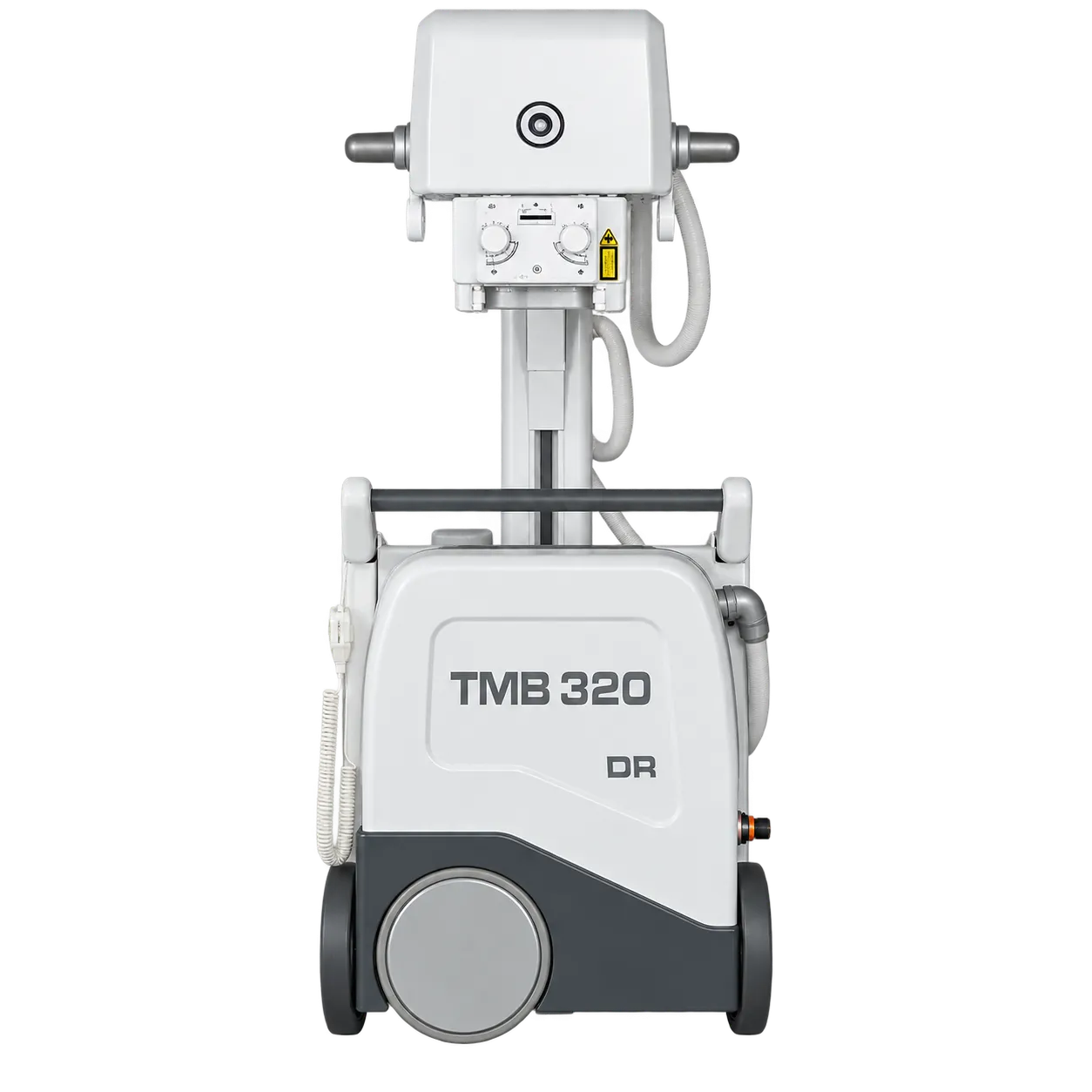
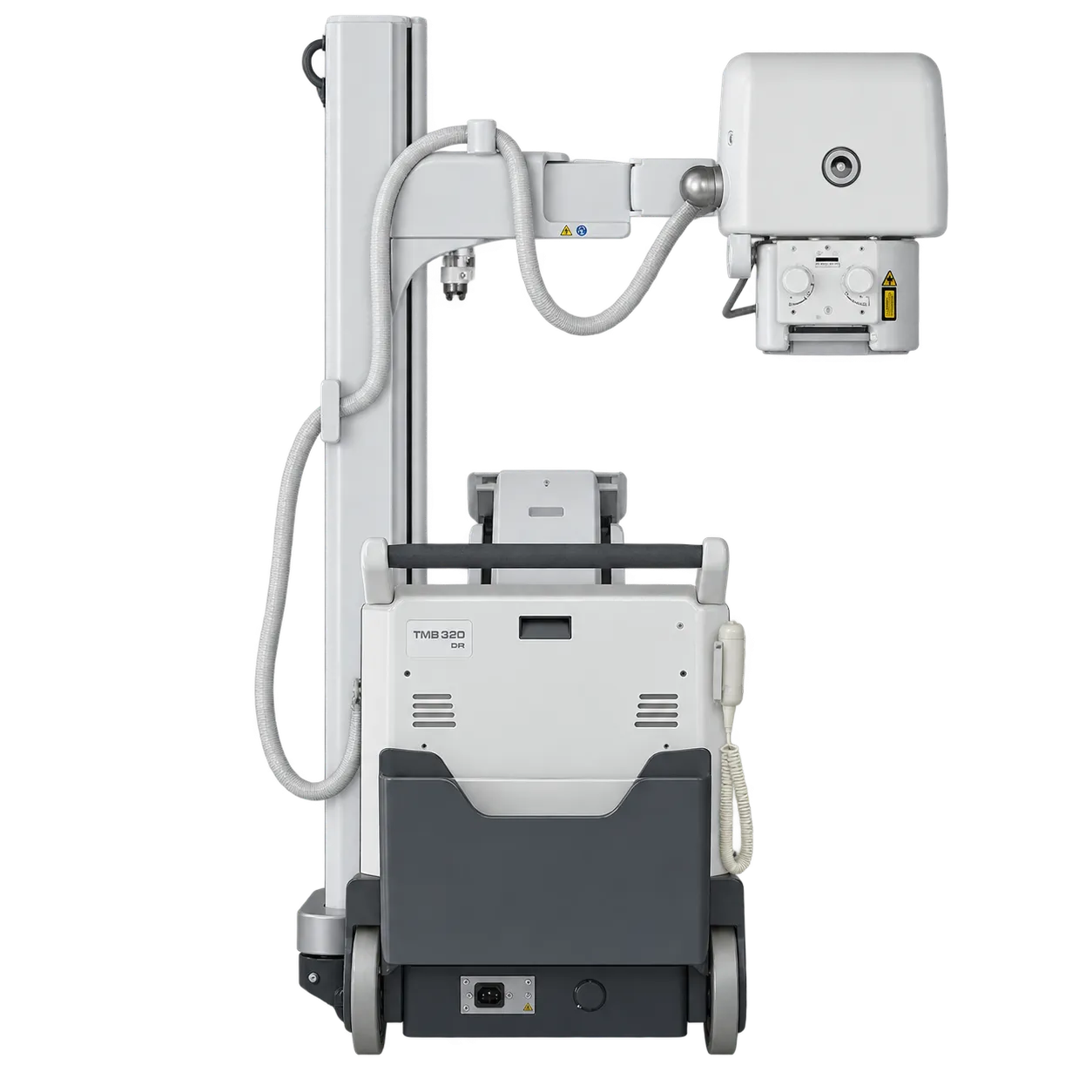
Bedside hospital radiography is the TMB 320 DR's field, for patients who stay in bed and for teams that want a finished digital image before moving on. Presets for each body part and patient size shape the acquisition, so the first image displayed is the one the examination needs.
In intensive care, the unit drives up to the bed, locks its arm once placed, and releases the exposure via an infrared remote from behind leaded glass. The image is on the Panel PC screen moments later.
On inpatient wards and in multi-bed rooms, its 57.6 cm chassis and swivelling column fit the space between beds, and each study can reach the diagnostic workstation over DICOM straight from the bedside.
In the emergency department, the battery drive overcomes obstacles, steps, and inclines on the way to the trolley, and the anatomical preset for the injured region is selected at the bed.
Orthopaedics, the plaster room and sports medicine call up the preset for the limb in question when taking check images, and post-processing works the image to suit each examination.
Paediatrics and neonatology rely on patient-size settings and the copper and aluminium filters in the collimator, which make the unit usable for children.
In theatre, the tube head swings ±180°, and the surgical team stays put while the exposure is controlled remotely. Images can then be saved to DVD and archived.
Radiology departments use the TMB 320 DR as the digital mobile unit for all these areas, with one battery charge rated to cover a full day.