
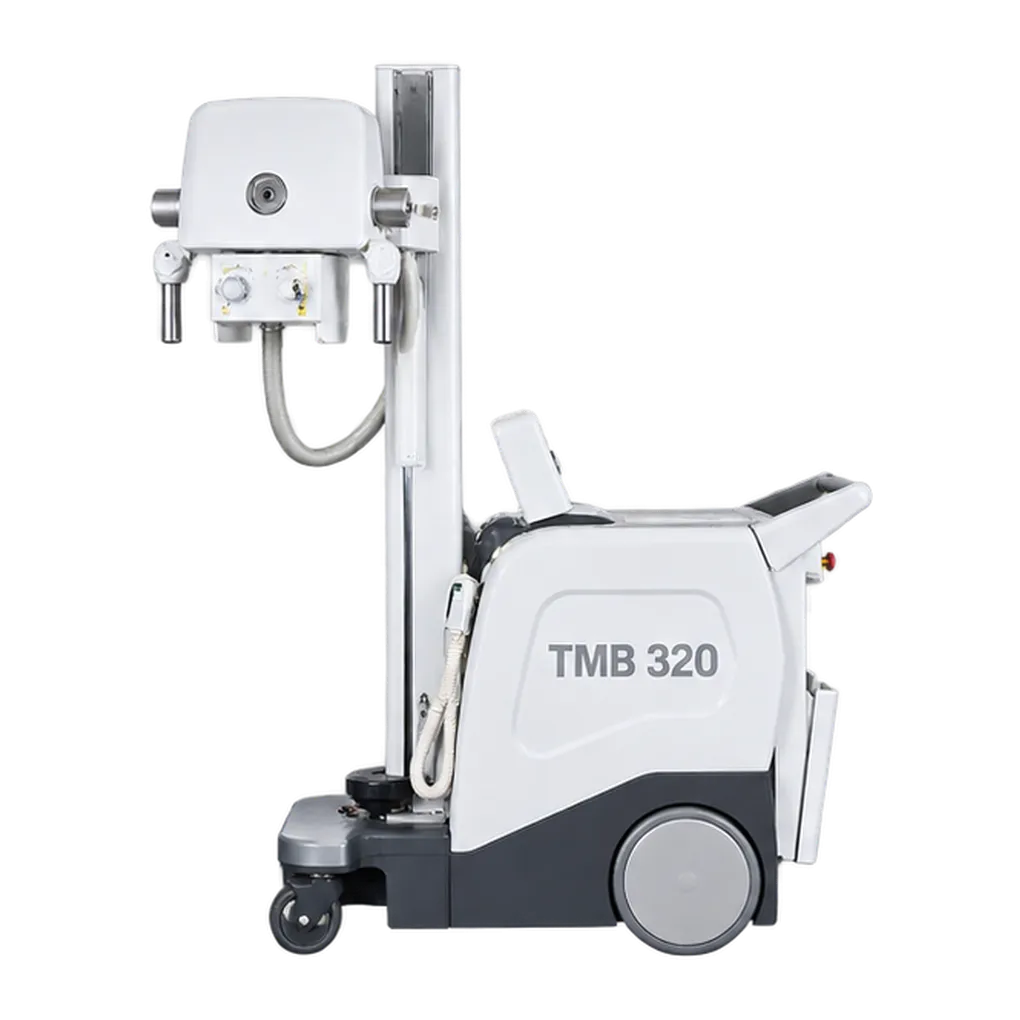
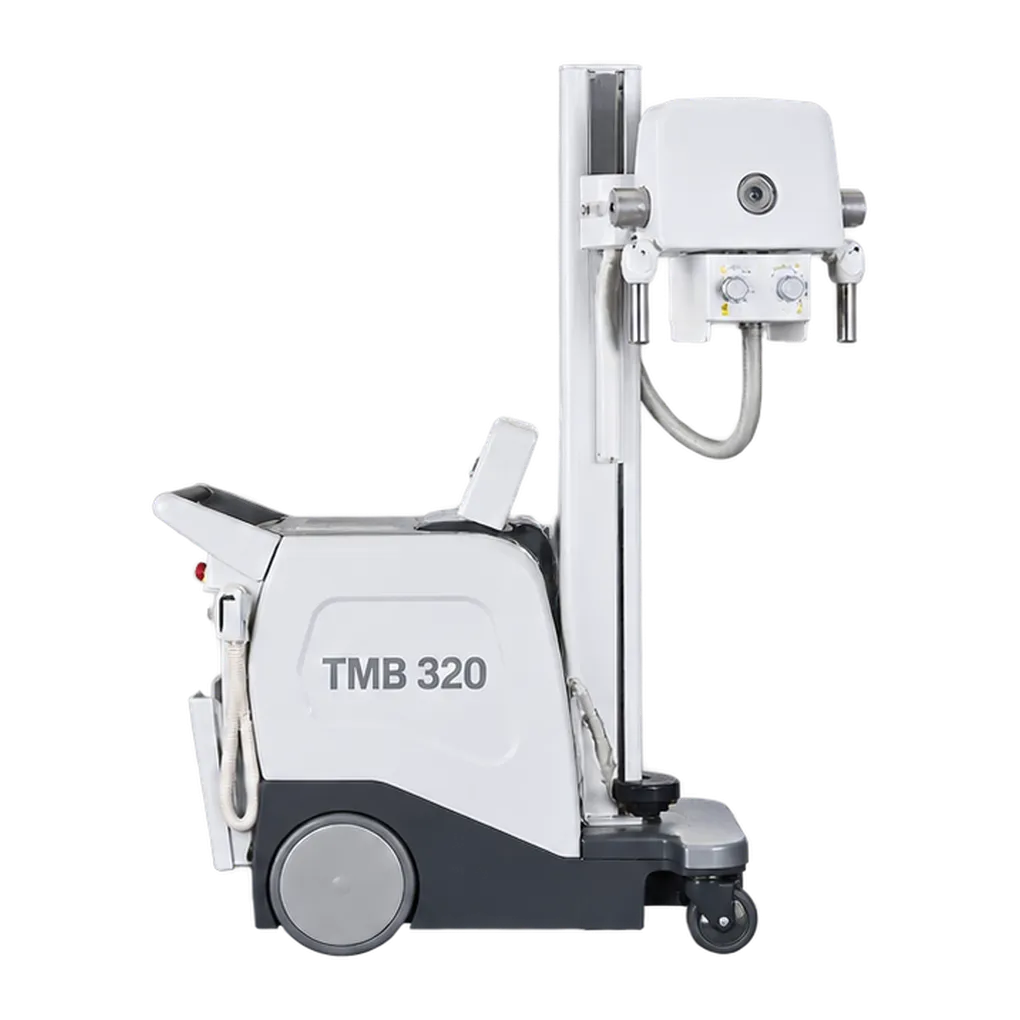
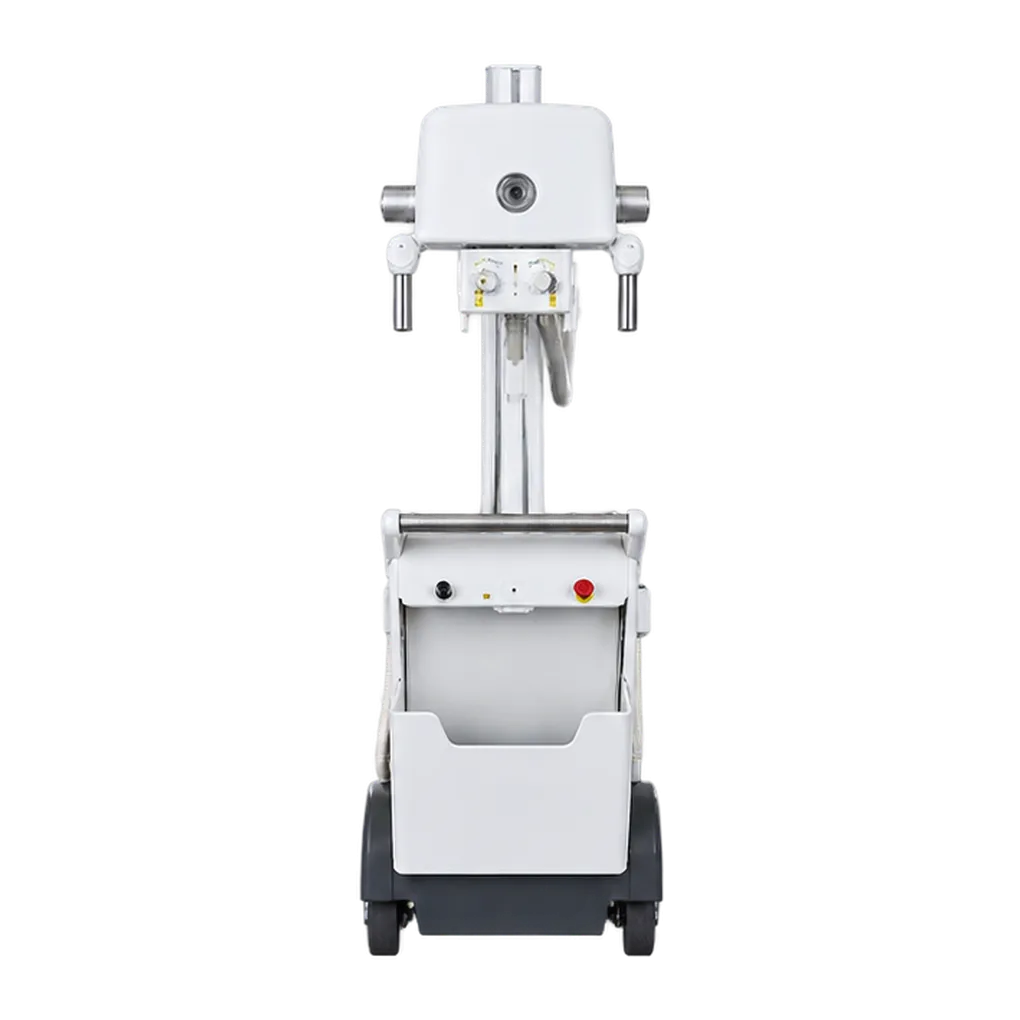
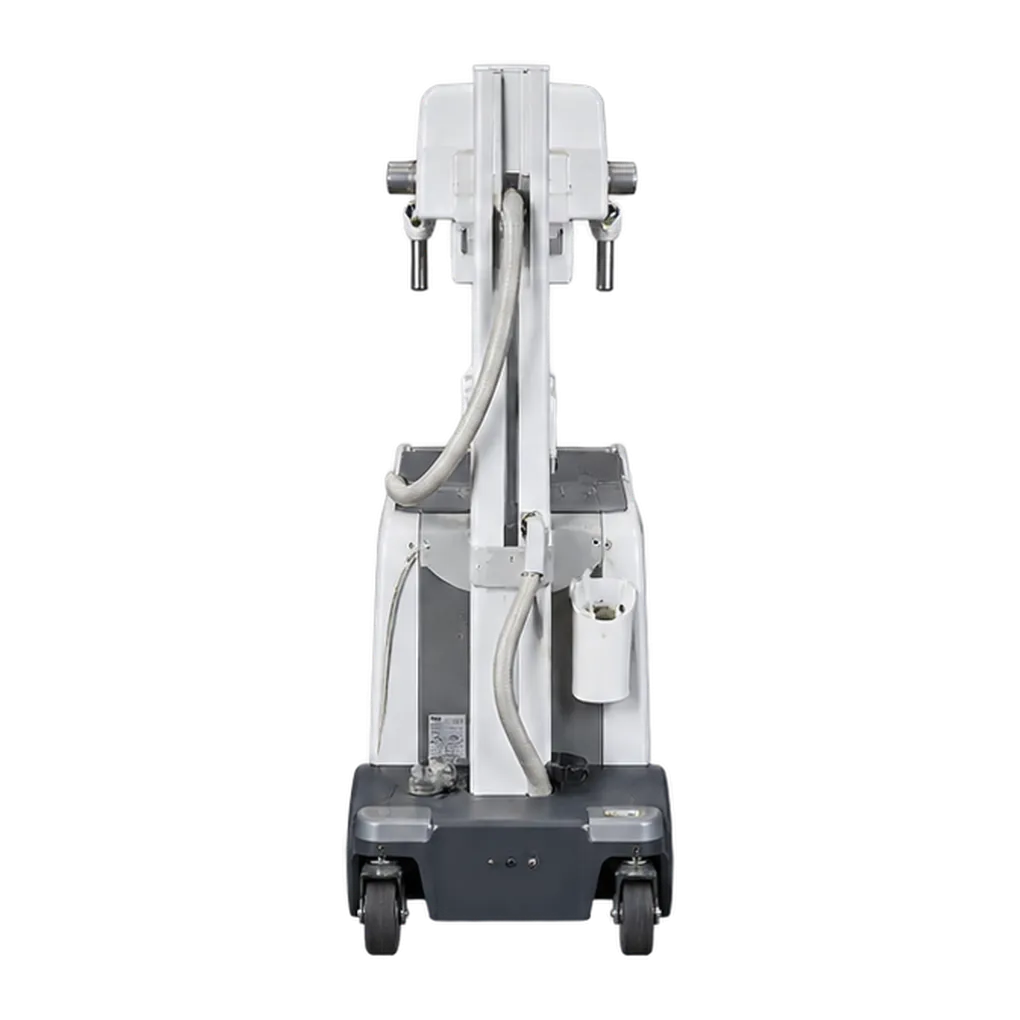
Wherever patients must stay in bed, the TMB 320 brings radiography to them all day. They are imaged where they lie, on standard or CR cassettes, and one battery charge keeps the unit in service from the morning round to the last examination of the day.
Intensive care is a core setting. The unit drives in on its own motor, the telescopic arm brings the tube head over the bed, and electric and mechanical locks hold the arm in place. Staff can release the exposure from behind glass or leaded glass using an infrared remote.
On inpatient wards and in multi-bed rooms, the 57.6 cm chassis and the swivelling column work in the space between beds. Motor-assisted fine positioning from the tube head, along with the additional controls beside the bed, completes each set-up a millimetre at a time.
The emergency department gains a unit that runs on battery power and takes obstacles, steps, and inclines in its stride, reaching the trolley wherever it stands.
Orthopaedics, the plaster room and sports medicine use the TMB 320 for fracture checks after reduction or casting. The arm's vertical excursion of 569 to 2069 mm meets the limb at the height the bed or trolley is set.
On paediatric wards and in neonatology, copper and aluminium filtration suits the youngest patients, and motor-assisted fine positioning aligns the beam to the millimetre over a small patient.
Theatre staff can stay at the table while the radiographer angles the tube head through its ±180° rotation and releases the exposure by remote.
Across these settings, the whole-day battery lets one unit cover several departments in a single day without returning to charge.