
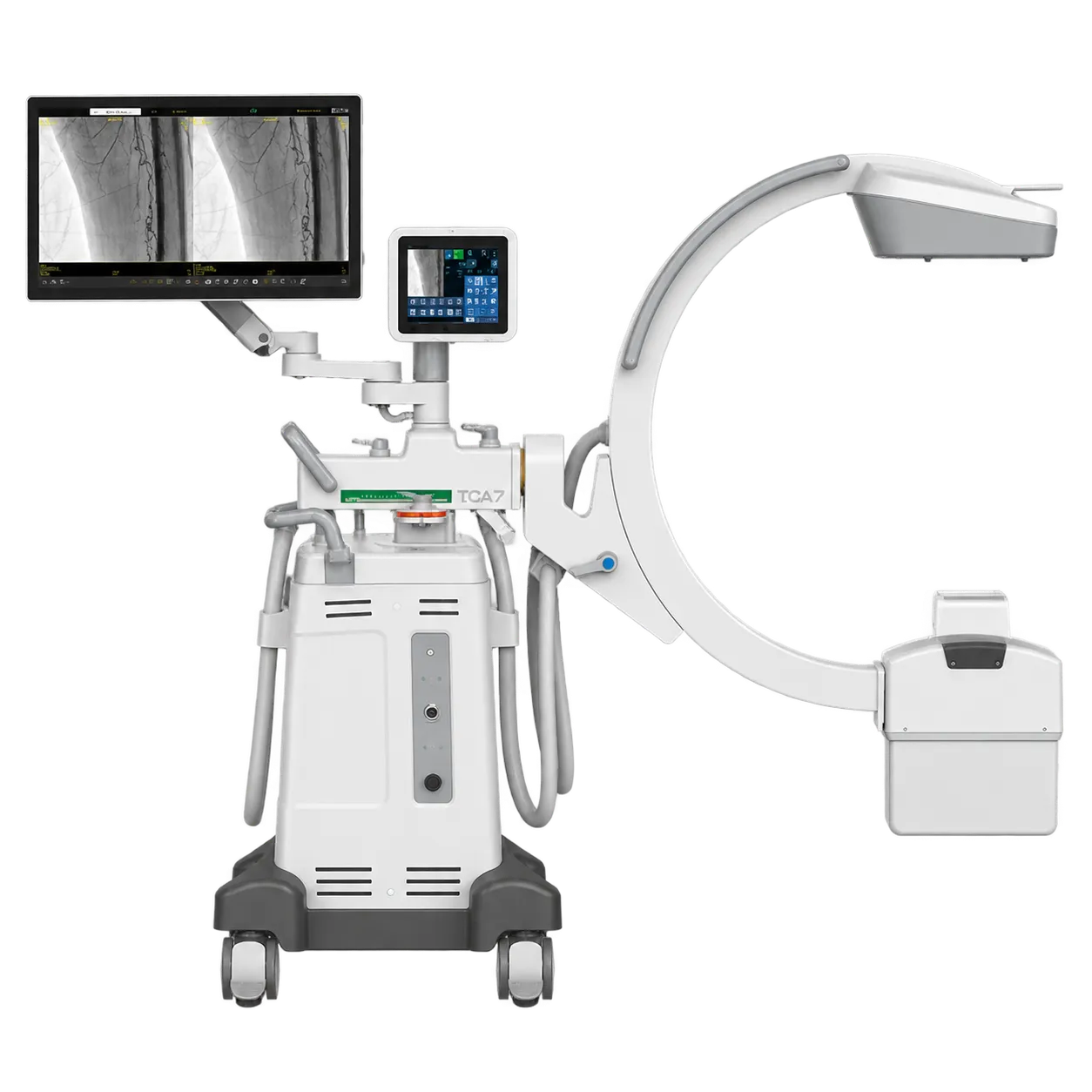
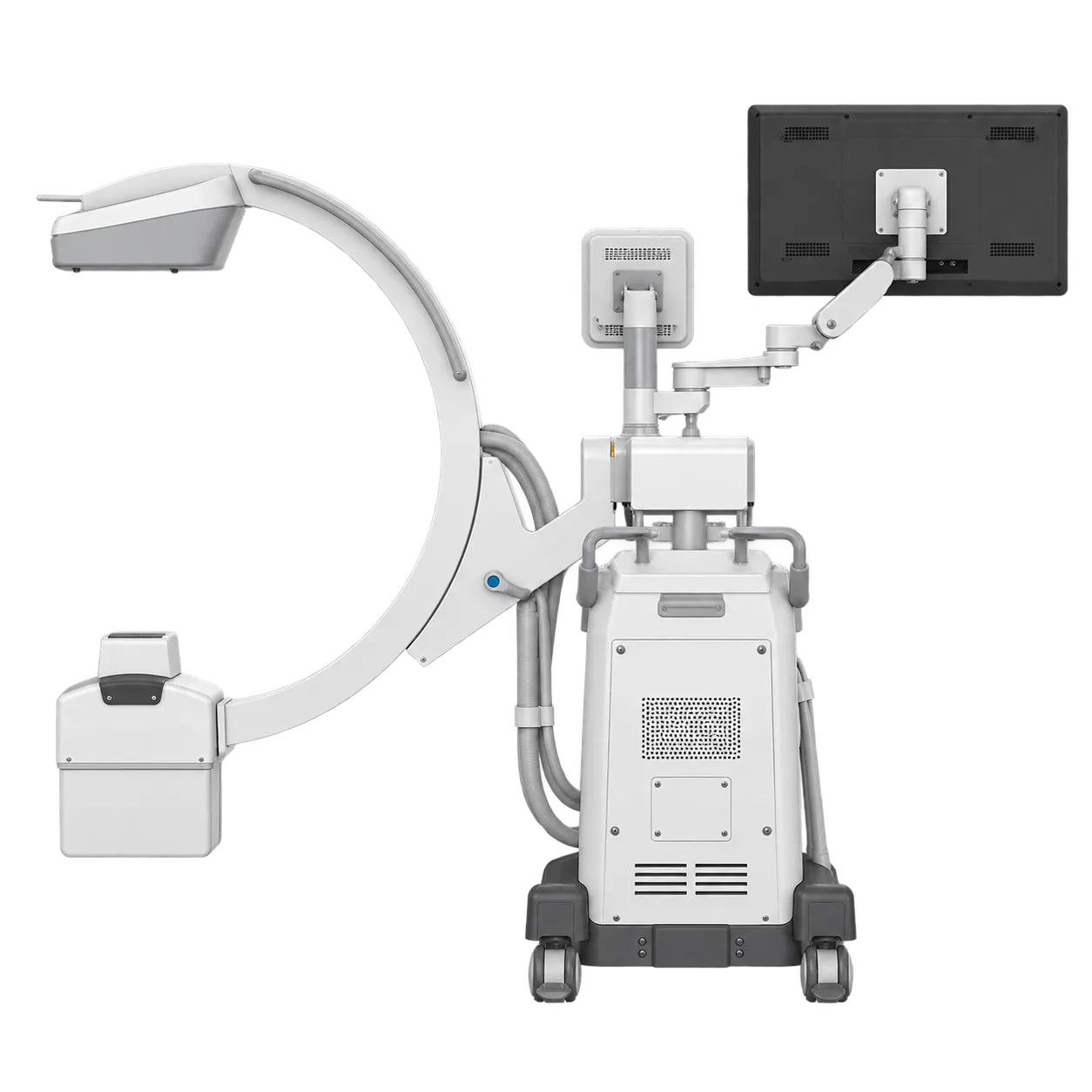
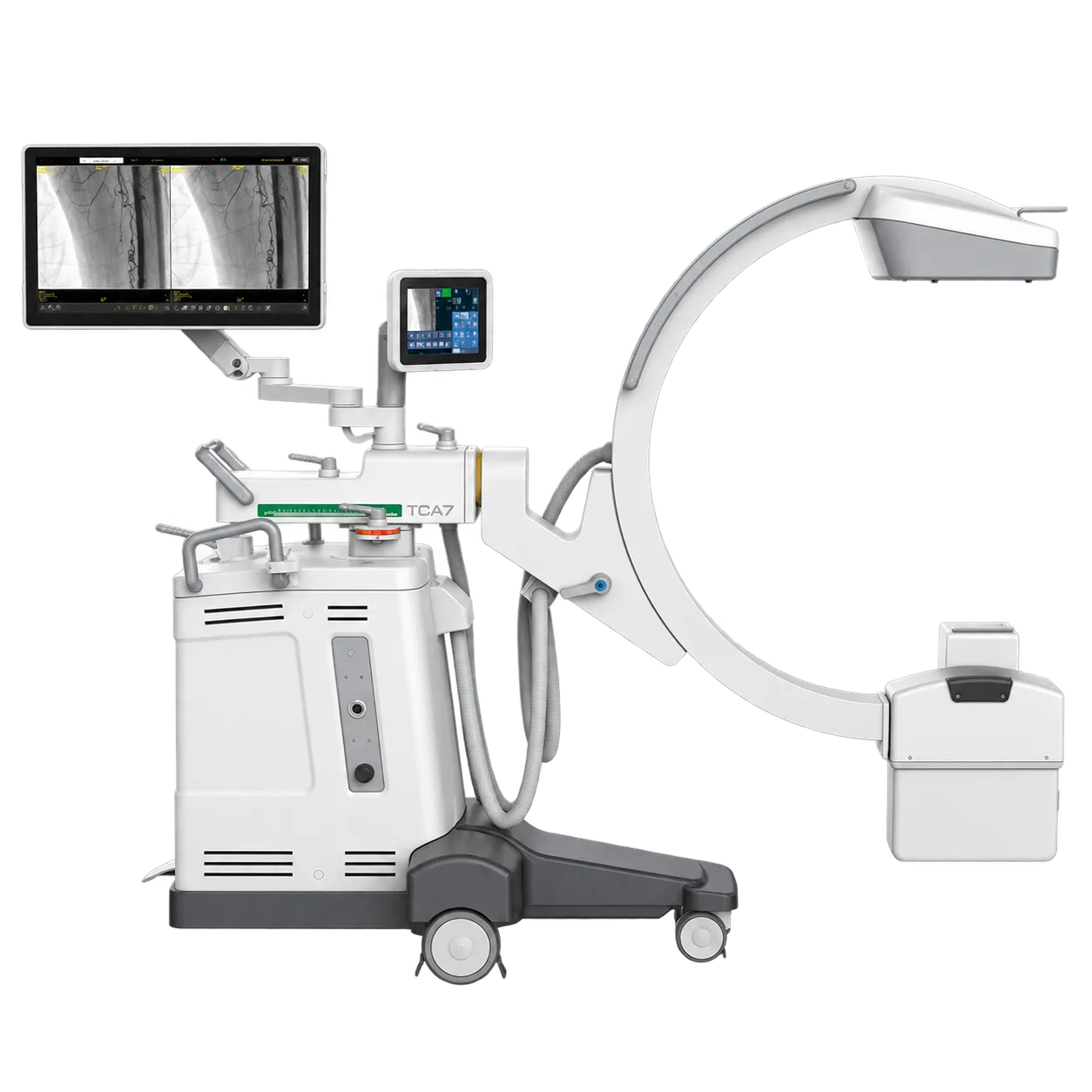
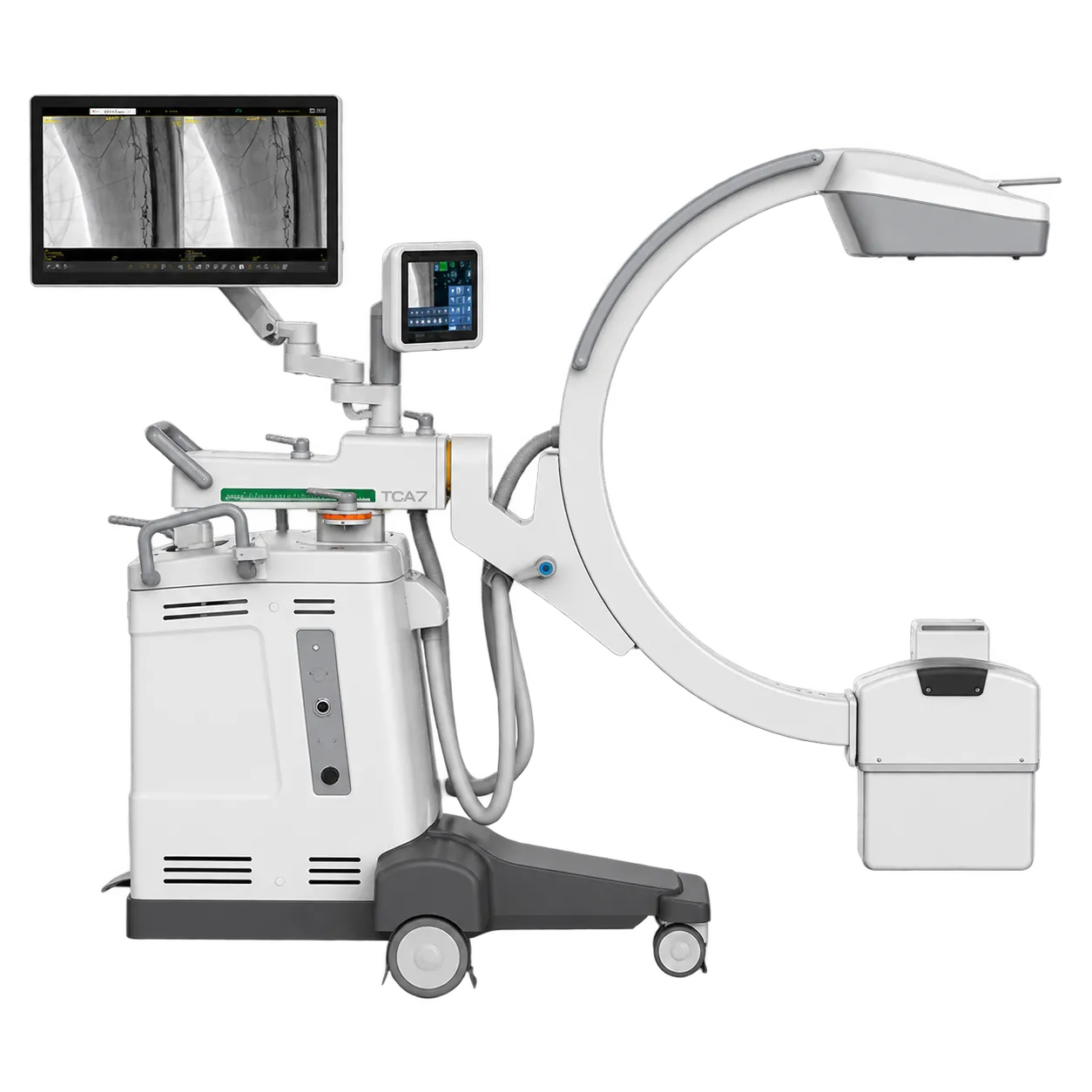
The TCA 7 Compact is built around small operating theatres. With the monitor on the stand, one unit parks at the table, and surgeons, radiographers and theatre staff read the same screen from wherever they stand during the case.
Trauma and orthopaedic surgery are core uses. Fracture reduction and fixation require repeated images at changing angles, and the 169° orbital rotation with overscan, the hand-set wig-wag, and the horizontal run bring the detector to the projection the surgeon wants. Pulsed fluoroscopy keeps exposures brief, and the last image hold leaves the picture on screen while instruments move.
General surgery uses the same setup for intraoperative imaging, switching between fluoroscopy, snapshot exposures, and digital radiography as the procedure demands. Live and reference images sit side by side, so each new view is read against a stored reference on the same screen.
Heart surgery and vascular work draw on the Digital Imaging Software. Digital subtraction angiography isolates the vessels, quantitative analysis outlines vessel edges and stenosis, and vascular tracing lays a traced vessel over the live image during acquisition.
Urology lists use the optional motorised rotation of ±30° around the horizontal axis. The angle changes from the control panel or a dedicated footswitch while the surgeon stays at the patient.
Paediatric cases rely on the removable grid and the motorised paediatric filters in the collimator, which support low-dose imaging of younger patients. When fitted, laser targeting positions the C-arm before any radiation is emitted.
Across these specialities, the narrow stand and the cable pushers on every wheel make it practical to move one C-arm between neighbouring theatres on the same list.